


CHIPOLBROK at 75: From China’s First Joint Venture to a Global Project Cargo Leader
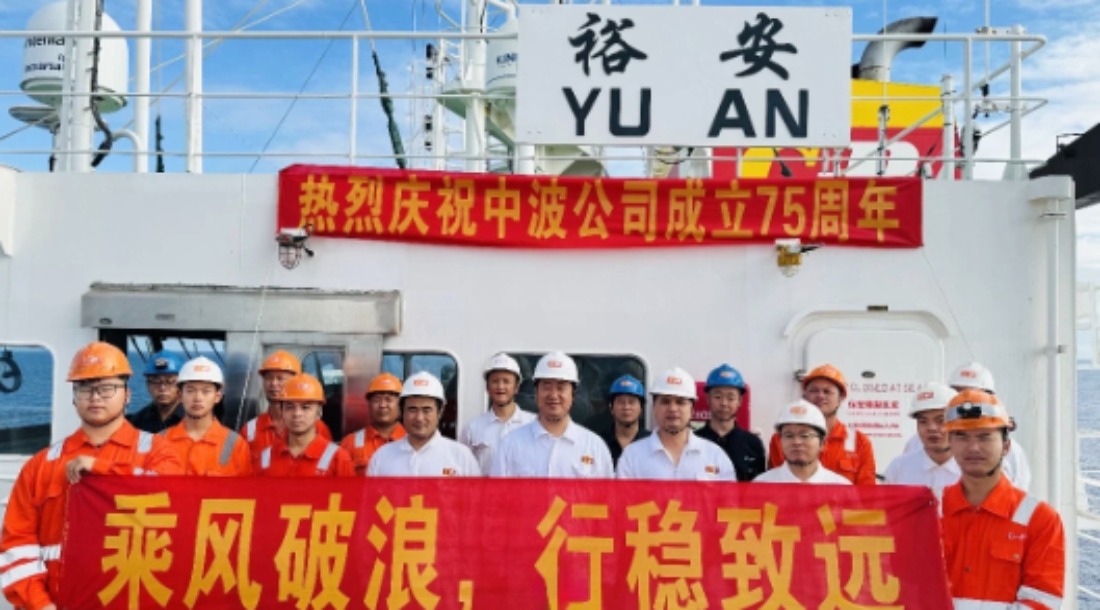

On June 15, 2026, at Taicang Port in eastern China, CHIPOLBROK's 62,000-dwt heavy-lift vessel BEM was loading transformers and engineering vehicles bound for Poland.
The scene reflects more than just another voyage. It symbolizes the continued evolution of a company that has served as a maritime bridge between China and Europe for 75 years.
Founded in 1951 by the governments of China and Poland, China-Poland Joint Stock Shipping Company (CHIPOLBROK) was China's first Sino-foreign joint venture and operated the country's first international liner service. What began as a strategic response to maritime blockades in the early years of the People's Republic of China has grown into one of the world's leading operators in project cargo and heavy-lift transportation.
Today, CHIPOLBROK is pursuing a new phase of development focused on fleet renewal, decarbonization, logistics integration and support for global industrial supply chains.
Driving a Green Transition
As environmental regulations continue to reshape international shipping, CHIPOLBROK has accelerated efforts to reduce emissions across its fleet.
The company has implemented a range of energy-efficiency upgrades on existing vessels, including propulsion improvements, equipment modernization and hull optimization measures. Selected voyages have also incorporated biofuels, achieving emission reductions of approximately 20%.
Since the introduction of the EU Emissions Trading System (EU ETS), CHIPOLBROK has maintained an "A" compliance rating for two consecutive years. In the first year of FuelEU Maritime implementation, the company also reported a surplus of more than 500 tonnes of CO₂-equivalent compliance credits.
The company's next-generation vessel designs aim to go even further.
In May 2026, the first vessel in a new series of 38,000-dwt heavy-lift multipurpose ships was launched at Shanghai Zhenhua Heavy Industries. The design incorporates electric cranes with energy recovery systems, a 1,000-kW battery installation, shore power capability, and a range of hydrodynamic efficiency improvements.
According to the company, the vessel is expected to reduce fuel consumption by approximately 4% at design speed while enabling zero-emission operations during port stays through shore power connections.
Largest Fleet Expansion in Company History
CHIPOLBROK is currently undertaking the most ambitious fleet renewal program in its 75-year history.
The company's 62,000-dwt heavy-lift series, introduced in 2021, pushed the sector into a new generation of larger-capacity project carriers. Just five years later, CHIPOLBROK has ordered six additional vessels of the same class.
Since May 2026, the company has welcomed three new vessels into service, including the bulk carriers ZHONG BO AN SHUN and ZHONG BO AN KANG, as well as the eighth vessel in its 62,000-dwt heavy-lift series, Copernicus.
In total, CHIPOLBROK expects to take delivery of five vessels during 2026, representing 265,000 dwt of new capacity — the largest annual fleet expansion since the company was established.
Over the next two years, a further 13 vessels totaling more than 700,000 dwt are scheduled for delivery.
The expansion supports the company's dual-brand strategy under CHIPOLBROK and Hongfa Shipping, strengthening its position in project cargo transportation while broadening its presence in bulk and breakbulk shipping markets.
Supporting China's Industrial Exports
One of CHIPOLBROK's most significant growth areas has been the transportation of renewable energy and industrial equipment.
The company began transporting wind turbine components as early as 2004 and has since become a major carrier of wind, solar, energy storage and industrial manufacturing projects.
In 2025, CHIPOLBROK completed 41 voyages over a two-year period to support the transportation of wind turbine equipment for the NEOM green hydrogen project in Saudi Arabia, one of the world's largest renewable energy developments.
The company has also played a pioneering role in China's rapidly expanding battery energy storage exports.
Since 2019, CHIPOLBROK has worked closely with Chinese manufacturers, ports and regulators to develop transportation solutions for battery energy storage systems (BESS). After years of technical validation, the company achieved large-scale commercial shipments in 2023 and has since opened new export corridors through ports including Nantong, Xiamen and Shanghai.
Beyond renewable energy, CHIPOLBROK continues to transport a wide range of oversized and high-value cargoes, including tunnel-boring machines, port cranes, railway equipment and complete industrial production lines.
Building an Integrated Logistics Network
Alongside its shipping business, CHIPOLBROK has accelerated its transformation into an integrated logistics service provider.
A recent example involved the transportation of a lithium battery production line from Taicang, China, to Budapest, Hungary. The project combined ocean transportation with inland trucking through Romania and Hungary, coordinated jointly by CHIPOLBROK's logistics division and its Central European logistics subsidiary, POLBROK.
The company has established logistics platforms in Central and Eastern Europe and the Yangtze River Delta, supported by subsidiaries in Houston and Dubai and an extensive global agency network.
Since launching its "Shipping + Logistics" strategy in 2019, CHIPOLBROK has participated in projects ranging from steel plant modernization in Serbia and solar developments in Azerbaijan to wind farms in Egypt, industrial relocations in Germany and battery storage projects across Europe.
Between January and May 2026, the company's full logistics cargo volume increased by 16.4% year-on-year.
Looking Toward a Century of Cooperation
At its 37th Shareholders' Meeting on June 15, 2026, CHIPOLBROK approved a new round of strategic reforms aimed at strengthening its core business, enhancing resilience and leveraging the unique advantages of China-Poland cooperation.
As the company celebrates its 75th anniversary, it is positioning itself for the next stage of growth — one built on cleaner shipping, larger fleets, integrated logistics solutions and deeper participation in global industrial supply chains.
For a company born from a historic partnership between China and Poland, the journey toward its centennial milestone is already underway.

READ MORE
 Dry Cargo
Wooyang orders four triple-fuel Newcastlemax bulkers at China’s New Times for Vale contracts
 Dry Cargo
Shipowners Are Raising Capital to Buy Ships Again: Safe Bulkers Signals Dry Bulk’s Shift from Freight Recovery to Asset Expansion
 Dry Cargo
NORDEN Shows Why Ships Alone Are No Longer Enough
 Dry Cargo
40 Days from Brazil to China: COSCO SHIPPING Bulk’s New Grain Fleet Takes Shape
 Dry Cargo
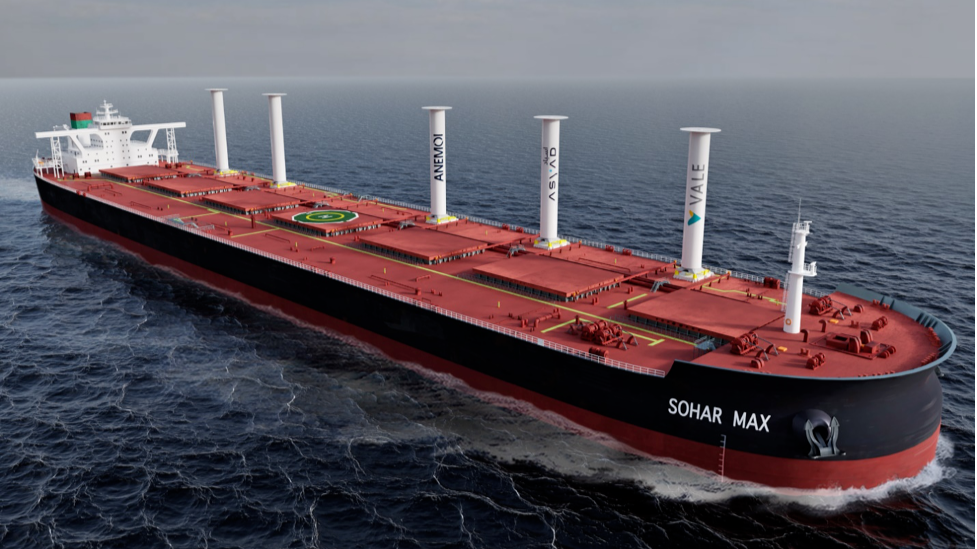
Vale’s 30-Vessel Triple-Fuel Ore Carrier Plan Takes Shape as 25-Year Contracts Reshape Iron Ore Shipping
 Dry Cargo
HMM Locks in $3.5bn Vale Iron Ore Deal for Eight Triple-Fuel Newcastlemaxes
 Dry Cargo
Capesize Rates Hit Highest Since 2021 as Strength Spreads Into Asset Values and Newbuildings
 Dry Cargo
Cetus Maritime Prepares for IPO: 13-Vessel Deal and 70% Equity Payment Could Open a New Chapter for the Handysize Giant
 Dry Cargo
Cetus Maritime Eyes 13-Vessel Expansion as Seacon Deal Points to Pre-IPO Consolidation
 Dry Cargo