


CMES Is Poised to Secure a Major 25-Year Simandou Shipping Contract
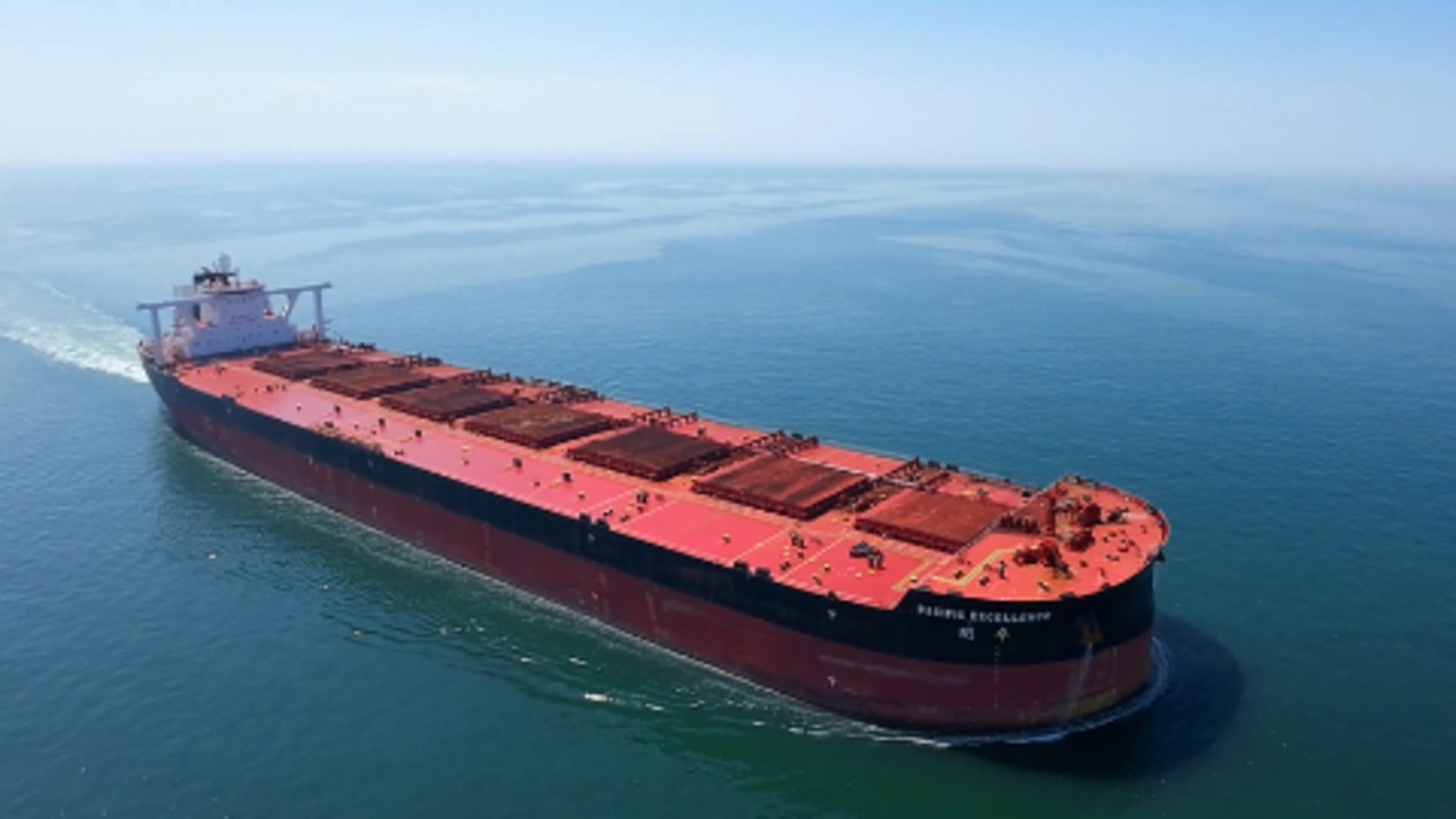
A 25-year iron ore transportation agreement linking Guinea’s Simandou project with global steel markets is moving closer to China Merchants Energy Shipping. The proposed contract could give the company long-term exposure to one of the world’s most consequential new dry bulk trade routes.
China Merchants Energy Shipping, or CMES, announced on July 21 that its wholly owned subsidiary Hong Kong Ming Wah Shipping intends to sign a long-term transportation agreement with a Chinese mineral resources supply chain company that holds shipping rights for Simandou iron ore products.
The proposed agreement will take the form of a 25-year contract of affreightment, or COA. Freight will be linked to a relevant Baltic Exchange route index and supplemented by a cost-adjustment mechanism.
Hong Kong Ming Wah has already transported approximately 600,000 tonnes of mineral cargo connected with the Simandou project. The planned agreement is therefore supported by an existing operating record. CMES has entered the project’s maritime logistics chain through actual voyages, while the 25-year COA could move Hong Kong Ming Wah from an early-stage transportation provider towards a long-term core carrier.
A 25-year COA for a new iron ore trade corridor
According to the CMES announcement, Hong Kong Ming Wah will act as the shipowner under the proposed agreement. The counterparty is described as a Chinese mineral resources supply chain company with shipping rights for Simandou ore products.
The company has yet to disclose the customer’s identity, annual cargo volume, total contract value, minimum volume commitment or the vessels that will be deployed.
The announcement has nevertheless established the principal commercial structure: a 25-year contract period, a COA arrangement, freight linked to a Baltic Exchange route index and an additional mechanism for adjusting costs.
For a dry bulk owner, such a structure can provide long-term cargo visibility while preserving a degree of exposure to market movements.
A 25-year cargo commitment could support fleet renewal, newbuilding investment, financing arrangements and long-term vessel deployment. Linking freight to a recognised market index would allow Hong Kong Ming Wah to participate in stronger dry bulk conditions, rather than fixing earnings at the same nominal level for a quarter of a century.
The cost-adjustment mechanism could also help both sides respond to changes in bunker prices, port charges, labour expenses, environmental compliance costs and other operating variables over the life of the contract.
The proposed agreement combines cargo certainty, market-linked pricing and long-term cost protection. Such a framework is well suited to a cross-ocean mining project whose production and transportation cycle could extend well into the middle of the century.
From early voyages to deeper project participation
CMES said Hong Kong Ming Wah has become an important participant in the long-distance maritime transportation of minerals from Simandou and has completed shipments totalling around 600,000 tonnes.
Based on cargo parcels of approximately 200,000 tonnes, that volume would be equivalent to about three full cargoes carried by large bulkers.
The quantity remains modest compared with Simandou’s planned production capacity of up to 120 million tonnes per year. It has nevertheless given Hong Kong Ming Wah operational experience in the trade and a record of performance with companies controlling the project’s seaborne cargo.
CMES described the planned agreement as a first step towards Hong Kong Ming Wah’s deeper participation in Simandou.
As production increases, the relationship could potentially expand into additional cargo volumes, dedicated vessel deployment, energy-efficient ship designs, lower-carbon transportation and closer coordination between mines, ports and ocean carriers.
The company said the agreement would establish a foundation for closer long-term cooperation with Simandou cargo interests, while supporting the organic development and quality improvement of its dry bulk fleet.
The contract still requires approval from the CMES board. The company also said the signing is not expected to have a material impact on its financial position or operating results in 2026.
Most of the commercial value will emerge after cargo volumes increase and the agreement moves into sustained performance.
A mine designed to produce 120 million tonnes a year
The Simandou project is located in southeastern Guinea and contains around 4.4 billion tonnes of identified high-grade iron ore with an iron content above 65%, according to information disclosed by CMES.
Once fully developed, the project is expected to have total annual production capacity of as much as 120 million tonnes.
The project is being developed by the Guinean government, SimFer and Winning Consortium Simandou. Production and iron ore exports formally began in November 2025.
The scale of the project becomes clearer when translated into shipping demand.
At an average cargo size of around 200,000 tonnes, exporting 120 million tonnes would require approximately 600 laden voyages each year. Guinea is also much farther from China than Australia, meaning each vessel requires substantially more time to complete a round voyage.
Xinde Marine News previously cited Drewry estimates suggesting that a Guinea-China round voyage could take around 92 days, compared with approximately 33 days for an Australia-China voyage.
Under that set of assumptions, transporting 120 million tonnes from Guinea to China could occupy around 181 Capesize vessels, approximately 116 more than would be required to carry the same quantity from Australia.
Fleet-demand estimates vary according to vessel size, speed, port productivity, offshore transshipment arrangements and the share of cargo ultimately shipped to China. The tonne-mile effect remains substantial under a wide range of assumptions.
Simandou will create new iron ore supply, while the longer sailing distance will magnify the shipping demand generated by each tonne.
The emerging corridor from West Africa to China and other Asian markets could become one of the most significant new sources of dry bulk demand over the coming decade.
CMES said in its recent investor communication that meaningful Simandou volume growth may not emerge until the fourth quarter of 2026. Progress continues to depend on local infrastructure, operational ramp-up and policy conditions.
The company also confirmed that it began providing transportation services after the project announced the start of mining operations.
Securing a 25-year agreement during the production ramp-up phase would give CMES an early position in the transport system before the project reaches its targeted output.
A RMB 4.93 billion VLOC programme
Several days before announcing the proposed Simandou agreement, CMES disclosed another major dry bulk investment.
The company plans to invest no more than RMB 4.93 billion in six new-generation, energy-efficient 343,000-dwt very large ore carriers. The VLOCs are scheduled for delivery between 2029 and 2030.
CMES said the newbuildings would optimise the vessel-size and age profile of its dry bulk fleet, strengthen cooperation with major customers and improve supply chain resilience, market competitiveness and sustainable profitability.
The two announcements reveal a strong alignment between the company’s cargo strategy and fleet investment.
On one side stands a six-vessel VLOC programme with an investment ceiling of RMB 4.93 billion. On the other is a proposed 25-year Simandou COA, supported by around 600,000 tonnes of transportation already completed.
The Simandou-to-Asia trade involves large cargo volumes and long distances. Where offshore loading arrangements and destination-port conditions permit, VLOCs can carry more ore per voyage and reduce unit transport costs.
Modern, energy-efficient ore carriers would also be commercially suited to a cargo commitment lasting 25 years, particularly as fuel efficiency and emissions performance become more significant in chartering and financing decisions.
CMES has not confirmed that the six 343,000-dwt VLOCs will be deployed exclusively in the Simandou trade. The company has also made no public statement establishing a direct one-to-one relationship between the newbuilding programme and the proposed COA.
Their timing, vessel type and strategic direction nevertheless point to a broader effort to match next-generation tonnage with long-term mineral cargo demand. The employment arrangements for the six vessels will depend on subsequent disclosures and commercial decisions.
From the Chalco Logistics agreement to Simandou
CMES had already begun strengthening its position in West African mineral transportation before the latest announcement.
In December 2025, Hong Kong Ming Wah signed a Guinea project contract with Chalco Logistics Group.
Xinde Marine News argued at the time that the long-term value of overseas mineral projects increasingly depends on whether resources can be transported back to China safely, consistently, punctually and under a controllable logistics structure.
The two companies said they would combine their respective strengths in resources, logistics and shipping to develop a secure West African mineral transportation corridor and improve the resilience of the mineral supply chain.
Cooperation between cargo owners and shipowners is expanding beyond individual freight transactions. Large industrial groups increasingly require long-term vessel availability, reliable connections between production and ports, operational transparency, emergency response capability and lower-carbon transportation.
The planned Simandou COA gives this strategy a more concrete commercial structure.
The earlier Chalco Logistics cooperation demonstrated the direction of CMES’s West African mineral transportation strategy. The latest announcement sets out a defined contract period, commercial format and freight mechanism for a long-term Simandou agreement.
Hong Kong Ming Wah is gradually converting West African trading experience, customer relationships and fleet capabilities into long-duration contractual assets.
CMES advances its major-customer strategy
Large mining projects require substantial capital, long construction periods, concentrated cargo flows and reliable long-distance transportation.
For the cargo owner, stable ocean capacity affects mine production, port inventories and the continuity of raw-material supply. For the shipowner, long-term cargo commitments can provide the commercial foundation required to invest in large and specialised vessels.
CMES has increasingly pursued cooperation with major cargo owners, energy companies and commodity traders.
The pattern begins with early project participation and an operating track record. Long-term time charters or COAs then secure cargo visibility, followed by investment in larger, more specialised and more efficient vessels aligned with customer requirements.
This model can reduce exposure to a single spot market while retaining some participation in freight-rate upside through index-linked pricing.
It also changes the role of the vessel. A ship supported by a long-term cargo commitment becomes part of a customer’s global supply chain infrastructure, with its design, deployment and financing linked more closely to the underlying commodity project.
For CMES, the Simandou opportunity extends beyond one 25-year contract.
The agreement could help Hong Kong Ming Wah secure a mineral transportation corridor lasting into the middle of the century, provide cargo support for future dry bulk fleet renewal and strengthen the company’s position among major mining customers and global commodity supply chains.
The sequence is already taking shape: approximately 600,000 tonnes transported, a 25-year COA awaiting board approval, and six 343,000-dwt VLOCs planned for delivery between 2029 and 2030.
Cargo, contracts, fleet investment and supply chain participation are beginning to form a connected strategy.
The major agreement approaching CMES could give the company far more than long-term freight revenue. It could provide a lasting position within the core maritime transportation system of one of the world’s largest new iron ore projects.
This article is based on CMES’s July 21, 2026 indicative announcement, its VLOC investment announcement, recent investor communications and previous reporting by Xinde Marine News. The proposed transportation agreement remains subject to approval by the CMES board. The total contract value, annual cargo volume, counterparty identity and vessels to be deployed have not been disclosed.

READ MORE
 Dry Cargo
A New National Shipping Company Launched, Targeting a 50-Ship Fleet
 Dry Cargo
Paliou Urges Fleet Discipline as Dry Bulk Faces Rising Supply and Changing Demand
 Dry Cargo
Can Dry Bulk Match Tankers’ Earnings?
 Dry Cargo
Safe Bulkers Chief Urges Ordering Restraint as Fleet Renewal Continues
 Dry Cargo
How Much Longer Can Dry Bulk Stay Strong?
 Dry Cargo
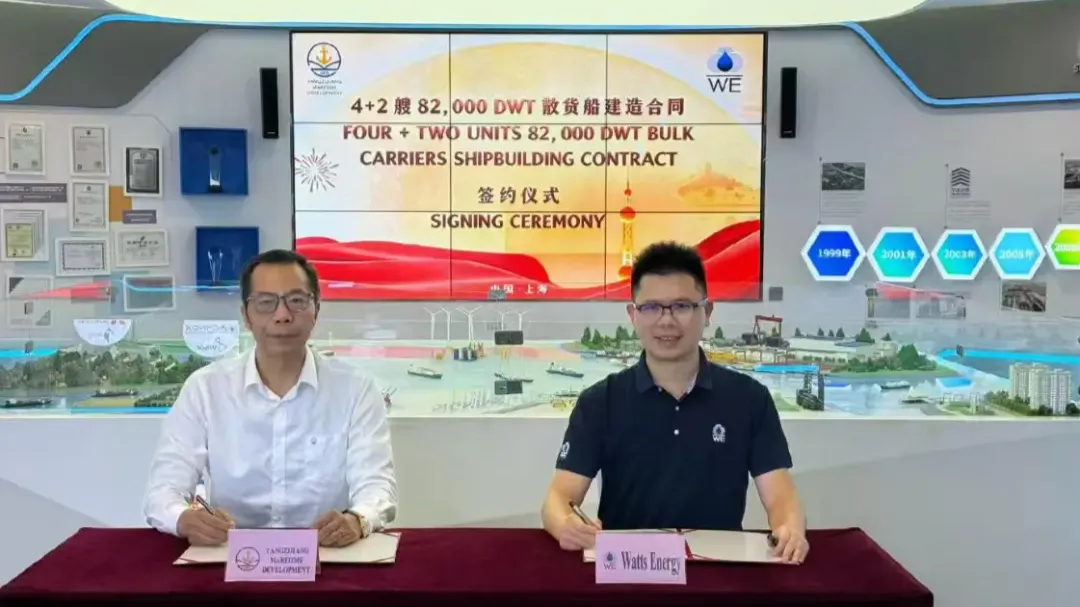
Yangzijiang Maritime Orders 4+2 Kamsarmaxes as Watts Energy Expands into Merchant Shipbuilding
 Dry Cargo
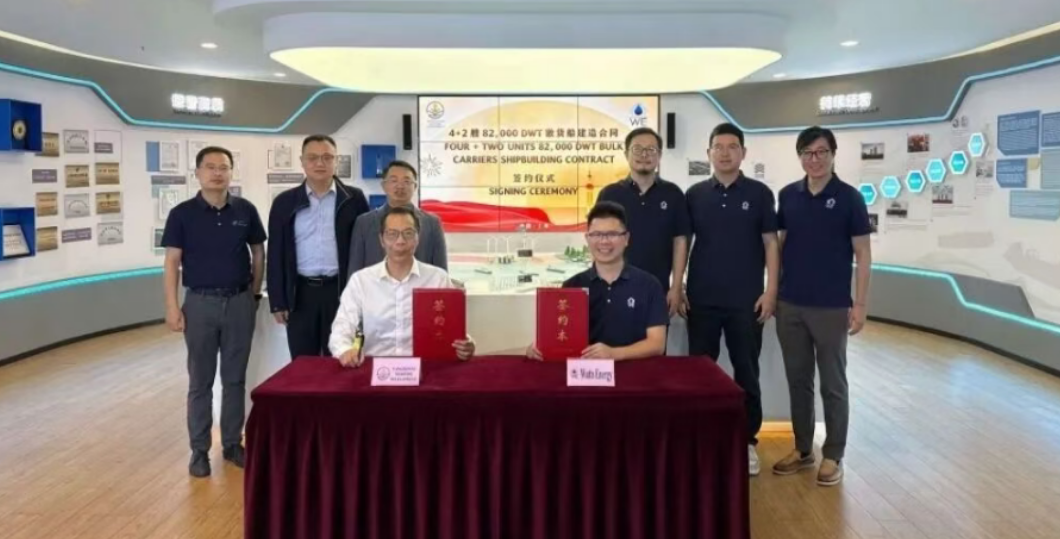
Yangzijiang Maritime linked to 4+2 Kamsarmax order
 Dry Cargo
Black Sea Wheat Loadings Plunge 78% as Grain Trade Reroutes
 Dry Cargo
China Merchants Signs $2.8 Billion-Plus Simandou Shipping Deal
 Dry Cargo