


Star Bulk Walks Away From $470.5m Genco Fleet Deal, but Diana’s Takeover Bid Remains Alive
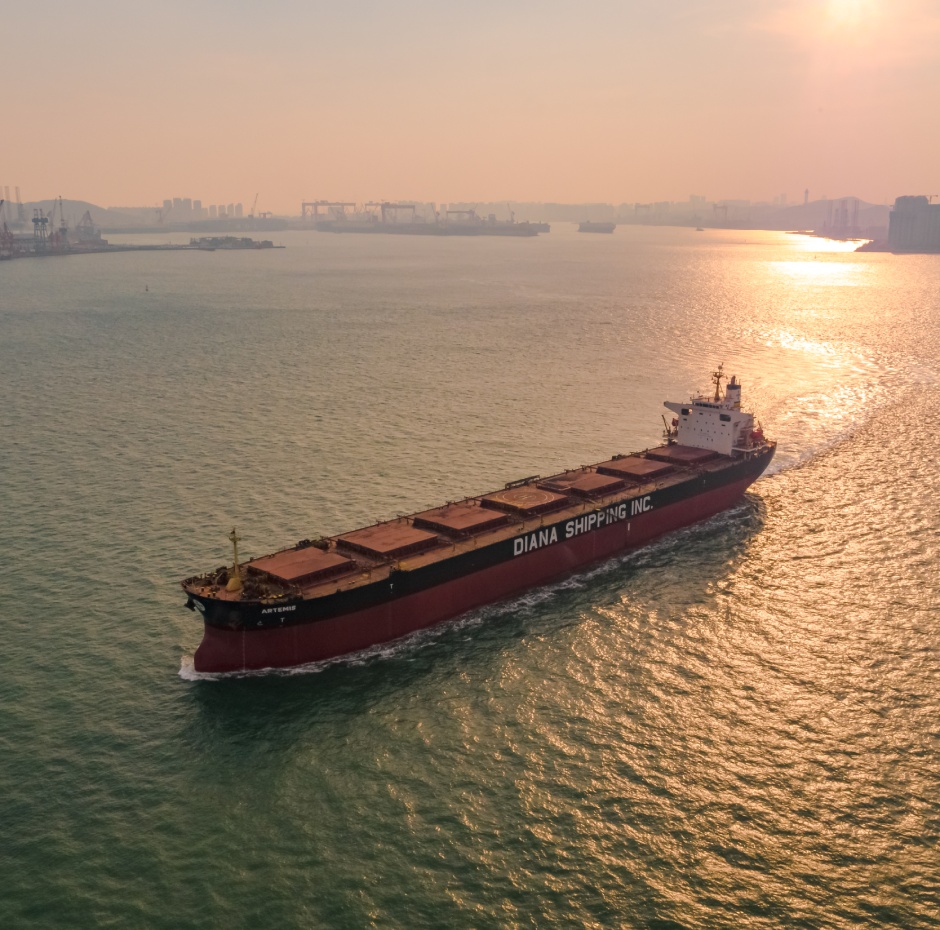

The withdrawal disrupts the pre-arranged fleet carve-out behind Diana Shipping’s pursuit of Genco, even as the bidder insists that its $1.411bn financing remains fully committed.
One of the dry bulk sector’s most closely watched takeover battles has taken another significant turn.
Diana Shipping and Star Bulk Carriers announced on 10 August that, at Star Bulk’s request, they had mutually terminated an agreement under which Star Bulk would have acquired 16 Genco Shipping & Trading vessels for $470.5m in cash if Diana completed its proposed takeover of Genco.
The vessel transaction has been abandoned, but Diana has not withdrawn its corporate acquisition proposal. It also stressed that Star Bulk’s departure has no effect on the $1.411bn of committed bank financing supporting the proposed Genco transaction.
The distinction is important. Diana’s separate cash tender offer made directly to Genco shareholders expired on 24 July and will not be extended or reinstated. However, the cash-and-share proposal delivered to Genco’s board on 17 June remains outstanding.
Star Bulk’s exit has therefore disrupted the fleet-disposal structure designed to accompany the takeover. It has not, at least for now, ended Diana’s pursuit of Genco.
Why the 16-vessel agreement mattered
Star Bulk entered the transaction on 6 March, when Diana increased its proposed cash consideration for Genco from $20.60 to $23.50 per share and announced $1.433bn of fully committed financing.
At the same time, Diana signed a definitive sale and purchase agreement with Star Bulk, securing a buyer in advance for part of Genco’s fleet. Diana said at the time that its bank financing was not conditional on completion of the Star Bulk transaction.
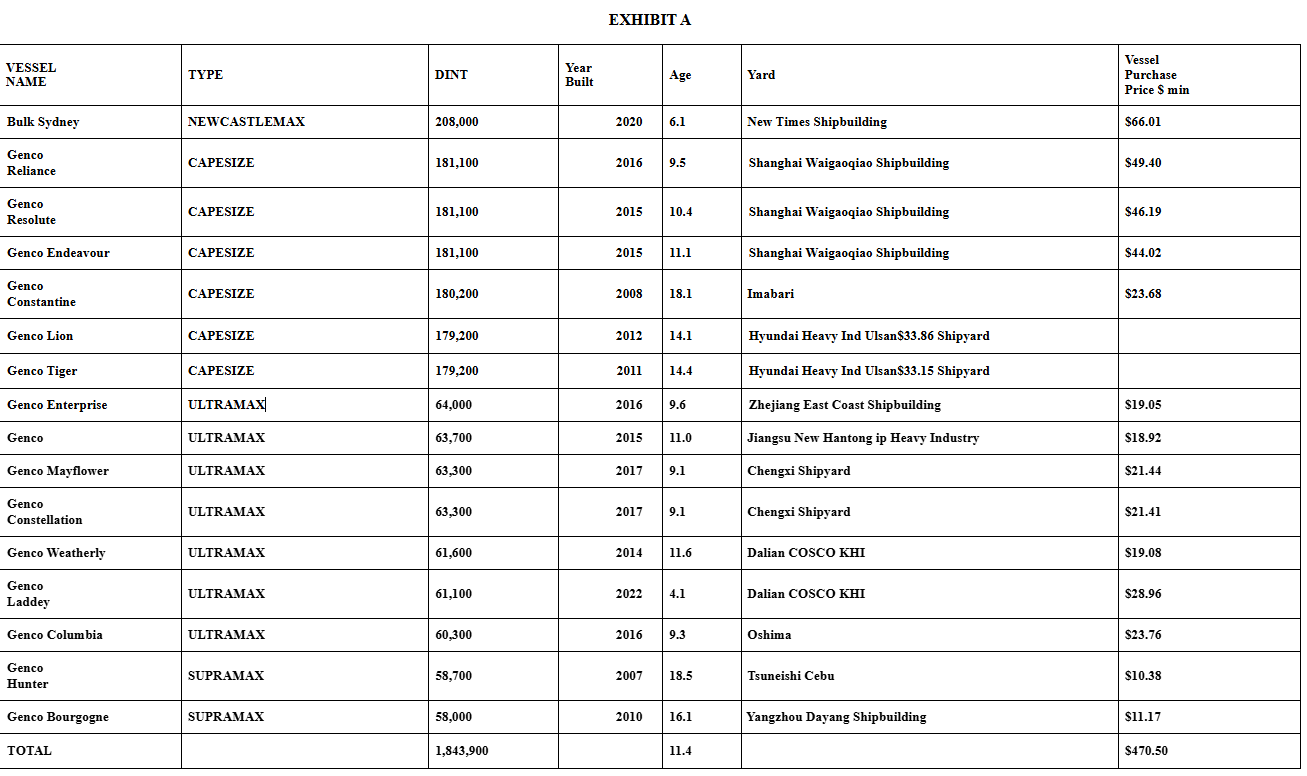
The 16-ship package comprised one Newcastlemax, six Capesize vessels, seven Ultramaxes and two Supramaxes. Together, the vessels had a carrying capacity of approximately 1.844m dwt and an average age of 11.4 years.
In addition to the $470.5m aggregate price, Star Bulk would have paid for the bunkers and unused lubricants and hydraulic oils remaining on board at delivery. Had the acquisition closed, Star Bulk expected its fully delivered fleet to rise to 157 ships with an aggregate capacity of about 15.9m dwt.
The original Star Bulk announcement showed that the package spanned both major and minor bulk segments. It was not simply a disposal of one vessel class or a group of ageing ships.
The arrangement served three practical purposes for Diana.
First, the $470.5m of sale proceeds would have provided a defined source of cash following completion, easing the capital burden of absorbing the whole of Genco. Second, disposing of 16 ships in advance would have kept the enlarged fleet within a scale Diana considered more manageable. Third, locking in a buyer with Star Bulk’s financing capacity and integration experience reduced the risk of having to market a large fleet package after closing.
The vessel sale was tightly linked to the corporate acquisition. Delivery was intended to occur substantially concurrently with Diana’s takeover of Genco. The agreement filed with the US Securities and Exchange Commission also allowed Star Bulk to terminate if Diana and Genco had not signed a merger agreement within six months of 6 March.
That deadline would have fallen in early September. Instead, the parties mutually terminated the agreement on 10 August at Star Bulk’s request, indicating that Star Bulk was no longer prepared to wait for the corporate negotiations to progress.
Star Bulk chief executive Petros Pappas attributed the withdrawal to what he described as Genco’s unwillingness to negotiate with Diana. That remains the position of Diana and Star Bulk, rather than an uncontested account of the discussions.
Genco said in statements on 23 and 27 July that its advisers had engaged with Diana’s advisers several times over price, structure and terms, that its board was continuing to review the 17 June non-binding proposal, and that it remained prepared to engage in good faith. The two sides continue to disagree over whether those contacts amounted to substantive negotiations.
From $20.60 in cash to a cash-and-share proposal
The takeover contest began on 24 November 2025, when Diana, which then owned approximately 14.8% of Genco, offered $20.60 in cash for each share it did not already control.
On 13 January 2026, Genco’s board formally rejected the proposal. It argued that the price undervalued the company’s fleet, commercial platform and net asset value, failed to include an appropriate control premium and, at that stage, lacked committed financing.
Genco also proposed the reverse structure: Genco would acquire Diana using a mixture of cash and Genco shares, with Genco’s existing management leading the combined company. Genco’s formal response showed that price was only one issue. The companies also differed over which should act as the consolidator and who should control the enlarged platform.
Three days later, Diana announced plans to nominate six candidates for all six seats on Genco’s board, opening a proxy contest alongside the takeover attempt.
On 6 March, Diana raised its offer to $23.50 per share in cash. The $1.433bn financing commitment from six international banks and the definitive Star Bulk agreement were intended to answer Genco’s concerns over funding and execution. Genco maintained that the revised price remained below NAV and did not include a control premium.
On 4 May, Diana bypassed the board and launched a $23.50-per-share cash tender offer directly to Genco shareholders. It increased that offer to $24.80 on 27 May.
Genco rejected both versions. It cited opinions from Jefferies and Morgan Stanley that the consideration was inadequate from a financial point of view. In its 2 June response, Genco pointed to a mean analyst NAV estimate of $26.66 per share and a median estimate of $27.10.
On 8 June, Diana narrowed its board challenge from six nominees to two, Jens Ismar and Paul Cornell, while continuing to press shareholders to support changes at Genco.
On 17 June, one day before Genco’s annual meeting, Diana changed the structure again. It proposed $24.80 in cash plus one Diana common share for each Genco share.
Diana valued the stock component at $2.54, based on its 30-day volume-weighted average share price through 16 June, producing an implied headline value of $27.34 per Genco share.
The actual value of the equity component moves with Diana’s share price and is not equivalent to fixed cash consideration. The proposal also provides for the cash component to be reduced by any subsequent Genco cash distributions. Diana disclosed the revised structure on 18 June.
At Genco’s annual meeting that day, all six incumbent directors were re-elected. According to Genco’s preliminary tally, close to 90% of the shares voted, excluding Diana’s holding, supported each of Genco’s nominees. Diana’s attempt to change the board as a route to advancing the transaction had failed, but the company said it would continue pursuing the acquisition.
The direct tender offer expired on 24 July. Approximately 11.78m shares, equal to 31.6% of the Genco shares not owned by Diana, had been tendered and not withdrawn at expiry. Those shares were returned after Diana decided not to extend the offer.
The separate cash-and-share proposal submitted to Genco’s board remained outstanding. Genco said on 27 July that its board was continuing to review the proposal.
On 5 August, Genco declared a second-quarter dividend of $0.80 per share. Diana’s latest announcement continues to describe the proposal using a $24.80 cash base, while stating that the cash component is to be adjusted for the newly declared $0.80 dividend, together with one Diana share valued at $2.54 on the June reference basis.
Financing remains intact, but the transaction economics have changed
Star Bulk’s withdrawal does not create an immediate funding gap, according to Diana.
The 10 August joint announcement said Diana still has $1.411bn of fully committed financing from six international banks, with no financing condition attached to the proposed Genco transaction.
The commitment stood at $1.433bn when first announced in March and was subsequently resized to its current level. Diana did not make Star Bulk’s $470.5m payment a condition to the availability of the bank financing.
That does not mean the original transaction model can continue unchanged. Star Bulk was both an asset buyer and a pre-arranged outlet through which Diana could reduce the post-closing fleet, recover cash and manage leverage. Its departure leaves at least three issues to be resolved.
The first is fleet scale. Based on the companies’ latest public figures, Diana has 36 vessels in the water with a combined capacity of about 4.1m dwt, while Genco has 43 vessels totalling approximately 4.935m dwt.
On a simple combined basis, retaining all of Genco’s ships would produce a fleet of roughly 79 vessels and 9.035m dwt, before accounting for subsequent acquisitions or disposals. Under the former Star Bulk arrangement, the equivalent ship count would have been about 63.
The 16-vessel package represented approximately 37% of Genco’s current ship count and about 36% of its carrying capacity. Retaining those assets would materially increase the scale of the technical, commercial and financial integration.
The second issue is the post-acquisition balance sheet. The $1.411bn financing commitment may allow Diana to continue pursuing the transaction, but the planned $470.5m cash inflow from the vessel sale is no longer available.
If Diana retains the ships, it will need to revisit debt levels, collateral, repayment schedules, fleet renewal and shareholder distributions. If it still wants to sell, it will have to identify another buyer and negotiate new terms based on prevailing vessel values, conditions and charters.
The third issue is valuation. Genco had argued that the $470.5m price did not reflect the market value of the 16 ships and that selling the package too cheaply could weigh on the value of the Diana shares to be issued to Genco investors.
Ending the Star Bulk agreement removes that specific objection. Diana chief executive Semiramis Paliou said the termination had eliminated one of Genco’s concerns about the proposal. At the same time, Diana has lost a buyer that had already signed a definitive agreement, leaving the future disposal strategy less certain.
Three possible routes for Diana
If Genco ultimately enters negotiations and a transaction proceeds, Diana has three broad options.
It could retain the 16 vessels and operate a larger combined platform. It could seek another buyer and redesign the disposal as one package or several smaller sales. Or it could use formal due diligence and negotiations with Genco to revise the consideration, financing and fleet mix.
Each route carries different costs. Keeping all the ships would increase market exposure and operating scale, but also integration and leverage. Finding a replacement buyer could restore part of the expected cash inflow, although the prices fixed in March would no longer govern a new transaction and fresh due diligence would be required. Restructuring the wider deal would depend on Genco moving from its present review to formal negotiations.
Genco has reasons to believe it can afford to wait. Its second-quarter results included net income of $16.6m, adjusted EBITDA of $56.7m and a fleet-wide time charter equivalent rate of $24,273 per day. It also declared the $0.80-per-share dividend.
The strong dry bulk market and Genco’s cash-return profile underpin its insistence on NAV value and a control premium. Diana, meanwhile, has argued that dry bulk vessel values have eased from their early-June highs and that further delay exposes shareholders to cyclical downside. The two sides remain apart on both the market cycle and the appropriate price.
With Star Bulk gone, the transaction has shifted from a three-party, pre-arranged carve-out — Diana buying Genco and immediately transferring 16 ships to Star Bulk — back to a direct contest between Diana and Genco.
The bank financing keeps Diana at the table. The loss of a ready buyer raises the complexity of execution and post-acquisition integration.
The next stage will therefore depend on more than whether Diana raises its offer again. It will also depend on how Diana proposes to deal with the 16 vessels and whether Genco’s board turns its continuing review into formal negotiations.
Those two questions will determine whether this nine-month dry bulk takeover battle can move into its next phase.


READ MORE
 Dry Cargo
Shipowners Are Raising Capital to Buy Ships Again: Safe Bulkers Signals Dry Bulk’s Shift from Freight Recovery to Asset Expansion
 Dry Cargo
NORDEN Shows Why Ships Alone Are No Longer Enough
 Dry Cargo
Vale’s 30-Vessel Triple-Fuel Ore Carrier Plan Takes Shape as 25-Year Contracts Reshape Iron Ore Shipping
 Dry Cargo
Wooyang orders four triple-fuel Newcastlemax bulkers at China’s New Times for Vale contracts
 Dry Cargo
HMM Locks in $3.5bn Vale Iron Ore Deal for Eight Triple-Fuel Newcastlemaxes
 Dry Cargo
Capesize Rates Hit Highest Since 2021 as Strength Spreads Into Asset Values and Newbuildings
 Dry Cargo
Cetus Maritime Prepares for IPO: 13-Vessel Deal and 70% Equity Payment Could Open a New Chapter for the Handysize Giant
 Dry Cargo
Cetus Maritime Eyes 13-Vessel Expansion as Seacon Deal Points to Pre-IPO Consolidation
 Dry Cargo
China’s Steel Demand Is Weak — So Why Are Capesize Ships Still Earning $30,000 a Day?
 Dry Cargo