


Germany Blocks COSCO’s Zippel Deal, Testing Inland Logistics Expansion

Berlin’s decision to stop an 80% acquisition of the Hamburg freight forwarder highlights the security scrutiny facing Chinese shipping investment beyond port terminals—even after competition clearance.
Germany’s cabinet has approved blocking COSCO’s planned acquisition of an 80% stake in Hamburg-based logistics company Konrad Zippel Spediteur GmbH, creating a setback for the Chinese shipping group’s expansion into Germany’s inland freight network.
An economy ministry spokesperson announced the decision following the cabinet meeting on October 7. The ministry said it would subsequently issue the formal prohibition order, an important distinction between the cabinet’s approval and the administrative implementation of the ban.
The government’s concern centres on dependencies and supply-chain resilience. Its assessment brings the strategic significance of inland logistics into focus: influence over international freight extends beyond ships and quaysides to the networks carrying containers between ports and industrial customers.
A link between the waterfront and inland customers
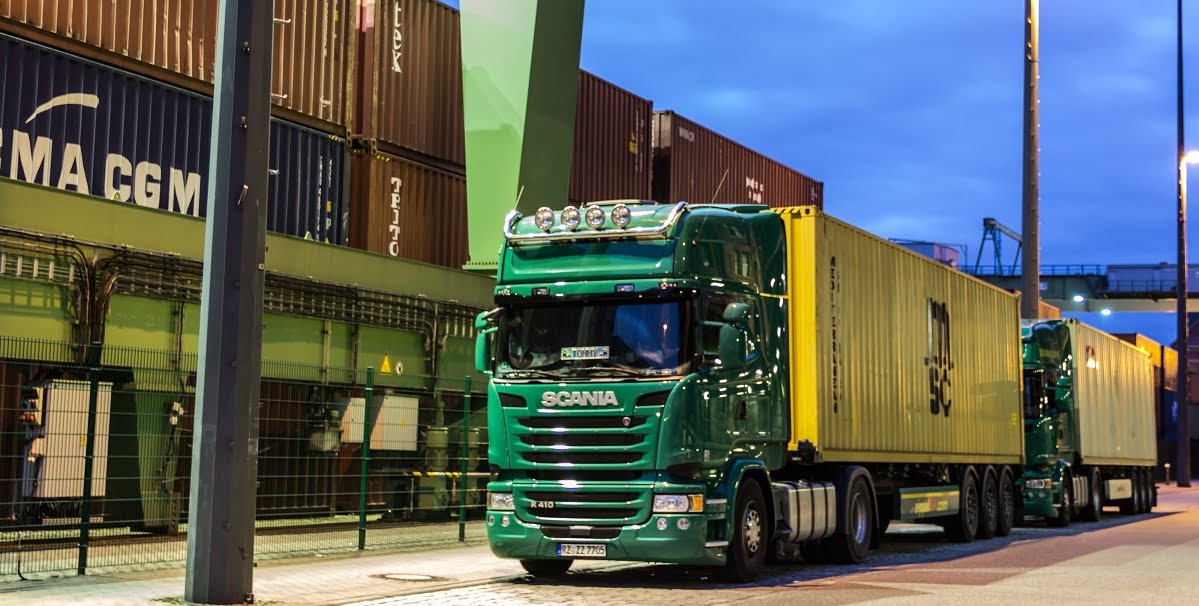
Zippel’s business connects the ports of Hamburg and Bremerhaven with inland Germany and neighbouring European countries, using road, rail and barge transport.
Its own rail services link the two ports with inland terminals in Berlin, Schkopau near Leipzig and Elsterwerda near Riesa. Trucks provide the first and last legs between terminals and customers’ loading or delivery sites. The group also offers container storage and depot services.
For an ocean carrier, the commercial attraction of such a network is straightforward. Coordinating inland movements with vessel arrivals can strengthen a door-to-door service offering and deepen relationships with cargo owners beyond the ocean voyage.
That potential helps explain the significance of the proposed investment. An 80% holding would give COSCO a controlling equity position in a business connecting seaborne trade with inland customers, rather than simply access to transport services through commercial contracts.
The buyer identified in Germany’s competition clearance was COSCO Shipping Holdings Co., Ltd. The transaction should therefore be distinguished from the separate investment by COSCO SHIPPING Ports Limited in Hamburg’s Container Terminal Tollerort.
Competition clearance was only one hurdle
The Federal Cartel Office, or Bundeskartellamt, cleared the proposed Zippel acquisition on February 20, 2026.
Its assessment focused on competition. COSCO and Zippel operated at different stages of the transport chain, while Zippel handled only a small share of the cargo moving through Hamburg and Bremerhaven. The authority did not expect the deal to materially restrict other carriers’ access to forwarding services or other forwarders’ access to shipping customers. Security and foreign-investment considerations were outside that assessment.
The subsequent government intervention reflects a separate test. Germany’s investment-screening framework examines potential threats to public order or security and can take an investor’s state control into account.
The two outcomes are therefore compatible: a transaction can raise limited concerns about market competition while still encountering objections over ownership, dependence and the resilience of strategically important transport networks.
For shipping companies pursuing logistics acquisitions, the practical consequence is significant. Antitrust clearance alone does not establish that a transaction can close.
Tollerort provides context, not a template
COSCO already has an investment presence at Hamburg’s waterfront. In June 2023, Hamburger Hafen und Logistik AG, or HHLA, and COSCO SHIPPING Ports finalised an agreement for a 24.99% stake in Container Terminal Tollerort, following investment screening.
The contrast with Zippel is material. Tollerort involved a minority holding in a terminal operator; the proposed Zippel purchase involved an 80% stake in an inland logistics business.
However, the difference in ownership percentages does not establish the full reason for the latest decision. Nor does the Tollerort outcome guarantee approval for another investment structured below 25%. Each transaction involves its own assets, governance arrangements and security assessment.
The detailed prohibition order will be important in understanding how the government applied those considerations to Zippel.
A constraint on expansion beyond the port
The decision puts a concrete obstacle in the way of COSCO’s proposed acquisition. Its wider significance is that security scrutiny can reach the inland businesses linking European ports with their customers.
For Chinese shipping groups seeking a larger role in European logistics, the case suggests that acquisition planning needs to address control and supply-chain dependencies alongside commercial value and competition law.
For cargo owners, the immediate question is operational continuity. In a September 29 response to earlier reporting about government opposition, Zippel said its business continued unchanged and directed questions about the handling of the decision to COSCO. That statement preceded the October 7 cabinet announcement.
The next developments to watch are the formal prohibition order and the parties’ response, including whether they pursue a revised transaction or a legal challenge. Neither should be assumed at this stage.


READ MORE
 Ports & Terminals
US Fees on Chinese-Built Ships May Be Delayed Until January, Pending USTR Action
 Ports & Terminals
COSCO SHIPPING and Shanghai Post Launch 28-Day Postal Sea Route to Peru via Chancay
 Ports & Terminals
Pinglu Canal opens a new river-to-sea route for southwest China
 Ports & Terminals
Keep buying!Inside the Maersk Family’s Infrastructure Buying Spree——From 70-Plus Ships to 50-Plus Terminals
 Ports & Terminals
China’s $10.7bn Pinglu Canal to Open Sept. 16, Cutting Southwest–ASEAN Shipping Route by 560 km
 Ports & Terminals
Northern Europe Port Strikes Add New Pressure to Asia–Europe Container Schedules
 Ports & Terminals
Shanghai-Ningbo Delays Stretch to 11 Days as Typhoon Backlog Spills Into Liner Networks
 Ports & Terminals
Container Schedule Reliability Slumps to 56.4% as Port Congestion Spreads
 Ports & Terminals
Hormuz Toll Debate Tests the Rules Governing the World’s Strategic Straits
 Ports & Terminals