


Keep buying!Inside the Maersk Family’s Infrastructure Buying Spree——From 70-Plus Ships to 50-Plus Terminals

The proposed acquisition of Euroports is the latest in a series of investments spanning ship leasing, ports and inland logistics. Together, they point to a long-term commitment to the infrastructure that keeps global trade moving.

On 28 September 2026, A.P. Moller Capital announced an agreement to acquire a majority stake in Euroports Group through a separately managed fund vehicle backed by A.P. Moller Holding.
With more than 50 deep-sea and inland terminals across 10 European countries and China, and annual cargo throughput exceeding 70 million tonnes, Euroports would add a substantial port and logistics network to the infrastructure investments associated with the Maersk family.
But the significance of the transaction extends beyond its scale.
It follows A.P. Moller Holding’s acquisition of ship-leasing platform Ocean Yield and a succession of investments by A.P. Moller Capital-managed funds in Spanish ports, Philippine logistics and Moroccan transport services. Viewed together, these transactions suggest a consistent direction: deeper participation in the assets and operating businesses that connect maritime transport with industrial production and consumption.
These are separate investments, involving different ownership structures and investment vehicles. They should not be mistaken for a single acquisition programme by the listed shipping and logistics company A.P. Moller–Maersk.
Nevertheless, their common characteristics offer an insight into how capital associated with the Maersk family is approaching global trade.
The emerging thesis is that dependable ships, ports and logistics networks can support both long-term financial returns and the continuity of essential cargo flows.
Euroports: A Major Position in Essential Cargo Flows
The seller’s disclosure provides further detail on the proposed transaction.
In an announcement dated 25 September, R-Logitech Finance said the share purchase agreement covers a 53.35% stake in Thaumas N.V., the indirect parent of Euroports. A.P. Moller Capital described the transaction as a majority investment and confirmed that SFPIM and PMV would remain shareholders.
The transaction value has not been disclosed. According to the seller, the consideration mechanism is linked to Euroports’ consolidated EBITDA for the 2026 financial year, with the final amount still to be determined. Completion remains subject to regulatory approvals and other conditions.
The nature of Euroports’ business is particularly important.
Its terminal network primarily handles bulk, breakbulk and liquid bulk cargoes, including fertilisers, agricultural commodities, sugar, forest products, metals and minerals. Through Manuport Logistics, the group also extends into freight forwarding across more than 20 countries.
This gives the investment a different character from a conventional container-shipping expansion. The underlying cargo flows are closely connected to the recurring requirements of factories, farms, food businesses and industrial customers.
Euroports also has an established presence in China, with operations in Changshu, Jiangsu province, and Gaolan, Guangdong province. Its Changshu terminal has a longstanding role in forest-product logistics along the Yangtze River.
For customers, the value of these facilities lies in whether cargo can be discharged, stored and moved onward when required. For investors, the question is how effectively those services are embedded in customers’ production and distribution needs.
A terminal’s strategic importance therefore cannot be measured by throughput alone. Its relationships with cargo owners, connections to inland transport and role within regional industrial networks are equally significant.
A Sequence of Deals Across the Supply Chain
The Euroports agreement becomes easier to interpret when placed alongside the preceding transactions.
In 2025, A.P. Moller Capital agreed to acquire a 51% stake in BERGÉ, the Spanish port and logistics business. The partnership was formalised in September following the necessary approvals, with the shareholders identifying opportunities for further development in the multipurpose port sector across Iberia and Latin America.
At the time, A.P. Moller Capital’s Joe Nielsen highlighted BERGÉ’s resilient business model and potential for long-term value creation. Euroports has subsequently been described by the firm as its second European investment, following BERGÉ.
The expansion at sea came through Ocean Yield.
On 2 July 2026, A.P. Moller Holding announced an agreement to acquire the ship-leasing platform from funds managed by KKR. The transaction was completed on 21 August.
Ocean Yield holds interests in more than 70 modern vessels, spanning LNG and other gas carriers, container ships, crude oil tankers, product and chemical tankers, and dry bulk carriers. During KKR’s ownership, the company invested more than $3 billion in expanding and renewing its portfolio, while its long-term contracted backlog increased to more than $5 billion.
The investment case is therefore more complex than the number of ships involved.
A ship-leasing platform combines physical assets with charter contracts, customer relationships and financing arrangements. Its value depends on how those elements work together over time. Ocean Yield provides both a platform for further maritime investment and an earnings base supported by long-term contracts.
In the Philippines, AC Logistics added another dimension.
A.P. Moller Capital’s Emerging Markets Infrastructure Fund II completed a 40% investment in the business on 7 July 2026, following an agreement announced in March 2025.
AC Logistics operates across cold chain, air cargo logistics, contract logistics and nationwide distribution, as well as project cargo. It serves sectors including food, agriculture, healthcare, pharmaceuticals and consumer goods.
Where Ocean Yield provides exposure to maritime assets, AC Logistics provides exposure to the networks that move goods within a domestic economy. The investments occupy different positions in the supply chain, but both depend on customers’ continuing need for dependable transport services.
On 17 August 2026, A.P. Moller Capital announced a further agreement for its relevant funds to acquire a majority stake in Morocco’s Globex Investissement.
Globex operates in express delivery, road freight, freight forwarding and customs brokerage. The proposed investment involves working with the founder and existing management team to support further development.
That arrangement highlights another recurring feature: the importance of established local operating capabilities. Transport assets require customers, experienced teams, market knowledge and service networks to generate sustainable value.
BERGÉ, Ocean Yield, AC Logistics, Globex and Euroports are different businesses. Yet they correspond to successive stages of cargo movement: ships carry goods across the sea; ports connect maritime and land transport; logistics networks move cargo into production, distribution and consumption.
This does not mean they already form a single operating network. It does reveal a common focus on the infrastructure and services supporting the movement of goods.
Holding and Capital: Shared Heritage, Different Roles
Understanding the corporate structure is essential to interpreting the investment pattern accurately.
A.P. Moller Holding is the holding and investment company owned by the A.P. Moller Foundation. It manages the foundation’s business interests and investments, including its controlling interest in the listed A.P. Moller–Maersk.
Ocean Yield has entered Holding’s investment portfolio. Its acquisition is therefore distinct from an acquisition by the listed shipping and logistics group.
A.P. Moller Capital, established in 2017, is an infrastructure fund manager within the wider A.P. Moller Group. It manages funds investing in businesses associated with transport, logistics and energy-transition infrastructure.
Holding’s acquisition of Ocean Yield represents a direct investment by the holding platform. Capital’s investments are made through relevant fund structures, each with its own investors, ownership arrangements and investment mandate.
The Euroports transaction illustrates the relationship between the two: the acquisition is being undertaken through a fund vehicle managed by Capital and supported by Holding.
“The Maersk family’s buying spree” is therefore a description of the wider ownership heritage and industrial context—not a statement that every asset is being acquired by the same company or financed solely with family capital.
Nor should these transactions automatically be interpreted as additions to Maersk’s liner network.
A shared heritage and investment theme do not, by themselves, establish operational integration, exclusive commercial relationships or a single chain of command across the portfolio.
The more defensible conclusion is that different platforms within the same wider investment environment are finding opportunities in closely related parts of the trade economy.
The Common Denominator: Reliable Trade and Long-Term Returns
A.P. Moller Capital’s explanation of the Euroports transaction provides a useful guide to its thinking.
Managing partner and chief executive Kim Fejfer linked the investment to the growing importance of resilient supply chains and secure trade flows. He also emphasised Euroports’ role in moving essential commodities through infrastructure supporting European industry, food systems and manufacturing.
That places the investment within the functioning of the real economy.
Factories require dependable supplies of raw materials. Food businesses need transport and storage systems that protect availability and quality. Exporters need goods to move beyond the discharge port and reach their customers.
Infrastructure serving these requirements can be attractive because its usefulness is tied to continuing economic activity, rather than a single shipment or a temporary freight-market opportunity.
The explanations accompanying earlier transactions point in a similar direction.
When announcing the Ocean Yield acquisition, Holding’s chief financial officer, Martin Larsen, emphasised stable cash flows and the platform’s complementarity with the existing maritime portfolio.
In the AC Logistics investment, Capital’s senior partner Lars Reno Jakobsen highlighted the need for more efficient, resilient and integrated supply chains in a geographically dispersed and growing Philippine market.
The BERGÉ investment likewise placed emphasis on business-model resilience and long-term value creation.
These statements suggest that the investment approach considers both the earnings characteristics of an asset and the role it performs for customers.
The financial drivers nevertheless differ by business. For a ship-leasing platform, they include contract duration, counterparty quality, financing costs and vessel residual values. For a terminal operator, they include cargo demand, customer concentration, operating efficiency and the terms under which facilities are operated. For a logistics business, service quality and the ability to coordinate multiple stages of delivery are central.
The common thread is the opportunity to earn returns by providing a service that customers need repeatedly—and need to trust.
Why the Value of Infrastructure Goes Beyond the Asset
A vessel, terminal or warehouse has an identifiable standalone function. Its importance to a customer, however, depends on how effectively it connects with the rest of the supply chain.
Consider a factory that imports an essential raw material.
A shipping contract may secure ocean transport, but production can still be interrupted if the receiving terminal cannot discharge the cargo, storage is unavailable or inland transport fails.
An exporter faces the same problem in reverse. A vessel’s arrival at the destination port does not complete the delivery requirement. The cargo still needs to move through the terminal and onward to its final destination.
These examples suggest a broader way to assess transport costs. The cheapest individual service is not necessarily the most economical supply-chain arrangement if it creates a greater risk of delay, damage or interruption.
They also explain why ships, ports and logistics networks can have strategic significance beyond their standalone earnings. Their availability influences the ability of other businesses to operate.
For an infrastructure investor, the opportunity is not simply to own an asset at a critical location. It is to develop a business capable of meeting customers’ requirements consistently, while earning an appropriate return.
That requires operational expertise as well as capital.
A terminal must be maintained and developed. A cold-chain network must preserve service quality throughout the transport process. A ship-leasing platform must manage its portfolio, financing and customer exposures across market cycles.
A.P. Moller Capital has explicitly identified the wider group’s reputation, relationships and industrial experience as resources supporting its investment approach. The recent transactions suggest an effort to combine those resources with established platforms and local management teams.
Seen through this lens, the investment pattern is not merely an accumulation of physical assets. It is an expansion into businesses whose capabilities help customers maintain the movement of goods.
Ownership Is an Opportunity, Not a Guarantee of Resilience
It would be an overstatement to suggest that acquiring maritime infrastructure eliminates geopolitical or supply-chain risk.
A shipowner cannot guarantee that a trade route will remain accessible. A terminal shareholder cannot prevent every disruption in the surrounding transport network. A logistics operator cannot make customers immune to changes in demand or trade policy.
Ownership can provide greater influence over investment, capacity and operating priorities, subject to the rights attached to a particular investment. Whether it improves reliability depends on how that influence is used.
Nor is there any automatic guarantee that investments in different countries and cargo segments will generate synergies.
A European bulk terminal, a Philippine cold-chain business and a globally diversified ship-leasing platform may each have a strong independent investment case without routinely serving the same customers or cargo flows.
Different fund mandates and commercial arrangements also matter. Investment decisions must be assessed at the level of each business and ownership structure, rather than justified solely by an overarching group narrative.
The strongest interpretation of the strategy therefore does not require a claim that all these assets will be combined into one seamless network.
It rests on a more measured proposition: businesses supporting essential transport functions can offer attractive opportunities when long-term capital is combined with industry knowledge, disciplined financing and effective operations.
Acquisition is the starting point. The eventual outcome depends on execution.
The Bigger Picture: A Long-Term Bet on the Infrastructure of Trade
Taken together, these transactions suggest that capital associated with the Maersk family is pursuing something broader than an expansion in shipping capacity.
The emerging investment theme is participation in the infrastructure that connects maritime transport with industrial production, commodity supply and distribution.
Ocean Yield provides exposure to vessels and long-term charter contracts. Euroports and BERGÉ provide positions in port operations and the handling of essential cargoes. AC Logistics and Globex extend that exposure into domestic transport, warehousing and freight organisation.
These businesses occupy different markets and serve different customers. What connects them is their role in moving goods through the economy—and the opportunity to generate returns by making that movement more dependable.
The investment thesis is not simply that more goods will need to move. It is that the reliability of the infrastructure moving them will remain commercially valuable.
For shipping lines, cargo owners and logistics providers, this brings the relationship between individual assets and the wider supply chain into sharper focus. A vessel provides transport capacity, but its usefulness to a customer also depends on terminal access, cargo handling and onward delivery. A port may occupy an advantageous location, but its competitiveness depends on operating performance and connections to its hinterland.
From an investor’s perspective, the opportunity lies in businesses that can turn those connections into durable customer relationships and sustainable earnings. Physical assets provide the foundation; contracts, service quality, local expertise and disciplined investment determine how effectively that foundation produces value.
The Euroports agreement also broadens the discussion beyond container shipping.
Bulk and breakbulk terminals serve cargo flows closely linked to agriculture, manufacturing and industrial supply. Investing in those facilities represents a different proposition from acquiring terminals primarily to support a liner network: the investment case rests on the requirements of multiple industries and cargo owners.
The portfolio is therefore best understood as a long-term commitment to the infrastructure behind trade, rather than an assumption that asset ownership alone can secure supply chains.
Its eventual success will depend on whether each business can strengthen its competitive position, serve customers reliably and earn an appropriate return on invested capital.
For the wider maritime industry, the question raised by these deals is not simply who will own the most ships or terminals. It is which owners and operators can develop the capabilities that cargo owners are prepared to rely on over many years.
From ship leasing to ports and inland logistics, the common thread is an investment in the continuity of trade—and in the businesses that make that continuity possible.

READ MORE
 Ports & Terminals
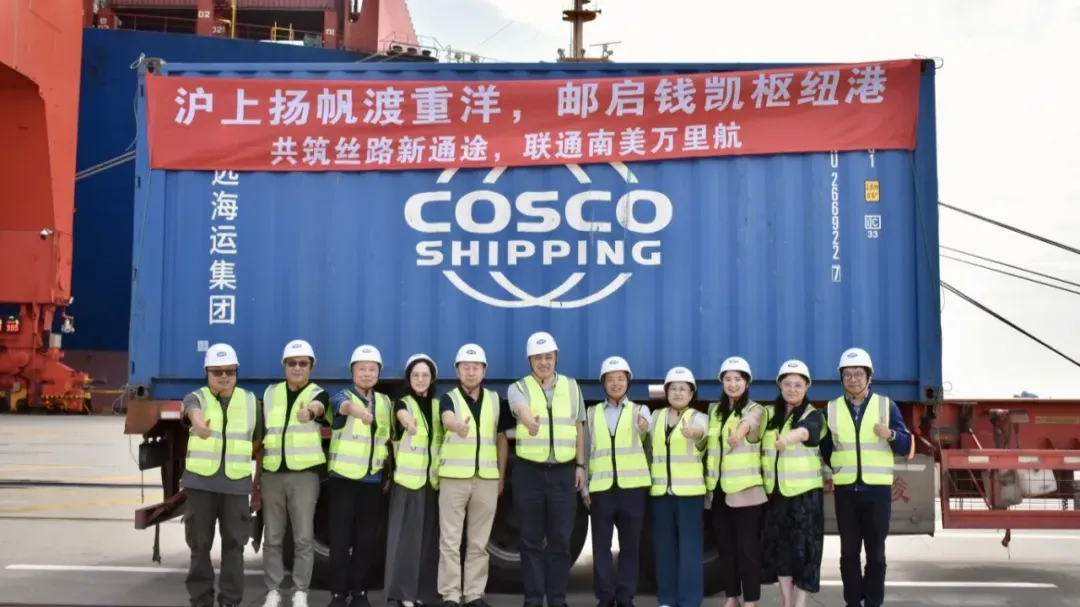
COSCO SHIPPING and Shanghai Post Launch 28-Day Postal Sea Route to Peru via Chancay
 Ports & Terminals
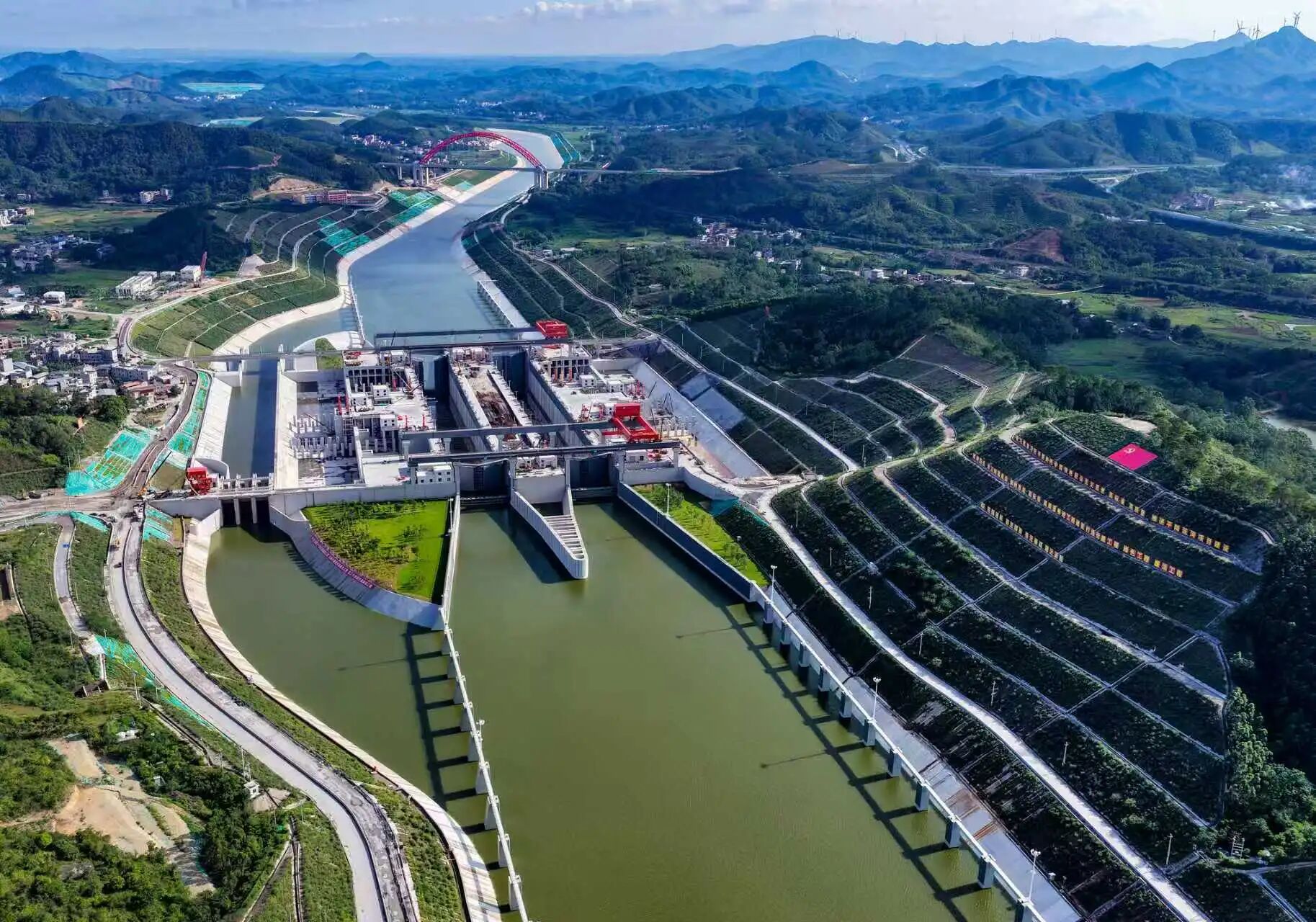
Pinglu Canal opens a new river-to-sea route for southwest China
 Ports & Terminals
China’s $10.7bn Pinglu Canal to Open Sept. 16, Cutting Southwest–ASEAN Shipping Route by 560 km
 Ports & Terminals
US Fees on Chinese-Built Ships May Be Delayed Until January, Pending USTR Action
 Ports & Terminals
Northern Europe Port Strikes Add New Pressure to Asia–Europe Container Schedules
 Ports & Terminals
Shanghai-Ningbo Delays Stretch to 11 Days as Typhoon Backlog Spills Into Liner Networks
 Ports & Terminals
Container Schedule Reliability Slumps to 56.4% as Port Congestion Spreads
 Ports & Terminals
Hormuz Toll Debate Tests the Rules Governing the World’s Strategic Straits
 Ports & Terminals
Record $5.3 Million Panama Canal Bid: SK Gas Secures Transit Slot for G.SPIRIT
 Ports & Terminals