


185 Ships and Counting: How Union Maritime Is Building Its Next Fleet in China

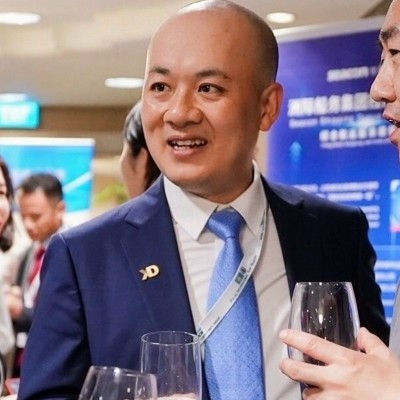
From West African oil trades to a 185-vessel fleet, Union Maritime is entering a new phase of expansion — with China at the centre of its newbuilding, financing and investment strategy.
Union Maritime is accelerating one of the most ambitious fleet expansion programmes among privately owned shipping companies, with China emerging as the most important shipbuilding base for its next generation of vessels.
At a recent Union Maritime China Investor Day, founder and CEO Laurent Cadji outlined the company’s development over the past two decades, its current fleet expansion programme, and a capital strategy built around co-investment, sale-and-leaseback transactions and long-term charter structures.
According to company materials, Union Maritime’s total fleet stood at 185 vessels as of 1 September 2026, comprising 106 vessels already in operation and 79 newbuildings yet to be delivered. Of these, the company identified 48 newbuildings currently placed at 10 Chinese shipyards, with deliveries scheduled between 2026 and 2030.
The scale of the programme is striking, but the more important story is how Union Maritime has built a business capable of supporting that level of expansion. What began in 2006 with a single vessel serving African oil trades has developed into a diversified international shipping platform spanning tankers, dry bulk, gas shipping and offshore-related activities.
And China is increasingly central not only to where the ships are built, but also to how they are financed and ultimately owned.
From oil trader to shipowner
Before establishing Union Maritime, Cadji worked across both finance and commodity trading. His early career included corporate finance at Credit Suisse, followed by oil trading at Morgan Stanley.
The origin of Union Maritime came from a trip to Nigeria in 2006, where Cadji was examining a long-term diesel supply opportunity. The visit exposed an inefficiency in the local shipping and logistics market and eventually led to the creation of Union Maritime with backing from his family.
The company started with one vessel supporting African trading activity. An initial shareholder loan of about $11.7 million was fully repaid by 2008.
That early phase established a pattern that would remain central to Union Maritime’s strategy: the company did not view ships purely as transportation assets. It treated them as part of a broader cargo and logistics system, combining freight exposure, asset investment and local operating capabilities.
Between 2009 and 2012, Union Maritime sold older tankers at attractive premiums while continuing to expand its commercial business. Its fleet subsequently grew to 24 vessels, while acquisitions of internationally trading tankers allowed the company to move beyond its original West African focus.
As the business expanded, Union Maritime began taking positions across different vessel classes and shipping cycles. It entered dry bulk through counter-cyclical investments and later moved into Aframax tankers when asset values offered attractive entry points. Its fleet subsequently grew through several stages, first to around 56 vessels and then to 69, creating a portfolio still centred on tankers but increasingly diversified across other segments.
Alongside the ships themselves, Union Maritime deepened its operating infrastructure in West Africa. The company developed businesses including Top Fenders, focused on ship-to-ship transfer operations; TMS, providing agency services; and Goodwork Crewing Services, supporting crewing requirements.
These businesses allowed Union Maritime to provide customers with something broader than freight capacity.
For an oil major or commodity trader, a cargo movement into West Africa can involve the deep-sea vessel, local feedering, ship-to-ship transfer, port agency, security and final delivery arrangements. Union Maritime’s model has increasingly been to organise several of those functions within one commercial platform.
That capability remains important to its profitability.
Two decades without an annual loss
Union Maritime says it has not recorded an annual loss since its establishment in 2006.
The company attributes much of that record to its ability to secure cargo, maintain long-standing customer relationships and capture additional value across the logistics chain.
In a weak shipping market, the problem for a shipowner is not simply lower freight rates. Vessel utilisation can deteriorate, waiting time can increase and cargo visibility can disappear. Union Maritime’s long-standing relationships with oil companies and traders, particularly in West Africa, have given it a degree of commercial continuity that a purely spot-market owner may not have.
The company has used its BP-related business as one example of this model. Rather than providing only the ocean transportation leg from Europe to Africa, Union Maritime can structure an integrated quotation incorporating the mother vessel, ship-to-ship transfer, smaller vessels, terminal delivery, agency arrangements and security.
For the customer, that reduces the need to coordinate multiple counterparties. For Union Maritime, it creates additional revenue streams around the transportation itself and increases the depth of the commercial relationship.
The company is now applying similar logistics concepts in other regions, including South America.
Its reported financial performance illustrates how strongly shipping market conditions can amplify the economics of that operating base. Union Maritime disclosed net profit of only about $0.92 million in 2018 and around $2.45 million in 2021. As the tanker market strengthened, net profit rose sharply to approximately $150 million in 2022, $263 million in 2023 and $198 million in 2024.
The stronger earnings period also created the financial capacity for a much larger fleet renewal programme.
A 79-vessel newbuilding pipeline
Since 2023, Union Maritime has accelerated both fleet renewal and fleet expansion. Older vessels have been sold into stronger asset markets while a new generation of ships has been ordered in China, Japan, South Korea and elsewhere in Asia.
The result is a current orderbook of 79 vessels.
Tankers remain the core of the fleet, but the composition of the orderbook shows that Union Maritime is broadening its exposure.
The company has expanded its dry bulk portfolio with modern Newcastlemax, Kamsarmax and other bulk carriers, arguing that newer vessels can offer both superior fuel efficiency and more attractive long-term asset economics.
Gas shipping is also returning to the portfolio.
Union Maritime sees growing LPG demand in West Africa and South America, while a number of its existing energy customers also require gas transportation capacity. That creates an opportunity to extend existing cargo and customer relationships from refined products into LPG and other liquefied gas trades.
In this sense, diversification is not simply an attempt to own more vessel types. The company is trying to build new shipping segments around cargo flows and counterparties it already understands.
Growth without owning everything
A key feature of Union Maritime’s strategy is that fleet growth does not depend on owning every vessel directly.
Within the broader 185-vessel fleet structure presented by the company, 94 vessels are owned and 91 are chartered, giving the business an unusually balanced combination of asset ownership and operating control.
That structure gives Union Maritime flexibility in allocating capital.
One important model is co-investment.
Under these arrangements, Union Maritime and external investors jointly provide equity for a vessel project. Union Maritime typically contributes the investment opportunity, shipyard relationships, technical and commercial management capabilities and access to cargo, while financial partners contribute part of the capital.
According to company figures, Union Maritime has attracted more than $481 million of external co-investment capital over roughly the past decade, involving close to 90 vessels.
Its current joint-investment portfolio includes 17 operating vessels and 21 newbuildings, while completed historical projects have generated a reported combined internal rate of return of approximately 35.24%.
Another model is sale and leaseback.
This structure allows Union Maritime to monetise a vessel while continuing to operate it. When asset values reach an attractive level, the company can sell a ship to an investor or leasing institution and charter it back under a long-term time charter or bareboat arrangement.
The buyer gains ownership of the physical asset and contractual cash flows. Union Maritime releases capital while maintaining commercial control of the vessel and its customer employment.
In one MR newbuilding example presented by the company, a Wuhu-built vessel was illustrated at a sale price of approximately $53 million, followed by a five-year leaseback at about $22,000 per day. The figures were presented as an example of transaction economics rather than final terms for a specific future deal.
The company is also open to structures in which an investor orders and owns the vessel directly, with Union Maritime committing to a long-term charter at the newbuilding contract stage.
These structures allow Union Maritime to expand the fleet it operates faster than would be possible through balance-sheet ownership alone.
China becomes the centre of the newbuilding programme
China has become the largest shipbuilding base for Union Maritime’s current expansion.
According to the company’s China Investor Day materials, 48 newbuildings are placed across 10 Chinese shipyards, covering projects in Anhui, Fujian, Shandong, Jiangsu and Liaoning.
The largest single relationship is with Wuhu Shipyard, which is responsible for 18 vessels: eight approximately 50,000-dwt MR tankers, six approximately 211,000-dwt Newcastlemax bulk carriers, and four 18,500-dwt IMO II chemical/product tankers.
A further eight 113,600-dwt LR2 tankers are being built within the Xiamen Shipbuilding/Fujian shipbuilding system, while Penglai Jinglu Shipyard is building seven approximately 49,200-dwt MR tankers.
The remaining Chinese programme is spread across yards including Dalian Shipbuilding Offshore, COSCO Shipping Heavy Industry, New Times Shipbuilding, Jingjiang Nanyang Shipbuilding, Yangzi-Mitsui Shipbuilding, Hengli Heavy Industry and Dalian Shipbuilding Industry.
The ship types range from chemical and product tankers to LR2s, Kamsarmaxes and large LPG carriers.
Two 88,000-cbm large gas carriers associated with the Yangzijiang shipbuilding system are scheduled for delivery between 2029 and 2030, further expanding Union Maritime’s exposure to the gas carrier segment.
The choice of China is based on more than pricing.
Union Maritime has increasingly emphasised Chinese shipyards’ ability to deliver modern tonnage with competitive fuel performance, advanced efficiency technologies and increasingly sophisticated vessel designs. For large dry bulk vessels and product tankers in particular, China now provides both the production capacity and technical capability required for a programme of this scale.
Wind power becomes part of the fleet strategy
The fleet renewal programme also includes a significant focus on energy efficiency.
Union Maritime has pursued multiple decarbonisation pathways, including alternative-fuel capability, efficiency technologies and wind-assisted propulsion.
According to its fleet planning figures, 23 vessels are either fitted with wind-assisted propulsion systems or prepared for future installation. That figure should not be interpreted as 23 vessels already sailing with operational sails; it includes both fitted systems and wind-ready vessels.
The company has worked with BAR Technologies, Norsepower and Anemoi Marine Technologies, giving it exposure to both rigid wing sails and rotor sail technologies.
One of the most visible examples is the Brands Hatch, a large tanker built by Shanghai Waigaoqiao Shipbuilding and equipped with BAR Technologies’ WindWings.
Union Maritime has previously described wind not simply as an environmental add-on, but as an additional source of propulsion energy capable of reducing fuel consumption, emissions and exposure to future carbon costs.
Its willingness to test different systems across multiple ship types indicates that wind assistance is being treated as part of fleet economics rather than as a standalone demonstration project.
Chinese capital is following Chinese shipbuilding
Union Maritime’s China strategy is now moving beyond the shipyards.
Company materials show financing discussions and transactions involving institutions within the China Merchants Bank system, Bank of China leasing businesses, Suyin Financial Leasing and Industrial and Commercial Bank of China, among others.
The projects cover chemical tankers, MR tankers, LR2s and Newcastlemax bulk carriers.
Some transactions have already been signed, while others remain at term-sheet, due-diligence or negotiation stage.
This points toward a broader model.
A vessel may be built at a Chinese shipyard, financed by a Chinese bank or leasing company, partly owned by external investors, and commercially and technically operated by Union Maritime.
For Union Maritime, that reduces the amount of equity required to control a much larger operating fleet. For Chinese financial institutions and investors, it provides exposure to internationally trading shipping assets backed by an experienced operator with established cargo relationships.
For Chinese shipyards, it strengthens the relationship with a repeat customer capable of placing orders across several vessel segments.
Union Maritime has made clear that it wants a larger share of its future financing and co-investment capital to come from China.
That could make the next phase of its expansion materially different from a conventional shipbuilding programme. The relationship with China is developing from a procurement relationship into a broader combination of shipbuilding, asset finance, leasing, co-investment and long-term vessel operation.
From one ship to 185
Union Maritime’s growth over the past 20 years reflects a particular model of private shipping.
It has combined cargo relationships with asset trading, local logistics capabilities with international expansion, and direct ownership with chartering and third-party capital.
The current fleet of 185 vessels therefore represents more than simple fleet accumulation.
It is the result of a structure in which Union Maritime can originate a vessel investment, arrange the shipyard slot, introduce equity or leasing partners, manage the ship technically, employ it commercially and connect it directly to cargo.
China is becoming increasingly important at almost every stage of that chain.
With 79 vessels still to be delivered and 48 projects highlighted across 10 Chinese shipyards, Union Maritime’s next phase of growth will be closely linked to Chinese shipbuilding capacity and, increasingly, Chinese capital.
For a company that began with a single vessel supporting African oil trades, that represents a substantial transformation: from regional tanker operator to an international shipping and asset platform — with China now firmly embedded in its expansion strategy.

READ MORE
 Shipbuilding
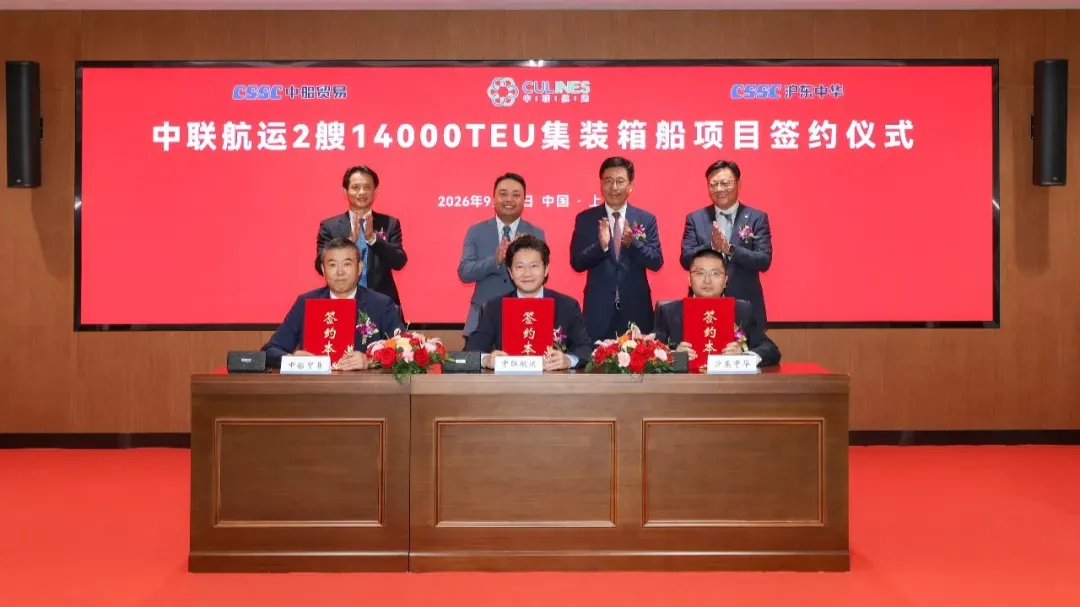
CULines Steps Up Fleet Expansion with First 14,000 TEU Newbuildings
 Shipbuilding
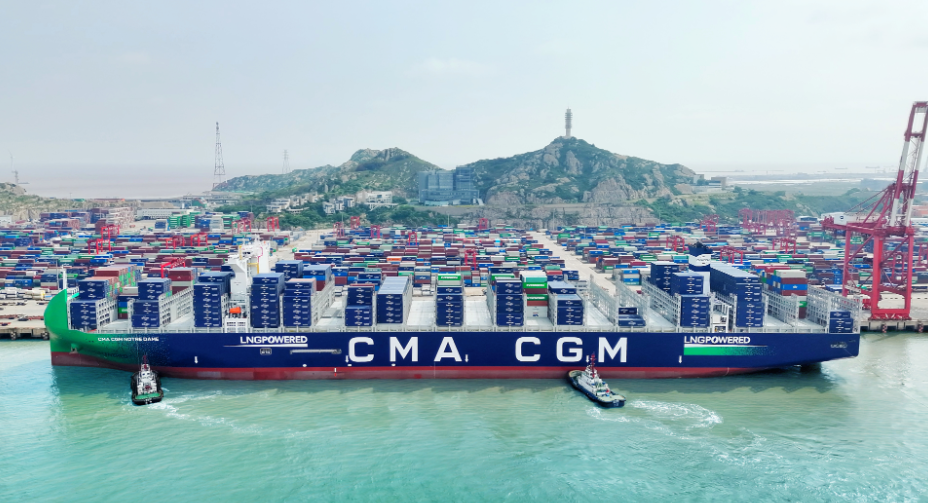
CMA CGM linked to $3bn Yangzijiang megamax programme
 Shipbuilding
Advantage Tankers adds MR2 quartet as product tanker orderbook builds
 Shipbuilding
Ren Yuanlin: Shipbuilding Still Has 8–10 Years of Strong Growth Ahead
 Shipbuilding
Seven Months, $78 Million: George Procopiou Reaps Windfall on Hengli-Built VLCC
 Shipbuilding
12 24,000TEU Ultra-large Container Ships Awarded to Yangzijiang Shipbuilding; Private Chinese Shipbuilder Lands US$3 Billion Mega Deal
 Shipbuilding
Wealth Holdings builds three-tier MPP fleet with up to 18 China newbuilds
 Shipbuilding
Schoeller Returns to Chengxi for Four More MRs as China Gains Ground on Korea
 Shipbuilding
China‘s Dajin Builds Its Own Fleet as Shipbuilding Orderbook Reaches RMB 12 Billion
 Shipbuilding