


Ren Yuanlin: Shipbuilding Still Has 8–10 Years of Strong Growth Ahead


“Shipbuilding will have no problem through 2035.”
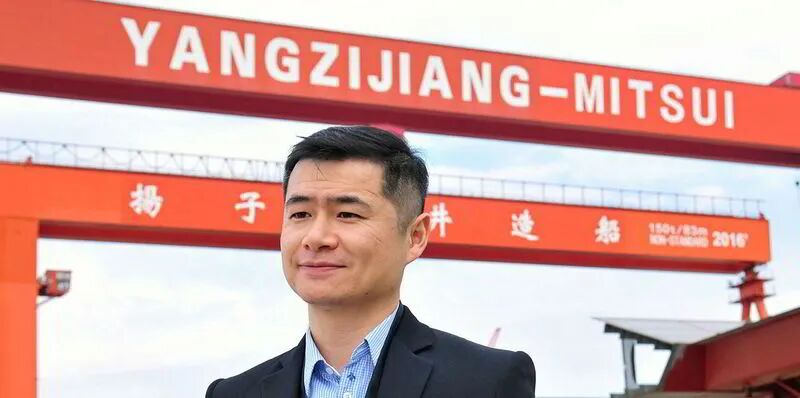
That was the assessment recently offered by Ren Yuanlin, founder of Yangzijiang Shipbuilding Group and one of the most influential figures in China’s private shipbuilding industry.
Speaking on 4 September at a business forum in Nantong, Ren — who has spent nearly five decades in shipbuilding and has lived through several complete shipping and shipbuilding cycles — made his long-term view unusually explicit:
The global shipbuilding industry could still have another eight to ten years of strong growth ahead.
The remark deserves to be viewed against the backdrop of today’s shipbuilding market.
Global ordering activity is already running at extremely high levels. According to Clarksons Research, 1,778 vessels were contracted globally in the first seven months of 2026, representing 50.9 million CGT and 159.9 million dwt. The pace of newbuilding investment has approached the historic highs seen in 2007 and is roughly twice the average level recorded over the past decade.
China’s performance has been even more striking.
In the first half of 2026, Chinese shipyards completed 36.5 million dwt of vessels, secured 121.06 million dwt of new orders and held an orderbook of 363.25 million dwt. On a deadweight basis, those figures represented 62.2%, 82.3% and 71.2% of the global market respectively.
By the end of August, measured in compensated gross tonnage — a metric that better reflects the complexity of ship construction — Chinese yards had also secured around 76% of global new orders.
This raises an obvious question.
With shipyards already operating at high utilisation rates and delivery slots at many leading Chinese builders stretching into 2029 and 2030, where exactly are we in the current cycle?
Are we approaching the top?
Or are we still somewhere in the middle of a much longer structural upcycle?
Ren clearly believes the latter.
More importantly, his view of this cycle is fundamentally different from the shipbuilding boom that preceded the 2008 financial crisis.
From a “Shipbuilding Summer” to 2035
Ren had already outlined his thinking in greater detail in March this year.
In an interview with Chinese financial media, he said the conventional shipbuilding cycle generally lasts between five and eight years. Having spent almost 50 years in the industry, he described the current market as one of the strongest shipbuilding cycles he had ever experienced.
But he also pointed to an important difference.
At the time, the Baltic Dry Index was only around 2,000 points — nowhere near the extreme levels above 12,000 recorded in 2008 — yet global shipbuilding activity remained exceptionally strong.
His conclusion was that the industry was still in what he called a “shipbuilding summer.”
The strength of the market, in his view, was no longer being driven simply by freight rates. Instead, it was being supported by a combination of geopolitical disruption, ageing fleets, the transition toward lower-carbon shipping and the increasing size and technical sophistication of modern vessels.
At that stage, Ren said it was difficult to predict when the “winter” would come. Yangzijiang Shipbuilding’s own orderbook was already extending towards 2030, while delivery slots at major yards remained scarce.
Six months later, his language became even more bullish.
In Nantong, Ren described the current environment as an “eight-to-ten-year period of strong growth” and said the shipbuilding market should remain healthy through 2035.
His reasoning can be broken down into three broad drivers.
First, a significant portion of the global merchant fleet will need to be replaced over the next 15 years.
Second, rising electricity and energy demand — including demand associated with artificial intelligence and data centres — will continue to support energy transportation.
Third, geopolitical conflict is increasing voyage distances, reducing fleet efficiency and creating additional demand for certain vessel classes, particularly large tankers.
Put together, Ren is effectively arguing that the present cycle is no longer a conventional five-to-eight-year shipbuilding upswing.
He sees it as a longer structural cycle.
The First Force: A Global Fleet Replacement Cycle
The most durable source of shipbuilding demand is not speculative fleet expansion.
It is replacement.
According to Clarksons, the global merchant fleet now consists of more than 120,000 vessels with a combined capacity of around 2.5 billion dwt. On a gross tonnage weighted basis, the average age of the fleet is around 13 years, while approximately 38% of existing fleet capacity is now more than 15 years old.
The combined value of the active fleet and vessels currently on order is estimated at around $2.1 trillion.
This creates a structural issue for the shipping industry.
A large number of vessels delivered during the shipbuilding supercycle of the mid-2000s and early 2010s are now moving into the middle and later stages of their commercial lives.
Ren puts the scale of that replacement requirement even more starkly.
He estimates that around 46,000 vessels will need to be renewed or phased out over the next 15 years.
A simple average would imply more than 3,000 potential replacement vessels per year.
Of course, ships are not scrapped according to a fixed age schedule. Freight markets, secondhand values, regulation and operating costs all influence how long individual vessels remain in service.
But the scale of the number is significant.
It suggests that future shipbuilding demand will increasingly be supported not only by fleet expansion, but also by a growing wave of replacement demand.
That is one of the key differences between the current cycle and the boom before 2008.
The previous supercycle was heavily driven by rapid trade growth, soaring freight rates and aggressive expectations for continued fleet expansion.
Today, a much larger share of ordering activity is serving two purposes at the same time:
expansion and replacement.
That makes the underlying demand base more resilient, even if annual newbuilding orders fluctuate.
The Second Force: Decarbonisation Is Shortening the Economic Life of Ships
In the past, whether a vessel was considered old was largely a question of physical age.
That is no longer enough.
A 15- or even 20-year-old ship can remain operational if it is mechanically sound and freight rates are high enough.
But decarbonisation is changing the economics.
IMO carbon regulations, the EU Emissions Trading System, FuelEU Maritime and shipowners’ own decarbonisation strategies are steadily reshaping vessel values.
Some ships are now at risk of becoming commercially obsolete before they become technically obsolete.
Fuel efficiency, carbon intensity, alternative-fuel readiness and future compliance costs are becoming increasingly important in determining whether a vessel remains competitive.
Clarksons data show that around 47% of current global orderbook capacity is now alternative-fuel capable.
DNV has also reported that although overall newbuilding orders in 2025 declined from the exceptionally strong levels seen in 2024, alternative-fuel vessels still accounted for around 38% of the market by gross tonnage.
Container shipping has been particularly active in this transition.
Yangzijiang Shipbuilding’s own orderbook provides a useful example.
At the end of 2025, the group had 245 vessels on order worth approximately $22.4 billion, with deliveries stretching from 2026 to 2030.
Green vessels accounted for around 71% of the total orderbook value.
Fleet renewal, therefore, is no longer driven solely by age.
Some vessels may not yet have reached traditional scrapping age, but could still lose competitiveness because of fuel consumption, carbon costs or a lack of alternative-fuel capability.
That creates another form of demand:
technological replacement.
If the global fleet continues moving towards LNG, methanol, ammonia and other lower-carbon fuels over the next decade, the scale and duration of the replacement cycle could be significantly larger than age profiles alone would suggest.
The Third Force: The Energy Era Is Not Ending — But Energy Transport Is Changing
Ren has repeatedly mentioned one subject this year that initially seems far removed from shipbuilding:
artificial intelligence.
His reasoning is straightforward.
AI requires electricity. Electricity requires energy. Energy ultimately has to be produced and, in many cases, transported.
In March, Ren said he remained optimistic about the tanker market and argued that the growth of AI would contribute to higher energy demand.
In September, he again linked AI, electricity, energy demand and maritime transportation as part of the long-term case for shipbuilding.
This should not be interpreted too mechanically.
It does not mean that every increase in AI demand automatically produces an equivalent increase in tanker demand.
The broader point is that the global energy system is now undergoing an unusual period of simultaneous expansion and diversification.
Traditional energy sources such as oil and natural gas still support enormous volumes of seaborne trade.
At the same time, LNG, LPG, ethane, ammonia, methanol and other energy carriers are creating new maritime trade flows.
The energy transition has not yet reduced the complexity of energy shipping.
It has increased it.
And for shipbuilding, greater complexity often means more specialised vessels, higher technical requirements and greater vessel values.
This helps explain why the current cycle is not confined to bulk carriers and containerships.
Strong ordering activity has extended into VLCCs, product tankers, LNG carriers, LPG carriers, VLACs and VLECs.
Yangzijiang Shipbuilding’s 245-vessel orderbook at the end of 2025 already reflected this diversification, including 126 containerships, 46 bulk carriers, 26 gas carriers and 47 tankers.
This broad-based demand across multiple vessel sectors is another reason why Ren appears comfortable extending his outlook further into the future.
The Fourth Force: Geopolitics Is Creating Demand for “Effective Capacity”
Another increasingly important factor in the 2026 shipping market has been geopolitical disruption.
Ren specifically cited conflicts such as the US-Iran confrontation as factors reducing route efficiency and increasing demand for large tankers.
Recent market developments support that argument.
Clarksons noted in its review of the first half of 2026 that the Strait of Hormuz crisis had become one of the defining developments for shipping markets.
Rerouting, longer voyages and supply-chain disruption helped offset weaker trade volumes in some sectors, while the ClarkSea Index rose 61% year-on-year during the first half.
At the same time, global VLCC newbuilding orders exceeded 150 vessels in the first six months of the year.
This highlights an increasingly important distinction in shipping:
nominal fleet capacity is not the same as effective fleet capacity.
Rerouting consumes vessel days.
Waiting consumes vessel days.
Port congestion consumes vessel days.
Sanctions can remove ships from conventional trading systems.
War risk can also change which regions owners and charterers are willing to enter.
As a result, the same volume of global trade can require more ships simply because each vessel is being used less efficiently.
This type of demand is less stable than long-term trade growth.
But it has become an important amplifier of the current shipbuilding cycle.
The Fifth Force: Shipyard Capacity Itself Has Become a Bottleneck
Strong demand does not automatically create a long shipbuilding cycle.
Supply matters just as much.
During the global shipbuilding boom of the 2000s, capacity expanded aggressively and many new yards entered the market.
After the cycle turned, years of consolidation and closures followed.
Today, global shipbuilding capacity is once again expanding, particularly in China.
But effective capacity for large, technically demanding vessels cannot be recreated overnight.
A drydock can be built.
An experienced design team, procurement network, production system, quality-control process and skilled workforce cannot.
That is why one of the most valuable assets in today’s market is no longer simply the ship itself.
It is the delivery slot.
Major Chinese shipyards are increasingly selling capacity for 2029, 2030 and beyond.
Competition is therefore shifting from a simple question of which yard can win an order to a more fundamental one:
which yard still has a commercially attractive delivery position?
Yangzijiang is a clear example.
At the end of 2025, its $22.4 billion orderbook already extended through 2030.
That means even if global new ordering slows over the next one or two years, shipyard revenue, utilisation and earnings will not necessarily fall at the same pace.
A vessel ordered today may not be delivered until 2029 or 2030.
The inherently long transmission cycle between contracting and delivery is itself extending the current shipbuilding upcycle.
China Could Be the Biggest Winner of the Next 8–10 Years
Ren has made another bold prediction this year.
In March, he said Chinese shipyards could eventually account for more than 70% of the global shipbuilding market.
Six months later, that forecast looks much less radical.
In the first half of 2026, China accounted for 82.3% of global new orders by deadweight tonnage and 71.2% of the global orderbook.
Measured in CGT, Chinese yards also secured around 76% of global new orders during the first eight months of the year.
China also accounted for more than 68% of global new orders for green vessels in the first half.
Ren’s explanation for China’s competitiveness goes well beyond labour costs.
Modern shipbuilding depends on steel, engines, marine equipment, electrical systems, automation, design, finance, ports and dozens of related industrial sectors.
China’s advantage increasingly lies in the completeness of its industrial ecosystem, procurement scale, engineering talent, skilled labour, delivery efficiency and growing experience in higher-value vessel segments.
Once this ecosystem reaches critical mass, it becomes self-reinforcing.
More orders support a stronger supply chain.
A stronger supply chain improves cost and delivery performance.
More vessel deliveries accelerate learning curves.
And a larger international customer base encourages classification societies, equipment suppliers and financial institutions to allocate even more resources around Chinese shipyards.
From this perspective, Ren’s “eight-to-ten-year high-growth period” carries an additional implication.
Even if the global shipbuilding market experiences cyclical fluctuations, Chinese yards may still be able to offset part of that volatility by continuing to increase market share.
But Eight to Ten Strong Years Does Not Mean Ten Years of Record Orders
This distinction is important.
A structurally strong market does not mean annual ordering activity will remain at record levels every year.
Clarksons data indicate that the global newbuilding orderbook already represents around 19% of the existing fleet.
The ratio is much higher in some sectors.
The containership orderbook is close to 40% of the existing fleet, while LNG carrier orders are approaching 50%.
By contrast, crude tanker and dry bulk orderbooks remain significantly lower.
That almost guarantees vessel-sector rotation over the next several years.
Some segments will move into periods of heavy delivery and weaker ordering.
Others will enter new renewal cycles driven by vessel age, freight markets, geopolitical disruption or fuel technology.
Containership ordering may cool.
Tankers may take over.
Bulkers may eventually enter a stronger replacement cycle.
Alternative-fuel vessels may continue growing even as conventional-fuel contracting declines.
Therefore, Ren’s forecast should not be interpreted as meaning that global shipbuilding orders will remain at 2026 levels for the next decade.
A more accurate interpretation is this:
the long-term floor under global shipbuilding demand is being raised by ageing fleets, decarbonisation, energy transportation, geopolitical disruption and limited effective shipyard capacity.
There will still be cycles.
Newbuilding prices will still move.
Orders will still rise and fall.
Some sectors will experience oversupply.
But the industry may be less likely to return to the prolonged, broad-based weakness seen during parts of the 2010s.
Why Is Ren Yuanlin Willing to Look as Far as 2035?
By this point, the logic becomes clearer.
Ren is not basing his view on next year’s Baltic Dry Index.
Nor is he simply looking at how much a particular vessel can earn today.
He is looking at the ships the world will need over the next decade.
More than 120,000 merchant vessels are getting older.
Tens of thousands will enter replacement windows over the next 10 to 15 years.
Environmental rules are reducing the economic life of some existing ships.
Global energy transportation is becoming more complex.
Geopolitical disruption is consuming effective fleet capacity.
And the number of shipyards capable of efficiently constructing sophisticated oceangoing vessels remains limited.
At the same time, shipyards are already locking in production several years ahead.
Yangzijiang itself illustrates the argument.
Its 245-vessel, $22.4 billion orderbook extends through 2030, with green vessels accounting for 71% of orderbook value.
Meanwhile, Yangzijiang Maritime — the maritime investment platform developed after Ren stepped back from the day-to-day management of Yangzijiang Shipbuilding — has been investing heavily in tankers, bulkers and other newbuilding assets.
In April alone, it committed to eight 319,000-dwt VLCC newbuildings scheduled for delivery between 2028 and 2030.
So when someone who has spent nearly half a century building ships says that the shipbuilding market “should have no problem through 2035,” the statement is more than simple optimism.
It reflects a particular way of reading an industrial cycle:
look first at fleet age, then at energy and trade flows; look at how many ships owners will need to replace, then at how much effective shipbuilding capacity the world actually has; and only then look at today’s freight rates and order volumes.
Viewed this way, Ren Yuanlin’s “eight-to-ten-year high-growth period” does not necessarily mean the world is entering a decade-long shipbuilding frenzy.
It may instead mean that global shipping has entered a prolonged era of fleet renewal — one defined by vessel replacement, fuel transition, changing trade patterns and constant rotation between ship types.
And Chinese shipbuilding is positioned at the centre of it.

READ MORE
 Shipbuilding
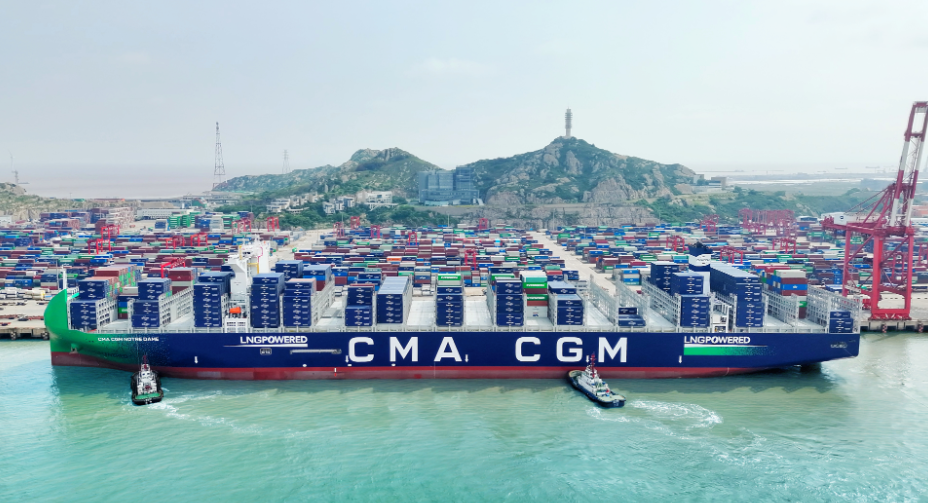
CMA CGM linked to $3bn Yangzijiang megamax programme
 Shipbuilding
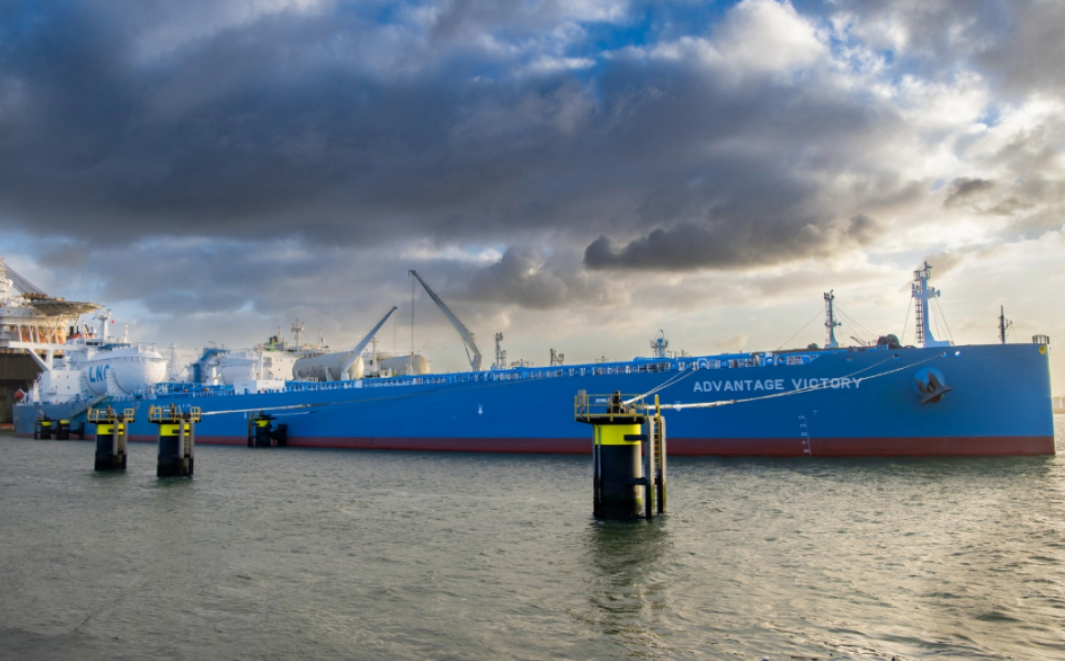
Advantage Tankers adds MR2 quartet as product tanker orderbook builds
 Shipbuilding
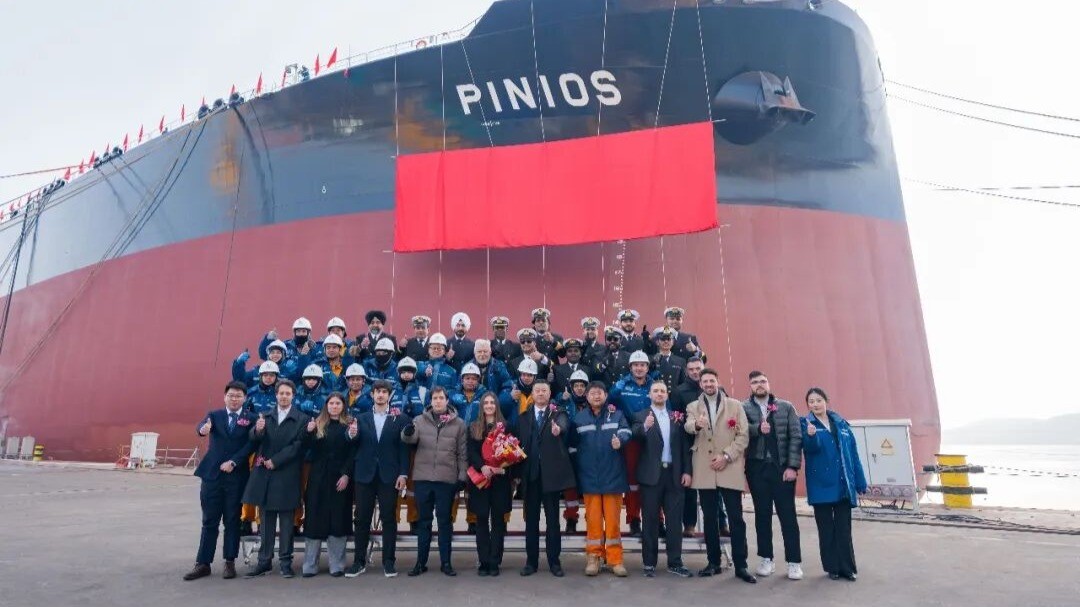
Seven Months, $78 Million: George Procopiou Reaps Windfall on Hengli-Built VLCC
 Shipbuilding
CULines Steps Up Fleet Expansion with First 14,000 TEU Newbuildings
 Shipbuilding
12 24,000TEU Ultra-large Container Ships Awarded to Yangzijiang Shipbuilding; Private Chinese Shipbuilder Lands US$3 Billion Mega Deal
 Shipbuilding
Wealth Holdings builds three-tier MPP fleet with up to 18 China newbuilds
 Shipbuilding
Schoeller Returns to Chengxi for Four More MRs as China Gains Ground on Korea
 Shipbuilding
China‘s Dajin Builds Its Own Fleet as Shipbuilding Orderbook Reaches RMB 12 Billion
 Shipbuilding
H-Line Ends Five-Year Bulker Ordering Hiatus With POSCO-Linked LNG Pair at New Times
 Shipbuilding