


Houthis Seize Mocha as Bab el-Mandeb Risks Rise — but Signal “Safe Passage” for Non-Saudi Shipping


The capture of Mocha, roughly 80 km from the Bab el-Mandeb Strait, pushes Houthi-controlled territory further south along Yemen’s Red Sea coast. Yet at the same time, the Houthi-controlled Humanitarian Operations Coordination Center has moved to reassure the maritime industry that navigation in international waters of the Red Sea remains safe for all vessels except those covered by its existing ban on Saudi shipping. With Hormuz already severely disrupted and Saudi Arabia increasing crude exports via Yanbu, the strategic importance of the Red Sea is rising sharply.

The war in Yemen is once again becoming a major variable for global shipping.
On September 10, Houthi forces seized the Red Sea port city of Mokha, or Mocha, in western Yemen. The development was confirmed by multiple parties, including Houthi representatives, forces aligned with Yemen’s internationally recognised government, and local residents.
Mocha lies around 80 km from the Bab el-Mandeb Strait, the narrow waterway connecting the Red Sea with the Gulf of Aden. Under normal conditions, roughly 12% of global merchandise trade passes through this route.
Following the loss of Mocha, government-aligned forces reportedly continued retreating south towards Dhubab, while Houthi forces also pushed operations towards the Hanish Islands.
The geography matters.
Dhubab sits directly opposite the Bab el-Mandeb area, while Perim, also known as Mayyun Island, lies inside the strait itself. Any sustained Houthi advance further south would therefore bring its forces closer to one of the world’s most strategically important maritime chokepoints.
Yet while the military picture has deteriorated, the Houthis are simultaneously sending a very different message to the shipping industry.
On September 10, Xinde Marine News received an email from the Houthi-controlled Humanitarian Operations Coordination Center, or HOCC. The message was sent by Compliance Manager Ahmed Salah under the subject:
“Safe of Maritime Navigation in the International Waters of the Red Sea, Except for Saudi Vessels.”
The email stated that the “Yemeni Armed Forces” continue to regard navigation in the international waters of the Red Sea as safe, with the exception of Saudi vessels already covered by a previously announced ban.
It also stressed that there had been “no further developments in this regard.”
That clarification is significant.
At least for now, the escalation on land has not been accompanied by an announced expansion of Houthi targeting against international commercial shipping.
From long-range strikes to territorial control
Mocha’s importance should not be assessed simply by its port throughput.
The port had already suffered serious disruption from previous missile attacks. The more important development is that Houthi forces have now extended their territorial control further south along Yemen’s Red Sea coast.
The military axis has become increasingly clear.
The Houthis have long controlled Hodeidah and large parts of northern Yemen. As fighting intensified, their forces pushed towards Hays and Mocha and began operations around the Hanish Islands. Following the fall of Mocha, government-aligned forces moved further south towards Dhubab.
This shift has the potential to alter the military geography of the southern Red Sea.
The closer Houthi forces move towards Bab el-Mandeb, the greater their potential ability to deploy surveillance systems, drones, unmanned surface vessels, missiles and other shore-based assets from positions nearer the shipping lanes.
The Hanish Islands are particularly important. Their location in the southern Red Sea makes them potentially valuable for maritime surveillance and targeting.
However, one distinction remains essential.
Available reporting indicates that Houthi forces have advanced towards and attacked the Hanish Islands, but there is not yet sufficient public confirmation that they have fully captured the island group. Dhubab and Perim also cannot currently be described as Houthi-controlled territory.
It would therefore be premature to say that the Houthis have “taken control of Bab el-Mandeb”.
A deliberate message to the maritime industry
The timing of the HOCC email is particularly noteworthy.
While Houthi forces were moving closer to Bab el-Mandeb, the organisation was actively communicating with international news agencies, maritime media and shipping information platforms to reinforce the limits of its current maritime policy.
The message was clear: Saudi vessels remain prohibited, while other international commercial shipping is being told that it may continue to transit.
This is consistent with HOCC’s existing “safe transit” framework, under which vessels outside Houthi restrictions are told they may sail through the Red Sea, Bab el-Mandeb, the Gulf of Aden and adjoining waters.

The result is an increasingly unusual risk structure.
Houthi military control is moving closer to Bab el-Mandeb, while the group is simultaneously attempting to prevent the shipping market from interpreting that advance as the beginning of a general blockade of international trade.
There is a clear strategic logic behind this.
The Houthis have already announced restrictions on Saudi-linked shipping and have targeted Saudi vessels and energy infrastructure. Expanding that campaign to international container ships, tankers, bulk carriers and car carriers would risk driving global shipping back into the broad-scale rerouting seen after late 2023.
It would also increase the likelihood of direct confrontation with a much wider group of states.
By maintaining a publicly declared “Saudi vessels only” restriction, the Houthis can continue applying economic and strategic pressure on Saudi Arabia while attempting to avoid driving all international shipping away from the Red Sea.
In this sense, the HOCC communication is not merely a navigation notice. It is also an exercise in risk management and market signalling.
Hormuz disruption makes Bab el-Mandeb even more important
The timing of the Mocha offensive is especially sensitive because the Strait of Hormuz is already suffering severe disruption.
Shipping data cited by Reuters showed that only seven publicly trackable commercial vessels transited Hormuz on September 9, compared with a revised 12 the previous day and an average of around 14 per day over the preceding 10 days.
Four vessels sailed out and three entered.
One fully laden VLCC, FINLAND PROSPERITY, reportedly exited the strait carrying close to 2 million barrels of crude, but no LNG carrier was publicly observed leaving Hormuz that day.
By comparison, around 28 commercial vessels reportedly transited Bab el-Mandeb during the same period.
The disruption at Hormuz has increased Saudi Arabia’s reliance on its East-West pipeline system, which transports crude across the Arabian Peninsula to the Red Sea export terminal at Yanbu.
Recent shipping data indicate a clear rise in crude and condensate loadings from Yanbu. Although different data providers use different methodologies, they point in the same direction: Saudi Arabia is moving more export barrels through the Red Sea as an alternative to Hormuz.
That creates a difficult new configuration for global energy shipping.
On the eastern side of the Arabian Peninsula, Hormuz is under pressure from the Iran conflict.
On the western side, the Red Sea export system that helps Saudi Arabia bypass Hormuz is increasingly exposed to Houthi military pressure.
The diversion of crude from the Gulf to Yanbu therefore does not remove geopolitical risk. It shifts more cargo into another highly contested maritime corridor.
“The Houthis say it is safe” is not the same as “shipowners believe it is safe”
The HOCC communication may reduce fears of an immediate blanket closure of Bab el-Mandeb.
It does not mean major shipping companies will consider the route safe.
Commercial shipping security decisions are not based on assurances from a single armed group.
Shipowners, charterers, P&I clubs, war-risk underwriters, flag states and naval security authorities must also assess the likelihood of misidentification, collateral damage, changes in targeting criteria, shore-based military capabilities and the wider trajectory of the conflict.
This becomes especially complex in modern shipping ownership structures.
A vessel may be owned by a Greek company, technically managed from Singapore, chartered by a European trader, carrying Middle Eastern cargo and have called at a Saudi port during a previous voyage.
Within a single shipping group, different vessels may share registered owners, ISM managers, commercial operators or chartering relationships.
That makes one question particularly important:
How exactly do the Houthis define a “Saudi vessel”?
For insurers and shipowners, that definition is at least as important as the general assurance that other vessels are safe.
The distinction can be framed as two separate risk layers.
The first is declared risk — which ships the Houthis publicly say they intend to target.
The second is operational risk — whether vessels can actually be identified accurately, whether attacks may hit unintended targets, and whether the conflict could expand with little warning.
It is the second category that ultimately determines whether shipowners and insurers are prepared to expose vessels to the route.
Red Sea normalisation may be pushed back again
This is particularly important for the container shipping industry.
Since Houthi attacks on commercial shipping escalated in late 2023, large numbers of Asia-Europe services have been rerouted around the Cape of Good Hope.
The longer voyages increased sailing distances, absorbed additional vessel capacity and materially changed liner network economics.
Although some traffic later returned to the Red Sea, the main east-west liner networks have never fully returned to their pre-crisis Suez routing patterns.
The fall of Mocha therefore does not immediately create a new wave of full-scale rerouting, because a significant share of major liner operators have not yet fully normalised Red Sea transits.
Its more immediate impact is likely to be on expectations for when normalisation can occur.
Before major carriers return in force, they would typically require a sustained period of reduced attacks, lower war-risk premiums, stronger security conditions and greater political stability around the waterway.
The extension of Houthi ground control further south means that even if the group continues to promise safe passage to non-Saudi shipping, carriers will have to incorporate a broader shore-based threat into their security assessments.
The HOCC statement may therefore help prevent the market from immediately interpreting the fall of Mocha as a closure of Bab el-Mandeb.
It is much less likely to accelerate the return of major liner services to the Red Sea.
Global shipping now faces a “two-chokepoint” risk
The wider regional picture is becoming increasingly difficult for shipping.
Hormuz is one of the world’s most important oil and LNG transit routes.
Bab el-Mandeb connects the Indian Ocean, Red Sea and Suez Canal and is essential to Asia-Europe trade as well as Middle Eastern energy flows.
Historically, disruptions at one chokepoint could sometimes be partially mitigated by shifting routes or infrastructure.
Saudi crude could be moved west through the East-West pipeline to Yanbu if Hormuz became unreliable.
Red Sea traffic could be diverted around the Cape of Good Hope if Bab el-Mandeb became unsafe.
Both alternatives now carry higher costs.
As Hormuz traffic has fallen, Yanbu has become more important.
At the same time, Houthi forces are moving closer to Bab el-Mandeb.
If Red Sea risk escalates further, Saudi crude may require more complex routing arrangements, while continued Cape diversions for Asia-Europe trade would sustain higher tonne-mile demand, longer voyages and greater vessel utilisation.
This is why the capture of Mocha matters well beyond the city itself.
Bab el-Mandeb is not closed.
Commercial vessels are still transiting the strait, and the Houthis have publicly reiterated that non-Saudi shipping remains safe.
But the risk framework has clearly changed.
The next questions for the maritime industry are no longer limited to whether Houthi attacks will resume.
The market must now watch whether Houthi forces continue advancing towards Dhubab, Perim/Mayyun Island and the Bab el-Mandeb coastline, whether the definition of prohibited Saudi-linked shipping is broadened, and whether insurers and major shipping companies continue to trust Houthi assurances as military capabilities move closer to the shipping lane.
The fall of Mocha and the HOCC’s simultaneous “safe passage” message capture the contradiction at the heart of the current Red Sea situation:
military pressure is increasing, but the Houthis have so far stopped short of converting that advantage into a general blockade of international shipping.
For the global maritime industry, the most important line on the map may therefore no longer be Mocha itself.
It is the much shorter distance between the advancing front and Dhubab, Perim and Bab el-Mandeb.


READ MORE
 Safety
The accident often starts when the job feels safe
 Safety
Opinion:Why a Rapid Return to Calm in the Middle East Looks Unlikely
 Safety
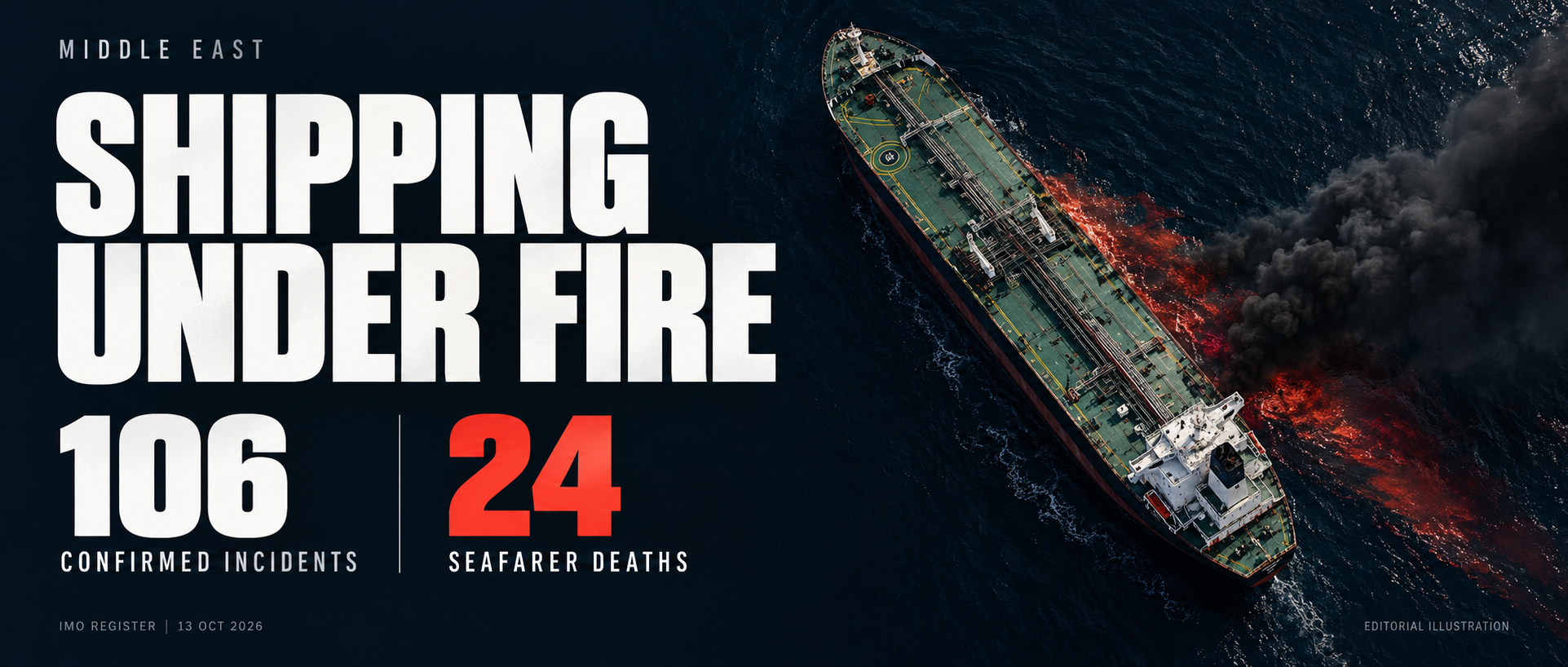
Middle East war leaves mounting toll on merchant shipping
 Safety
Alcohol‑Control for Seafarers and Key Points for PSC Inspections
 Safety
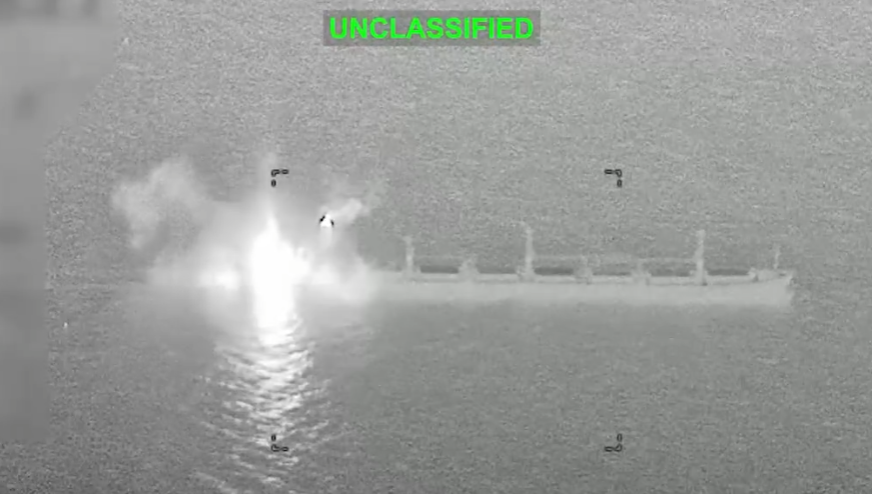
US Says It Disabled Hong Kong-Owned Bulker off Oman
 Safety
Attacked Just 42Days After Delivery: George Prokopiou’s 115,000-Dwt Tanker Hit in Hormuz
 Safety
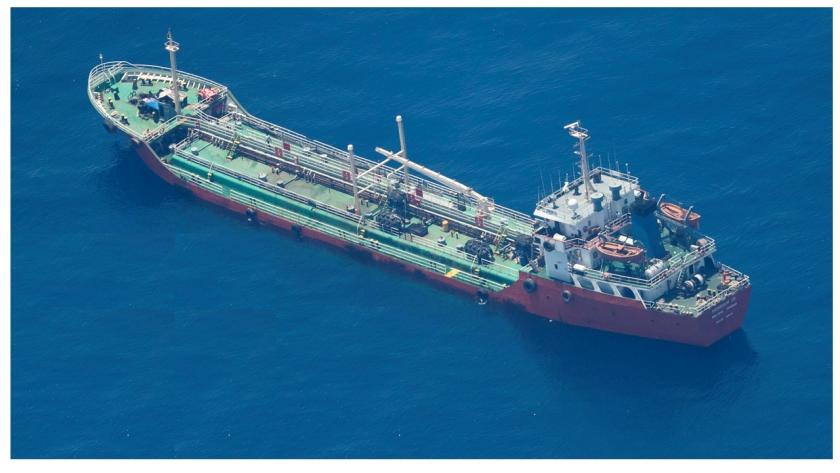
Five Seafarers Reported Dead as Puntland Retakes Hijacked Tanker Honour 25
 Safety
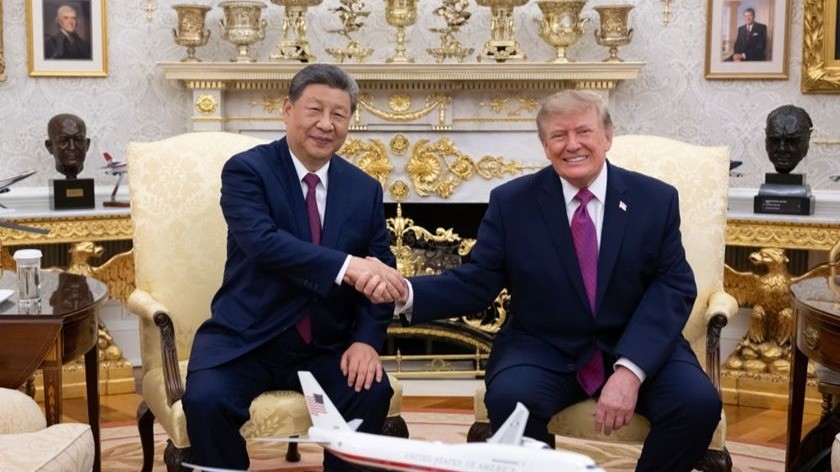
China-U.S. Consensus Highlights Free Navigation: No Country or Entity Should Impose Transit Fees on International Waterways
 Safety
1 seafarer killed, Fatal attack in the Strait of Hormuz: Capesize bulker CAPE DAO hit by unknown projectile
 Safety