


Haitong Development to Raise RMB 2 Billion for 16 More Ships as “100-Vessel Plan” Accelerates
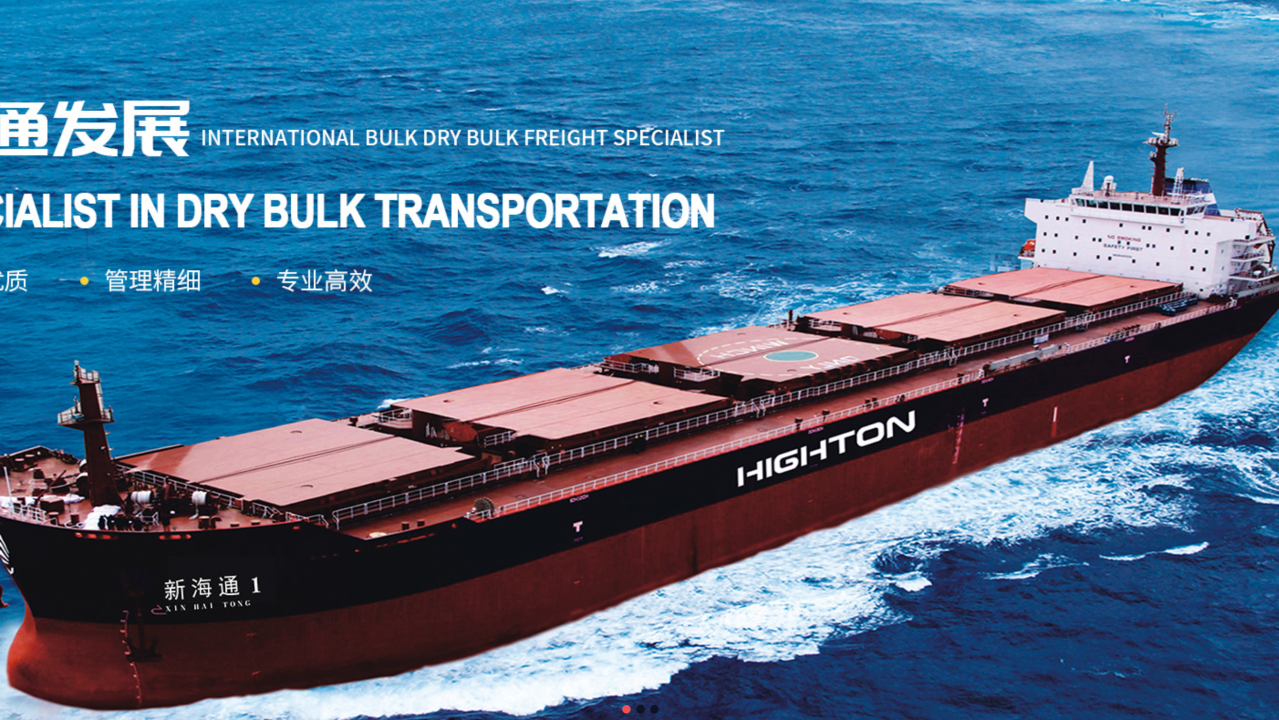
Haitong Development is preparing another major fleet expansion.
Fujian Haitong Development Co., Ltd. (603162.SH) disclosed on September 4 its 2026 plan for a private placement of A shares, under which the company intends to raise up to RMB 2 billion. After issuance expenses, all of the proceeds will be invested in vessel acquisitions.
The overall vessel acquisition programme carries an estimated investment of approximately RMB 2.252 billion and is expected to be implemented over 36 months. Haitong Development plans to acquire a total of 16 vessels, comprising dry bulk carriers and multipurpose heavy-lift ships.
The move comes shortly after the company reported a sharp improvement in earnings. In the first half of 2026, Haitong Development posted net profit attributable to shareholders of RMB 523 million, up 502.60% year on year.
The combination of strong earnings, aggressive fleet investment and a growing push into multipurpose heavy-lift shipping suggests that Haitong Development is moving into another phase of its long-running “100-vessel plan”.

RMB 2.25 billion to add another 16 vessels
According to the financing proposal, the 16 vessels will be acquired through Haitong Development itself and its wholly owned subsidiaries, including Haitong International Shipping Co., Ltd. and HAI DONG INTERNATIONAL SHIPPING PTE. LTD.
The company has not yet disclosed how many of the 16 vessels will be dry bulk carriers and how many will be multipurpose heavy-lift vessels. Details including vessel sizes, ages, individual purchase prices, counterparties and whether the ships will be newbuildings or secondhand tonnage have also yet to be announced.
What is already clear, however, is that part of the proceeds will be used to acquire multipurpose heavy-lift vessels.
Haitong Development said these ships would help the company capture growing seaborne transportation demand for high-end equipment and oversized project cargoes, while creating synergies with its existing breakbulk operations.
The vessel acquisition programme has an estimated total investment of RMB 2.25184 billion, of which RMB 2 billion would be funded through the proposed share issue, with the balance financed by the company itself.
Based on Haitong Development's calculations, the project is expected to generate an internal rate of return of 10.38%, while its static payback period, including the construction and investment period, is estimated at 8.16 years.
The financing structure is unusually focused: instead of allocating proceeds across debt repayment, working capital and several corporate purposes, Haitong Development intends to direct virtually the entire fundraising exercise towards ships.
The company said the investment would allow it to expand capacity, optimise its fleet structure and deepen the global reach of its shipping network while balancing growth requirements with financial stability.
By the end of 2024, Haitong Development's fleet ranked seventh among Chinese shipping companies and third among Chinese privately owned shipping companies, according to Shanghai Shipping Exchange statistics cited by the company.
Its services now cover more than 100 countries and regions and more than 350 ports worldwide, carrying cargoes including iron ore, coal, grain, fertilisers and breakbulk commodities.
Adding another 16 vessels would therefore represent another significant step in a fleet expansion strategy that has been under way for several years.
The “100-vessel plan” moves closer
Haitong Development has repeatedly outlined its ambition to build a fleet of 100 owned vessels around 2028-2029.
The company has also made clear that it does not intend to pursue this target simply by buying vessels indiscriminately. Management has stressed that capital allocation will remain linked to market cycles, secondhand prices and opportunities across different vessel segments.
Supramax and Ultramax dry bulk carriers remain at the core of the fleet, but the company has gradually expanded its exposure to Panamax, Capesize and multipurpose heavy-lift vessels.
During an earnings briefing in August, management said the 100-vessel target was progressing steadily. The company continues to regard secondhand vessel acquisitions as an important expansion tool, particularly because quality secondhand tonnage typically requires less capital than newbuildings and can be deployed immediately after delivery.
That makes the composition of the latest 16-vessel programme particularly important.
How many will be secondhand bulk carriers? How many will be new or relatively modern heavy-lift vessels? And how aggressively will Haitong Development use the programme to move beyond its traditional dry bulk base?
The financing document does not yet provide those answers.
But the direction of travel is becoming increasingly visible.
Net profit surges more than 500%
The timing of the proposed RMB 2 billion fundraising is also notable because Haitong Development is entering this expansion phase with substantially stronger earnings.
In the first half of 2026, the company generated operating revenue of RMB 3.471 billion, up 92.78% year on year.
Net profit attributable to shareholders reached RMB 523 million, an increase of 502.60%, while adjusted net profit excluding non-recurring items rose 507.25% to RMB 521 million.
Net cash flow from operating activities climbed 84.39% to RMB 722 million.
The improvement partly reflected firmer domestic freight rates and relatively strong conditions in the international dry bulk market, but it also showed the impact of the company's expanding operating platform.
In addition to its owned fleet, Haitong Development has continued to increase its use of chartered-in vessels, adding capacity through long-term, short-term and voyage-based charters when cargo availability and market conditions support such deployment.
This gives the company a more asset-flexible layer of capacity on top of its owned fleet and allows it to leverage its customer network, cargo sourcing capabilities and vessel operations without relying exclusively on balance-sheet-intensive ship ownership.
During the first half of 2026, cargo volume in the company's domestic voyage-charter business reached 24.749 million tonnes, up 31.61% year on year.
Internationally, Haitong Development continued to optimise vessel positioning and voyage selection while expanding its chartered-in operations.
The company's longer-term positioning is consequently evolving from that of a traditional shipowner towards what it describes as a resource-oriented shipping service provider, combining ship assets, chartered tonnage, cargo resources and global operating capabilities.
Fleet growth remains central to that strategy.
In 2025, Haitong Development added 18 vessels through acquisitions and bareboat charter arrangements.
After all previously announced transactions are completed, the company expects to have 61 self-operated dry bulk carriers, 13 long-term chartered dry bulk vessels, four multipurpose heavy-lift ships and three oil tankers, giving it approximately 5.02 million dwt of controlled capacity.
Fleet expansion continued in the first half of 2026. The company acquired another four dry bulk vessels and secured seven newbuilding multipurpose heavy-lift vessels through finance lease and operating lease arrangements.
Following the completion of related vessel deliveries and transactions, Haitong Development said its fleet would comprise 65 self-operated dry bulk vessels, 15 long-term chartered dry bulk vessels, four multipurpose heavy-lift ships and three oil tankers, with controlled capacity rising to approximately 5.5 million dwt.
The proposed acquisition of another 16 ships would push the company still further towards its longer-term fleet target, although the vessels cannot simply be added to today's fleet count before financing, acquisition agreements and deliveries are completed.
With a 36-month investment period, however, the programme makes clear that fleet expansion will remain a major capital allocation priority for Haitong Development over the next three years.
Heavy lift is becoming increasingly important
The other notable element of the latest plan is Haitong Development's repeated emphasis on multipurpose heavy-lift shipping.
The sector has appeared with increasing frequency in the company's announcements and management commentary during 2026.
In May, Xinde Marine News reported that Haitong International Shipping had signed contracts with Taizhou Kouan Shipbuilding for four 62,000-dwt multipurpose heavy-lift vessels, with total investment capped at RMB 1.2 billion excluding tax.
The vessels are intended to serve high-end equipment, oversized cargo, project cargo and conventional breakbulk trades.
Later that month, during a Haitong Development capital markets event covered by Xinde Marine News, management further elaborated on the strategy.
The company is seeking to broaden its fleet beyond its traditional focus on Supramax and Ultramax dry bulk ships towards a more diversified portfolio including Panamax, Capesize and multipurpose heavy-lift vessels.
Management also indicated that heavy-lift shipping could eventually provide a platform for expansion further into project logistics and more integrated logistics services.
By the time Haitong Development released its interim results, the company was explicitly describing the multipurpose heavy-lift business as a “second growth curve”.
The rationale is closely linked to China's manufacturing export story.
As Chinese manufacturers expand internationally in sectors such as renewable energy, power equipment, heavy machinery and industrial engineering, demand is increasing for vessels capable of transporting oversized, heavy and high-value project cargoes.
The latest private placement proposal reinforces that strategic direction.
Haitong Development specifically stated that part of the new capital would be used to acquire multipurpose heavy-lift vessels to meet rising demand for the transportation of high-end equipment and oversized cargoes.
At the same time, the company intends to maintain dry bulk exposure across several vessel sizes, including Ultramax, Panamax and Capesize tonnage.
The result is the emergence of two parallel fleet development tracks.
One remains centred on scale in conventional dry bulk shipping. The other is increasingly connected to multipurpose shipping, heavy-lift transportation and the export logistics requirements of China's advanced manufacturing industries.
The distinction matters.
Traditional dry bulk shipping remains highly exposed to commodity trade flows and freight market cycles. Multipurpose and heavy-lift vessels serve a different cargo base that can include wind turbine components, power generation equipment, engineering machinery, energy infrastructure and other large-scale industrial cargoes.
Those trades require different commercial relationships, cargo-handling capabilities and project execution expertise.
Haitong Development is now building vessels and operational capacity for that market.
Controlling shareholder-related investors to subscribe at least RMB 200 million
There is another notable feature of the proposed financing.
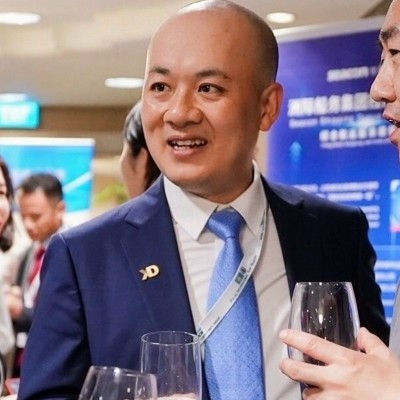
The private placement will target no more than 35 investors, including Dayunming Investment and Dalan Investment, two entities controlled by Haitong Development's actual controller, Zeng Erbin.
Under subscription agreements already signed, each will subscribe for at least RMB 100 million of shares, bringing their combined commitment to no less than RMB 200 million.
The maximum number of shares to be issued will not exceed 30% of Haitong Development's pre-issue share capital, equivalent to approximately 412.49 million shares.
The issue price will in principle be no lower than 80% of the average trading price during the 20 trading days preceding the pricing benchmark date.
Dayunming Investment and Dalan Investment will not participate in the bidding process but will accept the final issue price determined through the placement and subscribe at the same price as other investors.
For Haitong Development, equity financing also provides an alternative to funding the entire vessel expansion through debt.
Shipping is an inherently capital-intensive business, and a concentrated acquisition programme of this scale can materially increase leverage if financed predominantly through bank loans or other debt instruments.
By raising equity capital for most of the RMB 2.25 billion investment and using internal funds for the remaining portion, the company would preserve greater balance-sheet flexibility while continuing to pursue vessel acquisition opportunities.
The transaction is still at the proposal stage.
The private placement remains subject to shareholder approval, review by the Shanghai Stock Exchange and registration with the China Securities Regulatory Commission. The final amount raised, number of shares issued and actual vessel acquisition programme could therefore still change.
The strategic message, however, is already clear.
Haitong Development added 18 vessels in 2025. In the first half of 2026 it acquired another four dry bulk vessels and secured seven multipurpose heavy-lift newbuildings through leasing arrangements. Four 62,000-dwt heavy-lift vessels are already under contract, and the company is now proposing to invest another RMB 2.25 billion to acquire 16 additional dry bulk and multipurpose heavy-lift vessels.
At the same time, first-half net profit has risen to RMB 523 million, more than six times the level recorded a year earlier.
The combination of a larger fleet, broader global trading network, stronger cargo sourcing capabilities and a favourable dry bulk market has begun to translate into significantly stronger earnings and cash flow.
Now, another RMB 2 billion of proposed equity financing could provide the capital for the next leg of expansion.
For a privately controlled Chinese shipping company that has already set itself the goal of reaching 100 owned vessels by around 2028-2029, the planned acquisition of another 16 ships is unlikely to be an isolated transaction.
It marks another concrete step in Haitong Development's transition from a fast-growing domestic dry bulk owner into a larger and increasingly diversified international shipping group.

READ MORE
 Shipbuilding
Another Chinese Bridge Builder Moves Into Shipbuilding
 Shipbuilding
Amid China’s Shipbuilding Boom, a State-Owned Yard Quietly Enters Liquidation
 Shipbuilding
Yichang Changyun plans RMB120m inland bulker programme
 Shipbuilding
MISC Signs for Five More LNG Carriers at Hudong-Zhonghua
 Shipbuilding
Steel Giant Shagang Eyes Shipbuilding as a Booming Market Draws Industrial Capital
 Shipbuilding
Hengli Secures 12 Tanker Orders, Retaining World’s Largest VLCC Orderbook
 Shipbuilding
Hengli Signs 11 VLAC Contracts in One Week
 Shipbuilding
China ZWI Enters Ocean Shipping with VLGC Acquisition and Chemical Tanker Newbuild Project
 Shipbuilding
World’s First 325,000-DWT Methanol Dual-Fuel Ore Carrier Delivered
 Shipbuilding