


US$148 Million for Six Ships: Shenghang Launches a New Fleet Renewal Cycle
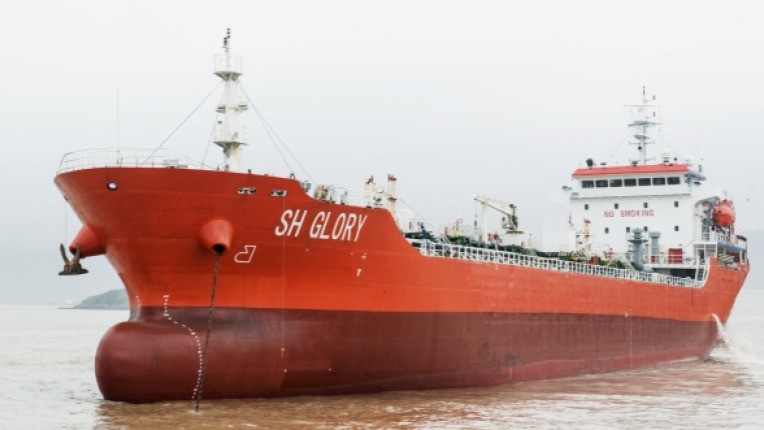
Nanjing Shenghang Shipping is preparing to commit nearly US$148 million (CNY 994.8 million) to a new generation of stainless-steel chemical tankers, marking one of the most significant fleet investments in the company’s recent history and another major step in its transition towards younger, higher-specification and more internationally deployable tonnage.
On August 31, Shenghang Shipping’s board approved a proposal to build six 13,500-dwt stainless-steel chemical/product tankers at China Merchants Shipbuilding Industry Nanjing Shipyard.
The company intends to sign six separate shipbuilding contracts, each valued at CNY 165.8 million, or approximately US$24.7 million, including tax. The total contract value will reach CNY 994.8 million, equivalent to approximately US$148 million.
The vessels are scheduled for delivery between August 2028 and October 2030.
For a specialist owner focused on the transportation of liquid chemicals and refined petroleum products, a capital commitment approaching US$150 million is substantial. Viewed against Shenghang’s fleet development over the past several years, however, the strategic direction is clear: the company is accelerating the replacement of ageing tonnage while concentrating a larger share of its fleet in modern stainless-steel chemical tankers capable of carrying more sophisticated and higher-value cargoes.
The six-ship programme therefore represents considerably more than another 81,000 dwt of gross capacity.
It marks the beginning of a new fleet renewal cycle.
Six 13,500-dwt Tankers with Duplex Stainless-Steel Cargo Tanks
All six vessels will be 13,500-dwt chemical/product tankers equipped with duplex stainless-steel cargo tanks.
Each ship will feature 14 segregated cargo tanks and a one-tank, one-pump, one-pipeline arrangement, allowing a single vessel to carry as many as 14 different cargoes simultaneously.
That configuration is particularly relevant to specialty and fine chemical trades.
Compared with conventional coated tankers, stainless-steel cargo tanks offer greater flexibility for products with stringent requirements relating to cargo purity, contamination control, temperature management and tank cleaning. Fully segregated cargo pumps and pipelines also allow an operator to combine multiple parcels for different customers and discharge ports within a single voyage.
For chemical tanker operators, this flexibility has direct commercial value.
The economics of parcel chemical shipping depend not only on deadweight capacity, but also on how efficiently an owner can combine different cargoes, meet segregation requirements, reduce contamination risks and minimise cleaning and turnaround times.
A vessel capable of simultaneously carrying 14 segregated parcels therefore offers significantly more commercial flexibility than its nominal deadweight capacity alone would suggest.
Shenghang said the vessels are intended to strengthen its ability to serve customers requiring multiple cargo types, larger volumes, wider geographical coverage and faster transportation.
The first vessel is scheduled for delivery on August 31, 2028, followed by the second on November 30, 2028. The remaining four vessels are scheduled for delivery in May 2029, August 2029, June 2030 and October 2030.
Payments will be spread across five construction milestones. Shenghang will pay 10% when each contract becomes effective, followed by 20% at commencement of construction, 30% at keel laying, 20% at launching and the remaining 20% upon delivery.
The staged payment structure will spread the approximately US$148 million investment over several years. Shenghang plans to fund the programme through a combination of internal resources and external financing.
The company said the investment was approved after taking into account increasingly stringent regulation of ageing vessels, future chemical tanker development trends, China’s controls on domestic chemical tanker capacity and policies encouraging the orderly replacement of older ships.
The 13,000-dwt Segment Is Becoming a Core Fleet Type
The latest programme also reveals an increasingly clear pattern in Shenghang’s fleet development.
Chemical tankers in the roughly 11,000-dwt to 14,000-dwt range, particularly ships equipped with duplex stainless-steel cargo systems, are becoming an increasingly important part of the company’s fleet.
In 2025, Shenghang put the 6,200-dwt Shenghang Discovery and the 13,710-dwt Shenghang Fortune into operation.
Both vessels feature duplex stainless-steel cargo tanks and segregated one-tank, one-pump and one-pipeline systems.
The Shenghang Fortune, in particular, is primarily deployed in international chemical trades, reflecting another important dimension of Shenghang’s strategy: gradually increasing its exposure to overseas chemical shipping alongside its established domestic coastal business.
Its controlled subsidiary Shenghang Haoyuan also currently has four vessels under construction. These include three duplex stainless-steel chemical/product tankers of approximately 11,000 to 12,500 dwt and one 4,500-dwt product tanker.
Adding another six 13,500-dwt vessels now changes the scale of that renewal effort.
Instead of replacing or upgrading ships one or two at a time, Shenghang is moving towards a more systematic series-building programme in which a larger group of modern and relatively standardised chemical tankers will enter the fleet over several years.
That has implications beyond average fleet age.
Series construction can create greater standardisation in machinery, cargo systems, crewing, maintenance, spare parts, training and operating procedures. For a specialist tanker owner, these efficiencies can become particularly valuable when vessels are required to satisfy increasingly demanding safety, cargo-handling and customer-vetting standards.
The additional stainless-steel capacity should also give Shenghang greater flexibility in allocating vessels between domestic and international markets.
Singapore Becomes a More Important Part of Shenghang’s International Strategy
The fleet investment is taking place alongside another significant development in Shenghang’s international expansion.
On July 9, 2026, the company formally opened Shenghang Shipping (Singapore) Pte. Ltd., giving the group a more substantive commercial and operational presence in one of the world’s leading maritime, petrochemical and commodity trading hubs.
The Singapore company itself had been incorporated in November 2022, but its formal opening in 2026 represented a more significant step towards building a locally anchored international operating platform.
Shenghang intends to use Singapore to strengthen international chartering and cargo development, deepen relationships with global chemical producers and traders, develop higher-value cargoes, expand routes and markets, improve customer service and coordinate the regional deployment of internationally trading vessels.
Its overseas network is increasingly centred on Singapore and covers Northeast Asia, Southeast Asia and India, while the company has also been expanding towards the Middle East and Australia.
This development is particularly relevant to the latest newbuilding programme.
Shenghang is simultaneously expanding the physical capability of its fleet and strengthening the commercial infrastructure required to employ that fleet internationally.
In the first half of 2026, the company transported approximately 1.50 million tonnes of liquid dangerous goods in international trades, up 39.36% year on year.
That rate of growth was substantially faster than the expansion of its overall cargo volume and provides tangible evidence that Shenghang’s international business is becoming a more meaningful part of the group.
The company has also been developing an integrated international team covering commercial activities, operations and shipmanagement as it pursues a dual-engine model combining domestic and international shipping.
Against this background, the Singapore platform and the six-vessel newbuilding programme can be viewed as two elements of the same strategy.
One provides closer access to international charterers, commodity traders, petrochemical producers and regional cargo flows.
The other provides the higher-specification stainless-steel tonnage required to compete for those cargoes.
Singapore could therefore become increasingly important in determining how Shenghang’s next generation of chemical tankers is commercially deployed.
For Shenghang, internationalisation is moving beyond simply assigning Chinese-owned vessels to foreign trades. The company is gradually building the overseas commercial infrastructure, customer relationships and fleet capabilities required to operate as a more internationally competitive specialist chemical tanker owner.
From Rapid Fleet Expansion to Higher-Specification Renewal
Shenghang’s fleet strategy has evolved considerably over the past several years.
During an earlier phase of expansion, acquiring existing vessels was an important way for the company to increase capacity relatively quickly.
In 2023, for example, Shenghang invested more than CNY 500 million, or approximately US$74 million, to acquire six second-hand chemical tankers, including vessels engaged in both domestic and international trades.
That transaction formed part of a broader effort to strengthen the company’s position in China’s coastal chemical tanker market while simultaneously accelerating its expansion into international shipping.
The latest US$148 million newbuilding programme points to a different stage of development.
Shenghang now operates from a much larger fleet base.
The priority is increasingly shifting from simply adding ships towards determining what kind of fleet the company wants to operate over the next decade.
Newly built duplex stainless-steel tonnage gives Shenghang the opportunity to shape that fleet around higher technical standards from the outset.
Modern ships can offer greater cargo flexibility, improved operating efficiency and newer equipment while reducing the risks associated with retaining ageing vessels in a market where regulation, customer vetting and safety standards continue to become more stringent.
The significance of the six-ship programme should therefore be viewed in terms of both capacity growth and replacement.
Some of the new tonnage may support expansion, while some will facilitate the orderly withdrawal or replacement of older vessels.
Shenghang itself has explicitly linked the programme to China’s policy framework for replacing ageing ships.
That distinction matters.
Gross fleet additions do not necessarily translate directly into equivalent net capacity growth if older vessels are simultaneously removed.
The programme therefore represents fleet restructuring as much as fleet expansion.
Strategic Refocus: Capital Returns to Core Shipping Assets
The timing of the newbuilding programme is also notable because Shenghang has spent the past two years simplifying parts of its corporate structure and reallocating resources towards its core shipping operations.
During an earlier stage of development, the company explored opportunities beyond pure vessel ownership and operation, extending its interests further along the liquid chemical and energy supply chain.
At the end of 2022, Shenghang and its partners established Shenghang Times as a platform to explore commercial management of chemical tankers, technical shipmanagement and international operations.
The company subsequently invested in Jiangsu Anderfu Energy Technology as part of a broader effort to participate in energy supply-chain businesses.
That direction was later adjusted.
In July 2025, Shenghang announced that it would dispose of its entire 48.55% interest in Jiangsu Anderfu Energy Technology for approximately CNY 184 million, or about US$27.4 million.
Following completion of the transaction, Shenghang no longer held an equity interest in Anderfu Energy Technology or its subsidiaries.
The divestment did not mean the end of commercial cooperation between the two sides. Operational relationships have continued in areas including vessel chartering.
From a capital-allocation perspective, however, the change was significant.
Shenghang released capital from a non-core associate investment and placed greater emphasis on its principal shipping activities.
The latest six-ship programme gives that strategic refocus a tangible form.
Capital that had previously been deployed more broadly across energy-related investments is increasingly being directed towards assets at the centre of Shenghang’s competitive position: specialist chemical and product tankers.
Profit Rises 33.9% as Shenghang Steps Up Fleet Investment
The investment also comes against a backdrop of improving financial performance.
In the first half of 2026, Shenghang reported operating revenue of CNY 802 million, equivalent to approximately US$119 million, an increase of 12.51% year on year.
Net profit attributable to shareholders rose 33.92% to CNY 72.59 million, or approximately US$10.8 million.
Net profit excluding non-recurring items increased 34.15% to CNY 71.33 million, equivalent to around US$10.6 million.
The stronger earnings performance provides a more supportive operating backdrop as the company enters another capital-intensive fleet renewal period.
A US$148 million newbuilding programme nevertheless represents a substantial commitment relative to Shenghang’s annual earnings and requires careful financial management.
The contract value will not be paid at once.
Payments will instead be distributed according to construction milestones through 2030, allowing the company to coordinate operating cash flow, financing requirements and vessel investment over the delivery schedule.
The company has also acknowledged the underlying market risks.
Chemical tanker earnings remain exposed to global economic conditions, downstream chemical demand, changes in cargo flows and future vessel supply.
If the supply-demand balance deteriorates by the time the vessels enter service, freight rates or utilisation could fall below expectations.
Shenghang therefore plans to manage fleet deployment between domestic and international trades and adjust its operating strategy according to market conditions.
A 54-Vessel Platform Enters Its Next Renewal Phase
By the end of June 2026, Shenghang controlled 54 vessels with combined capacity of approximately 422,300 dwt.
Its operations cover domestic and international liquid chemical transportation as well as refined petroleum product shipping, giving the company a substantially broader operating platform than it had only several years ago.
During the first half of 2026, Shenghang transported approximately 5.48 million tonnes of liquid dangerous goods, an increase of 11.72% year on year.
This existing scale changes the strategic meaning of new investment.
For a smaller owner, the addition of six vessels might primarily represent fleet expansion.
For Shenghang today, the programme is increasingly about fleet composition: which ships should be retained, which should be replaced, how much stainless-steel capacity should be available, how vessels should be distributed between domestic and international trades, and what cargo segments the company wants to target over the next decade.
With four vessels already under construction and another six 13,500-dwt vessels now planned, the proportion of modern stainless-steel chemical tanker capacity within the group should rise materially as deliveries progress.
By 2030, Shenghang could therefore be operating a fleet that is not merely larger, but structurally different from the fleet it operates today — younger, more standardised and more heavily weighted towards high-specification chemical tonnage.
Chemical Shipping Competition Is Moving Beyond Fleet Size
This transformation is taking place as competition in chemical shipping becomes increasingly multidimensional.
Fleet size remains important, particularly when major petrochemical and industrial customers require reliable and continuous transportation capacity.
But scale alone does not determine competitiveness in specialist chemical trades.
Cargo compatibility, stainless-steel tank capacity, segregation capability, safety management, vessel age, crew competence, operational reliability, customer-vetting performance and the ability to efficiently combine different parcels are becoming increasingly important commercial differentiators.
A modern 14-tank stainless-steel chemical tanker therefore offers considerably more than nominal deadweight capacity.
It provides a commercial platform from which an owner can compete for more sophisticated cargoes, serve a broader customer base and optimise voyage combinations across multiple ports and charterers.
That increasingly appears to be where Shenghang is directing its fleet.
Its earlier expansion established scale.
Its development of international trades broadened its geographical reach.
The formal opening of its Singapore platform strengthens its commercial presence outside China.
The disposal of non-core equity investments has sharpened its capital focus.
Improving profitability gives the company greater capacity to reinvest in its principal business.
Now, the planned US$148 million investment in six 13,500-dwt stainless-steel chemical/product tankers brings those developments together.
For Shenghang, the next phase of development is increasingly centred on the quality, flexibility and international competitiveness of its fleet.
Nearly US$150 million for six vessels is a significant investment.
Viewed against the company’s longer-term evolution, it is also a clear indication of where Shenghang intends to place its capital over the coming years: back into specialised shipping, into its international operating platform, and into a younger, higher-specification chemical tanker fleet.
Currency conversions are approximate and based on an exchange rate of around CNY 6.72 per US dollar.

READ MORE
 Shipbuilding
Amid China’s Shipbuilding Boom, a State-Owned Yard Quietly Enters Liquidation
 Shipbuilding
Yichang Changyun plans RMB120m inland bulker programme
 Shipbuilding
Steel Giant Shagang Eyes Shipbuilding as a Booming Market Draws Industrial Capital
 Shipbuilding
Another Chinese Bridge Builder Moves Into Shipbuilding
 Shipbuilding
Hengli Secures 12 Tanker Orders, Retaining World’s Largest VLCC Orderbook
 Shipbuilding
Hengli Signs 11 VLAC Contracts in One Week
 Shipbuilding
China ZWI Enters Ocean Shipping with VLGC Acquisition and Chemical Tanker Newbuild Project
 Shipbuilding
World’s First 325,000-DWT Methanol Dual-Fuel Ore Carrier Delivered
 Shipbuilding
CIMC Raffles Extends NOCC Car Carrier Programme to 2030
 Shipbuilding