


Europe Is Losing More Than Ship Orders: The System Behind China’s Shipbuilding Lead


Europe still knows how to design and build some of the world’s most sophisticated vessels. It retains exceptional engineering expertise, strong marine equipment suppliers, advanced research programmes and pockets of highly competitive shipbuilding. Yet much of the commercial market has moved to Asia, while China has turned shipbuilding into one of the clearest demonstrations of how long-term industrial strategy can reshape a global industry.
That contradiction dominated a one-hour discussion at the first Mare Forum Germany, held in Hamburg on 31 August 2026. The session, titled “Europe’s Maritime Industrial Edge,” was formally focused on shipbuilding, marine equipment and circular maritime innovation. In practice, it became a much broader examination of why Europe’s technological strengths no longer translate reliably into capacity, orders and market share.

The speakers did not agree on every remedy. Some called for stronger industrial policy and public support. Others warned against protectionism and argued that Europe must remain open while competing through innovation. There was also disagreement over whether shipping should be treated as critical infrastructure. The common conclusion, however, was difficult to miss: Europe’s central weakness lies in its ability to convert knowledge into industrial scale, bankable projects, first customers and long-term production.
China’s advantage, as described repeatedly during the discussion, now extends far beyond lower labour costs or individual subsidies. European maritime companies increasingly find themselves competing with a system that can combine shipyard capacity, financing, supply chains, testing environments, public policy and commercial demand. The contest is therefore no longer simply between one European yard and one Chinese yard. It is between different ways of organising an entire maritime industrial base.
Europe Still Has the Technology, but Technology No Longer Guarantees Orders
Reinhard Lüken , Managing Director of the German Shipbuilding and Ocean Industries Association, rejected the idea that European shipbuilding is fighting a lost battle. Europe retains an industrial knowledge base that is difficult to match, he argued, particularly in engineering, marine equipment and the construction of highly complex vessels. In technological terms, he saw no reason for the continent to be intimidated by its competitors。

The harder question concerns political will and implementation. Europe has now produced a European Maritime Industrial Strategy, but Lüken warned that the continent has a history of publishing ambitious strategies without following them through. He invoked the Lisbon Strategy, under which the European Union once aimed to become the world’s most competitive knowledge-based economy, as an example of a grand objective that gradually disappeared from political attention.
Lüken’s historical comparison with China was especially striking. According to his account, when China announced in 2002 that it intended to become the world’s leading shipbuilding nation, Europe’s commercial output was roughly three times larger. The subsequent reversal shows how a clear objective, pursued over more than two decades, can alter the balance of a capital-intensive global industry.
Europe’s remaining technological strength should not be underestimated. It can still design advanced ships, integrate complex systems and supply high-value marine equipment. The problem is that modern shipbuilding competition is increasingly determined by more than the quality of a single design. Owners also require predictable pricing, secure refund guarantees, attractive payment terms, reliable delivery slots, established supplier networks and confidence that a yard can repeat the same performance across a large series.
This is where isolated technological excellence loses ground to industrial organisation. A country may possess world-class naval architects and equipment manufacturers, yet still lose the construction contract if it cannot assemble the financing, production capacity and risk-sharing structure required by the owner. The decisive question has shifted from whether Europe can design a superior vessel to whether it can build that vessel repeatedly, competitively and with an acceptable level of commercial risk.
From 15,000 Workers to 60: The Erosion of an Industrial Ecosystem
Stijn Van Doninck , Chief Executive of EDR Antwerp Shipyard, illustrated how quickly an industrial ecosystem can disappear. In the late 1980s and early 1990s, the Antwerp ship-repair area employed about 15,000 people. Employment later fell to 2,000 or 3,000 and, by the time his company took over the yard, only around 60 people remained. The docks and waterfront infrastructure were still there, but much of the skilled workforce, supplier density, order flow and industrial confidence had vanished.
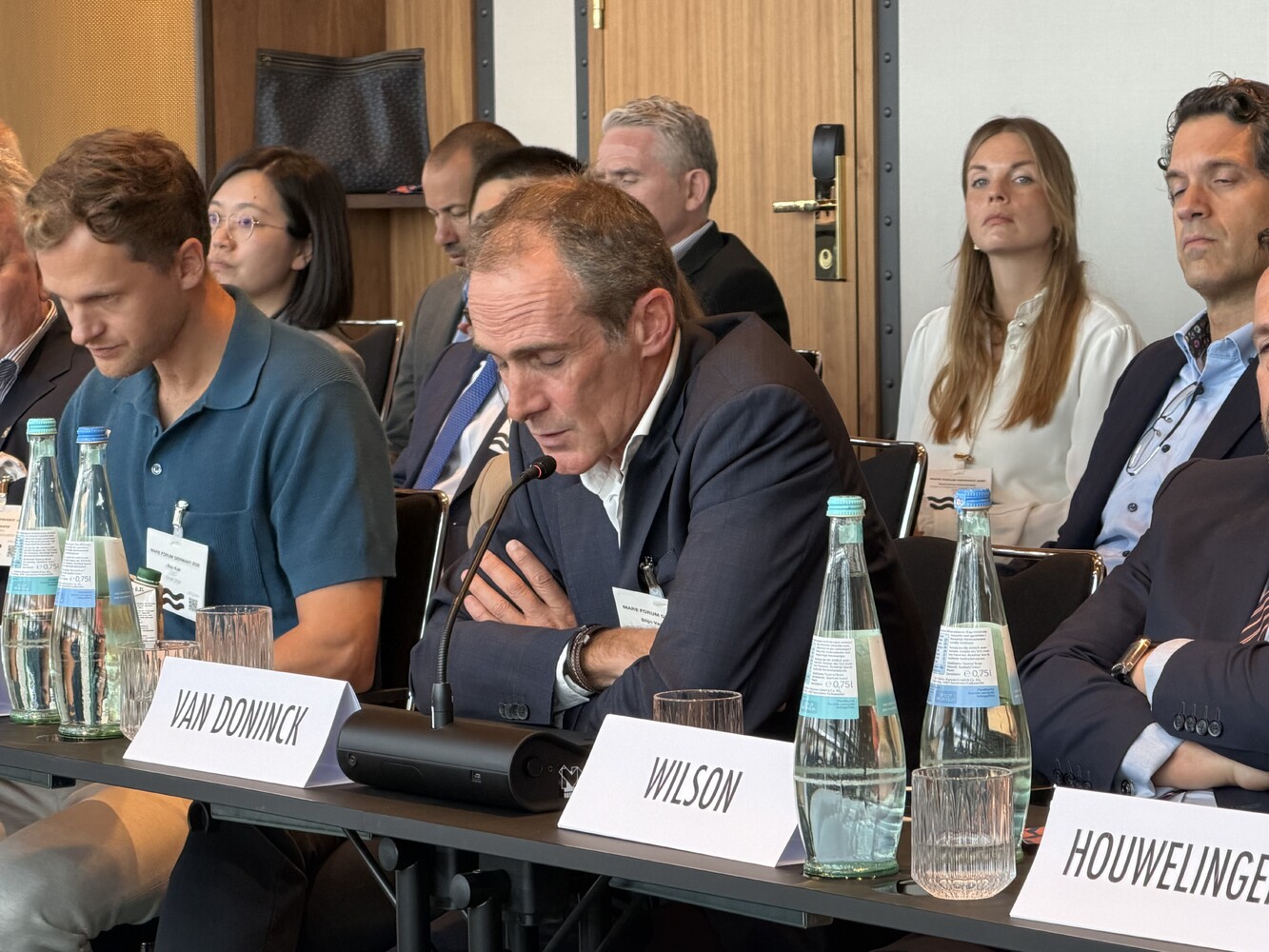
EDR’s recovery was built around a straightforward operating discipline inherited from port repairs: ships must sail, not remain alongside. Every part of the organisation, from cleaners and welders to senior management, was expected to understand that a vessel’s arrival and departure schedule was commercially critical to the owner. That focus on timing and quality allowed the company to rebuild activity around an old industrial site.
The investment horizon is equally important. EDR is modernising the yard through a master plan covering shore power, solar panels, workshops, lighting, heating and future production equipment. The programme is roughly halfway complete, and Van Doninck said such a transformation had to be viewed over 40 or 50 years. A yard cannot be renovated or rebuilt with a ten-year mindset.
His concern is that Europe may continue to develop advanced concepts while losing the physical ability to construct them. He pointed to nuclear-powered vessels as an example: France possesses considerable nuclear expertise, but future vessels using that technology may still be built in Asia. Similar risks apply to alternative-fuel ships and other specialist vessels that could have become platforms for a European industrial revival.
This is how industrial hollowing-out becomes self-reinforcing. A shortage of orders weakens the business case for new facilities and automation. Insufficient investment reduces productivity and raises costs. More owners then place orders in Asia, further shrinking the workload available to European yards. Skilled workers and suppliers leave, and when a new market eventually appears, the region no longer has the capacity to respond quickly.
Shipbuilding capacity cannot be switched on and off like an ordinary production line. Docks, engineers, skilled trades, marine suppliers, classification knowledge and financing relationships develop together over decades. Once all of them have weakened at the same time, the cost of restoring the ecosystem can be far greater than the cost of preserving it.
The Dutch Exception Shows Both Europe’s Strength and Its Financing Problem
The discussion also offered an important counterexample to the claim that European commercial shipbuilding has disappeared entirely. One participant placed the competitive boundary at specific vessel sizes: the Netherlands remains a leading builder in the roughly 3,600-tonne and 5,000-tonne categories, begins to lose ground to China at around 6,500 tonnes, and has largely lost the contest by approximately 8,500 tonnes.
Jan Jaap Nieuwenhuis , Managing Director of Conoship International, said northern Dutch yards were full until 2030 and launched about 20 ships each year, including general cargo vessels of up to roughly 15,000 tonnes. These yards have remained competitive even though many still use traditional production methods with limited robotics and automation.
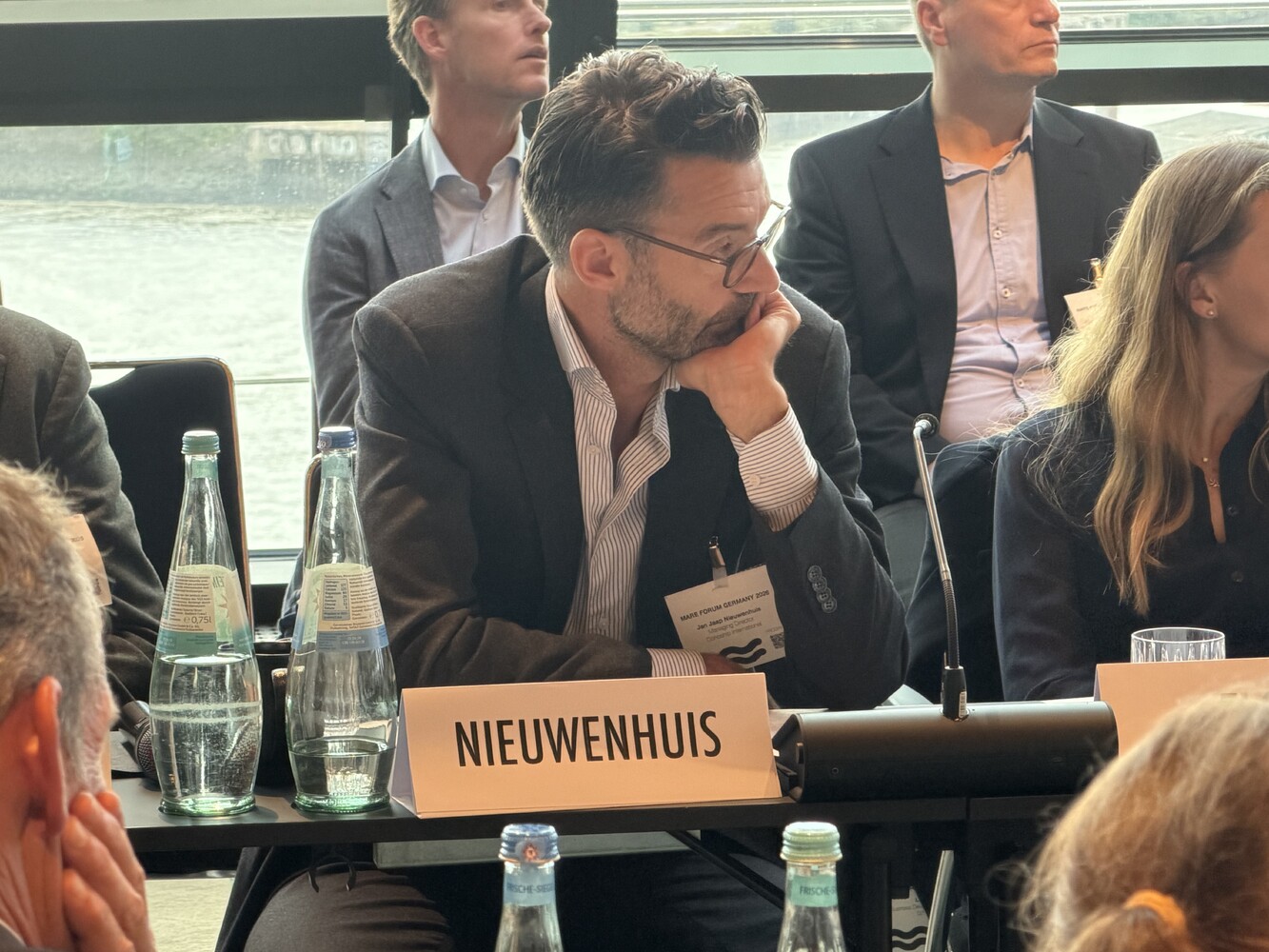
Their strength comes from a dense regional cluster. Designers, suppliers, yards and owners know one another, communication lines are short, and technical issues can be resolved locally. Nieuwenhuis said a 3,800-tonne ship designed and built in the Netherlands could be 150 to 200 tonnes lighter than a comparable Chinese-built vessel. On a ship carrying around 3,600 tonnes, a 200-tonne difference in cargo intake is commercially significant over the vessel’s operating life.
Local construction also reduces supervision costs and communication risk. An owner can reach a nearby Dutch yard by bicycle instead of maintaining a long-term site team in China. These advantages, however, do not eliminate the initial price difference. Nieuwenhuis estimated that a vessel in this size range could cost about €2 million more to build in Europe.
Financing may be an even larger obstacle than price. Chinese yards can offer payment structures such as 10% during construction and 90% upon delivery. Dutch yards generally cannot provide comparable terms, and some struggle to obtain the refund guarantees required by owners and their banks. Nieuwenhuis said several series had come close to being built in the northern Netherlands or at idle German yards, only to fail because the financing structure and refund security could not be completed.
This makes the debate over “support” much more specific. European yards may not need governments simply to subsidise the contract price of every ship. They may need public financial institutions to share risks around refund guarantees, construction finance, first-of-a-kind orders and long-term investment in production facilities. Nieuwenhuis even raised the idea of financing new industrial facilities with something resembling a 100-year loan. The proposal was partly rhetorical, but it highlighted the mismatch between shipbuilding’s strategic time horizon and the much shorter period over which commercial lenders assess profitability.
The Dutch case demonstrates that Europe can still compete where design efficiency, customer proximity and tightly integrated clusters outweigh the benefits of Asian scale. It also shows why technical superiority alone cannot expand that success into larger vessel segments. Without bankable payment structures and long-duration capital, a competitive design may never become a signed order.
Europe’s Innovation Paradox: Strong at Invention, Weak at Scale
Hilmar Backer , Managing Director of Dutch Boat Factory, presented one example of Europe’s continuing technological vitality. The company emerged from CEAD Group, a producer of some of the world’s largest 3D printers, and is developing automated, large-scale printing of complete boat hulls. It has so far produced vessels of up to 12 metres, including workboats, rigid inflatable boats and unmanned surface vessels for markets such as offshore infrastructure protection and defence.
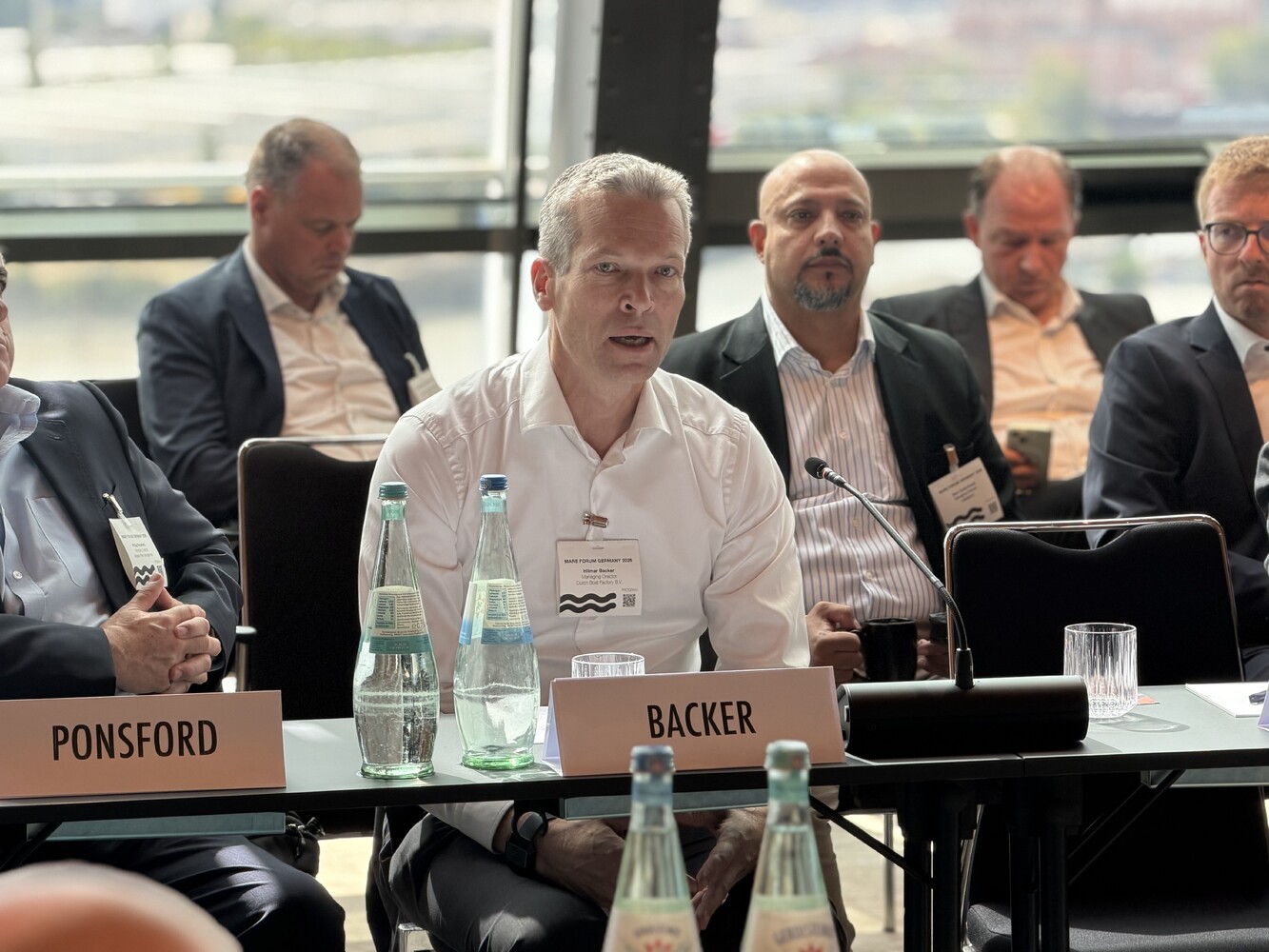
The production method could reduce dependence on labour-intensive manual processes, bring manufacturing closer to European customers and lower exposure to fragile global supply chains. It may also support a more circular model for small craft. Conventional fibre-reinforced composites have few satisfactory end-of-life options, while thermoplastic materials could potentially be recovered, sorted, cleaned and returned to the production process.
Moving from technical possibility to industrial-scale production remains difficult. New materials and processes need research funding, energy at competitive prices, recycling infrastructure, classification approval and customers willing to accept early commercial risk. Existing certification frameworks were largely developed around conventional methods such as hand lay-up construction, which means a company can demonstrate that a new process works and still face a regulatory system designed for an older technology.
Rosanne van Houwelingen , Innovation Project Manager at Maritime & Offshore NL, described the wider European problem. Europe already has substantial research and innovation instruments, including Horizon Europe, WaterborneTP and the partnership for Zero-Emission Waterborne Transport. The missing link is the process that takes technology from a funded demonstration into commercial production.
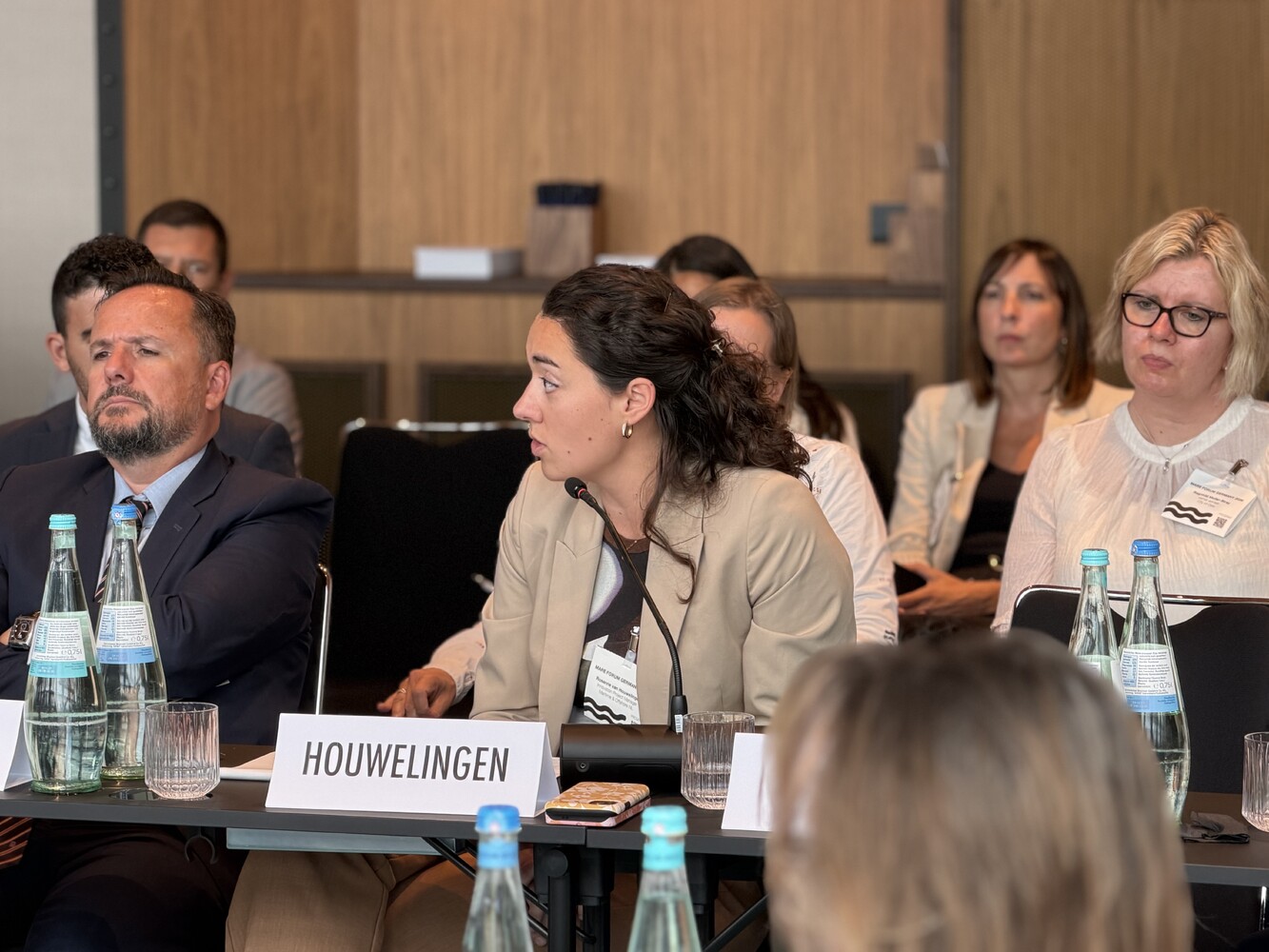
Who will become the launch customer? Who will carry the risk of market acceptance? What policy framework can a start-up rely on while it invests in scale? How can smaller technology companies and equipment manufacturers gain a place in a value chain dominated by much larger actors? These issues often remain unresolved even after the technical work has succeeded.
The result is a recurring European pattern: the continent develops the concept, constructs the prototype and demonstrates the technology, while an Asian manufacturing ecosystem eventually turns the innovation into products, serial orders and market share. Research grants typically support the early stages of development. Commercial banks prefer projects with established cash flow and firm orders. Between them lies a commercialisation gap that is especially difficult to bridge in shipping, where capital requirements are high, certification is slow and customers demand proven reliability.
Without initial orders, a new technology cannot move down the cost curve. Without lower costs and operational evidence, owners are reluctant to place larger orders. European maritime innovation is therefore frequently trapped in pilot projects or industrialised elsewhere, in markets that can connect early-stage technology with manufacturing capacity and customer demand.
China’s Most Powerful Advantage May Be Policy Predictability
Roy Kok, founder of maritime automation company Smart-Ship, brought the comparison with China into sharper focus. He described how a Dutch company seeking to test an autonomous vessel might have to petition the authorities for permission to use a very limited stretch of water for a very limited period. Raising only €100,000 or €200,000 in start-up funding could take months.
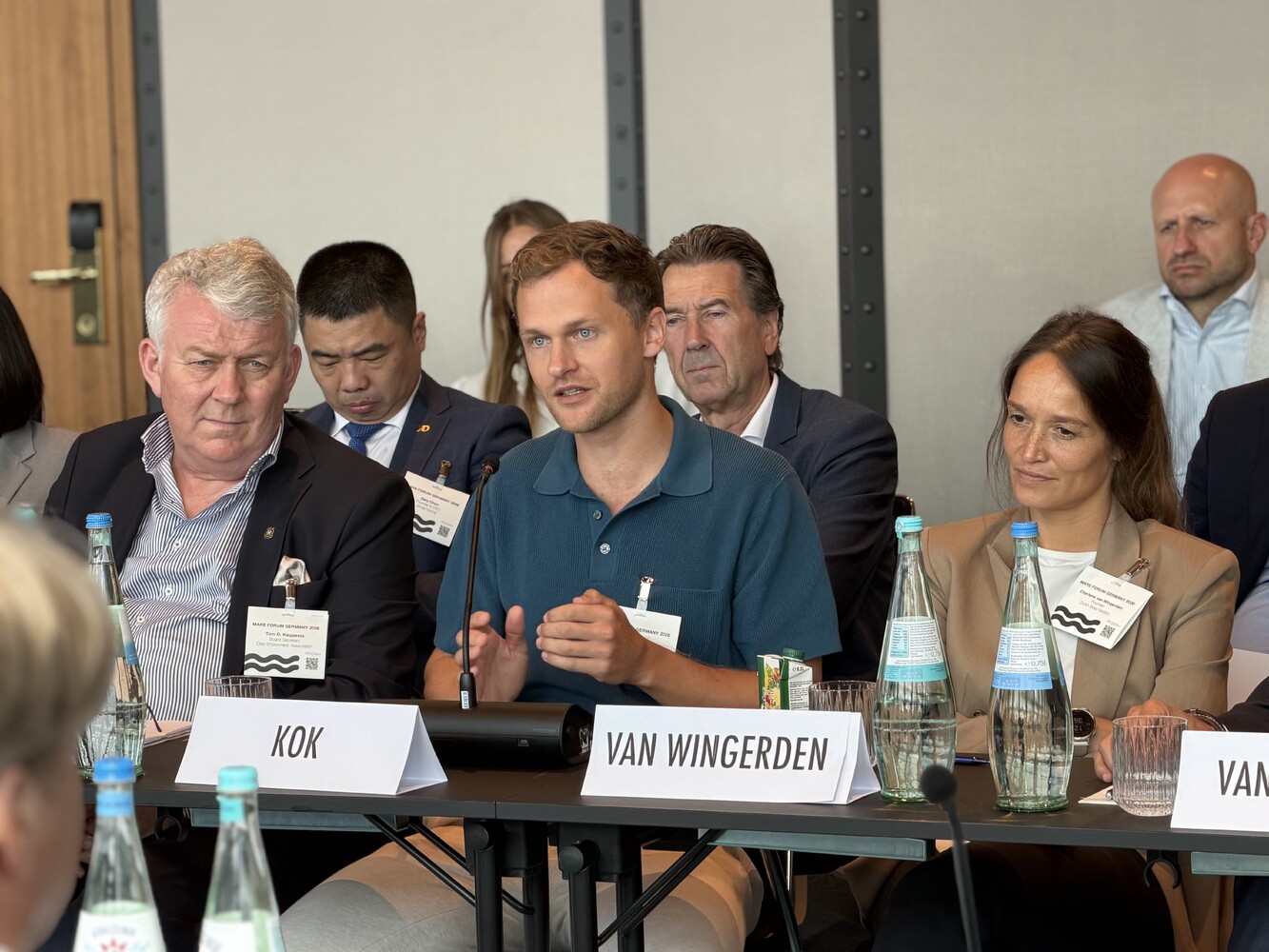
Chinese government representatives, he said, had approached his company directly and offered office space, funding and assistance in establishing operations in China. His account was not presented as an argument for government to replace the market. Kok was openly sceptical about asking slow-moving European governments to lead technological development. His more fundamental point concerned consistency.
China, he argued, is highly effective at setting out a long-term plan and remaining on the same course. Even before considering whether every policy choice is correct, predictability gives entrepreneurs and investors a basis for action. Companies can allocate people, capital and technology when they believe a policy direction will still exist many years later. Across parts of Europe, policy can change substantially every three or four years, causing owners, yards and technology companies to hesitate before committing to investments with ten-, twenty- or forty-year payback periods.
Tom O. Kleppestø of the Oslo Shipowners’ Association and Lili Flour of GT Wings extended the discussion to Europe’s political fragmentation and frequent changes of leadership. Their point was not a rejection of democracy. It was an acknowledgement of an industrial cost: officials and ministers change, companies repeatedly explain the same problems to new decision-makers, priorities are reset, and capital remains unused because investors cannot rely on a stable framework.
This is why describing China’s advantage simply as “subsidies” misses much of the mechanism. For emerging technologies such as autonomous ships, alternative fuels and intelligent marine systems, access to testing areas, regulatory flexibility, demonstration projects, launch customers and scale-up capital may matter more than an isolated research grant. The jurisdiction that moves technology out of the laboratory and into real operations first gains data, supply-chain experience and influence over future standards.
China’s advantage lies in creating a continuous path from policy objective to industrial application. Once shipyards, equipment suppliers, banks, owners and government bodies begin moving in the same direction, the system reinforces itself: orders justify capacity, capacity lowers costs, lower costs attract more orders, and repeated projects improve technology and delivery performance.
When Shipping Becomes a Geopolitical Asset, Shipbuilding Is No Longer an Ordinary Industry
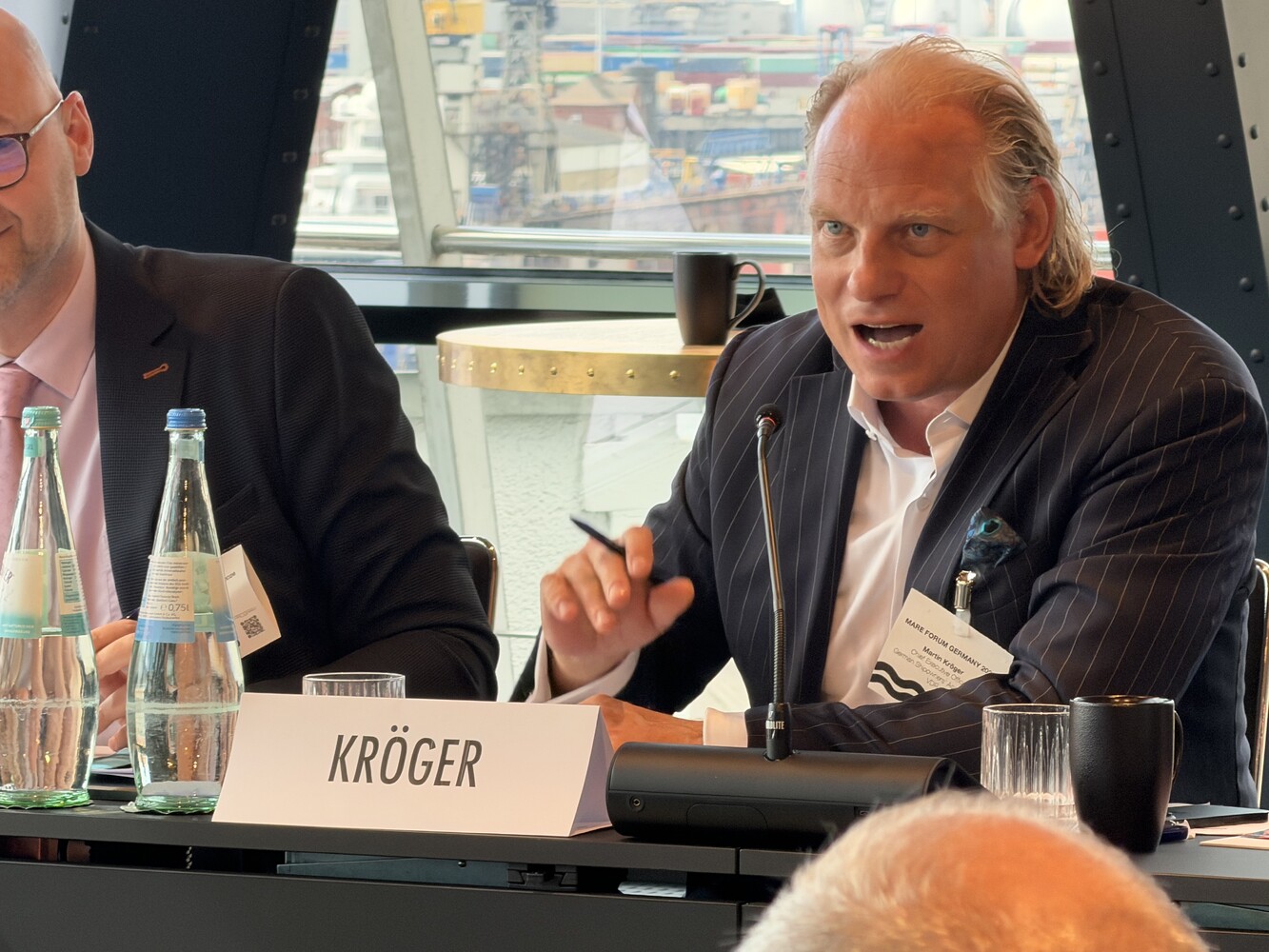
The discussion eventually moved from commercial competitiveness to security and resilience. Martin Kröger, Chief Executive of the German Shipowners’ Association, was cautious about defining shipping as infrastructure in the classical sense. If one ship is lost, he argued, thousands of others may be available to replace it, whereas a port or shipyard is a fixed asset that cannot be substituted quickly. He nevertheless acknowledged the fundamental reality that without shipping, global trade stops.
@Lodewijk Wisse of the Royal Association of Netherlands Shipowners placed greater emphasis on crisis conditions. In a normally functioning market, ships can be chartered and repositioned globally. During a geopolitical emergency, governments return to questions of national flags, national control and minimum domestic capacity. Europe has no single European flag, meaning that German, Dutch, Cypriot and other fleets ultimately return to a national political context when sovereignty and supply security are at stake.
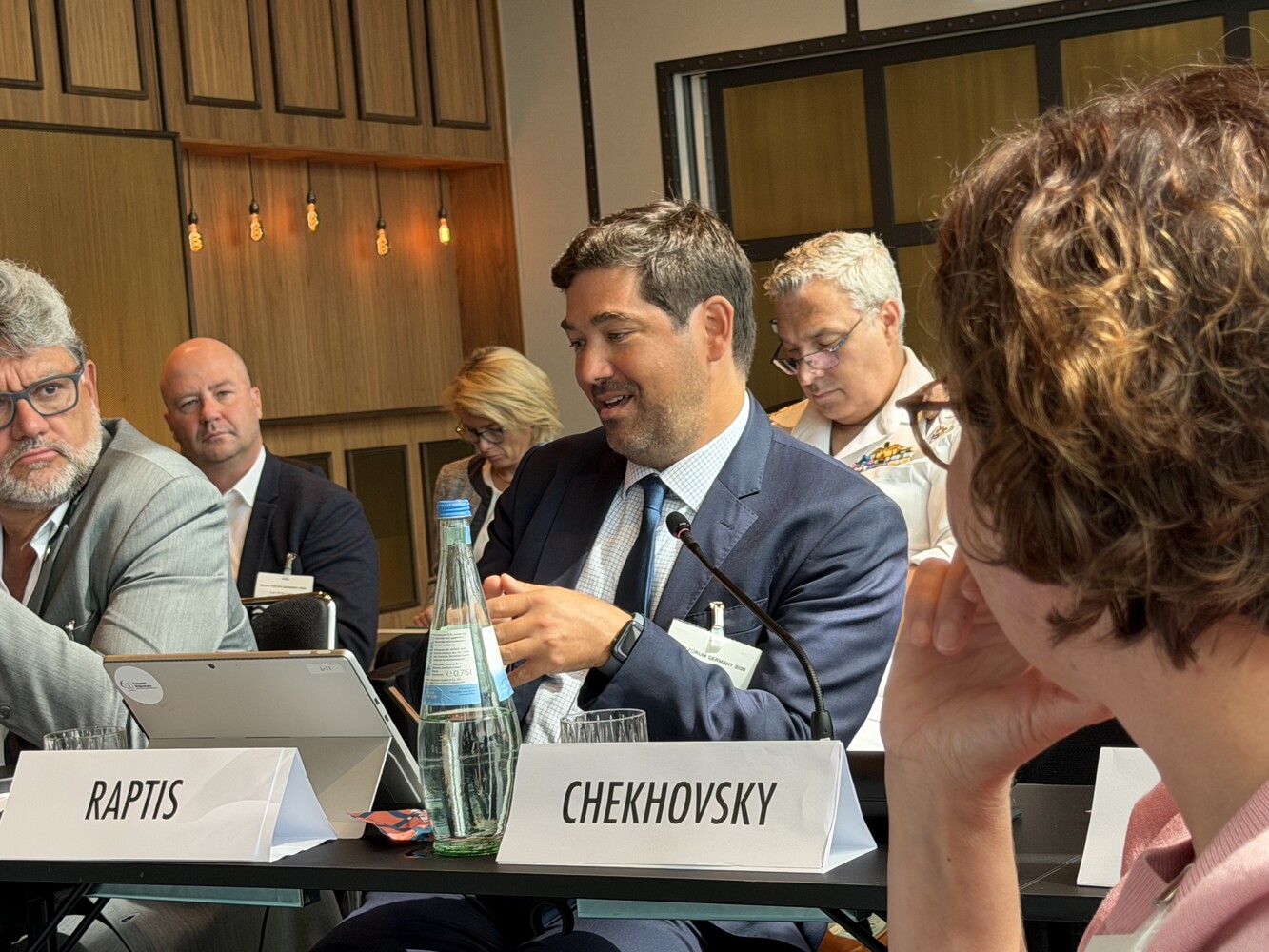
Sotiris Raptis , Secretary General of European Shipowners, described shipping as a geopolitical asset for the continent and a cornerstone of energy and supply-chain security. Yet he also rejected the idea that Europe should respond by closing its markets or imposing broad protectionist barriers. In his view, the European fleet’s geopolitical value will be strengthened by competitiveness, innovation and advanced technology—not by attempting to subsidise labour costs until they match those of lower-cost jurisdictions.
An audience question about remote-controlled and autonomous ships exposed a newer layer of strategic risk. If Europe’s future autonomous vessels are built abroad, dependence may extend beyond hull construction to software, sensors, data systems and remote-control architecture. Shipbuilding capacity then becomes connected to questions of cyber resilience, repair access, military readiness and control over critical technology.
Lüken reinforced this argument by noting that the maritime industrial base has both civilian and military applications. Economic security therefore goes well beyond the cost of an individual commercial vessel. Heavy dependence on external production can create vulnerabilities in emergency ship acquisition, repair capacity, critical equipment supply and access to strategically important technologies.
There was no consensus in Hamburg in favour of protectionism, and that distinction matters. Europe cannot assume that an unrestricted market will automatically preserve every capability it may need in a crisis. It also cannot rebuild a competitive industry simply by sheltering inefficient capacity from competition. The most credible policy tools are likely to involve pre-competitive finance, refund guarantees, demonstration orders, coordinated procurement, commercialisation support and cross-border supply-chain cooperation.
Europe Needs Bankable Business Mechanisms, Not Another Strategy Documen
In his closing summary, moderator Christophe Tytgat, Secretary General of SEA Europe, said the glass remained half full. Europe still has industrial knowledge, engineering talent, complex-vessel expertise, innovative companies and several successful regional clusters. Germany and other countries retain room to rebuild. The session nevertheless produced three clear requirements: cooperation across the entire maritime value chain, access to public finance and policy support, and stronger commercial backing for real investment projects.
The European Maritime Industrial Strategy will ultimately be judged by whether it produces contracts that can be signed, financed and delivered. Owners need European construction proposals with acceptable lifecycle economics, payment terms and delivery security. Yards require order visibility before investing in automation and expanded capacity. Start-ups need testing environments, certification pathways and launch customers. Banks need public institutions capable of sharing construction and refund-guarantee risks over a longer time horizon.
Without those mechanisms, “reviving European maritime industry” risks remaining a political aspiration. Tytgat drew a telling comparison with aerospace: Europe has Airbus, but the maritime sector has no equivalent platform capable of integrating research, manufacturing, customer demand, finance and strategic policy on a comparable scale.
For China, the discussion provided an unusually candid external assessment of what has driven its rise. European maritime executives increasingly see China’s competitive edge as a combination of long-term planning, consistent policy, industrial finance, regional clusters, commercialisation speed and execution. The country’s shipbuilding lead was built through a system in which owners can obtain finance, yards can expand, suppliers can improve through repeated orders, and government bodies can provide industrial space and testing opportunities.
That lead is substantial, but it is not guaranteed to remain uncontested. Japan is preparing to expand shipbuilding output, the United States is developing plans to revive its commercial fleet and yards, and Europe is bringing maritime industry back into discussions of economic security and strategic autonomy. Lüken noted that US commercial shipbuilding output remained below 100,000 gross tonnes, compared with roughly 2.5 million gross tonnes in Europe, illustrating both America’s weak starting point and the scale of the policy effort now being considered.
The next phase of competition will centre on alternative-fuel vessels, autonomous navigation, digital systems, offshore energy, defence requirements and circular production. Many of the technologies, standards and supply chains in these markets have not yet been fixed. Europe still possesses a large stock of relevant knowledge and has begun to recognise the institutional weaknesses that prevent it from scaling that knowledge.
The Hamburg debate showed that Europe has lost more than a succession of ship orders. Over several decades, it has lost investment momentum, supplier density, financing convenience, policy continuity and part of its ability to move innovation into mass production. China’s strongest barrier to entry is similarly larger than the number of docks it operates. Its advantage lies in having organised these elements into a system capable of delivering vessels continuously and at scale.
Europe can still design advanced ships and build some of the most complex vessels in the world. Its task is to turn “we can build it” into a proposition that owners, banks, yards and investors can all support: commercially attractive, financeable, repeatable and secure. Until that commercial loop is restored, the European Maritime Industrial Strategy will remain a strategy. China’s most consequential achievement over the past two decades has been its ability to turn strategy into yards, capacity, orders and deliveries.

READ MORE
 Shipbuilding
Amid China’s Shipbuilding Boom, a State-Owned Yard Quietly Enters Liquidation
 Shipbuilding
Yichang Changyun plans RMB120m inland bulker programme
 Shipbuilding
Steel Giant Shagang Eyes Shipbuilding as a Booming Market Draws Industrial Capital
 Shipbuilding
Another Chinese Bridge Builder Moves Into Shipbuilding
 Shipbuilding
Hengli Secures 12 Tanker Orders, Retaining World’s Largest VLCC Orderbook
 Shipbuilding
Hengli Signs 11 VLAC Contracts in One Week
 Shipbuilding
China ZWI Enters Ocean Shipping with VLGC Acquisition and Chemical Tanker Newbuild Project
 Shipbuilding
World’s First 325,000-DWT Methanol Dual-Fuel Ore Carrier Delivered
 Shipbuilding
CIMC Raffles Extends NOCC Car Carrier Programme to 2030
 Shipbuilding