


Peter Döhle Adds Two More 14,000 TEU Boxships at Hudong-Zhonghua After Five-Month-Early Delivery
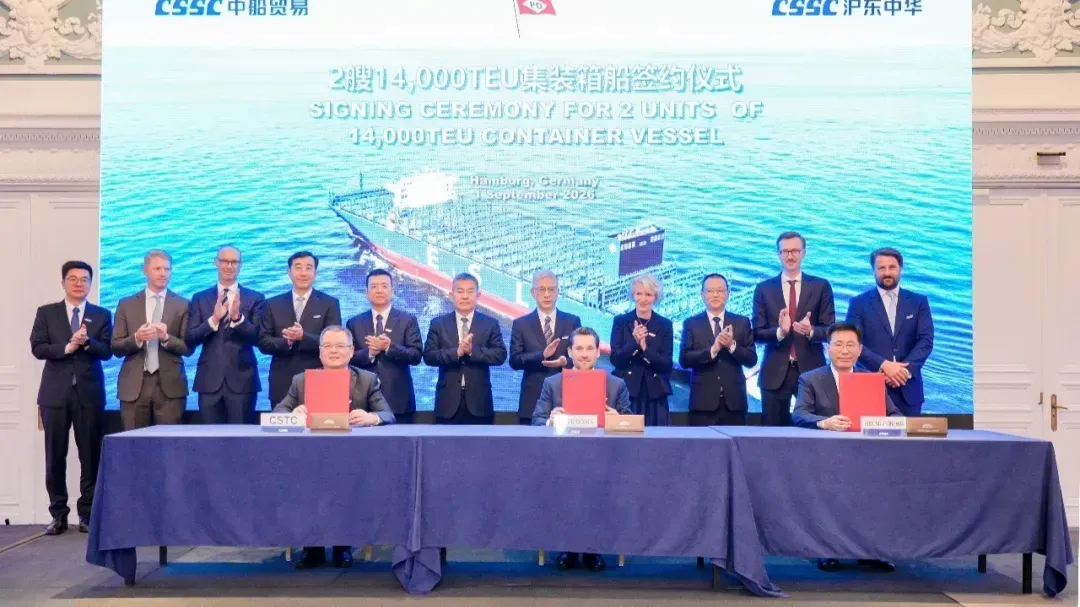
German shipowner Peter Döhle has returned to Hudong-Zhonghua Shipbuilding with a repeat order for two additional 14,000 TEU containerships, expanding its series at the Chinese yard to six vessels.
The newbuilding contracts were formally signed on September 1 during SMM Hamburg 2026 by Peter Döhle, Hudong-Zhonghua Shipbuilding and China Shipbuilding Trading Co. (CSTC).
The deal follows Peter Döhle’s original order placed in June 2024 for four 14,000 TEU methanol-ready containerships at Hudong-Zhonghua.
With the latest two vessels added, the German owner’s 14,000 TEU newbuilding programme at the yard has now grown from four ships to six.
According to earlier market information, the newly ordered pair is expected to be delivered in August and October 2028 respectively. No contract value has been officially disclosed.
Current market assessments put the newbuilding price of a conventional-fuel 13,000–14,000 TEU containership at around $150 million, suggesting a combined market value in the region of $300 million for the two ships. This, however, should be regarded only as a market reference rather than the actual contract price agreed between the parties.
Five months ahead of schedule — and another order follows
The repeat order comes shortly after Hudong-Zhonghua delivered the first vessel in the original four-ship series well ahead of schedule.
On May 26, 2026, the series leader, ESL Singapore, was handed over approximately five months earlier than the contractual delivery date.
For a large containership programme, such an early delivery is commercially significant.
Major shipyards around the world are currently working against historically large orderbooks, while construction of a modern mainline containership requires close coordination across engines, electrical systems, shaft generators, cargo systems, equipment suppliers and a highly complex marine supply chain.
A five-month acceleration therefore gives an owner more than simply an earlier delivery date. It allows the vessel to enter service sooner, generate revenue earlier and provide greater flexibility in fleet deployment.
Against that background, Peter Döhle’s decision to add another two ships only around three months after the delivery of ESL Singapore represents a strong endorsement of the yard’s execution capability.
Repeat orders from an existing customer remain one of the clearest measures of shipyard performance.
Unlike a first-time buyer, a returning owner has already gone through the full project cycle — from design approval and equipment selection to construction supervision, sea trials and final delivery. A decision to order further vessels of the same series therefore reflects experience rather than expectation.
The programme has effectively followed a straightforward commercial sequence:
initial order, construction, early delivery, operational validation and repeat business.
Why 14,000 TEU remains an important size segment
Peter Döhle’s decision to continue investing in 14,000 TEU tonnage is also noteworthy in the broader development of the containership market.
For much of the past decade, attention in the liner sector has focused on the rise of 20,000 TEU and 24,000 TEU ultra-large containerships.
Yet vessels in the 13,000–15,000 TEU range continue to occupy a strategically important position in global liner networks.
They are large enough to achieve substantial economies of scale on major east-west trades, while remaining more flexible than the very largest vessels in terms of port access, cargo density and route deployment.
A 24,000 TEU ship can deliver extremely low slot costs when deployed at high utilisation on the right trade lane. But such ships require deepwater terminals, large volumes of cargo, high-capacity cranes and tightly structured network operations.
A 14,000 TEU vessel can generally be deployed across a broader range of services, including Asia-Europe, transpacific, Middle East, South America, Indian Subcontinent and other long-haul trades.
That flexibility is becoming increasingly valuable as liner networks evolve in response to changing trade patterns, regionalisation, supply-chain restructuring and geopolitical disruption.
For an owner such as Peter Döhle, whose business model has long combined shipowning, chartering and shipmanagement, broadly deployable vessels can also retain strong commercial appeal across different chartering environments and liner counterparties.
A six-ship standardised series also creates operational advantages.
Common vessel designs can reduce crew-training requirements, simplify spare-parts inventories, improve maintenance planning and lower technical-management costs. For the shipyard, series construction supports design maturity, production efficiency and supply-chain optimisation.
Methanol-ready and ammonia-ready
The technical configuration of the vessels is another important part of the programme.
According to Hudong-Zhonghua, the series is equipped with the world’s first methanol-ready WinGD 6X92-1.1 main engine and incorporates a permanent-magnet shaft generator designed to improve overall energy efficiency.
The ships have also been designed with future conversion to both methanol and ammonia in mind.
The emphasis here is on optionality.
Shipping has yet to reach a definitive consensus on the dominant fuel pathway for deep-sea vessels over the coming decades.
LNG, methanol, ammonia, biofuels and potentially synthetic fuels all remain part of the transition landscape, but each comes with different challenges relating to cost, infrastructure, availability, energy density and lifecycle emissions.
At the same time, regulation is steadily increasing the economic cost of carbon.
The EU Emissions Trading System, FuelEU Maritime and future IMO greenhouse-gas measures are all pushing shipowners to consider not only how a vessel performs at delivery, but how competitive that asset will remain throughout a service life that could extend for 20 to 25 years.
For this reason, fuel readiness has increasingly become a form of risk management.
Rather than committing immediately to one fuel whose global bunkering network may still be immature, an owner can build in structural, machinery-space and system allowances that reduce the technical and financial barriers to a future conversion.
For large containerships, such “future-proofing” is likely to play an increasingly important role in long-term charterability, financing conditions and residual asset values.
Peter Döhle deepens its newbuilding exposure to China
The latest contract also fits into a broader trend of renewed fleet investment by Peter Döhle.
Headquartered in Hamburg, Peter Döhle is one of Germany’s best-known privately controlled shipping groups, with longstanding involvement in containerships, bulk carriers, shipmanagement, chartering and maritime services.
In recent years, the company has increased its exposure to newbuilding projects as owners across the container sector seek to modernise fleets and improve energy efficiency ahead of tighter environmental regulation.
Chinese shipyards have become an important part of that strategy.
In addition to the 14,000 TEU series at Hudong-Zhonghua, Peter Döhle has been associated with several other containership newbuilding projects at Chinese yards across different size segments.
The overall direction is clear: the owner is gradually assembling a younger, more efficient containership portfolio with greater flexibility for future fuel conversion.
That matters because competition in the charter market is increasingly influenced by more than vessel availability alone.
Ship age, fuel consumption, carbon intensity, energy-efficiency performance and compatibility with future regulatory requirements are becoming increasingly important in determining the commercial attractiveness of containership assets.
For independent owners and tonnage providers, newer and more efficient vessels can therefore command a growing strategic premium.
Six ships underline Hudong-Zhonghua’s customer stickiness
For Hudong-Zhonghua, the latest order is important for reasons that go beyond the addition of two vessels to its backlog.
Large containership construction is one of the most competitive segments of the global shipbuilding market.
Chinese and South Korean yards compete directly for major international owners, with customers evaluating not only price but also vessel design, fuel efficiency, equipment specification, construction quality, delivery reliability and operational performance.
Winning the first order allows a shipyard to enter an owner’s supplier base.
Winning the repeat order shows that the relationship has worked.
Peter Döhle’s progression from an initial four-ship contract in 2024 to the five-month-early delivery of the first vessel in May 2026, followed by another two-ship order at SMM Hamburg, provides a particularly clear example.
The series’ second vessel is already under construction in dock, while additional units will follow over the coming years.
With the latest contracts, Hudong-Zhonghua will continue delivering 14,000 TEU containerships to Peter Döhle well into the second half of the decade.
The commercial message from the programme is straightforward.
In today’s shipbuilding market, delivery performance is increasingly becoming one of the strongest forms of marketing.
For Hudong-Zhonghua, delivering the first ship five months ahead of schedule has now been followed by the most tangible endorsement available from an owner: another order.

READ MORE
 Shipbuilding
Another Chinese Bridge Builder Moves Into Shipbuilding
 Shipbuilding
Amid China’s Shipbuilding Boom, a State-Owned Yard Quietly Enters Liquidation
 Shipbuilding
Yichang Changyun plans RMB120m inland bulker programme
 Shipbuilding
MISC Signs for Five More LNG Carriers at Hudong-Zhonghua
 Shipbuilding
Steel Giant Shagang Eyes Shipbuilding as a Booming Market Draws Industrial Capital
 Shipbuilding
Hengli Secures 12 Tanker Orders, Retaining World’s Largest VLCC Orderbook
 Shipbuilding
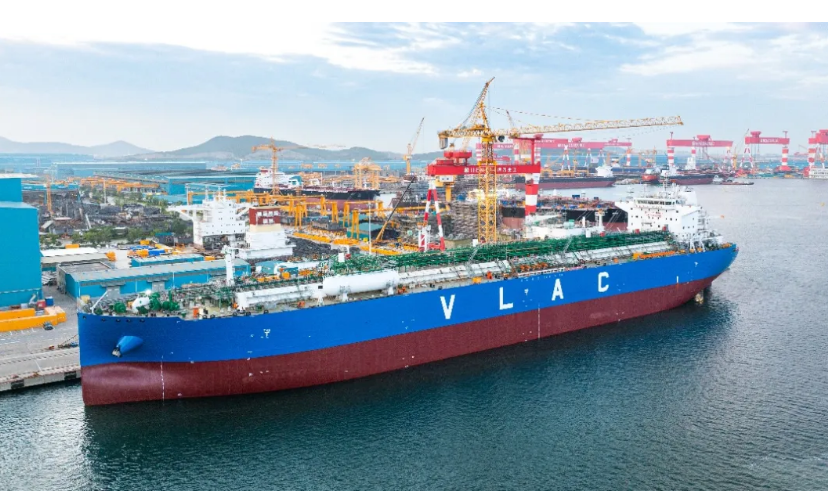
Hengli Signs 11 VLAC Contracts in One Week
 Shipbuilding
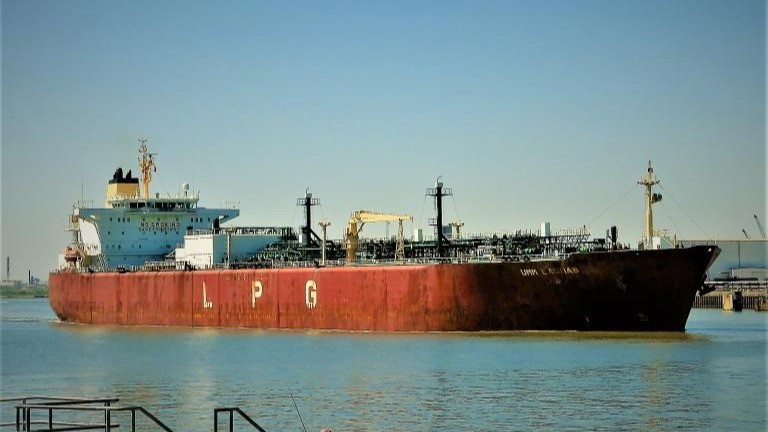
China ZWI Enters Ocean Shipping with VLGC Acquisition and Chemical Tanker Newbuild Project
 Shipbuilding
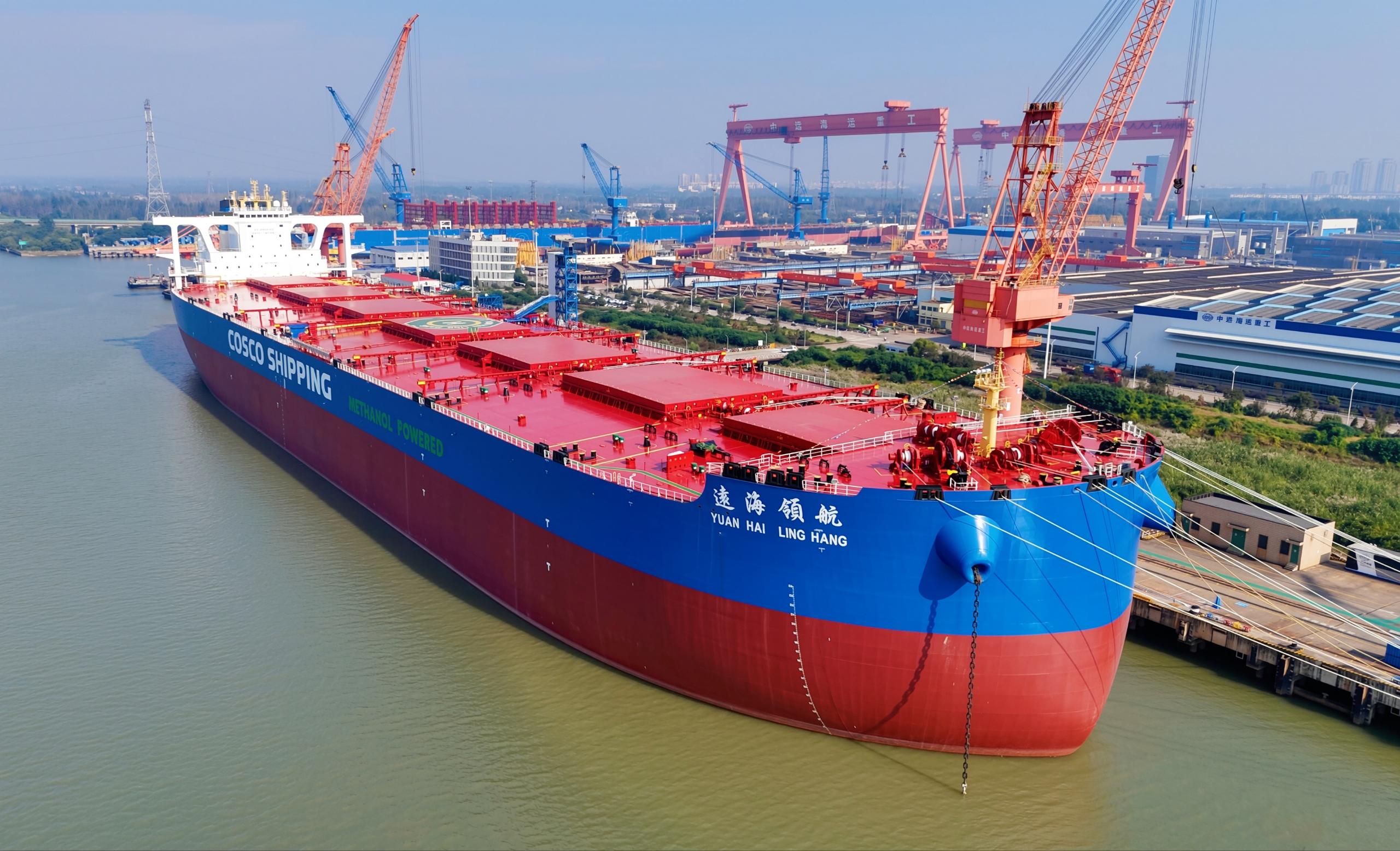
World’s First 325,000-DWT Methanol Dual-Fuel Ore Carrier Delivered
 Shipbuilding