


China ZWI Enters Ocean Shipping with VLGC Acquisition and Chemical Tanker Newbuild Project
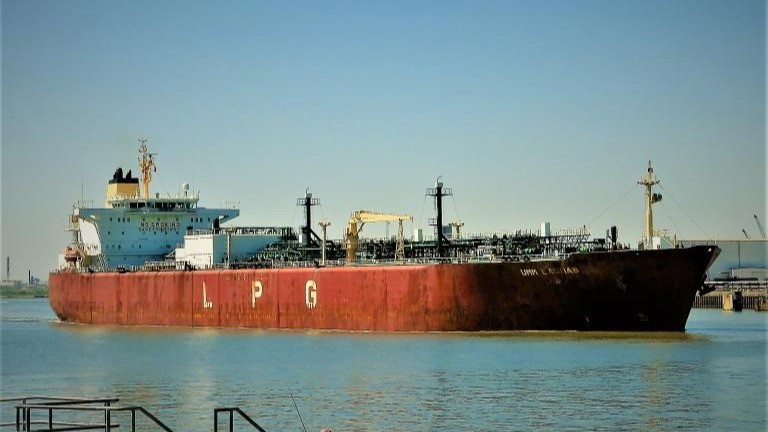
Chinese energy trading business ZWI is expanding into shipowning with the acquisition of an 82,408-cbm very large gas carrier and a stainless steel chemical tanker project in China.
The acquired VLGC, formerly named UMM LAQHAB, now trades as ZWI HONG KONG under the Hong Kong flag. The vessel previously belonged to a joint venture fleet involving Qatari gas shipping company Nakilat and its partners.
ZWI began extending its activities from energy trading into shipping in 2025. Its acquisition of existing tonnage, reported chemical tanker newbuild and establishment of several Hong Kong shipping companies are now giving that expansion a more concrete structure.

An 82,408-cbm VLGC Joins the Fleet
ZWI HONG KONG, IMO number 9359454, was built in July 2008 at Hyundai Heavy Industries’ Ulsan shipyard in South Korea. Vessel database records show a deadweight of 54,538 tonnes, gross tonnage of 47,058, length of 225.28 metres and beam of 36.60 metres. Nakilat’s historical fleet information lists the vessel’s cargo capacity at 82,408 cubic metres.
The ship is designed for ocean transportation of liquefied petroleum gas, principally propane and butane. Its new name and Hong Kong flag appear in vessel history records from August 2026.
Recent voyage information shows the vessel departing Freeport in the US Gulf on 7 October and subsequently declaring Cristobal, Panama, as its destination. Market information describes its intended trading pattern as US Gulf–Asia. Its charterer, cargo interests and any long-term employment arrangements have not been publicly disclosed.

Hong Kong Ownership Structure and Wah Kwong Management
Hong Kong Companies Registry notices show that ZW Investment Group Co., Limited was incorporated on 22 October 2025 and renamed ZWI Group (Hong Kong) Limited on 6 August 2026.
Four other companies—ZW 01 Shipowning Limited, ZW 02 Shipowning Limited, ZW SHIP MANAGEMENT LIMITED and ZW SHIPPING LIMITED—were incorporated in Hong Kong on 7 May 2026. Their establishment provides a corporate framework covering vessel ownership, management and shipping activities.
Company information updated in the vessel database on 13 August identifies ZW 01 Shipowning Ltd as a Hong Kong company established in 2026, with a correspondence address in Shenzhen’s Nanshan district. It lists one vessel in service: ZWI HONG KONG.
The vessel’s ownership history identifies Nakilat Umm Laqhab LLC as the registered owner in March 2025, with ZW 01 Shipowning Ltd appearing in the August 2026 record alongside the new vessel name and flag.
Wah Kwong Ship Management HK is listed as the ship manager, operator, technical manager and company responsible for the vessel’s Document of Compliance under the International Safety Management Code. Hong Kong-based Wah Kwong has activities spanning shipowning, ship management, dry bulk operations and energy.
These records indicate that ZWI’s entry into gas shipping involves an established ship management provider. VLGC operations require specialist expertise in cargo handling, pressure and temperature control, crew training, maintenance and customer vetting. Access to that capability gives an energy trader an operational foundation as it develops its shipping business. ZWI’s full ownership structure and acquisition financing have not been publicly detailed.
A Vessel from Nakilat and Milaha’s Joint Venture Fleet
UMM LAQHAB’s ownership history traces back to cooperation between Nakilat and Milaha, the Qatari maritime and logistics group. Nakilat’s historical fleet list identifies the vessel’s ownership as “Nakilat / Milaha”.
Milaha’s 2025 fact sheet states that it previously held a 50% interest in four VLGCs built in 2008 and 2009 through its joint venture with Nakilat. In 2025, Milaha acquired two vessels from the joint venture and subsequently divested them during the same year. The fact sheet also identifies Milaha as Nakilat’s largest shareholder, with an approximately 36% stake.
Xinde Marine’s coverage in May 2025 examined changes to Nakilat’s older VLGC fleet, including UMM LAQHAB and AL WUKIR. UMM LAQHAB has since appeared in vessel records under the ZWI name. Market information describes ZWI’s transaction as an acquisition from Nakilat, although the precise closing date has not been announced.
Alongside the adjustment of older assets, Nakilat is introducing a new generation of gas carriers. On 30 September, the company announced the naming of ENERGY NORTH at HD Hyundai Samho in South Korea. In that announcement, the vessel was scheduled to enter service on 2 October.
ENERGY NORTH has a cargo capacity of 88,000 cubic metres and can transport LPG and ammonia. It features dual-fuel propulsion and an ammonia-ready design, and forms part of Nakilat’s order for two LNG carriers and four LPG/ammonia carriers at the yard.
The developments illustrate two different approaches to fleet investment: an established gas carrier owner introducing new tonnage, and a new entrant acquiring an existing vessel that can be placed into service more quickly.
Secondhand Transactions Show Continued Demand for Older VLGCs
Recent VLGC transactions provide market context for ZWI’s acquisition.
In its weekly report dated 10 August 2026, shipbroker Compass Maritime listed three secondhand VLGC acquisitions by ADNOC Logistics & Services, the UAE energy transportation and logistics company. The vessels—SUNSTAR, SANSOVINO and SILVIO—were all built at Hyundai’s Ulsan yard in 2016 and have capacities of approximately 82,400 cubic metres.
The report quoted prices of $105 million to $110 million per vessel, with prompt delivery and special survey and drydocking dates extending to 2031. It also recorded the sale of the 2016-built, 82,400-cbm PACIFIC DONGYING at a Chinese auction in March for $83.67 million.
Transactions involving vessels closer in age to ZWI HONG KONG were announced by LPG shipping company BW LPG in July and August. Its 52%-owned subsidiary BW LPG India signed agreements to sell the 2007-built BW ELM and BW BIRCH.
Each transaction was expected to generate approximately $64 million in net cash proceeds on a 100% vessel basis. Estimated gains were approximately $36 million for BW ELM and $37 million for BW BIRCH. BW LPG said the disposals formed part of its fleet renewal strategy, taking advantage of strong secondhand vessel values.
ZWI has not disclosed the price paid for its VLGC. The wider transactions nevertheless show that vessels approaching 20 years of age continue to attract buyers and retain substantial asset value. Their operating returns depend on purchase cost, maintenance and survey requirements, fuel consumption, financing and employment.
Chemical Tanker Project Broadens the Shipping Portfolio
ZWI is also reported to have a stainless steel chemical tanker, ZWI Singapore, under construction at the Dingheng yard in Yangzhou, part of China Merchants Group.
Published project information gives the vessel’s size as either 25,900 dwt or 28,000 dwt. Its final specifications and delivery schedule have yet to be disclosed. The Yangzhou yard has previously built 25,900-dwt stainless steel chemical tankers for domestic owners.
The chemical tanker would serve a different cargo market from the VLGC. While the gas carrier transports large LPG parcels over long distances, a chemical tanker can carry liquid chemicals according to its tank construction, segregation arrangements and approved cargo list.
Delivery of the newbuild would give ZWI exposure to both gas and liquid chemical transportation, extending its shipping activities across two markets connected to energy and chemical trading. The vessel’s cargo range and trading routes will depend on its final configuration and customer contracts.
Bringing Trading and Vessel Employment Together
For an energy trader, ownership of shipping capacity creates an opportunity to coordinate cargo procurement, sales, loading schedules and transportation within the same business.
Where cargo volumes and vessel availability align, this can improve scheduling and reduce dependence on securing tonnage for individual shipments. Shipownership also introduces continuing capital, maintenance, crewing and insurance costs, making consistent vessel employment central to the economics of the business.
The LPG market already includes companies combining shipping and trading. BW LPG, for example, operates an internal LPG trading business alongside its VLGC fleet, participating in cargo sourcing and delivery. Such arrangements connect cargo flows with vessel deployment and commercial operations.
For ZWI, the next developments will be the progress and delivery of ZWI Singapore, the continuing employment of ZWI HONG KONG, and the emergence of cargo commitments or longer-term transportation contracts. Those arrangements will determine how its trading activities support the shipping assets and whether the expanding fleet can secure consistent employment across market cycles.

READ MORE
 Shipbuilding
CIMC Raffles Extends NOCC Car Carrier Programme to 2030
 Shipbuilding
Grimaldi Advances New ConRo and Multipurpose Projects as Fleet Renewal Continues
 Shipbuilding
COSCO Shipping Specialized Carriers Shifts Eight 60,000-DWT Heavy-Lift Ships from Chengxi to Dalian
 Shipbuilding
World’s First 325,000-DWT Methanol Dual-Fuel Ore Carrier Delivered
 Shipbuilding
DryDel Orders Two Kamsarmax Bulkers at Tsuneishi
 Shipbuilding
Erasmus Orders Two More Feeders in Fourth Huangpu Wenchong Deal in Six Months
 Shipbuilding
Chipolbrok Begins Construction of First 60,800 DWT Forward-Accommodation Heavy-Lift Vessel
 Shipbuilding
Jianglong Adds $40m Offshore Vessel Order to 2026 Contract Run
 Shipbuilding
Hubei Firm Proposes RMB427m LNG and Methanol Vessel Programme
 Shipbuilding