


$4 Million for a Panama Canal Slot: The Price of Time Is Surging
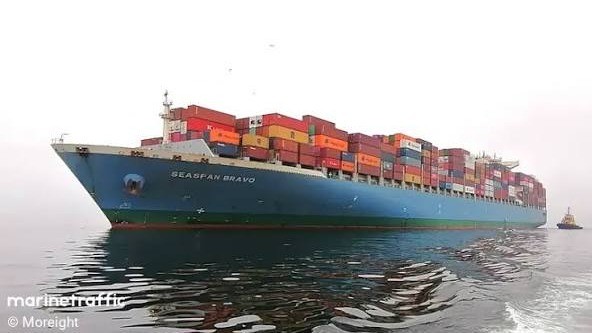

The 10,010 TEU containership SEASPAN BENEFACTOR reportedly paid about $4 million to secure priority transit through the Panama Canal, as waiting times for Neopanamax vessels on the Pacific-to-Atlantic route climbed to around 10 days. At the same time, the Canal is progressively tightening draft restrictions, with the maximum allowable Neopanamax draft set to fall to 47.5 feet from September 3. Congestion, water levels and the rising value of schedule reliability are once again putting the Panama Canal at the centre of global shipping markets.
A 10,010 TEU containership has reportedly paid around $4 million simply to secure an earlier passage through the Panama Canal.
Flexport disclosed on August 11 that the owner of SEASPAN BENEFACTOR secured a priority transit slot earlier this week with a bid of roughly $4 million, a figure close to record levels and far above recent average auction prices.https://www.flexport.com/blog/the-4-million-fast-pass-through-the-panama-canal/
Bloomberg subsequently reported that the payment was made by the shipowner, although Seaspan did not comment and the Panama Canal Authority, or ACP, did not confirm either the vessel identity or the exact amount.
SEASPAN BENEFACTOR is currently operated by Ocean Network Express, or ONE, on an Asia–US East Coast service operated within the Premier Alliance and Evergreen network.
While Seaspan may have been the formal party participating in the booking process as registered owner, the commercial burden of the transit cost would more likely sit with the vessel’s operator or ultimately be allocated under the relevant charterparty and operating arrangements. The exact contractual allocation has not been publicly disclosed.
Flexport said it had 30 containers belonging to 14 customers aboard the ship.
Using the vessel’s nominal capacity of 10,010 TEU, equivalent to roughly 5,005 FEU, a $4 million auction payment works out to around $800 per 40-foot container slot on a purely theoretical full-capacity basis.
That calculation is striking, but one distinction is crucial.
The $4 million was not the vessel’s normal Panama Canal toll.
It was the price paid in an auction for a scarce transit slot.
$4 million buys time
The Panama Canal operates a combination of advance booking and auction mechanisms.
Ships that obtain reserved slots transit according to the booking system. Vessels unable to secure a normal reservation but requiring urgent passage can compete for additional transit opportunities.
The ACP’s tariff schedule describes auctioned transit slots simply as “Best Offer.”
In other words, the auction price is market-driven.
A standard Neopanamax booking currently costs $100,000, while certain last-minute Neopanamax booking options are substantially higher. Auctioned slots, however, can rise into the millions of dollars when demand becomes intense.
A similar case emerged earlier this year when an LPG carrier was reported to have bid close to $4 million for a Panama Canal slot.
At the time, the ACP stressed that such extraordinary prices reflected commercial urgency, freight market conditions, bunker costs, cargo economics and the willingness of individual shipowners or operators to pay for time. They were not equivalent to an official increase in Panama Canal tolls.
Auction prices have since climbed further.
According to data cited by the Financial Times, Panama Canal transit-slot auctions have averaged about $1.1 million so far in August, more than 16 times the average level seen during the same period last year.https://www.straitstimes.com/world/ship-pays-5-million-to-skip-line-to-cross-panama-canal
In recent weeks, average auction prices for some large Neopanamax slots reportedly climbed to around $2.5 million, while individual Neopanamax auction prices since late July reached as high as approximately $3.78 million.
Against that background, the roughly $4 million reportedly paid for SEASPAN BENEFACTOR still sits at the very top end of the market.
Flexport also highlighted the worsening queue.
As of the afternoon of August 11, about 103 vessels were reportedly waiting around the Canal, including 72 with confirmed reservations and 31 still waiting for transit opportunities.
Waiting times for unreserved Neopanamax vessels heading from the Pacific to the Atlantic had risen to around 10 days, the highest since May.
Flexport also noted that its view of the auction calendar showed no remaining auction availability for the rest of August at that time, with the next visible regular slot not until September 7.
For a containership operating a fixed weekly service, a 10-day delay can have consequences far beyond the vessel itself.
Port windows can be missed. Feeder connections can be disrupted. Rail and truck arrangements may need to be rescheduled. The next voyage in the rotation may also be affected.
That is why the economics of a $4 million payment cannot be assessed simply against the daily operating cost of one ship.
For liner operators, the value of avoiding a major schedule disruption can extend across an entire service network.
What does a 10,000 TEU ship normally pay?
The ACP’s current tariff structure helps put the $4 million payment into perspective.
For Neopanamax containerships with a capacity of 10,000 TEU or more, the current toll structure includes a fixed charge of $300,000 per transit, plus a capacity-based charge of $30 per TEU.
Loaded containers are then charged separately, with laden units assessed at $45 per TEU, while empty units are charged at a much lower rate.
Using SEASPAN BENEFACTOR as a simplified example:
- Fixed toll component: $300,000
- Nominal capacity charge for 10,010 TEU: about $300,300
- If all 10,010 TEU were assumed to be laden: about $450,450
That produces a simplified core toll estimate of approximately $1.05 million.
The actual payment would depend on the ship’s real cargo mix, laden and empty containers, and other applicable services.
Additional costs can include reservation charges, tug services, line-handling fees and freshwater surcharges linked to Gatun Lake conditions.
The distinction is therefore significant.
A normal transit for a ship of this size already costs well above $1 million once the full range of charges is considered.
The reported $4 million auction payment came on top of that broader transit cost, purely to secure scarce access to an earlier slot.
Traffic is again approaching the Canal’s upper operating range
The latest ACP operating figures show why competition for slots is intensifying.
In July 2026, an average of 35.4 vessels per day arrived at the Panama Canal, while oceangoing transits averaged 34.03 vessels per day.
Neopanamax transits totalled 310 during the month, averaging exactly 10 ships per day.
The ACP generally places Neopanamax lock capacity at around 9–11 vessels per day, while the long-term sustainable capacity of the Canal as a whole is roughly 36–38 transits per day, depending on vessel mix and operating restrictions.
July’s average of 34.03 oceangoing transits per day was therefore already relatively close to the Canal’s sustainable operating ceiling.
Trade patterns are adding pressure.
Disruptions around the Middle East have redirected parts of global crude oil, refined products, LPG and chemical flows.
Greater Asian demand for cargoes originating from the US Gulf has increased the commercial importance of Panama for energy shipping between the Atlantic and Pacific basins.
That has brought more tankers and gas carriers into competition for Canal capacity at precisely the time when water conditions are becoming less favourable.
In July, the ACP offered 306 auction booking opportunities, of which 247 were used, equivalent to a utilisation rate of about 80.7%.
Draft restrictions are tightening again
The second major pressure point is water.
The ACP has progressively lowered the maximum allowable draft for Neopanamax vessels this summer.
From July 3, the maximum allowable draft was reduced to 49.5 feet, or 15.09 metres tropical freshwater draft.
From July 24, that was lowered further to 49.0 feet, or 14.94 metres.
The ACP has already announced another series of reductions:
From August 15: 48.5 feet, or 14.78 metres
From August 26: 48.0 feet, or 14.63 metres
From September 3: 47.5 feet, or 14.48 metres, until further notice
The ACP has attributed these measures to Gatun Lake levels, hydrological forecasts and the continuing effects of El Niño.
From early July to early September, the maximum allowable Neopanamax draft will therefore decline by two feet.
Compared with the roughly 50-foot draft typically associated with normal Neopanamax operations, the reduction reaches 2.5 feet.
For vessels already operating close to their draft limits, this directly reduces cargo-carrying capability.
Large containerships, LPG carriers, LNG carriers, tankers and other deep-draft Neopanamax vessels may need to reduce cargo intake in order to comply.
The number of ships passing the Canal may remain unchanged, yet the amount of cargo transported per transit can decline.
The ACP has stressed that the latest draft restrictions do not currently require a reduction in the number of available daily transit slots.
For now, the constraint is primarily affecting how deeply ships can load rather than how many ships can transit.
That distinction could become critical if water conditions deteriorate further.
Maintenance adds another layer of pressure
Scheduled lock maintenance is also reducing operational flexibility.
The ACP has planned a series of maintenance periods for the Panamax locks in late August and September.
Maintenance is scheduled on August 25, 26 and 27, followed by a longer window beginning September 1.
At Miraflores, maintenance work on the west-side culvert is scheduled to continue from September 1 to September 12.
On the Neopanamax side, work has also been scheduled at the Agua Clara locks later in September.
None of these factors in isolation has yet returned the Panama Canal to the severe restrictions seen during the 2023 drought.
The current pressure instead comes from several developments occurring at the same time.
Energy trade flows are adding vessels.
Daily traffic is already operating close to the Canal’s sustainable capacity range.
Draft restrictions are reducing the amount of cargo some ships can carry.
Maintenance is narrowing the system’s operational buffer.
And in the middle of all this, the auction market is assigning an increasingly high price to one particularly scarce commodity:
certainty of transit.
From gas carriers and tankers to containerships
Million-dollar Panama Canal slot auctions have historically been associated more often with LPG carriers, LNG ships, tankers and chemical carriers.
Those ships can carry extremely high-value cargoes, while spot freight earnings can fluctuate dramatically. Saving several days can therefore justify a very large premium.
The case of SEASPAN BENEFACTOR points to a broader development.
A 10,010 TEU containership reportedly paying around $4 million for priority access shows that the value of Panama Canal capacity is now being transmitted directly into liner schedule economics.
Flexport has already advised cargo owners routing through Panama to reassess schedule buffers for the fourth quarter and consider alternatives, including routing via US West Coast ports followed by inland rail or truck transport.
The current imbalance may still prove temporary.
But the next few weeks will be closely watched.
From September 3, the maximum Neopanamax draft is scheduled to fall to 47.5 feet.
If Gatun Lake levels deteriorate beyond current projections and the ACP eventually moves from restricting how much each vessel can carry to restricting how many vessels can transit each day, the impact on container shipping, LPG, crude oil and refined-product trades could become considerably larger.
For now, the reported $4 million “fast pass” has already revealed what the market is willing to pay when time itself becomes scarce.


READ MORE
 Ports & Terminals
Pinglu Canal opens a new river-to-sea route for southwest China
 Ports & Terminals
China’s $10.7bn Pinglu Canal to Open Sept. 16, Cutting Southwest–ASEAN Shipping Route by 560 km
 Ports & Terminals
Northern Europe Port Strikes Add New Pressure to Asia–Europe Container Schedules
 Ports & Terminals
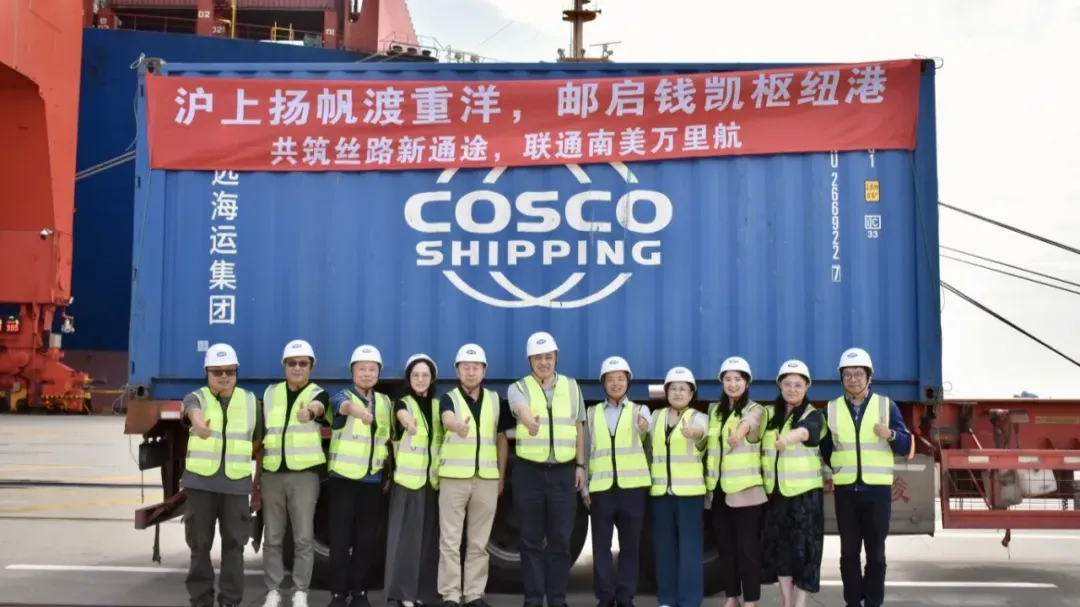
COSCO SHIPPING and Shanghai Post Launch 28-Day Postal Sea Route to Peru via Chancay
 Ports & Terminals
Shanghai-Ningbo Delays Stretch to 11 Days as Typhoon Backlog Spills Into Liner Networks
 Ports & Terminals
Container Schedule Reliability Slumps to 56.4% as Port Congestion Spreads
 Ports & Terminals
Hormuz Toll Debate Tests the Rules Governing the World’s Strategic Straits
 Ports & Terminals
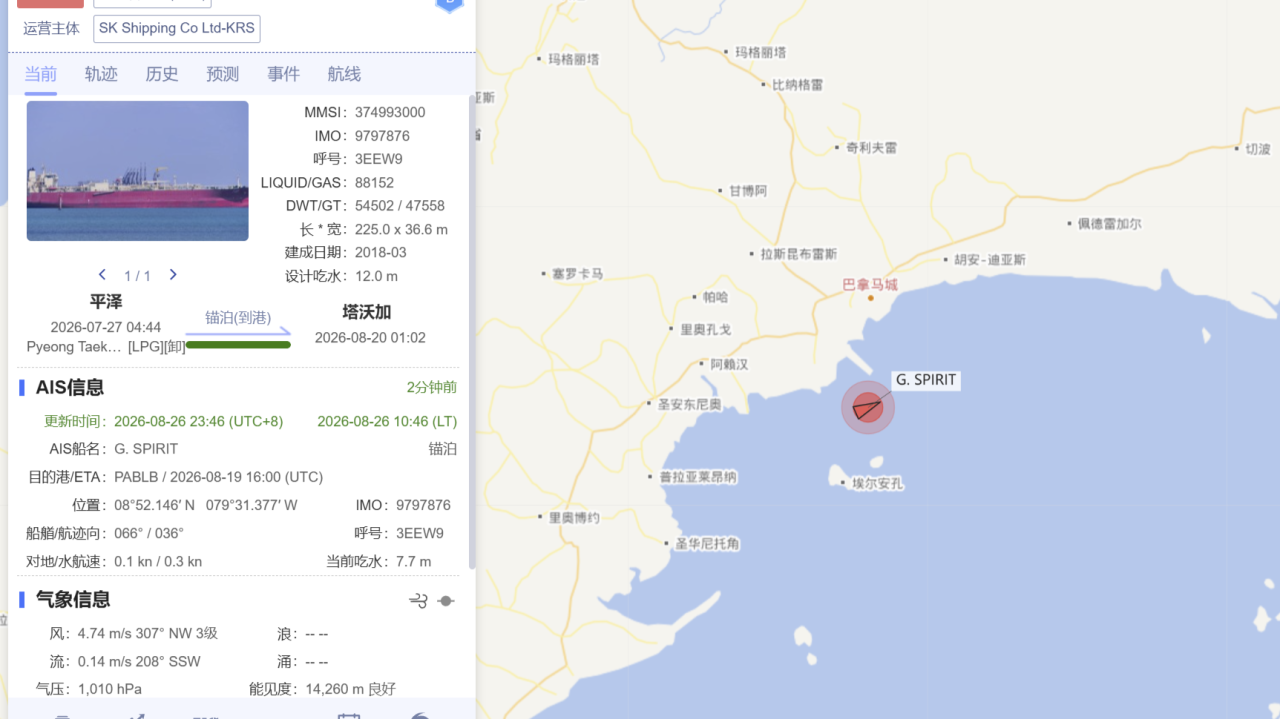
Record $5.3 Million Panama Canal Bid: SK Gas Secures Transit Slot for G.SPIRIT
 Ports & Terminals
Global No. 2 Changes Hands: Ningbo-Zhoushan Overtakes Singapore for the First Time in H1
 Ports & Terminals