


Secured orders for 253 newbuildings in 7 month,Hengli Plans to Recruit Another 100,000 Workers
After Shipowners Ordered 253 Newbuildings at Hengli in Seven Months, the Yard Plans to Recruit Another 100,000 Workers
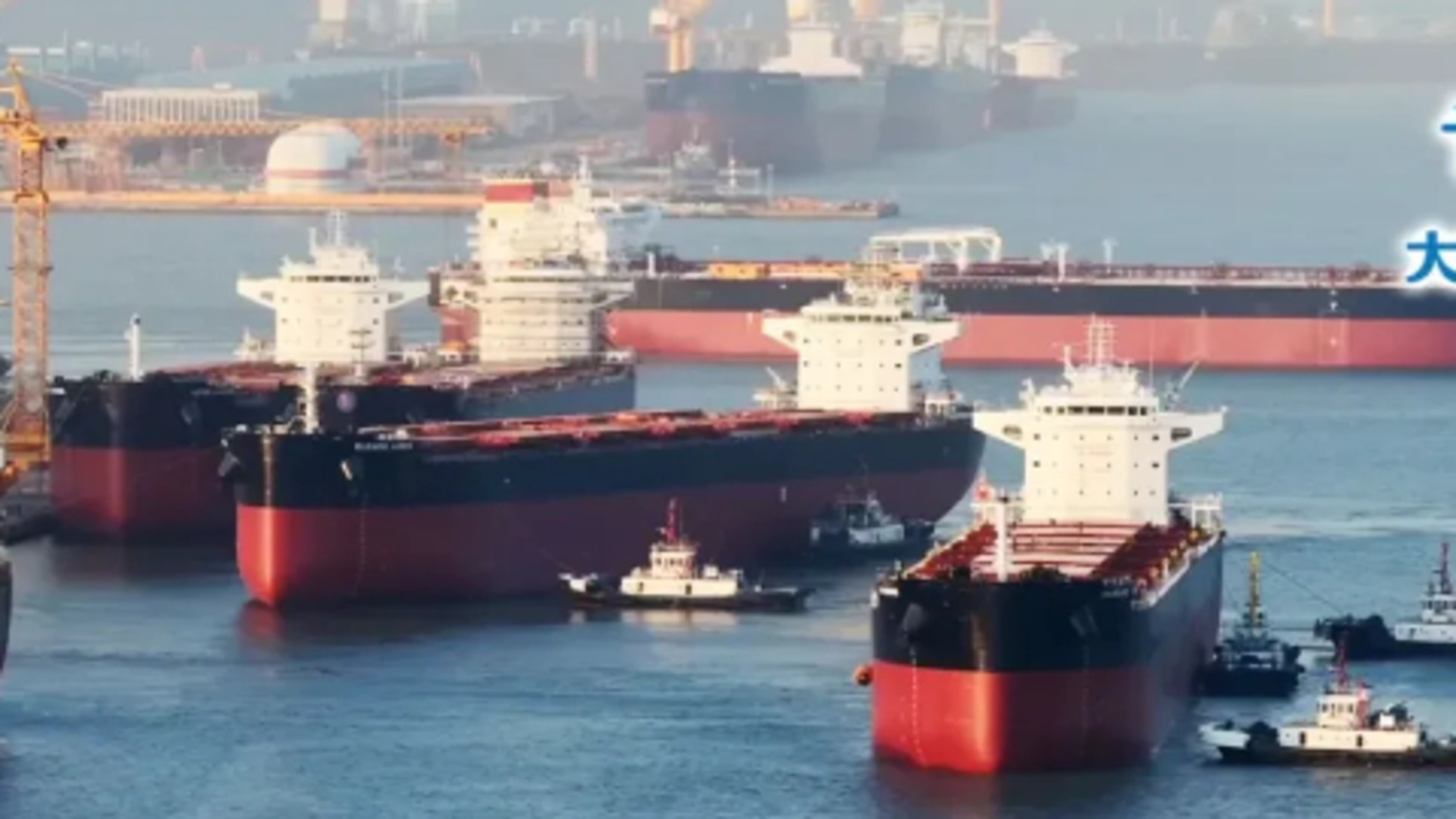
Shipowners placed orders for 46 newbuildings worth more than RMB30 billion at Hengli Heavy Industry in July, following 207 vessels ordered at the yard during the first half of 2026. With deliveries scheduled through 2030, the Chinese shipbuilder is now expanding its docks, engine production, supporting facilities and industrial workforce on an extraordinary scale.
Shipowners placed orders for 46 newbuildings at Hengli Heavy Industry in July alone, with a combined contract value exceeding RMB30 billion, equivalent to approximately $4.42 billion.
The vessels cover four major commercial shipping segments: bulk carriers, containerships, tankers and gas carriers.
Together with the 207 newbuilding orders secured by the yard during the first half of 2026, the July contracts brought the total number of vessels ordered at Hengli during the first seven months of the year to 253.
That is an average of more than 36 ships per month.
For a privately owned shipbuilding operation that resumed production only a little more than three years ago, the pace of expansion is remarkable.
Orders are accelerating
During the first half of 2026, shipowners placed orders for 207 newbuildings at Hengli Heavy Industry.
The total comprised 94 tankers, 56 containerships, 49 bulk carriers and eight very large ammonia carriers.
Tankers and containerships together accounted for 150 vessels, or 72.5% of the first-half total. Bulk carriers continued to provide a stable volume of series orders, while VLACs entered Hengli’s orderbook as a distinct and increasingly important product line.
During the same six-month period, Hengli delivered 40 vessels.
The company said its cumulative order intake since restarting the shipbuilding business had exceeded 500 vessels, with delivery positions extending into 2030.
The pace of contracting accelerated further during the second quarter.
At the Posidonia shipping exhibition in Greece in June, Hengli signed agreements with six shipowners covering 21 firm newbuildings and four options.
The package included 6,000-teu containerships, 82,000-dwt Kamsarmax bulk carriers, 181,000-dwt Capesize bulkers, LR2 product tankers and Suezmax crude carriers.
The total value of the projects approached RMB15 billion, equivalent to approximately $2.21 billion. Firm contracts worth more than RMB10 billion, or about $1.47 billion, had already become effective.
Following Posidonia, shipowners ordered another 16 vessels across five ship types at Hengli within just 10 days. Those contracts were valued at more than RMB8 billion, equivalent to approximately $1.18 billion.
Then came July’s 46-vessel order haul, worth more than RMB30 billion.
The succession of multibillion-dollar contract packages over a period of only two months shows that Hengli’s commercial expansion has entered another stage.
A very different orderbook
A review by XINDE MARINE NEWS of Clarkson Research newbuilding data shows how rapidly the structure of orders placed at Hengli has changed.
In 2023, Clarkson recorded 36 newbuildings ordered at Hengli, including 34 bulk carriers and two tankers. Bulk carriers were still the yard’s main route back into the international newbuilding market.
In 2024, the number increased to 101 vessels.
The portfolio had already expanded to include 54 bulk carriers, 20 containerships, 17 tankers of different sizes, six ore carriers and four gas carriers.
In 2025, Clarkson data identified 99 newbuildings ordered at Hengli, including 44 crude and product tankers, 28 containerships and 25 bulk carriers.
By then, the yard had moved away from a predominantly bulker-focused orderbook and established a broader mix of containership, tanker and dry bulk projects.
The change has become even more pronounced in 2026.
As of July 16, Clarkson had recorded 165 new orders linked to Hengli for the year. Hengli’s own figures, however, showed 207 orders during the first half, followed by another 46 vessels in July.
The difference reflects the time lag involved in entering recently signed contracts into third-party databases, as well as projects where the final shipowner has not been disclosed or where vessels originally reserved by Hengli have subsequently been transferred to external owners.
For that reason, Xinde Marine News is using Hengli’s official figure of 253 orders during the first seven months as the primary reference.
From a yard dominated by bulk carrier construction in 2023, Hengli is now simultaneously receiving series orders for VLCCs, Suezmax tankers, large and mid-sized containerships, Capesize bulkers and VLACs.
It is rapidly becoming a full-range commercial shipbuilder.
Greek shipowners place repeat orders
Two independently developed Hengli designs featured prominently in the July order intake.
Greek shipowner Minerva Marine Inc. placed a batch order for 3,100-teu containerships.
The design is intended for regional services and feeder fleet renewal, targeting demand created by the ageing mid-sized containership fleet and changing regional trade patterns.
Greek shipowner Evalend Shipping Co S.A. ordered 88,000-cbm VLACs at the yard.
Hengli has not disclosed the number of vessels ordered by Minerva or Evalend, nor has it published the complete shipowner and vessel breakdown for the 46 July contracts.
Even so, the significance of the two orders is clear.
Hengli’s proprietary design portfolio is expanding beyond conventional bulk carriers and tankers into regional containerships and technically more demanding gas carriers.
At the end of July, Hengli also announced that contracts for six VLACs ordered by three international shipowners had become effective within a single week.
The package comprised four 93,000-cbm VLACs and two 88,000-cbm VLACs.
Together with the eight VLACs ordered at Hengli during the first half, the yard received orders for at least 14 VLACs during the first seven months of 2026.
The gas carrier segment is therefore moving quickly from an experimental product line into a series-construction business.
From slipway construction to in-house cargo tanks and engines
Hengli’s progress in gas carriers is not limited to the number of contracts signed.
On June 23, the shipbuilder launched its first 93,000-cbm VLAC.
The vessel was described as the world’s first VLAC to be constructed and successfully launched from a slipway, challenging the long-established practice of building very large gas carriers inside dry docks.
The vessel is equipped with cargo tanks manufactured by Hengli and an LPG dual-fuel engine produced by Hengli Heavy Industry.
By bringing hull construction, cargo containment systems and propulsion machinery closer together within the same industrial group, Hengli is developing greater control over the most critical parts of gas carrier construction.
The company has established production capabilities covering LNG-, LPG-, methanol- and ammonia-related dual-fuel engines.
Closer integration between shipbuilding, cargo tank production and marine engine manufacturing can reduce the risk of vessels waiting for delayed machinery or other critical equipment.
It may also help Hengli control construction costs and delivery schedules.
With construction slots at many leading Asian shipyards already heavily committed, that integrated capacity is becoming an important commercial advantage.
Another 100,000 workers
After receiving such a large volume of newbuilding orders, Hengli now faces a more practical question: who will build all these ships?
Hengli Group chairman Chen Jianhua recently said the company’s shipbuilding operations had a workforce of 110,000 people during the first half of 2026.
The workforce includes design, engineering and management personnel, as well as welders, fitters, painters, grinders and other industrial workers.
According to Chen, an ordinary welder at Hengli earns an average of approximately RMB550 per day, equivalent to about $81 based on the August 4 exchange rate.
During the second half of the year, Hengli plans to recruit another 100,000 industrial workers.
The group also plans to offer more than 5,000 positions to graduates from vocational colleges and universities, including bachelor’s and postgraduate candidates.
The vacancies will mainly cover marine engines, shipbuilding, offshore engineering and equipment manufacturing.
The reported workforce of 110,000 is understood to represent the wider employment base supporting Hengli’s shipbuilding facilities and associated projects, rather than only permanent employees directly registered with the shipyard.
The planned recruitment of another 100,000 people is also likely to include subcontractors, construction workers and employees supporting the surrounding marine equipment and industrial supply chain.
Even with that broader definition, demand for another 100,000 workers is highly unusual by global shipbuilding standards.
The recruitment drive reflects the scale of Hengli’s continuing expansion.
As new docks, production workshops, engine facilities and equipment plants enter operation, the company needs to establish a workforce capable of supporting what it intends to become a fully integrated mega-shipbuilding complex.
Three million tonnes of steel and 300 engines a year
Hengli says its current facilities have annual steel-processing capacity of 3 million tonnes and annual production capacity for 300 marine engines.
Four major construction docks are capable of simultaneously building series of VLCCs and containerships of 10,000 teu and above.
Shipbuilding, offshore engineering, marine engine production, cargo tank manufacturing and supporting equipment are being developed as part of a single industrial cluster on Changxing Island in Dalian.
The strategy is to bring together activities that are often spread across several suppliers and locations, including design, assembly, engine production and critical equipment manufacturing.
Standardised designs, bulk procurement, series construction and production-line delivery schedules are intended to lower costs and increase output.
From an ordering perspective, the model is already attracting international attention.
Shipowners that have placed orders at Hengli include MSC Mediterranean Shipping Company , CMA CGM , Eastern Pacific Shipping Pte. Ltd. , Capital Ship Management Corp. , Dynacom Tankers Management, Ltd. , Minerva, THENAMARIS , Evalend and Frontline Management AS .
Some owners have returned with additional contracts or expanded their cooperation into new ship types before all the vessels from their initial orders have been delivered.
The focus now shifts to delivery
With shipowners ordering 253 newbuildings at Hengli during the first seven months of 2026, cumulative orders exceeding 500 vessels, deliveries scheduled through 2030 and another 100,000 workers to be recruited, the company is undertaking one of the most ambitious shipbuilding expansions seen in recent years.
During international shipping events in China and overseas this year, shipowners and maritime executives from Singapore, Greece, Denmark, Norway and other markets have repeatedly asked Xinde Marine News about Hengli’s development.
One question has appeared frequently: can the yard deliver such a large orderbook on time?
For Hengli, the number of new orders is no longer the only measure of success.
As increasing numbers of VLCCs, containerships, bulk carriers and VLACs enter construction, assembly, launching and delivery stages at the same time, the company will face growing challenges in workforce training, subcontractor management, quality control, equipment procurement, project coordination and workplace safety.
VLACs, dual-fuel vessels and large containerships also demand higher standards in welding, cryogenic materials, cargo systems, engine commissioning and project management.
Recruiting another 100,000 people may address the question of workforce numbers.
Turning such a large influx of new workers into a stable and skilled production organisation will be far more difficult.
That will determine whether Hengli can convert its orderbook advantage into a delivery advantage.
Since taking over the dormant former STX Dalian facilities in 2022, Hengli has rebuilt both production capacity and commercial momentum at remarkable speed.
The company has already demonstrated that it can attract orders for hundreds of ships.
The next record that matters may not be how many more newbuildings shipowners order at Hengli, but whether those vessels can be delivered on schedule and to the quality expected by their owners.

READ MORE
 Shipbuilding
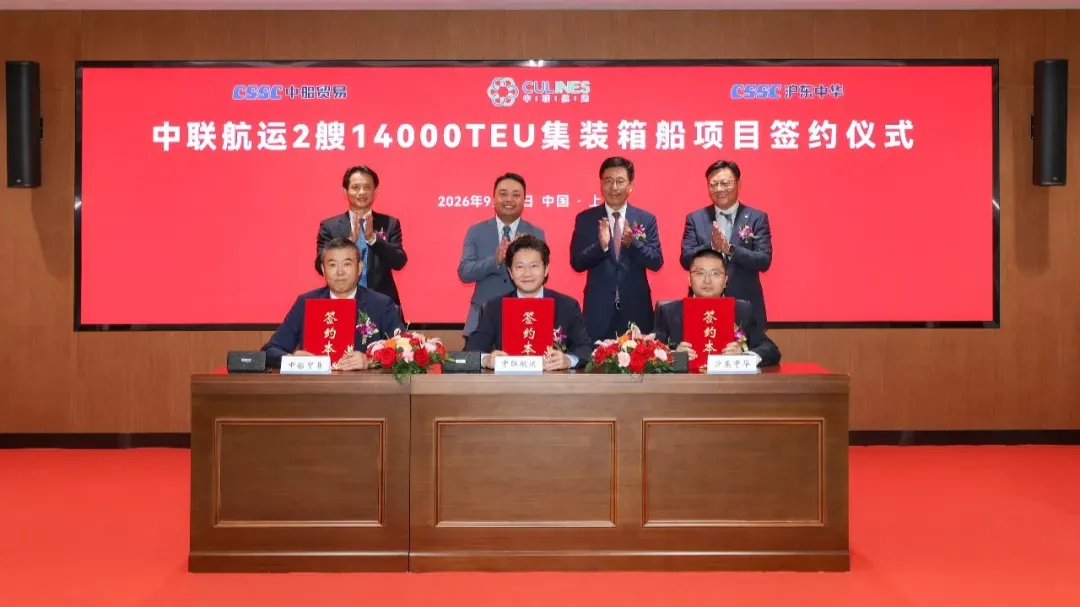
CULines Steps Up Fleet Expansion with First 14,000 TEU Newbuildings
 Shipbuilding
CMA CGM linked to $3bn Yangzijiang megamax programme
 Shipbuilding
Advantage Tankers adds MR2 quartet as product tanker orderbook builds
 Shipbuilding
Ren Yuanlin: Shipbuilding Still Has 8–10 Years of Strong Growth Ahead
 Shipbuilding
Seven Months, $78 Million: George Procopiou Reaps Windfall on Hengli-Built VLCC
 Shipbuilding
12 24,000TEU Ultra-large Container Ships Awarded to Yangzijiang Shipbuilding; Private Chinese Shipbuilder Lands US$3 Billion Mega Deal
 Shipbuilding
Wealth Holdings builds three-tier MPP fleet with up to 18 China newbuilds
 Shipbuilding
Schoeller Returns to Chengxi for Four More MRs as China Gains Ground on Korea
 Shipbuilding
China‘s Dajin Builds Its Own Fleet as Shipbuilding Orderbook Reaches RMB 12 Billion
 Shipbuilding