


Titan Wind Secures Six LR2 Tankers as China’s Offshore Builders Move Deeper into Commercial Shipping
The wind equipment specialist has secured eight firm tanker orders and two options within ten days, highlighting a broader shift as Chinese offshore, wind-power and specialised shipbuilders enter the mainstream merchant vessel market.
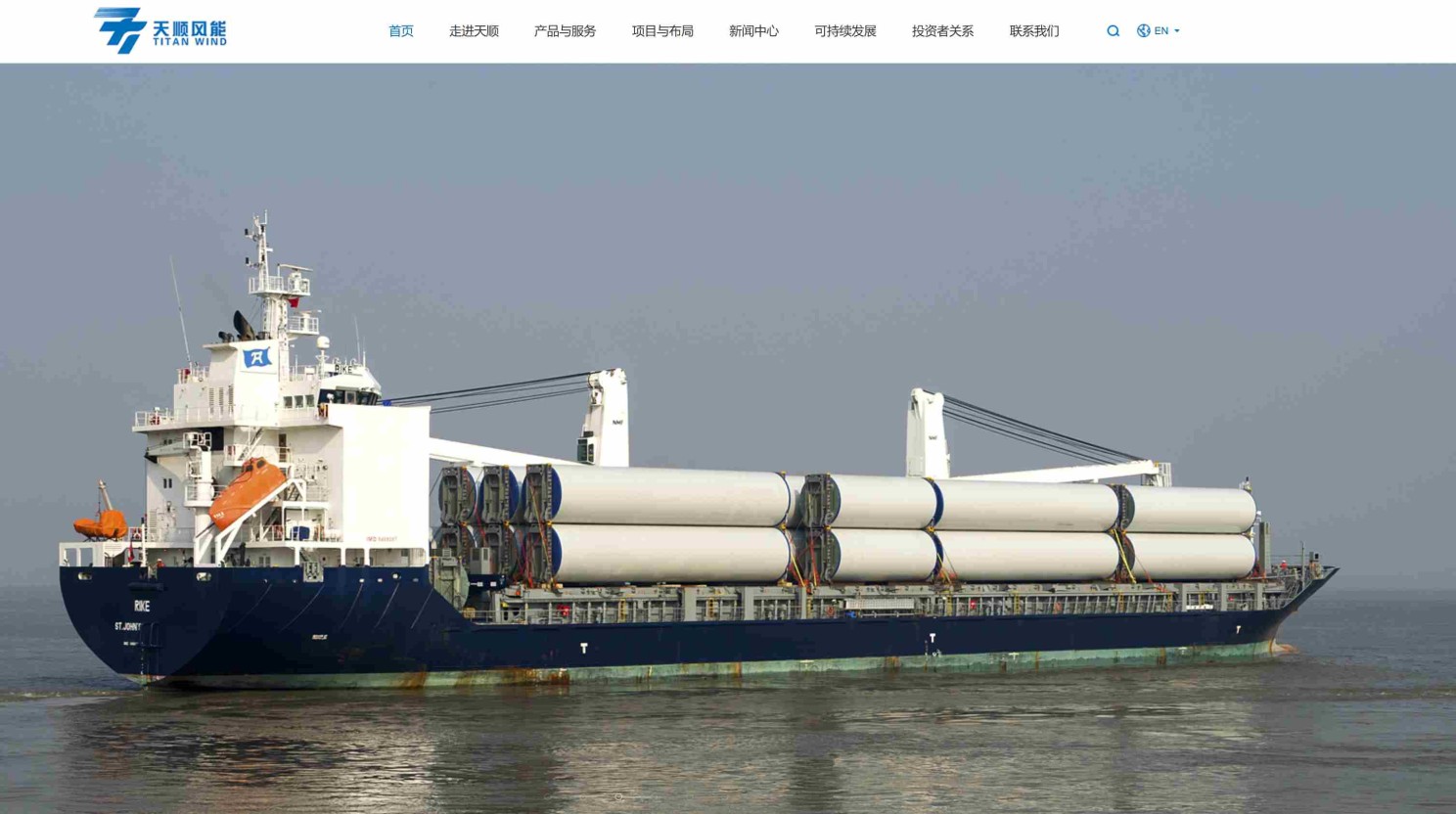
A Chinese company best known for wind towers, turbine blades and offshore wind foundations is rapidly emerging as a new contender in the large tanker newbuilding market.
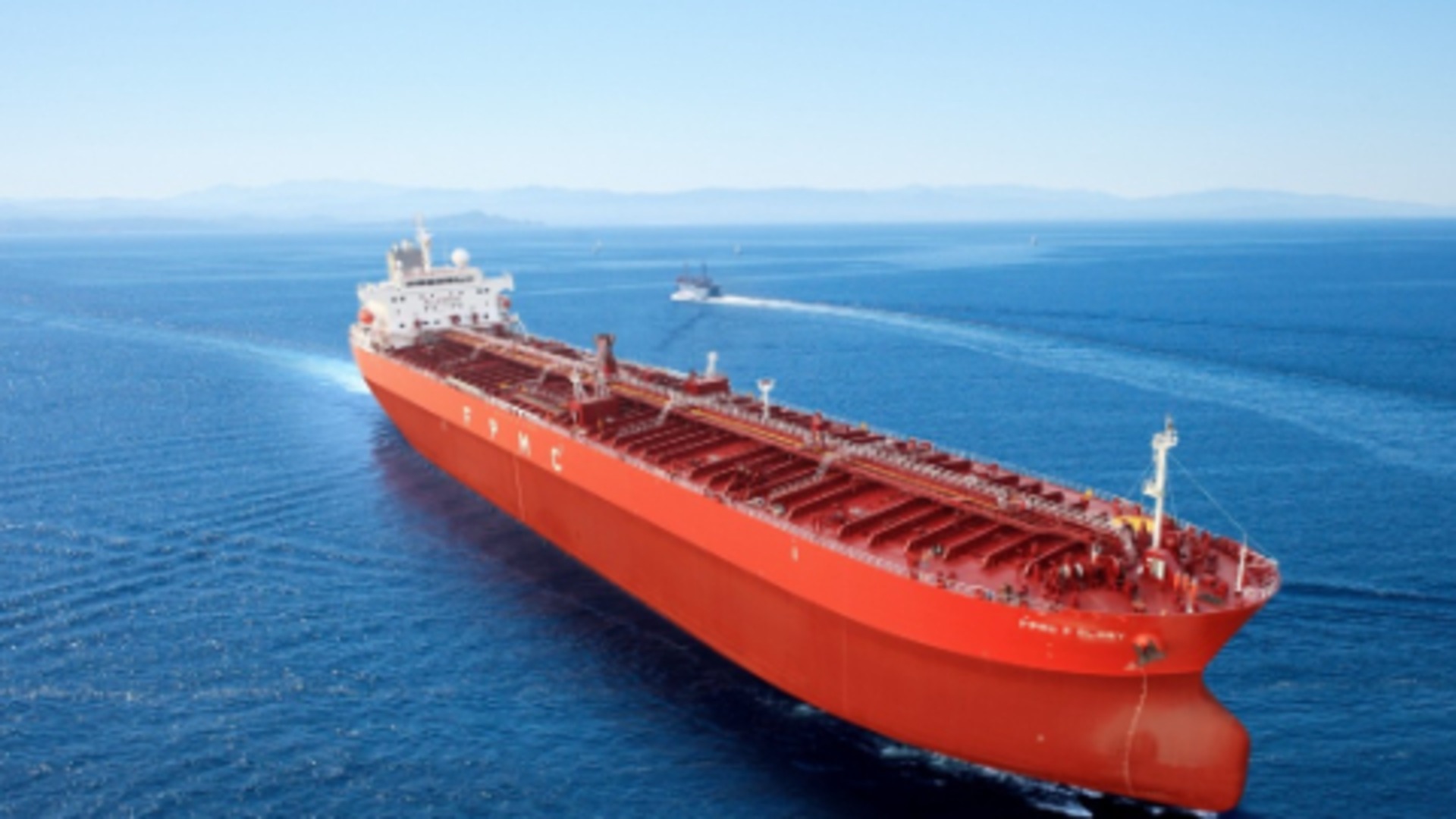
Titan Wind Energy has announced that a wholly owned subsidiary within its offshore engineering division has secured contracts for six 114,000-dwt product/crude oil tankers from a subsidiary of what the company described as a well-known international shipowner.
The contracts are valued at between $420m and $480m, equivalent to approximately RMB 2.85bn to RMB 3.26bn at the exchange rate prevailing when the agreements were signed. The vessels are scheduled for delivery in batches during 2028 and 2029.
On that basis, the implied price is between $70m and $80m per vessel.
The order is particularly significant because it is Titan Wind’s second major tanker deal in less than two weeks. Together with an earlier order for two firm crude oil tankers plus two options, the company has now assembled a commercial shipbuilding backlog comprising eight firm tankers and two optional vessels.
For a group that entered the marine sector through offshore wind structures, floating oil facilities and heavy steel fabrication, the speed of its expansion into conventional shipbuilding is striking.
Six LR2 tankers worth up to $480m
The latest vessels will each have a deadweight of 114,000 tonnes, an overall length of approximately 248.8 metres, a beam of 44 metres and a moulded depth of 21.5 metres.
Titan Wind classifies the ships as LR2 product/crude oil tankers. Its offshore subsidiary will be responsible for design, construction and delivery of the vessels in seaworthy condition.
Unlike LR2 tankers primarily optimised for refined products, dual-purpose designs can offer shipowners greater flexibility across crude and clean petroleum trades, depending on cargo system arrangements, coatings and chartering requirements.
That flexibility is commercially attractive in a market where earnings can vary significantly between crude and product tanker segments.
For Titan Wind, a six-ship series also provides an opportunity to spread first-of-class design, production engineering and supply-chain costs across multiple sister vessels. Repetition should support a more efficient construction rhythm once the lead ship moves through design, block assembly, outfitting and commissioning.
However, the company has not publicly identified the shipowner, classification society, designer, engine supplier or specific construction yard. Those details will be important in assessing the technical configuration and execution risk of the programme.
Eight firm tankers and two options in ten days
The six LR2s follow an order disclosed on 22 July for two firm and two optional 113,800-dwt crude oil tankers.
The full four-vessel package was valued at approximately RMB 1.874bn. Of that amount, the two firm ships accounted for around RMB 937m, with the remaining RMB 937m attached to the two buyer’s options.
The buyer was given 30 days from contract signing to declare the optional vessels. Until those options are exercised, Titan Wind’s confirmed tanker backlog stands at eight ships rather than ten.
The two batches share almost identical principal dimensions, suggesting that Titan Wind may be able to use a common or closely related hull platform, construction infrastructure and supplier network.
The firm value of the two disclosed tanker orders therefore stands at approximately RMB 3.79bn to RMB 4.20bn. Should the two options be declared, a further RMB 937m would be added.
The size of the orderbook is material for a company that only recently entered conventional tanker construction. Yet the real test will come during execution.
Titan Wind must now demonstrate that offshore engineering experience can be converted into the production discipline required for a series of standard merchant ships. Design freeze, long-lead equipment procurement, block accuracy, outfitting efficiency, testing, sea trials and contractual delivery performance will all be closely watched.
From offshore wind structures to FSO and FPSO hulls
Titan Wind’s move into tankers did not begin with the July orders.
In October 2024, its subsidiary Nantong Changfeng New Energy Equipment signed an engineering, procurement and construction contract worth about $45m with OceanSTAR Marine & Offshore Investment for a floating storage and offloading unit.
Under that agreement, Nantong Changfeng was responsible for process design, hull construction, procurement of selected equipment and materials, installation and pre-commissioning. The unit was intended for deployment in a Southeast Asian oilfield, with a construction period of approximately 22 months.
By the first half of 2026, Titan Wind’s first FSO had been launched and a second unit had entered construction.
The company subsequently secured its first FPSO hull construction contract, valued at around RMB 568m. The project was awarded by China Merchants Heavy Industry in Jiangsu for OceanSTAR FPSO Asset 01 Sdn. Bhd.
The hull measures approximately 199.2 metres in length, 41 metres in beam and 22.95 metres in depth, with delivery scheduled for 2027.
These projects reveal a clear industrial progression.
Titan Wind began with offshore wind monopiles, jackets and large steel structures. It then moved into FSO engineering and FPSO hull construction before entering the more standardised and repeatable market for crude and product tankers.
FSOs, FPSOs and oil tankers share several areas of engineering and production expertise, including large hull structures, cargo containment spaces, heavy-plate welding, piping, outfitting and classification oversight.
Those similarities provide Titan Wind with a credible technical bridge into tanker construction.
Even so, conventional shipbuilding operates under a different commercial model. Offshore projects are often highly customised and project-specific, while merchant ship profitability depends heavily on standardisation, series production, procurement discipline and predictable delivery.
Titan Wind’s first tanker series will therefore determine whether the company can move beyond heavy fabrication and become a reliable turnkey shipbuilder.
Offshore yards are moving into mainstream shipbuilding
Titan Wind is not an isolated case.
Across China, offshore engineering companies, wind equipment manufacturers and specialised yards are moving into tankers, bulk carriers and container ships as the boundary between offshore fabrication and commercial shipbuilding becomes increasingly blurred.
Wison New Energies: 6+4 VLCCs
In May 2026, Wison New Energies, traditionally associated with FLNG, FPSO and large offshore energy facilities, signed contracts with United Overseas Group for six firm and four optional 319,000-dwt very large crude carriers.
Deliveries are expected to begin in the fourth quarter of 2027.
The order marked Wison’s entry into VLCC construction and demonstrated that offshore engineering groups are no longer limiting themselves to small or technically specialised merchant vessels.
They are now targeting one of the most demanding and capital-intensive sectors of commercial shipbuilding.
CIMC Raffles: four VLCCs under construction
CIMC Raffles has followed a similar path.
The company built its reputation through drilling rigs, FPSOs, offshore wind installation vessels and complex offshore units. It has since moved into large merchant ship construction, including four 319,000-dwt VLCCs ordered by European shipping investment company Bruton Ltd.
Construction of the first vessels began in May 2026.
The ships use a mature VLCC design developed by the Marine Design and Research Institute of China and will be classed by the American Bureau of Shipping.
Hull sections are being distributed between CIMC Raffles’ Haiyang and Yantai facilities before final integration and delivery in Yantai, illustrating how offshore modular construction methods can be adapted to series-built merchant ships.
COSCO Shipping Offshore in Qidong: first conventional crude tankers
COSCO Shipping Energy Transportation has ordered two 74,900-dwt Panamax crude oil tankers from COSCO Shipping Offshore’s Qidong yard.
The two vessels are valued at a combined RMB 1.018bn and are scheduled for delivery in October and November 2028.
The Qidong facility has historically focused on FPSOs, offshore modules and other marine engineering projects. The tanker contracts extend its product range into more standardised oil transportation vessels.
Dajin Heavy Industry: eight Newcastlemax bulk carriers
Dajin Heavy Industry, a major supplier of offshore wind monopiles, jackets and heavy steel structures, has entered the dry bulk newbuilding market.
In April 2026, the company signed contracts with a Norwegian shipowner and a Greek shipowner for a combined eight 210,000-dwt Newcastlemax bulk carriers.
The two four-vessel packages were valued at approximately $294m and $297m respectively, giving a combined contract value of about $591m.
Deliveries are scheduled for 2028 and 2029.
The move shows how offshore wind fabrication bases equipped for large-diameter steel structures, heavy lifting and deepwater loadout can be repurposed for large oceangoing bulk carriers.
CIMC Sinopacific Offshore & Engineering: feeder container ships
CIMC Sinopacific Offshore & Engineering, best known for LNG, LPG and other gas carrier projects, has moved into container ship construction.
The yard secured six firm and two optional 1,800-teu container ships, with the first vessel scheduled for delivery in 2027.
It had previously entered the feeder segment through an order for two firm and two optional 1,450-teu LNG dual-fuel container ships.
Its experience with cryogenic systems, alternative fuels and complex machinery integration gives it a potential advantage as feeder owners seek lower-emission propulsion solutions.
Dajin Heavy Industry and Jiangsu Dajin: entry into bulkers and feeder ships
Jiangsu Dajin Heavy Industry has also widened its product portfolio beyond offshore support vessels, engineering ships and specialised tonnage.
The yard secured three 64,500-dwt Ultramax bulk carriers for delivery between May and November 2028, marking its first entry into the Ultramax sector.
The company has also moved into feeder container ships and multipurpose vessels, demonstrating how smaller offshore and specialised yards are using standard merchant designs to build repeatable production backlogs.
China’s shipbuilding capacity is being reallocated
The shift comes amid a period of exceptionally strong ordering at Chinese yards.
China’s shipbuilders secured 121.06m dwt of new orders in the first half of 2026, up 173.1% year on year and representing 82.3% of global contracting.
By the end of June, Chinese yards held an orderbook of 363.25m dwt, equivalent to 71.2% of the global total.
With leading commercial yards filling delivery slots into 2029 and 2030, some shipowners are looking to alternative builders that can offer earlier positions.
Offshore and wind equipment manufacturers are well placed to capture part of that overflow.
Many already possess large fabrication halls, heavy-plate processing lines, deepwater quays, large cranes, modular construction experience and familiarity with international classification requirements.
The transition is therefore less about building shipyards from scratch and more about reallocating existing heavy industrial capacity.
There are limits, however.
A company capable of delivering a large offshore structure is not automatically capable of producing a profitable series of merchant ships. Tankers, bulkers and container ships require disciplined repetition, tight procurement control and predictable commissioning schedules.
Margins can be eroded quickly by steel price movements, equipment delays, design changes, currency exposure or liquidated damages.
Winning the first contract opens the door. Delivering the first series determines whether the door remains open.
Titan Wind now faces the delivery test
The six LR2 contracts give Titan Wind a meaningful position in the tanker newbuilding market and extend its marine portfolio from offshore wind structures and floating production assets into conventional oceangoing ships.
Its current order profile now includes FSOs, an FPSO hull, crude oil tankers and dual-purpose product/crude carriers.
That progression reflects a broader convergence between China’s offshore engineering sector and its mainstream shipbuilding industry.
The next stage will be defined by execution.
Market attention will turn to the identity of the construction facility, the selected design and machinery package, classification arrangements and the timing of the first steel-cutting milestones.
Most importantly, Titan Wind will need to demonstrate that it can deliver the vessels within the 2028–2029 contractual window while maintaining quality and controlling costs.
The latest six-ship order is a valuable entry ticket into the large tanker market.
Whether Titan Wind becomes a lasting commercial shipbuilder will depend on what happens on the shop floor, at the outfitting quay and during sea trials over the next three years.

READ MORE
 Shipbuilding
CULines Steps Up Fleet Expansion with First 14,000 TEU Newbuildings
 Shipbuilding
CMA CGM linked to $3bn Yangzijiang megamax programme
 Shipbuilding
Advantage Tankers adds MR2 quartet as product tanker orderbook builds
 Shipbuilding
Ren Yuanlin: Shipbuilding Still Has 8–10 Years of Strong Growth Ahead
 Shipbuilding
Seven Months, $78 Million: George Procopiou Reaps Windfall on Hengli-Built VLCC
 Shipbuilding
12 24,000TEU Ultra-large Container Ships Awarded to Yangzijiang Shipbuilding; Private Chinese Shipbuilder Lands US$3 Billion Mega Deal
 Shipbuilding
Wealth Holdings builds three-tier MPP fleet with up to 18 China newbuilds
 Shipbuilding
Schoeller Returns to Chengxi for Four More MRs as China Gains Ground on Korea
 Shipbuilding
China‘s Dajin Builds Its Own Fleet as Shipbuilding Orderbook Reaches RMB 12 Billion
 Shipbuilding