


From 18,700 cbm to 271,000 cbm: Hudong-Zhonghua Expands Its LNG Carrier Portfolio
MISC’s latest order extends the Chinese shipbuilder’s LNG offering from deep-sea transportation to regional distribution
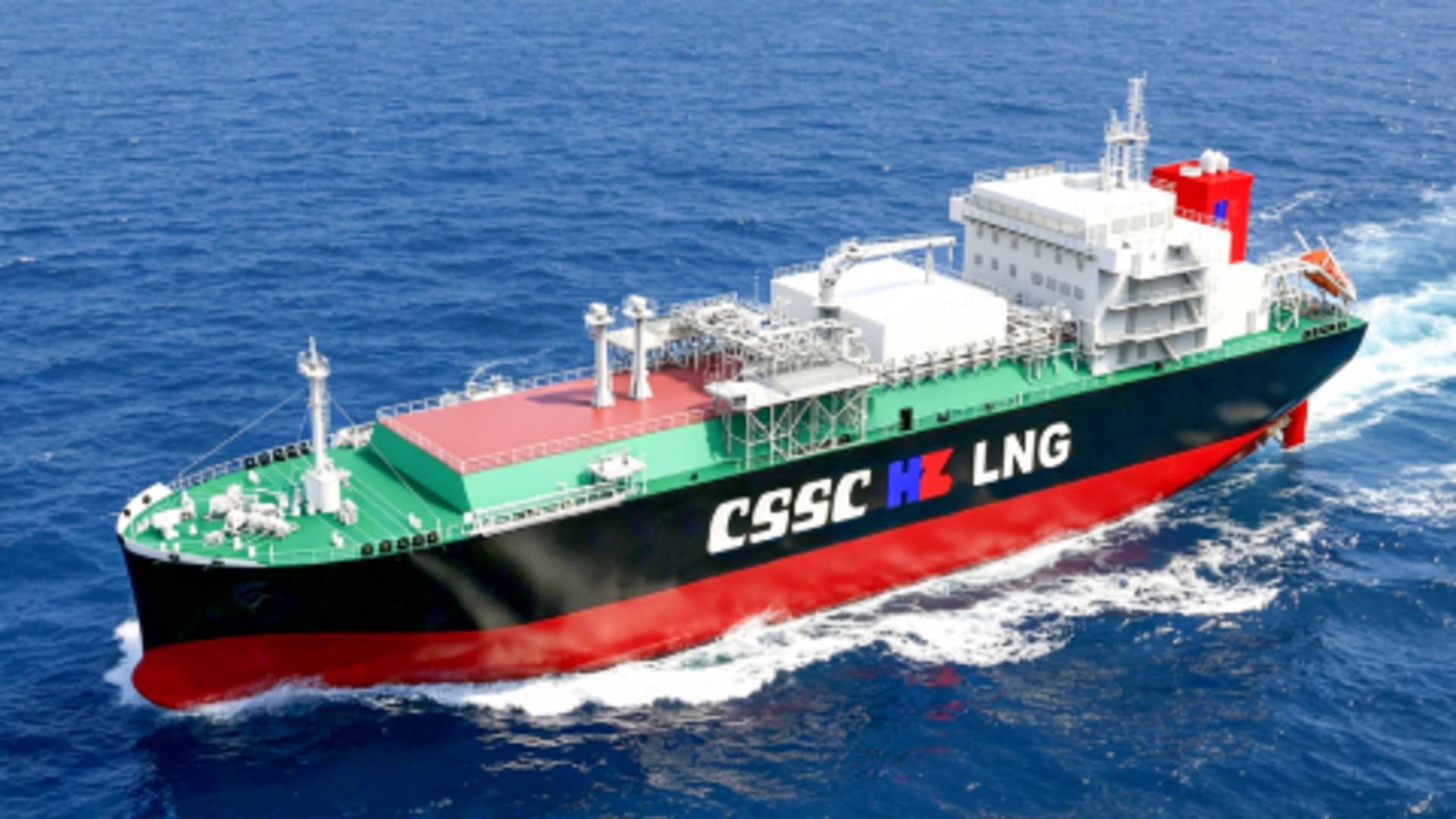

Hudong-Zhonghua Shipbuilding (Group), together with China Shipbuilding Trading, has signed a contract with Malaysian shipping company MISC Berhad for the construction of one 18,700-cbm LNG carrier.
MISC confirmed in a filing to Bursa Malaysia on July 31 that it had secured a long-term transportation contract from Malaysia LNG Sdn Bhd and entered into the shipbuilding agreement with Hudong-Zhonghua.
The vessel is expected to begin a ten-year charter in 2028, transporting LNG supplied by Malaysia’s national energy company PETRONAS from Bintulu to Sendai, Japan. According to MISC, the project will continue an LNG supply relationship between PETRONAS and Sendai that has lasted for nearly three decades.
The newbuilding therefore comes with a defined cargo source, designated route and long-term charter. It is not a speculative vessel ordered in anticipation of future market demand.
This project-based model is especially important in the small-scale LNG carrier segment, where ship orders are often closely tied to individual terminals, regional supply chains and long-term sales agreements.

MISC expands cooperation with Hudong-Zhonghua again
The 18,700-cbm order marks another expansion of LNG shipping cooperation between MISC and Hudong-Zhonghua in 2026.
On January 30, the two companies signed contracts covering three firm 174,000-cbm LNG carriers and three optional vessels. On February 27, they signed a second agreement covering another two firm vessels and two options.
The two transactions therefore comprise five firm orders and five optional vessels, rather than ten fully confirmed ships.
PETRONAS LNG has signed 20-year charter agreements with MISC for the five firm large LNG carriers. These vessels are expected to enter service progressively from 2029.
The two sides have now established two distinct product lines within their cooperation.
The 174,000-cbm vessels will serve large-volume, long-distance and international LNG transportation. The 18,700-cbm vessel will support regional distribution between specific terminals and smaller receiving facilities.
An LNG carrier one-tenth the size of a mainstream vessel
The most common large LNG carriers in international service today have a capacity of approximately 174,000 cbm.
At 18,700 cbm, the latest MISC newbuilding will carry only around one-tenth of the volume of a mainstream large LNG carrier.
A smaller vessel, however, does not necessarily mean a less sophisticated design.
Small LNG carriers frequently operate in more restricted ports and waterways. Regional receiving terminals may have shallow approach channels, shorter berths, limited turning basins or infrastructure that cannot accommodate conventional large LNG carriers.
Hudong-Zhonghua’s new vessel will have an overall length of 129.8 metres, a beam of 25.4 metres, a depth of 16 metres and a design draught of 6.5 metres. Its design speed will be 15 knots.
Its compact dimensions and relatively shallow draught will allow it to call at a wider range of small and medium-sized coastal LNG terminals. It will also be able to operate in selected inland waterways, giving the design potential for combined river-sea transportation.
In simple terms, large LNG carriers operate like long-distance trunk-line trains connecting major export plants with large import terminals. Small LNG carriers function more like regional feeder services, delivering cargoes to smaller terminals and local markets.
Twin-skeg propulsion and membrane tanks address two key requirements
The vessel will adopt a twin-skeg propulsion arrangement.
A twin-skeg design uses two relatively independent propulsion lines at the stern. This can improve manoeuvrability and is particularly suitable for ships that need to enter restricted waters or make frequent port calls.
According to published specifications, the design can achieve an approximately 20% improvement in propulsion power performance compared with a conventional single-skeg arrangement.
The vessel will also be equipped with a dual-fuel electric propulsion system. It will be capable of operating in gas mode across its full operating range and will comply with the International Maritime Organization’s Tier III nitrogen oxide emission requirements.
The cargo tanks will use a membrane containment system.
LNG must be stored at a temperature close to minus 163 degrees Celsius. A membrane system uses multiple insulation layers to separate the cryogenic cargo from the ship’s hull, while the hull structure supports the cargo load.
Compared with independent cylindrical tanks, a membrane system can make more efficient use of the internal hull volume. It also places much higher demands on engineering accuracy, insulation installation and construction quality.
The new vessel will have a designed daily boil-off rate of 0.24%.
The boil-off rate measures the proportion of LNG that naturally vaporises each day. LNG evaporation cannot be eliminated entirely, but the resulting boil-off gas can be used as fuel for the vessel’s propulsion and power systems.
This reduces cargo losses and improves overall energy efficiency.
The “first in China” description requires clarification
Some reports have described the newbuilding as China’s first small LNG vessel to use a membrane containment system. This description needs to be more precisely defined.
Hudong-Zhonghua has previously built and delivered two 18,600-cbm membrane-type LNG bunkering vessels, Gas Agility and Gas Vitality.
Both vessels use GTT’s Mark III Flex membrane containment technology and entered the European LNG bunkering market in 2020 and 2021 respectively.
An LNG bunkering vessel mainly supplies LNG fuel to containerships, cruise ships and other LNG-powered vessels in or near ports.
An LNG carrier, by contrast, transports commercial LNG between liquefaction plants, receiving terminals and regional distribution facilities.
The latest vessel should therefore be more accurately described as China’s first small-scale membrane-type LNG carrier designed for cargo transportation, as well as Hudong-Zhonghua’s first order for a membrane LNG carrier in this capacity range.
This distinction is important.
It shows that Hudong-Zhonghua is extending its experience in small membrane tanks and LNG bunkering vessels into the regional transportation of commercial LNG cargoes.
From port bunkering to ultra-large deep-sea transportation
Hudong-Zhonghua has developed an LNG vessel portfolio covering several capacity ranges and operating scenarios.
| Capacity segment | Representative vessel | Main application |
|---|---|---|
| Around 18,600 cbm | Membrane-type LNG bunkering vessel | Marine fuel supply in ports |
| 18,700 cbm | Small membrane-type LNG carrier | Regional distribution, small terminal supply and river-sea transportation |
| 80,000 cbm | River-sea LNG carrier | Coastal and inland-waterway transportation |
| 174,000 cbm | Changheng-series large LNG carrier | Mainstream international LNG trades |
| 271,000 cbm | QC-Max LNG carrier | Ultra-large-volume, long-distance transportation |
The 80,000-cbm LNG carrier represents one of Hudong-Zhonghua’s specialised solutions for shallow-water and river-sea operations.
China State Shipbuilding Corporation has stated that Hudong-Zhonghua has delivered three vessels of this type. They are designed to operate in ports and waterways that cannot easily accommodate conventional large LNG carriers.
The 174,000-cbm class is currently the mainstream design in the international LNG shipping market.
Hudong-Zhonghua has developed this segment into its fifth-generation Changheng series and has established batch-construction capabilities. MISC’s five firm large LNG carrier orders placed this year are also in the 174,000-cbm category.
At the opposite end of the scale, Hudong-Zhonghua has secured orders from QatarEnergy for 24 QC-Max LNG carriers, each with a capacity of 271,000 cbm.
These are currently the world’s largest LNG carriers by cargo capacity. Construction of the first vessel officially began in June 2026.
From 18,600-cbm bunkering vessels and 18,700-cbm regional carriers to 80,000-cbm river-sea vessels, 174,000-cbm mainstream carriers and 271,000-cbm ultra-large ships, Hudong-Zhonghua’s portfolio now covers several critical links in the LNG transportation chain.
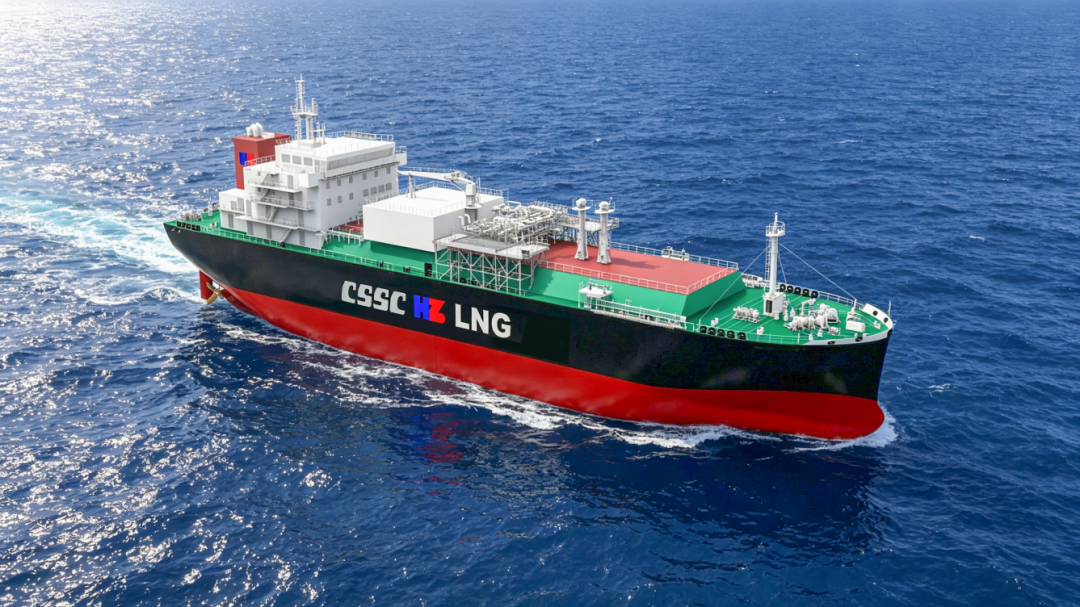
LNG shipping is developing a trunk-and-feeder structure
For many years, the global LNG business followed a relatively straightforward model.
Large liquefaction plants produced LNG. Large LNG carriers transported it across oceans. Large receiving terminals unloaded and regasified the cargo.
This model allowed vessels of around 174,000 cbm to become the market standard.
The structure is now becoming more diversified.
Some importing countries do not have the conditions or demand required to support very large receiving terminals. Islands, coastal cities, industrial parks and regional gas companies may also require smaller cargo parcels.
These markets are better served by regular deliveries using small or medium-sized LNG carriers.
The International Gas Union’s World LNG Report 2026 showed that global LNG trade reached a record 437 million tonnes in 2025, an increase of 6.3% year on year.
A further 68.4 million tonnes per annum of LNG liquefaction capacity reached final investment decision during the year.
Growing LNG supply and the increasing number of participating markets are creating demand for both deep-sea transportation and regional distribution.
Small LNG carriers will not simply replace large carriers.
Large ships reduce transportation costs through economies of scale. Smaller ships offer better port accessibility, greater scheduling flexibility and the ability to complete the final maritime leg of the supply chain.
The MISC project is a clear example of this emerging model.
PETRONAS operates a major LNG production base in Bintulu, while the Sendai supply programme requires a vessel matched to the receiving terminal, cargo parcel size and delivery schedule.
The 18,700-cbm carrier will therefore serve a relatively small but stable and long-term energy supply route.
The platform value behind a single-vessel order
Public information indicates that Hudong-Zhonghua has delivered 64 LNG vessels to date.
Against that total, an order for one 18,700-cbm ship may not appear significant.
Its importance lies in the fact that it gives Hudong-Zhonghua a new commercial application for its LNG technology.
Large LNG carrier projects have high contract values and are often ordered in series. However, the number of major customers is limited and competition is highly concentrated.
Small-scale LNG transportation involves a broader group of regional energy companies, city gas suppliers, industrial users and operators of small receiving terminals.
Shipbuilders entering this market must adapt designs to specific waterways, berths, cargo volumes and route distances.
The vessels are usually more customised, while orders are commonly supported by a specific energy project or long-term charter.
It would therefore be premature to assume that this single order will immediately lead to a wave of small LNG carrier contracts comparable with the current large-carrier orderbook.
Regional projects are more fragmented, and operating conditions vary considerably from one route to another.
Nevertheless, the MISC vessel already has a defined transportation programme and a ten-year charter.
It gives Hudong-Zhonghua’s new design a credible first commercial application and establishes a reference project that could support future orders in the regional LNG transportation market.
From the deep-sea arteries of international LNG trade to the smaller feeder routes serving regional terminals, Hudong-Zhonghua is turning its LNG business from a collection of individual flagship designs into a broader product platform.
That is the real significance of the 18,700-cbm order.

READ MORE
 Shipbuilding
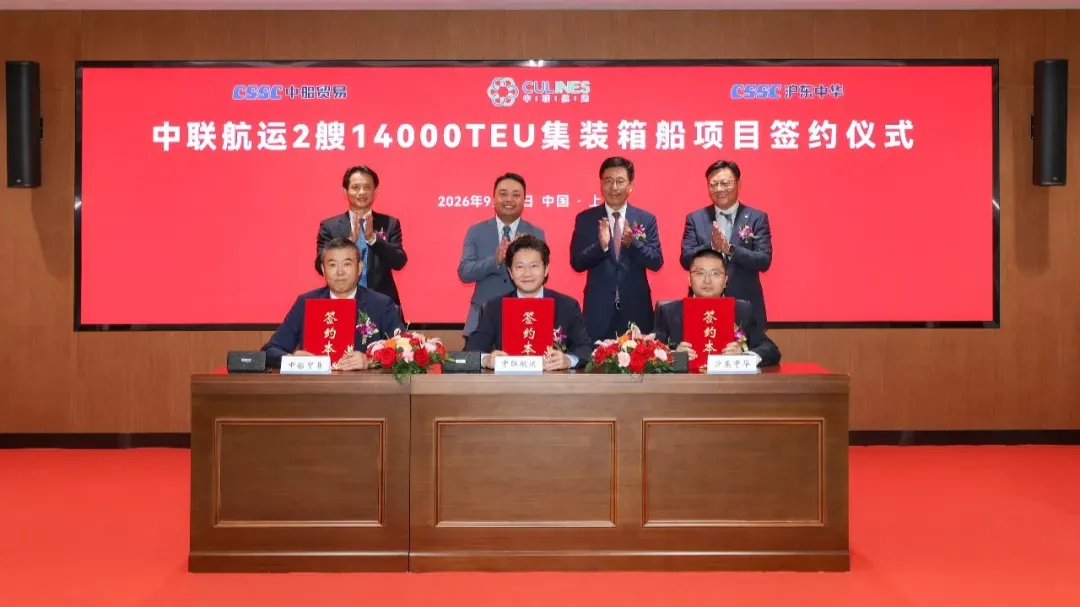
CULines Steps Up Fleet Expansion with First 14,000 TEU Newbuildings
 Shipbuilding
CMA CGM linked to $3bn Yangzijiang megamax programme
 Shipbuilding
Advantage Tankers adds MR2 quartet as product tanker orderbook builds
 Shipbuilding
Ren Yuanlin: Shipbuilding Still Has 8–10 Years of Strong Growth Ahead
 Shipbuilding
Seven Months, $78 Million: George Procopiou Reaps Windfall on Hengli-Built VLCC
 Shipbuilding
12 24,000TEU Ultra-large Container Ships Awarded to Yangzijiang Shipbuilding; Private Chinese Shipbuilder Lands US$3 Billion Mega Deal
 Shipbuilding
Wealth Holdings builds three-tier MPP fleet with up to 18 China newbuilds
 Shipbuilding
Schoeller Returns to Chengxi for Four More MRs as China Gains Ground on Korea
 Shipbuilding
China‘s Dajin Builds Its Own Fleet as Shipbuilding Orderbook Reaches RMB 12 Billion
 Shipbuilding