


Shandong Shipyard Wins Order for Five LNG-Powered Inland Cargo Vessels
The 3,000-dwt standardized design marks Shandong New Energy Shipbuilding’s first major breakthrough into the Zhejiang market
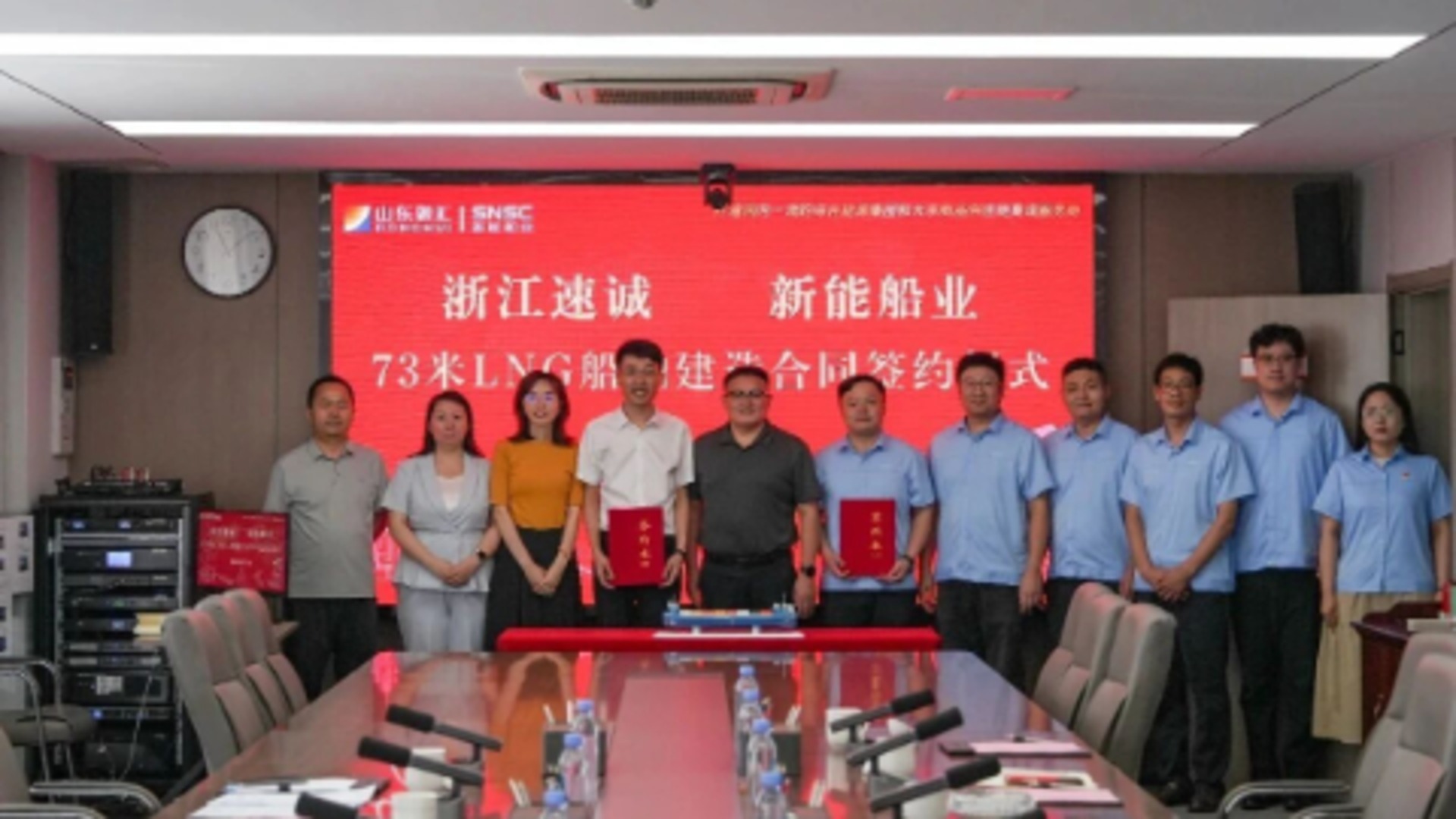

Shandong New Energy Shipbuilding has signed a contract with Zhejiang Sucheng Shipping for the construction of five 73-metre LNG-powered standardized inland cargo vessels.
The agreement was signed on 1 August in the presence of Liu Wei, general manager of Zhejiang Sucheng Shipping, and Zhang Lei, deputy Party secretary and director of Shandong Ronghui Group.
The order marks the first batch deployment of Shandong New Energy Shipbuilding’s independently developed standardized green vessel design in Zhejiang and represents an important step in the shipyard’s expansion beyond its home market.
The vessels should be described as LNG-powered cargo vessels rather than LNG carriers. They will use liquefied natural gas as propulsion fuel but will not transport LNG as cargo.
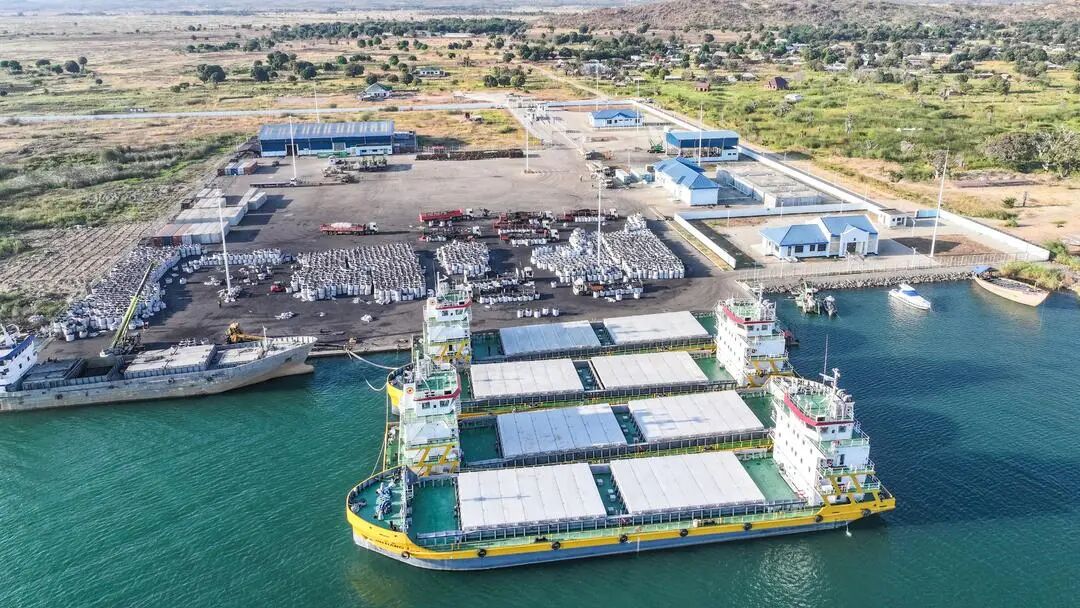
3,000-dwt design for Class A and B inland waterways
The 73-metre vessel design has received approval from the China Classification Society.
Each vessel will have an overall length of 73 metres, a moulded breadth of 13.76 metres, a moulded depth of 5.1 metres and a deadweight capacity of approximately 3,000 tonnes.
The design adopts a low-resistance hull form intended to balance cargo capacity, navigational stability and operating efficiency in inland waterways. It is suitable for both Class A and Class B inland navigation areas and can operate under varying channel and water-depth conditions.
According to the shipyard, the vessel could save around CNY 3,000 in fuel costs for every 100 kilometres sailed compared with a conventional diesel-powered vessel.
The company also expects the LNG propulsion system to reduce emissions of nitrogen oxides, particulate matter and other pollutants. Actual savings will depend on vessel speed, loading conditions, water depth, LNG prices and operating patterns.
The 73-metre platform has already entered serial production.
Shandong New Energy Shipbuilding completed the construction and delivery of 21 vessels based on the same platform during the first quarter of 2026. The company said the design has a cruising range of approximately 2,200 kilometres and can carry both dry bulk cargoes and containers.
A further batch of 18 standardized 3,000-dwt LNG-powered vessels was delivered in July, indicating that the design has progressed beyond the prototype stage and entered large-scale production.
Overcoming regional barriers in China’s inland shipping market
China’s inland vessel market remains highly regional.
Waterway classifications, channel depths, bridge clearances, lock dimensions, port infrastructure and local regulatory requirements can differ considerably between provinces and river systems.
A vessel design developed for one region may therefore require additional technical verification before it can be introduced into another market.
This has contributed to the long-standing “one province, one policy” and “one river, one design” structure of China’s inland shipping sector.
The latest Zhejiang order suggests that Shandong New Energy Shipbuilding is attempting to overcome these barriers through standardized designs combined with regional technical adaptation.
The company has also adopted an integrated “shipbuilding plus financial services” business model.
To support its expansion in Zhejiang, the shipyard established a dedicated project team together with financial partners. The team has been stationed locally to provide technical consultation, commercial coordination and financial due-diligence services.
This approach could help smaller shipping companies reduce the initial financial burden of fleet renewal while improving the likelihood that newbuilding projects reach the contract and financing stages.
The parties have not disclosed the contract value, financing structure, delivery schedule or intended operating routes of the five vessels.
Inland fleet renewal gathers pace
The order comes as China accelerates the replacement of ageing inland vessels and promotes cleaner propulsion technologies.
Chinese authorities have encouraged the development of LNG, battery-electric, methanol and hydrogen-powered vessels, while calling for standardized and serialised designs suited to different inland transport scenarios.
Updated subsidy and fleet-renewal policies also require newly built inland vessels to comply with standardized ship-type requirements. New energy and clean-energy vessels applying for relevant subsidies are generally required to undergo construction surveys by the China Classification Society.
For medium- and long-distance inland cargo transportation, battery-electric propulsion continues to face limitations related to range, charging infrastructure and initial investment.
LNG remains one of the more mature options for larger inland vessels because it offers relatively long cruising range, short refuelling times and an established technical base.
However, its commercial competitiveness still depends heavily on the price difference between LNG and diesel, the availability of bunkering infrastructure and the vessel’s actual utilisation rate.
More than 400 vessels contracted
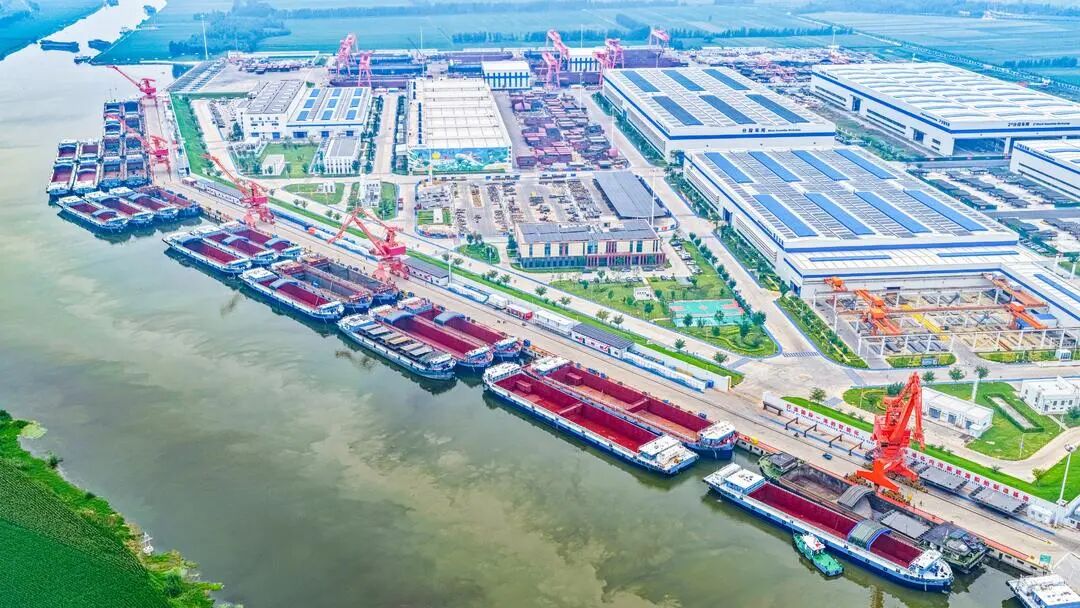
Established in 2022, Shandong New Energy Shipbuilding focuses on the research, design, construction and repair of LNG, battery-electric, methanol and hydrogen-powered inland vessels.
The shipyard began trial production in October 2023 and has concentrated on standardized new energy vessels in the 2,000-dwt to 5,000-dwt range.
According to figures released by the company, it had delivered more than 150 new energy vessels and secured domestic and overseas contracts for more than 400 vessels by the end of July 2026. It plans to deliver approximately 200 vessels during 2026.
Unlike large coastal shipyards that primarily build oceangoing merchant ships, Shandong New Energy Shipbuilding is targeting the inland vessel market through standardized platforms, modular propulsion systems and production-line construction methods.
The significance of the latest contract therefore extends beyond the five vessels themselves.
It indicates that China’s inland new energy vessel market is beginning to move from local demonstration projects towards cross-regional sales and large-scale replication of standardized designs.
Competition among inland shipbuilders will increasingly depend on whether their designs can deliver reliable operating economics, comply with different regional requirements, support serial production and provide financing and after-sales services throughout the vessel’s lifecycle.
For Shandong New Energy Shipbuilding, the Zhejiang project will be an important test of whether its standardized platform can be successfully replicated across provincial markets.

READ MORE
 Shipbuilding
Advantage Tankers adds MR2 quartet as product tanker orderbook builds
 Shipbuilding
Seven Months, $78 Million: George Procopiou Reaps Windfall on Hengli-Built VLCC
 Shipbuilding
12 24,000TEU Ultra-large Container Ships Awarded to Yangzijiang Shipbuilding; Private Chinese Shipbuilder Lands US$3 Billion Mega Deal
 Shipbuilding
CMA CGM linked to $3bn Yangzijiang megamax programme
 Shipbuilding
Wealth Holdings builds three-tier MPP fleet with up to 18 China newbuilds
 Shipbuilding
Schoeller Returns to Chengxi for Four More MRs as China Gains Ground on Korea
 Shipbuilding
China‘s Dajin Builds Its Own Fleet as Shipbuilding Orderbook Reaches RMB 12 Billion
 Shipbuilding
H-Line Ends Five-Year Bulker Ordering Hiatus With POSCO-Linked LNG Pair at New Times
 Shipbuilding
Chair of CSSC Xu Peng Calls for Broader Full-Value-Chain Maritime Cooperation Between China and Europe
 Shipbuilding