


14 Directly Controlled Newbuildings and Exposure to Eight More VLCCs: Scorpio Tankers Launches a Cross-Segment Expansion
The tanker owner turns record earnings and nearly $786 million of vessel-sale proceeds into its next-generation fleet

Strong tanker earnings are accelerating fleet renewal among the sector’s leading owners.
New York-listed Scorpio Tankers has disclosed agreements to order two new LR2 product tankers in China and acquire a minority stake of less than 15% in a newbuilding joint venture that has contracted eight VLCCs.
Following the latest transactions, Scorpio Tankers will directly control 14 newbuildings: six MRs, six LR2s and two VLCCs. Through its minority investment, the company will also gain indirect exposure to another eight VLCCs.
The move represents a significant broadening of Scorpio Tankers’ traditional product tanker strategy. The company is using the cash generated during the current strong tanker cycle to build a more diversified asset portfolio spanning MR, LR2 and VLCC tonnage.
Notably, 12 of the 14 directly controlled newbuildings will be constructed at Chinese yards. Jiangsu Hantong Ship Heavy Industry, YAMIC, Jingjiang Nanyang Shipbuilding and Dalian Shipbuilding Industry Co have emerged as the principal Chinese builders supporting the latest phase of Scorpio Tankers’ fleet renewal.
Two New LR2s Ordered at Jiangsu Hantong
In July 2026, Scorpio Tankers signed a letter of intent to acquire two scrubber-fitted, 114,000-dwt LR2 product tankers from Jiangsu Hantong Ship Heavy Industry.
Each vessel is priced at $72.8 million, bringing the combined contract value to approximately $145.6 million. Deliveries are scheduled for the second and third quarters of 2029.
The deal adds Jiangsu Hantong to Scorpio Tankers’ pool of Chinese LR2 suppliers, alongside DSIC in Dalian.
Scorpio Tankers has also agreed to acquire a minority interest of less than 15% in a VLCC newbuilding joint venture. The venture has contracted eight scrubber-fitted VLCCs for delivery between the third quarter of 2029 and the second quarter of 2030.
The identities of the joint-venture partners, the shipyard and the total construction price have not been disclosed.
Scorpio Tankers will fund its equity contribution in instalments aligned with the payment schedule under the underlying shipbuilding contracts. Linking the equity injections to construction milestones reduces the need for a large upfront cash commitment and allows capital deployment to follow the physical progress of the vessels.
As of July 28, 2026, Scorpio Tankers’ directly controlled and minority-owned newbuilding exposure comprised the following projects:
| Vessel type | Shipyard | Price per vessel | Expected delivery |
|---|---|---|---|
| Four MRs | Jingjiang Nanyang Shipbuilding | $45.0 million | Q3 2026–Q2 2027 |
| Two MRs | YAMIC | $46.33 million | Q1 2030 |
| Two LR2s | DSIC | $70.8 million | Q3 2027 |
| Two LR2s | DSIC | $68.5 million | Q3–Q4 2029 |
| Two LR2s | Jiangsu Hantong | $72.8 million | Q2–Q3 2029 |
| Two VLCCs | Hanwha Ocean | $128.0 million | Q3–Q4 2028 |
| Eight VLCCs through JV | Undisclosed | Undisclosed | Q3 2029–Q2 2030 |
The four MRs under construction at Jingjiang Nanyang were acquired through newbuilding resale transactions at $45 million per vessel, or $180 million in total.
Nearly $1 Billion Invested in 14 Directly Controlled Newbuildings
Based on disclosed contract prices, Scorpio Tankers’ 14 directly controlled newbuildings represent a total investment of approximately $953 million.
The six MRs account for around $273 million, the six LR2s for approximately $424 million, and the two Hanwha Ocean VLCCs for $256 million.
Including the company’s minority investment in the eight-vessel VLCC joint venture, its overall newbuilding and joint-venture programme has moved beyond the $1 billion mark.
As of July 28, Scorpio Tankers had paid $97.2 million towards its newbuilding and joint-venture commitments. A further $978.2 million remained payable.
The company expects to pay approximately $102 million during the remainder of 2026, $257.6 million in 2027, $264.9 million in 2028, $262.8 million in 2029 and $91 million in 2030.
The payment profile is deliberately back-ended. It allows Scorpio Tankers to continue generating cash from its existing fleet before committing the majority of the capital required for vessels delivering between 2027 and 2030.
Fifteen Older Tankers Sold for Nearly $786 Million
Scorpio Tankers’ expansion is not simply increasing its vessel count. The company is continuing its established strategy of selling older tonnage and replacing it with newer, more efficient ships.
During the second quarter of 2026, Scorpio Tankers completed the sale of 10 product tankers for an aggregate consideration of $465 million. The vessels comprised six MRs and four LR2s, mainly built in 2014 and 2015.
In July, the company completed the sale of another four LR2s and one MR for a combined $320.8 million.
Together, the two rounds of disposals involved 15 vessels and generated approximately $785.8 million in proceeds. Scorpio Tankers recorded a vessel-sale gain of $154.1 million during the second quarter.
Following the transactions, the company’s owned operating fleet stood at 74 product tankers, comprising 25 LR2s, 35 MRs and 14 Handymax tankers. The fleet has a combined capacity of approximately 5.06 million dwt and an average age of 10.2 years.
By selling 2014- and 2015-built vessels while secondhand asset prices and freight earnings remain elevated, Scorpio Tankers is monetising their remaining value ahead of future dry-docking, maintenance and regulatory costs.
Most of the replacement vessels will not arrive until 2027–2030, giving the owner a relatively long period to prepare for the associated capital expenditure.
Second-Quarter Net Profit Jumps to $387.5 Million
The fleet renewal programme is supported by sharply higher earnings and a strong liquidity position.
Scorpio Tankers reported vessel revenue of $408.7 million for the second quarter of 2026, compared with $230.2 million a year earlier.
Net income increased to $387.5 million from $73.5 million in the corresponding period of 2025.
Adjusted net income, excluding vessel-sale gains, debt extinguishment costs and changes in the fair value of financial instruments, reached $243.7 million, compared with $67.8 million in the same quarter last year.
The reported net profit included the $154.1 million gain on vessel sales. Even after removing that one-off contribution, the underlying tanker business delivered a substantial year-on-year improvement.
Scorpio Tankers’ fleet generated an average daily time charter equivalent rate of $52,661 during the quarter, more than double the $25,569 achieved a year earlier.
Its LR2 fleet earned an average of $77,749 per day in the spot and pool markets. MRs averaged $52,027 per day, while Handymax vessels achieved $49,210 per day.
The company said disruption to Middle East exports, including restrictions affecting traffic through the Strait of Hormuz, forced buyers of crude oil and refined products to source cargoes from more distant regions.
The resulting fleet repositioning and longer voyages pushed spot tanker rates to record levels during the early part of the quarter. Although earnings later retreated from their extreme highs, longer trading distances kept overall returns well above the levels recorded a year earlier.
Preliminary third-quarter bookings indicate growing divergence between tanker segments.
As of July 30, Scorpio Tankers had fixed its LR2 spot and pool days at approximately $65,000 per day. MR bookings stood at around $29,000 per day, while Handymax vessels had secured approximately $20,800 per day.
The figures suggest that the exceptional second-quarter rates should not be extrapolated in a straight line. LR2s continue to benefit from longer voyages and regional supply dislocations, while the correction has been more pronounced in the MR and Handymax markets.
Nearly $2 Billion in Cash Provides Substantial Headroom
As of July 28, Scorpio Tankers held approximately $1.96 billion in unrestricted cash and cash equivalents, together with $483.2 million of undrawn revolving credit facilities.
The company’s net cash position stood at approximately $1.31 billion.
During the second quarter, Scorpio Tankers issued $605 million of 1.75% convertible senior notes due in 2031 and prepaid $389.1 million of secured debt. In July, it also redeemed $200 million of 7.5% unsecured notes.
These transactions reduced financing costs and extended the company’s debt maturity profile.
With almost $2 billion of unrestricted cash, Scorpio Tankers has considerable financial capacity to meet the remaining $978.2 million of newbuilding and joint-venture commitments while retaining a meaningful liquidity buffer.
Why Chinese Shipyards?
Twelve of Scorpio Tankers’ 14 directly controlled newbuildings will be constructed in China, including all six MRs and all six LR2s.
The allocation reflects the breadth of China’s product tanker construction capabilities. Jingjiang Nanyang and YAMIC are supplying the MRs, while DSIC and Jiangsu Hantong are building the LR2s.
Using several yards also reduces exposure to delays or capacity constraints at any single facility.
The earliest Jingjiang Nanyang MRs are scheduled to enter the fleet from 2026. The first DSIC LR2s will follow in 2027, together with the Hanwha Ocean VLCCs in 2028. Further Chinese-built MRs and LR2s will then be delivered in 2029 and 2030.
This creates a fleet renewal pipeline extending across more than four years and avoids concentrating a large volume of new capacity in a single delivery period.
Scrubber-Fitted Fleet Reflects a Pragmatic Technology Strategy
All 14 directly controlled newbuildings, together with the eight VLCCs in the joint venture, are expected to be equipped with exhaust gas cleaning systems, commonly known as scrubbers.
Scrubbers are not mandatory under IMO sulphur regulations. Shipowners can comply with the MARPOL Annex VI sulphur limits by burning compliant low-sulphur fuel or by using approved equivalent compliance methods such as exhaust gas cleaning systems.
For fuel-intensive LR2s and VLCCs operating over long distances, scrubbers preserve the option of burning high-sulphur fuel oil. Their economic value increases when the price spread between high-sulphur and low-sulphur marine fuels widens.
Scorpio Tankers’ disclosed specifications continue to focus on conventional-fuel, energy-efficient designs fitted with scrubbers. The company has not announced LNG, methanol or ammonia dual-fuel systems for these vessels.
The approach indicates that Scorpio Tankers is prioritising proven technology, fuel procurement flexibility and predictable asset returns.
There are, however, longer-term regulatory considerations. The EU Emissions Trading System, FuelEU Maritime and any future global greenhouse-gas pricing mechanism will increase the carbon cost of conventional fuels.
Vessels delivering in 2029 and 2030 may therefore require further efficiency improvements, operational optimisation and fuel-strategy adjustments during their service lives.
From Product Tanker Leader to Broader Oil Shipping Platform
Scorpio Tankers has historically concentrated on refined-product transportation.
In November 2025, however, the company ordered two VLCCs from South Korea’s Hanwha Ocean at $128 million each for delivery in the third and fourth quarters of 2028.
The contracts marked Scorpio Tankers’ return to direct VLCC newbuilding investment more than a decade after it sold seven VLCC construction contracts in 2014.
Chairman and chief executive Emanuele Lauro said at the time that the company remained constructive on the long-term fundamentals of the crude tanker market and that the VLCC order would provide direct exposure to crude oil transportation.
The subsequent investment in an eight-vessel VLCC joint venture reinforces that direction.
Direct ownership of two VLCCs gives Scorpio Tankers full exposure to their operating earnings and asset values. A minority interest in a further eight vessels allows the company to expand its crude tanker exposure with a more limited capital commitment and controlled project risk.
Combined with six MRs and six LR2s, the newbuilding portfolio covers regional refined-product trades, long-haul product transportation and intercontinental crude oil movements.
Scorpio Tankers is effectively converting the strong cash flows generated during the 2026 tanker market into fleet competitiveness for the 2027–2030 period.
Selling older vessels at elevated prices, spreading newbuilding payments across several years, expanding into multiple tanker classes and distributing orders among several shipyards form the central elements of the strategy.
The key risks include rising tanker deliveries, the easing of geopolitical freight premiums, changes in refinery utilisation and increasing carbon costs.
Nevertheless, Scorpio Tankers’ willingness to commit more than $1 billion during a strong market indicates that it expects the restructuring of global crude and refined-product trades to persist.
By the time the new vessels are fully delivered, the company will have materially upgraded its fleet age profile, expanded its long-haul trading capabilities and developed a broader platform spanning both product and crude tankers.

READ MORE
 Shipbuilding
China‘s Dajin Builds Its Own Fleet as Shipbuilding Orderbook Reaches RMB 12 Billion
 Shipbuilding
H-Line Ends Five-Year Bulker Ordering Hiatus With POSCO-Linked LNG Pair at New Times
 Shipbuilding
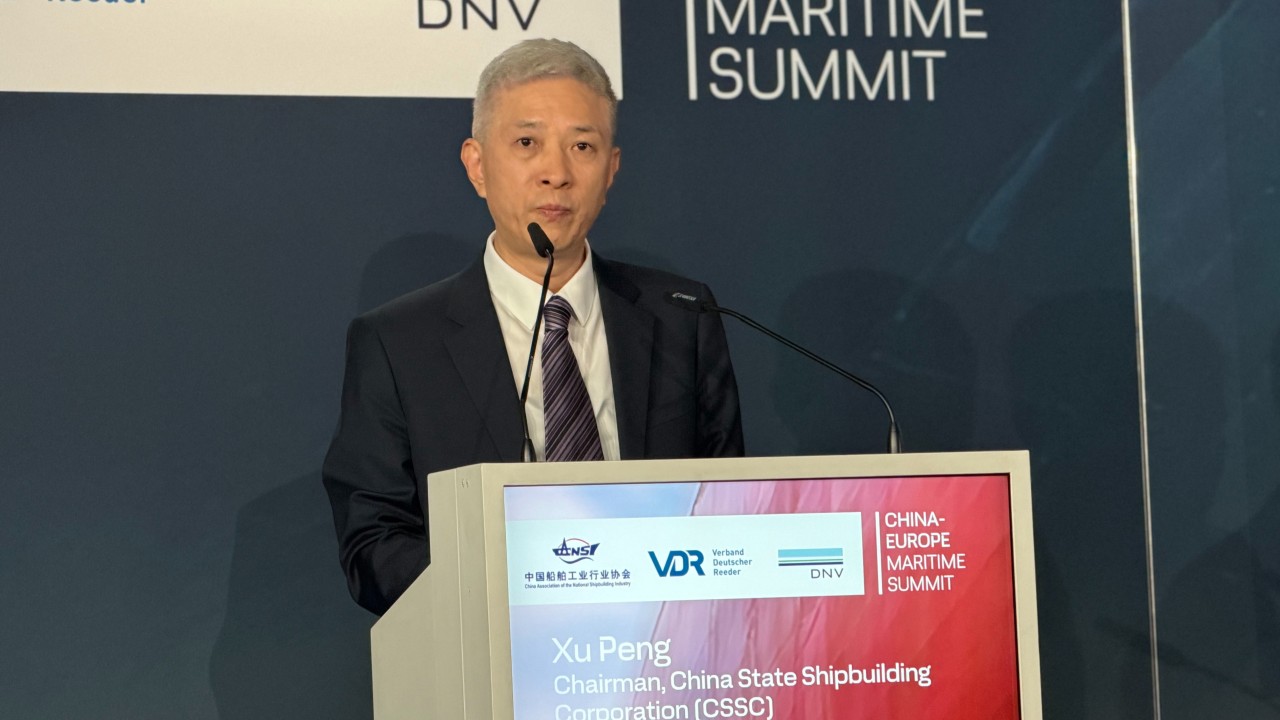
Chair of CSSC Xu Peng Calls for Broader Full-Value-Chain Maritime Cooperation Between China and Europe
 Shipbuilding
Schoeller Returns to Chengxi for Four More MRs as China Gains Ground on Korea
 Shipbuilding
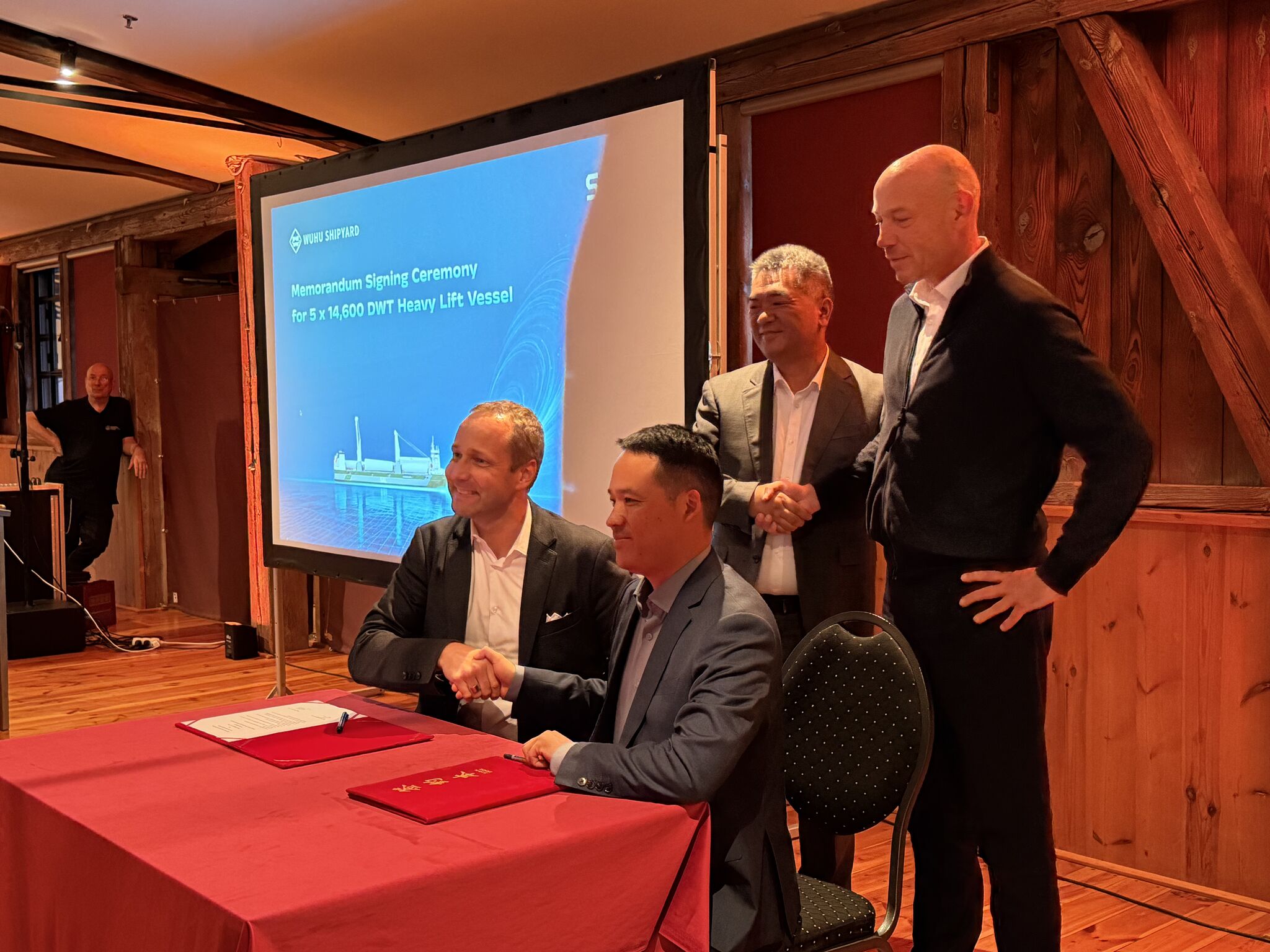
SAL Moves to Double Orca Heavy-Lift Series at Wuhu With Five-Vessel MoU
 Shipbuilding
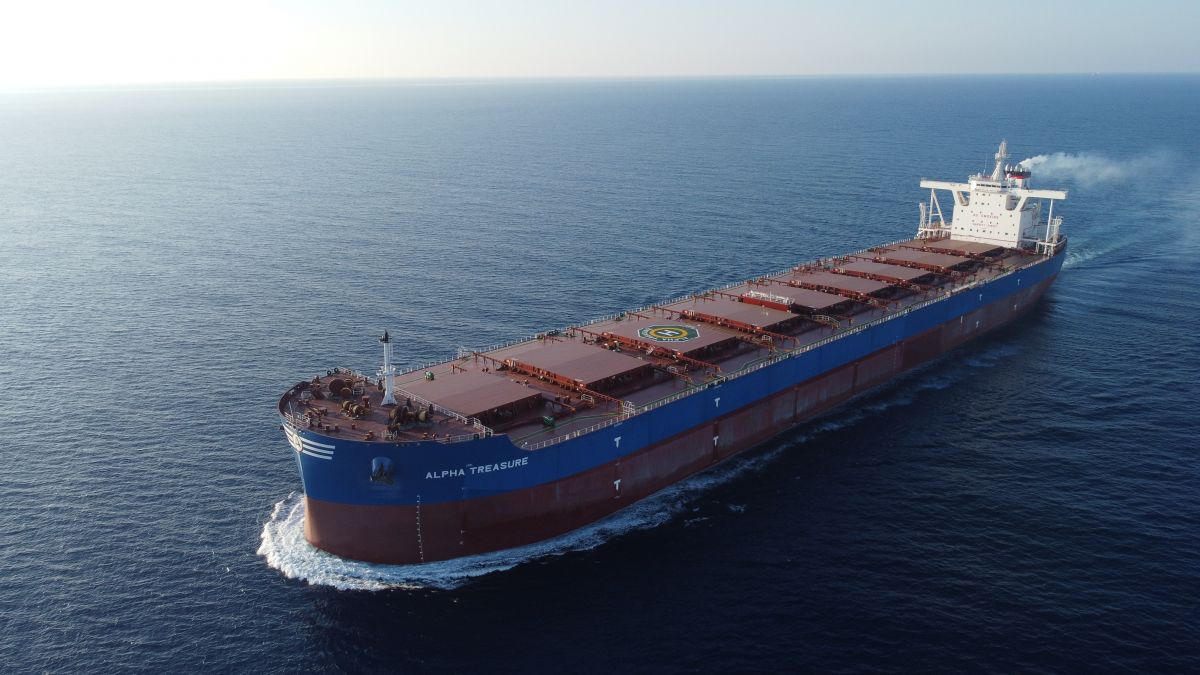
Alpha Bulkers Linked to Two More Newcastlemaxes at Hengli
 Shipbuilding
From a 150-Year Greek Shipping Dynasty to Hengli: Carlova Maritime Opens a New Dry-Bulk Chapter
 Shipbuilding
China’s Shipyards Are Selling 2030 Slots as New Orders Hit Record Highs
 Shipbuilding
Leonhardt & Blumberg Adds Two More GSI MR Tankers, Taking Series to Eight
 Shipbuilding