


From a 150-Year Greek Shipping Dynasty to Hengli: Carlova Maritime Opens a New Dry-Bulk Chapter
A newly established Greek shipping company carrying more than 150 years of maritime history is expanding its newbuilding programme — and China is becoming an increasingly important part of that strategy.
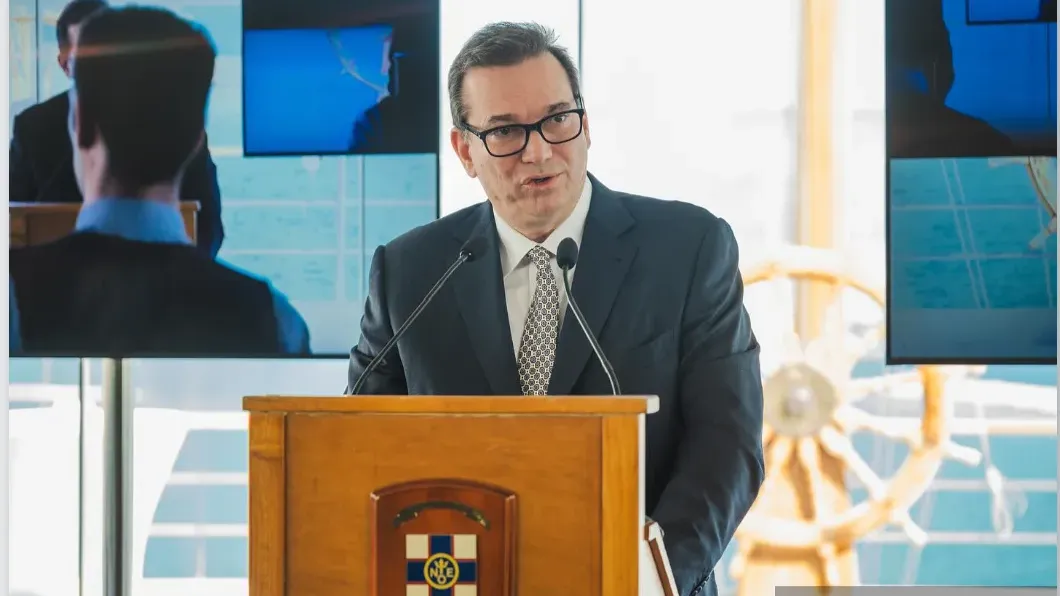
Anthony Inglessis -led Carlova Maritime Co has contracted Hengli Heavy Industries in China for a Kamsarmax bulk carrier scheduled for delivery in 2027, according to shipbroking sources. The vessel is understood to be around 82,000 dwt, the standard size of Hengli’s current Kamsarmax design.
The order represents Carlova’s first disclosed dry-bulk newbuilding investment under its new corporate structure. It also marks a second vessel segment entrusted to Hengli.
Earlier in 2026, Carlova ordered a 114,000-dwt Aframax tanker at the same Chinese yard. Carlova’s own fleet information shows the tanker is due for delivery in the second quarter of 2028. The company also has two 300,000-dwt VLCCs under construction at Hanwha Ocean in South Korea, scheduled for delivery in the fourth quarter of 2027 and the third quarter of 2029 respectively.
In a relatively short period, therefore, Carlova has assembled a newbuilding programme spanning VLCCs, Aframaxes and Kamsarmaxes across South Korea and China.
For a Greek shipping family whose fleet renewal strategy was closely associated with Japanese shipyards for decades, that emerging pattern deserves to be viewed in a much longer historical context.
A new company with a very old history
Carlova may be a relatively new name on the Greek shipping map, but the family behind it is anything but new to shipping.
The Inglessis family traces its modern maritime history to the island of Samos in 1875, when Dimitrios Inglessis and his family were involved in trading goods with sailing vessels. The family also developed commercial interests in wine production and leather manufacturing in Karlovasi, laying the financial base for a shipping business that would eventually survive wars, freight-market collapses and several generations of corporate restructuring.

The family's own historical records differ slightly on some of the earliest dates, but both Carlova Maritime and J.H.I. Steamship today present the Inglessis maritime tradition as extending for more than 150 years.
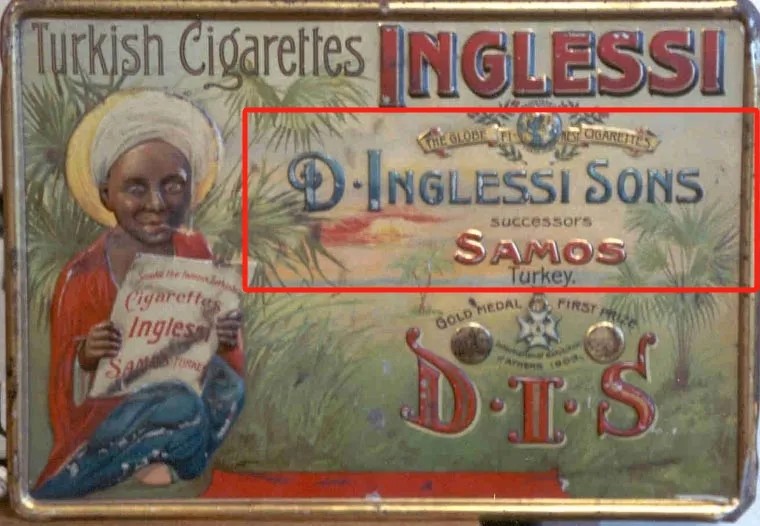
By the early 20th century, the family had moved firmly into steam shipping. Samos Steamship was established by the sons of Dimitrios Inglessis, while the business subsequently expanded into cargo and passenger shipping.
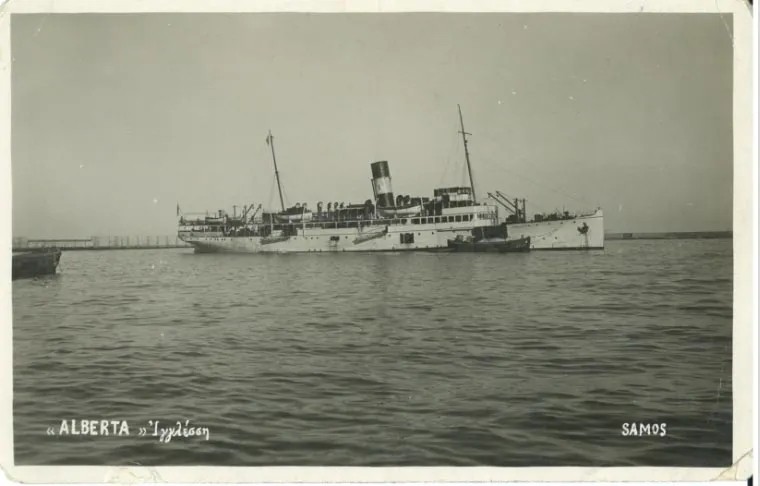
World War II inflicted severe losses on the family fleet. Post-war reconstruction began with Liberty ships acquired as part of the rebuilding of the Greek merchant marine, followed by other cargo vessels and eventually tankers. The family established Frinton Shipbrokers in London during the 1950s, giving the business a permanent presence in one of the centres of global shipbroking.
In 1964, the family joined other Greek shipping interests in creating Pegasus Ocean Services, a pioneering joint operating platform in London with representation in Piraeus. Over more than 25 years, Pegasus managed over 100 vessels, including a substantial number of Japanese-built newbuildings.
The Inglessis family returned to independent shipowning in 1991, reviving the Samos Steamship name.
That period became particularly important in shaping the family's relationship with Japanese shipbuilding.
Over the following decades, Samos systematically renewed its fleet with tankers and bulk carriers ordered at leading Japanese yards. J.H.I.'s family history records 36 high-specification newbuildings delivered over a 17-year period, while Forbes Greece previously counted 35 Japanese newbuildings between 2001 and 2018. The difference reflects slightly different counting periods, but the broader picture is clear: Japan became central to the family's fleet-development model.

That shipbuilding relationship would eventually become part of the DNA of the Inglessis fleet.
One family, several new shipping platforms
The first major corporate change came in 2019.
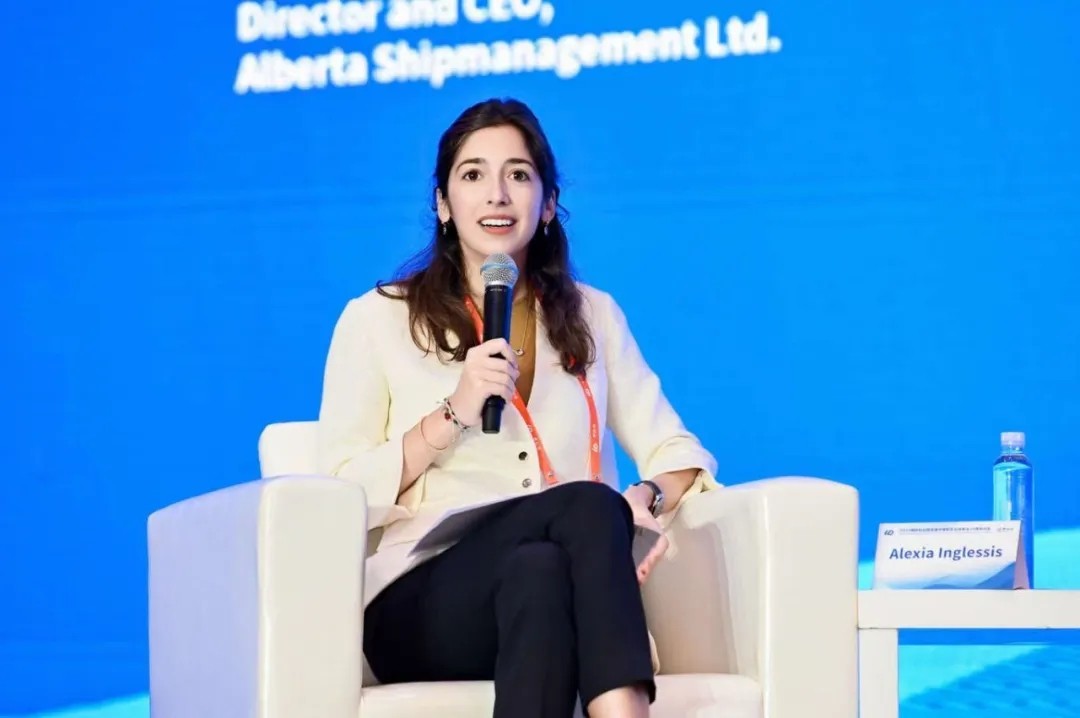
Nikolas Inglessis left Samos Steamship and established Alberta Shipmanagement with his daughters Ismini and Alexia, representing the family's fifth generation.
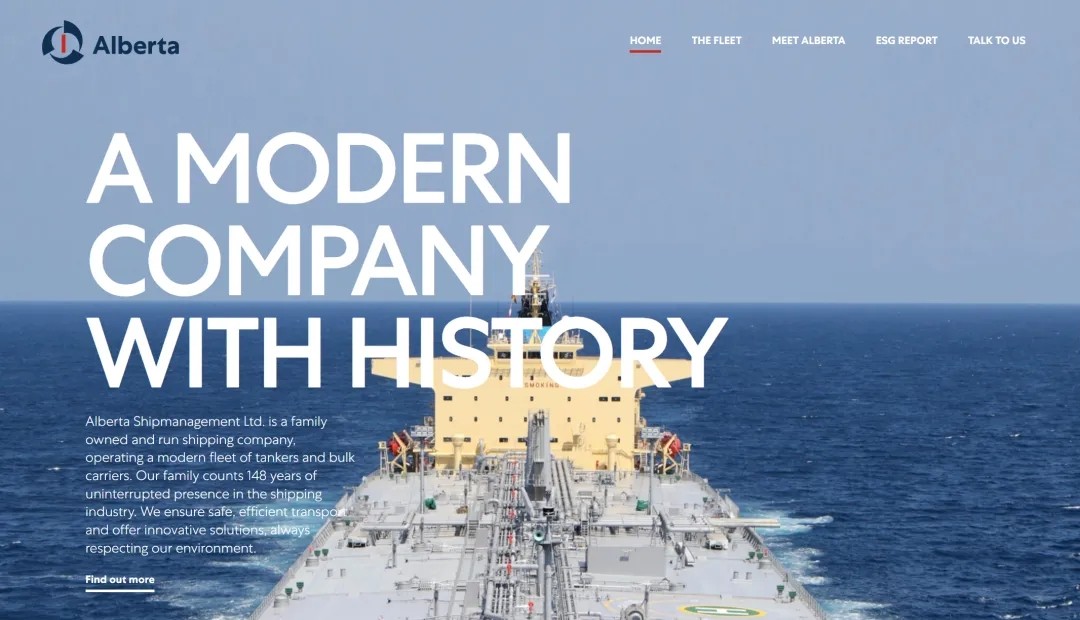
According to Forbes Greece, Alberta began with four tankers and three dry bulk carriers transferred from the wider family interests. Within five years, its fleet had expanded to 22 vessels, with Forbes valuing it at approximately US$1.046 billion in its 2024 ranking of leading Greek shipowners. Nikolas Inglessis also served a five-year term as chairman of the UK P&I Club, ending in November 2023.
Alberta later became the first Greek P&I member of the China P&I Club when the Kamsarmax bulk carrier FALBALA entered the club in May 2024 — another small indication of the increasingly broad commercial connections developing between the Inglessis shipping interests and China's maritime sector.
A second, more fundamental reorganisation followed in 2025.
Samos Steamship, then controlled by cousins Antonis — commonly known internationally as Anthony — Inglessis and Ioannis, or John, Inglessis, began a gradual separation of its businesses.
J.H.I. Steamship's official corporate history now states that a new division in January 2025 created two separate companies: J.H.I. Steamship, led by Ioannis Inglessis, and Carlova Maritime, led by Antonis Inglessis. Samos Steamship continued during the transition with a reduced fleet, while the two branches retained a joint London chartering presence through Alberta Shipbrokers.
Carlova describes itself as carrying forward the Samos shipping tradition, while operating under a new structure and building its own tanker and dry-bulk portfolio.
This background is important when examining its latest Kamsarmax order. The ship represents part of a fleet strategy being formed after a major generational and corporate restructuring, rather than a routine replacement order placed by the old Samos organisation.
Thirteen ships — and an unmistakably Japanese foundation
Carlova currently lists 13 vessels in operation: nine tankers and four bulk carriers.
Every one of those 13 ships was built in Japan.
Its tanker fleet ranges from the 301,850-dwt VLCC Olympus, delivered by JMU Ariake in 2023, to the 49,999-dwt MR2 Manolates, delivered by Onomichi in 2018. Other vessels were built by Sumitomo, JMU and Universal.
The dry-bulk side consists of two Capesizes and two Kamsarmaxes: the 182,205-dwt Freedom, built by Universal in 2011; the 183,384-dwt Prometheus, delivered by JMU Ariake in 2024; the 82,025-dwt Balos, built by Sanoyas in 2018; and the 81,962-dwt Proso, delivered by Sanoyas in 2025.
That fleet composition makes the new Hengli order particularly informative.
Carlova is already familiar with the Kamsarmax segment. It operates two vessels of almost exactly the same size, including a Japanese-built unit delivered only last year. The decision to order another Kamsarmax therefore reflects continuity in vessel strategy while changing the source of the tonnage.
The vessel type remains familiar. The shipyard relationship is changing.
Phaedra provided an early commercial foundation
Another ship helps explain how Carlova entered its new phase.
The 114,807-dwt Aframax Phaedra was delivered by Sumitomo Heavy Industries in 2025 after initially being ordered within the Samos Steamship structure. The vessel subsequently became part of Carlova's fleet.
Carlova secured a long-term charter for the scrubber-fitted tanker with US energy group Phillips 66 at a reported base rate of US$29,950 per day. The firm period is five years, with an additional two-year extension option, meaning the employment could run for as long as seven years.
For a newly separated shipping platform, a modern Japanese-built Aframax backed by several years of contracted employment provides both earnings visibility and a strong operating asset around which to build.
Carlova subsequently moved quickly into additional newbuildings.
And this time, Japan was no longer the only — or even the principal — source.
The new orderbook points to Korea and China
Carlova's disclosed newbuilding programme now presents an almost perfect contrast with its existing fleet.
Its 13 operating vessels are Japanese-built.
Its next generation of ships is being built in South Korea and China.
Hanwha Ocean has secured the two 300,000-dwt VLCCs.
Hengli Heavy Industries has secured the 114,000-dwt Aframax.
And Hengli has now added the Kamsarmax.
That change should not necessarily be interpreted as Carlova abandoning Japanese shipbuilding. Greek owners tend to allocate newbuildings according to vessel type, technical specification, price, delivery timing, financing and long-term relationships rather than according to a simple country preference.
Japanese yards also remain deeply embedded in the Inglessis fleet.
What has changed is the range of shipbuilding partners available to the family.
Under Samos, Japan dominated the newbuilding programme for years. Under Carlova, the first independent wave of orders is geographically more diversified.
This is also occurring at a time when Chinese yards have become far more successful in attracting established Greek owners across mainstream tanker and dry-bulk segments.
Hengli is moving from first order to cross-segment relationship
The Carlova-Hengli relationship offers a useful example.
An owner can place a single vessel at a yard for many reasons: a competitive price, an available berth, a particular specification or simply the timing of the market.
A second contract in another vessel segment provides stronger evidence of a developing commercial relationship.
Carlova first selected Hengli for an Aframax tanker.
It has now returned with a Kamsarmax bulk carrier.
The contracts span two of the company's core markets and two technically different ship types. That gives the relationship more significance than the size of the latest one-ship order might initially suggest.
Hengli has been building a much broader Greek customer base along similar lines.
In May 2026, EuroDry confirmed contracts with Hengli for two 82,000-dwt Kamsarmax bulk carriers, scheduled for delivery in the first and second quarters of 2028 at an aggregate contract value of about US$74 million. Market reports indicated that the wider Eurobulk/EuroDry interests were associated with four Kamsarmaxes at the yard.
Capital Group has also been linked with multiple Hengli Kamsarmaxes after earlier work with the yard across Capesize bulk carriers and VLCCs.
Enesel provides another example of cross-segment expansion within dry bulk. After ordering Capesize vessels from Hengli, the Greek owner added a 210,000-dwt Newcastlemax scheduled for delivery in November 2028. Riviera reported that Enesel's Hengli orderbook had grown to five large bulk carriers across the two vessel classes.
Carlova therefore joins a broader group of established Greek shipping companies using Hengli for increasingly diverse newbuilding programmes.
Why the yard map is changing
The expansion of Chinese yards among traditional Greek owners is closely linked to the transformation of China's shipbuilding industry itself.
For many years, Japanese yards occupied a particularly strong position among conservative Greek family owners. Their appeal was built on proven designs, operating efficiency, construction quality, resale values and decades-long relationships between owners and yards.
Those advantages have not disappeared.
What has changed is the competitive position of Chinese shipbuilders.
China now offers mature designs across the major bulk carrier and tanker categories, a much larger production base, competitive construction economics and, at selected yards, increasingly attractive delivery positions. Major Chinese builders are also securing repeat orders from owners whose earlier fleets were heavily Japanese- or Korean-built.
Hengli is an unusual case because it is simultaneously a relatively recent re-entrant to commercial shipbuilding and one of the fastest-expanding yards in the international market.
For Greek owners, delivery timing matters almost as much as headline contract price. A ship delivered into the right point of a freight cycle can generate a substantially different return from an otherwise identical ship arriving two years later. A yard able to combine specification, price and a commercially useful berth can therefore penetrate owner relationships that once appeared highly stable.
Carlova's ordering pattern illustrates this logic well.
Its VLCC requirements went to Hanwha Ocean.
Its Aframax went to Hengli.
Its first dry-bulk newbuilding under the new corporate structure has also gone to Hengli.
The result is a newbuilding portfolio assembled by segment and opportunity rather than by historical allegiance to a single shipbuilding country.
A 150-year family entering another cycle
There is a broader point in the history of the Inglessis family.
The family has survived for more than a century and a half partly because its corporate structure and fleet strategy have repeatedly changed.
Sailing vessels gave way to steamships.
Passenger and cargo operations were rebuilt after wartime destruction.
The family later participated in the Pegasus joint fleet before returning to independent ownership through Samos Steamship.
Samos developed a major Japanese newbuilding programme.
The next generations subsequently created Alberta Shipmanagement, J.H.I. Steamship and Carlova Maritime.
The names and corporate structures have changed repeatedly, while capital, operating expertise, seafarers, commercial relationships and accumulated shipping knowledge have moved from one generation to the next.
Carlova's latest Kamsarmax is only one vessel in that much longer history.
Yet it captures the direction of the newest chapter.
The company has inherited a fleet shaped overwhelmingly by Japanese shipbuilding. Its own newbuilding programme is being constructed with Korean and Chinese yards. Hengli has moved from supplying Carlova with one Aframax to securing a second ship type. Dry bulk, already part of the operating fleet, is now becoming part of the company's direct newbuilding strategy.
For Hengli, the order adds another respected Greek family to a growing customer portfolio and strengthens an existing relationship.
For Carlova, it adds another building block to a shipping company that is less than two years into its independent development but carries a maritime heritage dating back around 150 years.
The new corporate name may be recent.
The capital allocation discipline behind it has been formed over five generations.

READ MORE
 Shipbuilding
Another Chinese Bridge Builder Moves Into Shipbuilding
 Shipbuilding
Amid China’s Shipbuilding Boom, a State-Owned Yard Quietly Enters Liquidation
 Shipbuilding
Yichang Changyun plans RMB120m inland bulker programme
 Shipbuilding
MISC Signs for Five More LNG Carriers at Hudong-Zhonghua
 Shipbuilding
Steel Giant Shagang Eyes Shipbuilding as a Booming Market Draws Industrial Capital
 Shipbuilding
Hengli Secures 12 Tanker Orders, Retaining World’s Largest VLCC Orderbook
 Shipbuilding
Hengli Signs 11 VLAC Contracts in One Week
 Shipbuilding
China ZWI Enters Ocean Shipping with VLGC Acquisition and Chemical Tanker Newbuild Project
 Shipbuilding
World’s First 325,000-DWT Methanol Dual-Fuel Ore Carrier Delivered
 Shipbuilding