


China’s Shipyards Capture the Lion’s Share of a $132.6 Billion Newbuilding Boom
.
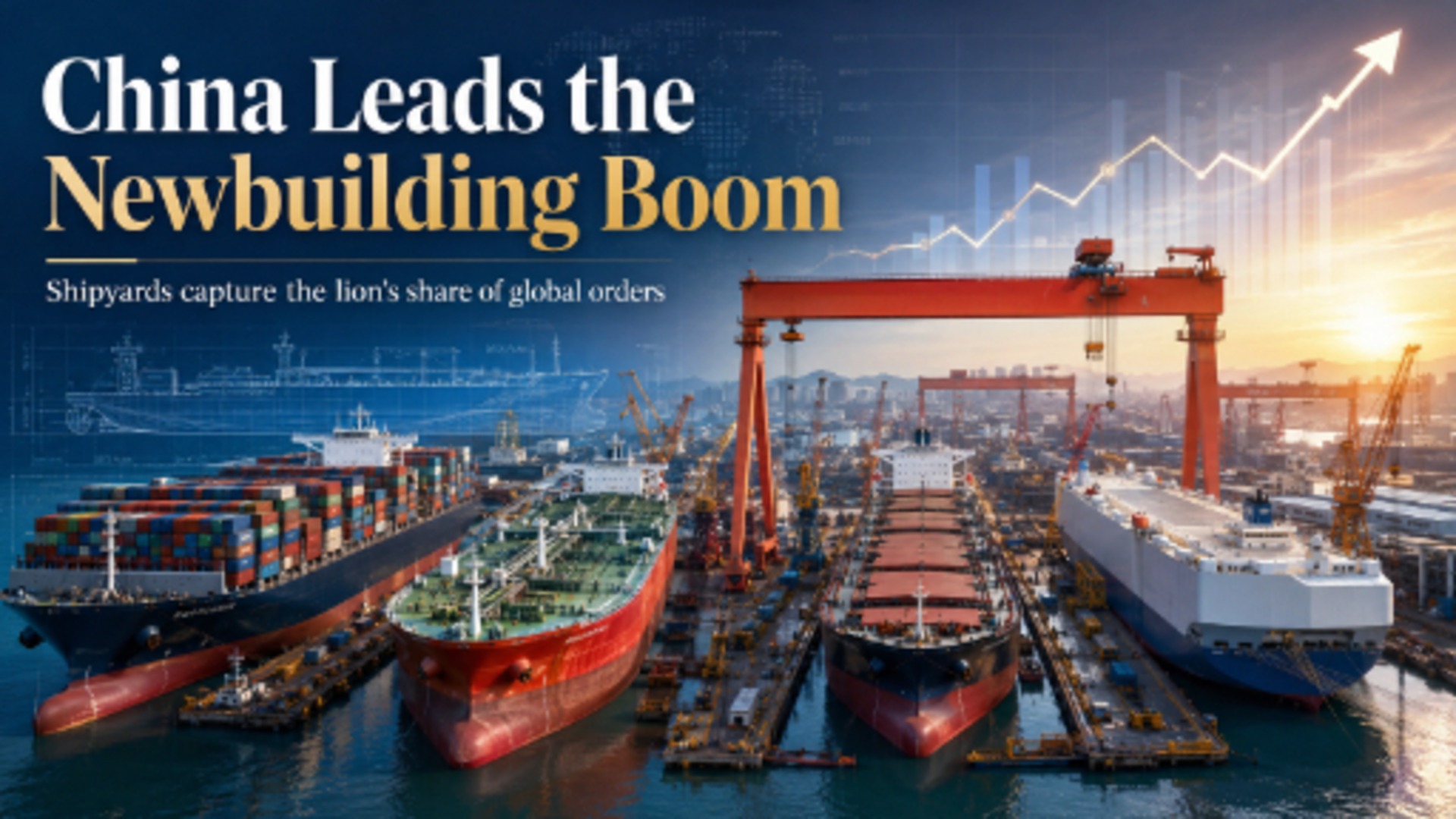

After a brief period of uncertainty at the beginning of the Middle East conflict, the global newbuilding market has once again demonstrated its resilience.
Shipowners remain highly cash-generative, industry leverage is still close to historically low levels, and investment sentiment across the shipping sector remains strong. According to Clarksons Research, 1,481 new vessels worth a combined $132.6 billion were ordered worldwide in the first half of 2026, bringing investment close to the highest half-year level on record.
That is equivalent to approximately $730 million in newbuilding contracts being signed every day. Of this total, around $530 million per day flowed to Chinese shipyards.
On that basis, Chinese yards secured close to $96 billion in newbuilding investment during the first six months of the year.
Measured by compensated gross tonnage, China’s lead was equally pronounced. Chinese shipyards reportedly won orders for 1,131 vessels totalling approximately 31 million cgt, accounting for around 72% of global contracting. South Korean yards ranked second, securing 195 vessels and approximately 8 million cgt, equivalent to about 19% of the global market.
The centre of gravity of the global shipbuilding industry is continuing to shift towards China.
China Absorbs Most of the New Order Growth
The strength of the newbuilding market in the first half of 2026 has been underpinned by the improved financial position of shipowners.
Over the past several years, container shipping, tanker, dry bulk and car carrier markets have each experienced periods of strong profitability, allowing many owners to accumulate substantial cash reserves. At the same time, shipping companies have generally exercised greater discipline over debt than during previous investment cycles.
As a result, even amid growing geopolitical uncertainty, shipowners retain both the balance-sheet capacity and confidence to continue renewing and expanding their fleets.
In several shipping segments, secondhand vessel values have risen close to, or in some cases above, equivalent newbuilding prices. For owners with access to competitive financing and the ability to accept longer delivery periods, ordering new tonnage has therefore become increasingly attractive.
New vessels generally offer lower fuel consumption, improved carbon efficiency and longer regulatory lifespans. Many are also being designed with LNG, methanol or ammonia capability, or with sufficient space and engineering provisions for future fuel conversion.
Despite the release of additional shipbuilding capacity, yard pricing has remained firm. By the end of June, the Clarksons Newbuilding Price Index was still 0.3% higher than at the beginning of the year.
Labour costs in China and other major shipbuilding nations continue to rise, while higher raw material, energy and equipment costs following the Middle East conflict have provided further support for yard prices. Adjusted for inflation, however, indicative newbuilding prices remain slightly below the peak of the previous cycle.
Within this expanding market, Chinese yards have captured not only the highest number of vessels, but also the majority of global newbuilding investment.
China’s Strength Now Extends Across the Full Vessel Spectrum
China’s traditional shipbuilding strengths were once concentrated in bulk carriers, smaller containerships and conventional tankers. That picture has changed substantially.
Chinese yards are now securing series orders for ultra-large containerships, VLCCs, Suezmax tankers, chemical tankers, vehicle carriers, LNG carriers, very large ammonia carriers and a growing range of dual-fuel vessels.
Their competitive position has expanded beyond price and capacity. It increasingly includes vessel design, green propulsion systems, equipment integration, production efficiency and serial construction capability.
Hengli Heavy Industry provides one of the clearest examples of this development. The yard reported securing 207 vessels in the first half of 2026, including 49 bulk carriers, 56 containerships, 94 tankers and eight very large ammonia carriers.
The former STX Dalian facility, revived under new ownership, has rapidly emerged as one of the fastest-growing shipbuilders in the current cycle.
At the same time, major state-owned yards under China State Shipbuilding Corporation, including Jiangnan Shipyard, Hudong-Zhonghua, Shanghai Waigaoqiao Shipbuilding, Dalian Shipbuilding Industry, Guangzhou Shipyard International, Qingdao Beihai Shipbuilding and Huangpu Wenchong, continue to expand their coverage of higher-value vessel segments.
Leading private and diversified builders, including Yangzijiang Shipbuilding, New Times Shipbuilding, China Merchants Industry, Zhoushan Changhong, Fujian Mawei and other regional yards, are also expanding capacity and upgrading their product portfolios.
This multi-tiered structure, combining large state-owned shipbuilding groups, leading private yards and restarted facilities, allows China to accommodate a wide range of vessel types, order sizes and delivery requirements.
Many top-tier yards are already booked into 2029 or 2030. However, newly added capacity and the ability to shift production between vessel types mean Chinese builders can still offer relatively competitive delivery slots.
For international owners, delivery availability has become almost as important as price.
Greek Owners Return to the Market in Force
Another defining feature of the 2026 newbuilding market has been the broadening of the buyer base.
Before 2026, global newbuilding investment was heavily concentrated among major shipowners. This year, ordering activity has become far more diversified, with medium-sized owners and newcomers entering the market alongside established industry leaders.
According to Clarksons Research, Greek shipowners invested approximately $23.4 billion in new tonnage during the first half of 2026, already exceeding their total investment for the whole of 2025.
That represented the highest half-year level on record and returned Greece to first place among shipowning nations for newbuilding investment. Chinese owners followed closely, investing approximately $22.4 billion.
The surge in Greek ordering has generated a substantial flow of tanker, bulk carrier and feeder containership contracts for Chinese yards.
Data cited by Xclusiv Shipbrokers indicated that Greek owners ordered 102 vessels in the first quarter alone, an increase of 209% year on year and equivalent to around 24% of global contracting during the period.
Tankers accounted for 63 of those vessels, including 24 VLCCs and 23 Suezmaxes.
These orders have included projects from major Greek shipping groups led by figures such as George Procopiou and Evangelos Marinakis, as well as contracts from owners entering certain vessel segments or Chinese yards for the first time.
Capital Group, controlled by Marinakis, was linked to an order for 11 VLCCs at Hengli Heavy Industry, one of the most closely watched tanker contracts of the year.
Greek owners are being attracted not only by earlier delivery positions, but also by China’s increasingly mature standard designs for large tankers, bulk carriers and feeder containerships.
Proven designs can reduce engineering and construction risk, while series orders provide greater consistency in operating costs, spare parts, technical management and crew training.
China’s broader maritime ecosystem—including ship leasing, equipment manufacturing, classification, financing and supply-chain support—is also becoming an increasingly important part of the ordering proposition.
Tankers Drive the Newbuilding Surge
Tankers, and VLCCs in particular, have been the most dynamic part of the 2026 newbuilding market.
Middle East tensions, risks surrounding the Strait of Hormuz, the expansion of sanctioned fleets and the limited supply of compliant modern tonnage have increased the strategic value of tanker assets.
At the same time, the global crude tanker fleet is ageing, while the availability of modern, fuel-efficient vessels remains limited. Some owners are therefore moving early to secure delivery positions between 2028 and 2030.
Clarksons Research estimates that more than 40% of tanker orders placed during the first half came from owners classified as new entrants to the relevant segment. Nearly one-quarter of the orders were placed at yards that were themselves relatively new to the vessel type.
This has made the tanker newbuilding market more diverse, but also more difficult to interpret.
China is particularly well positioned to benefit because its yards now offer a complete tanker product range covering MR product tankers, LR1s, LR2s, Aframaxes, Suezmaxes and VLCCs.
Hengli Heavy Industry, New Times Shipbuilding, Dalian Shipbuilding Industry, Guangzhou Shipyard International, Shanghai Waigaoqiao Shipbuilding and Qingdao Beihai Shipbuilding are among the yards benefiting from the current wave of tanker investment.
China’s growth is therefore no longer being driven primarily by large volumes of relatively low-value conventional vessels.
VLCCs, sophisticated dual-fuel tankers, ammonia carriers and advanced chemical tankers are becoming increasingly important contributors to both orderbook value and technical capability.
Capacity Expansion Will Face Its Real Test After 2030
The strength of the present orderbook does not eliminate the risk of future oversupply.
A number of previously inactive or underutilised Chinese shipyards have restarted production, while leading builders are expanding docks, block fabrication lines and automated production facilities.
Shipbuilding capacity is also being developed in Southeast Asia, India and Brazil. However, these projects will require time to secure skilled labour, establish supply chains and achieve reliable construction performance.
Clarksons Research expects global vessel deliveries to rise sharply to approximately 61.1 million cgt in 2027, which would represent a record annual level.
Containerships, tankers, vehicle carriers and some dry bulk segments are all set to receive substantial volumes of new capacity.
There is also a group of provisional, non-effective or unreported contracts, together with yard-controlled resale or inventory projects, that may not yet be fully reflected in industry databases.
Actual committed production capacity may therefore be higher than published statistics suggest.
If the supportive effects of geopolitical disruption, sanctions-related fleet replacement and elevated freight markets begin to fade, some vessel sectors could face significant supply pressure after the delivery wave arrives.
For Chinese shipyards, the next phase of competition will increasingly concern execution rather than order intake.
As production volumes rise, yards will need to maintain quality, delivery performance, margins and supply-chain control. They will also need to manage shortages of skilled workers, longer equipment lead times and volatile steel and raw material prices.
With delivery schedules extending into 2029 and 2030, contracts signed today may span an entire shipping cycle before the vessels enter service.
During that period, fuel strategies, environmental regulations, financing costs and global trade patterns could all change materially.
Longer orderbooks therefore provide revenue visibility, but also increase execution risk for both shipowners and shipbuilders.
China Is Redefining the Global Shipbuilding Market
China’s estimated 72% share of global newbuilding orders in the first half of 2026 reflects far more than sheer production capacity.
The country now combines mature vessel designs, competitive delivery positions, cost control, dual-fuel engineering, equipment manufacturing, financing support and large-scale serial construction.
The world’s largest shipowners, traditional Greek shipping families, Chinese state-owned shipping groups and newly established market entrants are all directing capital towards Chinese yards.
Even as several countries seek to revive their domestic shipbuilding industries or introduce measures targeting Chinese-built vessels, international owners have few immediate alternatives capable of matching China across scale, cost, delivery and product range.
The global newbuilding market remains exceptionally strong, and Chinese shipyards are at the centre of the investment cycle.
Orderbooks are stretching towards 2030, while new capacity continues to enter the market. The next test will be whether China’s shipbuilding industry can preserve construction quality, profitability and technological progress while operating at an unprecedented scale.
The orders are already secured. The more important question is how successfully they will be delivered.

READ MORE
 Shipbuilding
Another Chinese Bridge Builder Moves Into Shipbuilding
 Shipbuilding
Amid China’s Shipbuilding Boom, a State-Owned Yard Quietly Enters Liquidation
 Shipbuilding
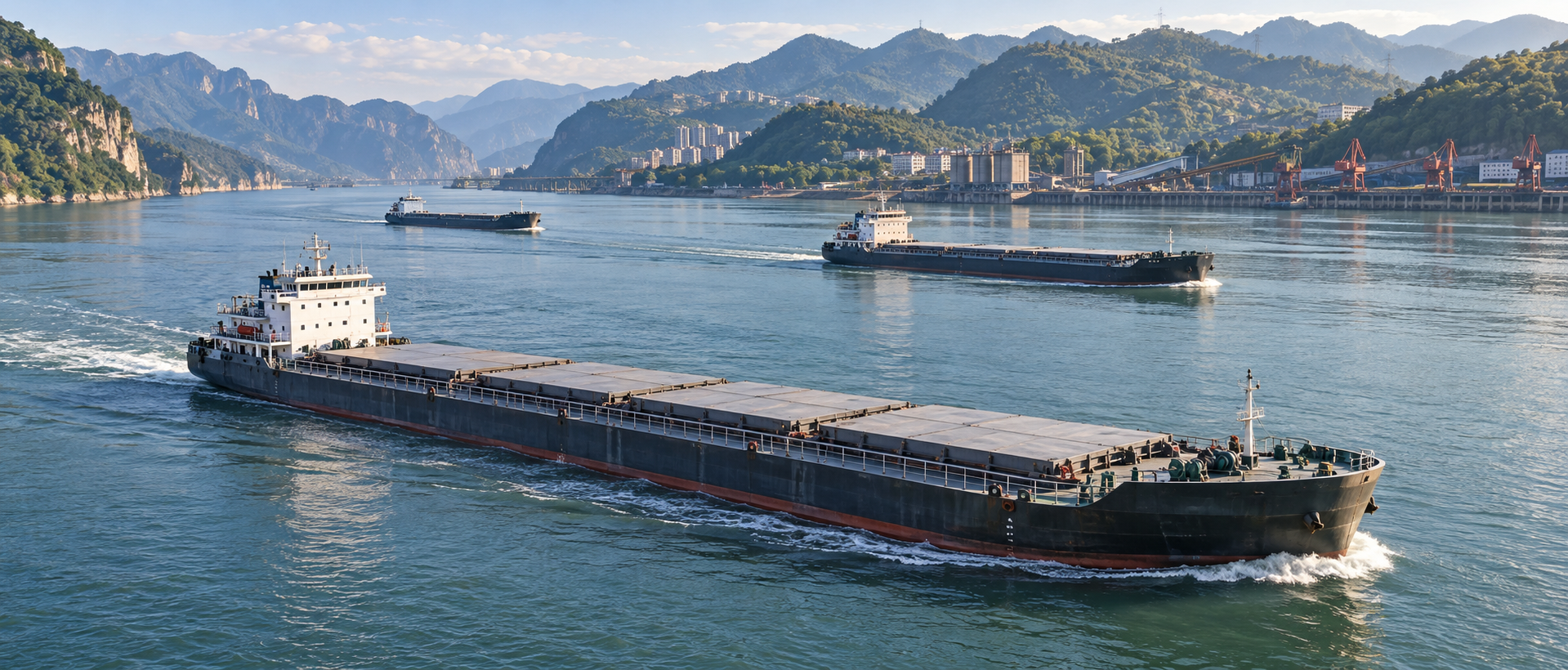
Yichang Changyun plans RMB120m inland bulker programme
 Shipbuilding
MISC Signs for Five More LNG Carriers at Hudong-Zhonghua
 Shipbuilding
Steel Giant Shagang Eyes Shipbuilding as a Booming Market Draws Industrial Capital
 Shipbuilding
Hengli Secures 12 Tanker Orders, Retaining World’s Largest VLCC Orderbook
 Shipbuilding
Hengli Signs 11 VLAC Contracts in One Week
 Shipbuilding
China ZWI Enters Ocean Shipping with VLGC Acquisition and Chemical Tanker Newbuild Project
 Shipbuilding
World’s First 325,000-DWT Methanol Dual-Fuel Ore Carrier Delivered
 Shipbuilding