

Evergreen Distributes NT$34.6bn in Cash Dividends, Extending Payout Streak to Six Years
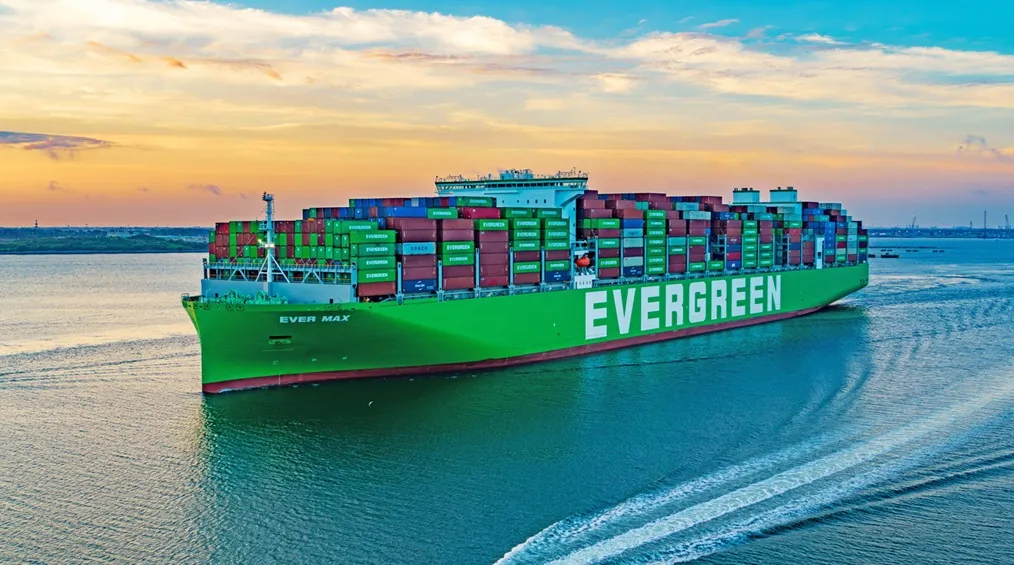

More than NT$34.6bn in cash has been credited to the accounts of Evergreen Marine shareholders.
On 17 July, Evergreen Marine Corporation distributed a cash dividend of NT$16 per share, representing a total payout of approximately NT$34.64bn, or about US$1.18bn. The payment marked the sixth consecutive year in which the Taiwan-listed container shipping company has returned cash to shareholders.
Over the six-year period, Evergreen has distributed close to NT$383bn in aggregate cash dividends, equivalent to roughly US$13bn, with cumulative dividends reaching approximately NT$149 per share.
For one of the world’s largest container shipping companies, the figures provide a clear indication of how the extraordinary profits generated during the previous container shipping supercycle have continued to flow back to investors.
More than 300,000 shareholders share the payout
Evergreen completed the ex-dividend process on 17 June, with the cash dividend formally paid on 17 July.
The company’s shareholder base had exceeded 300,000 by the end of June. Dividing the total payout by the number of shareholders gives a simple average of approximately NT$115,500 per investor, or around US$3,900.
Actual payments naturally vary significantly according to individual shareholdings.
Evergreen has also become an important constituent of several Taiwan-listed high-dividend exchange-traded funds. Its latest dividend distribution is therefore expected to provide meaningful income to funds holding sizeable positions in the carrier.
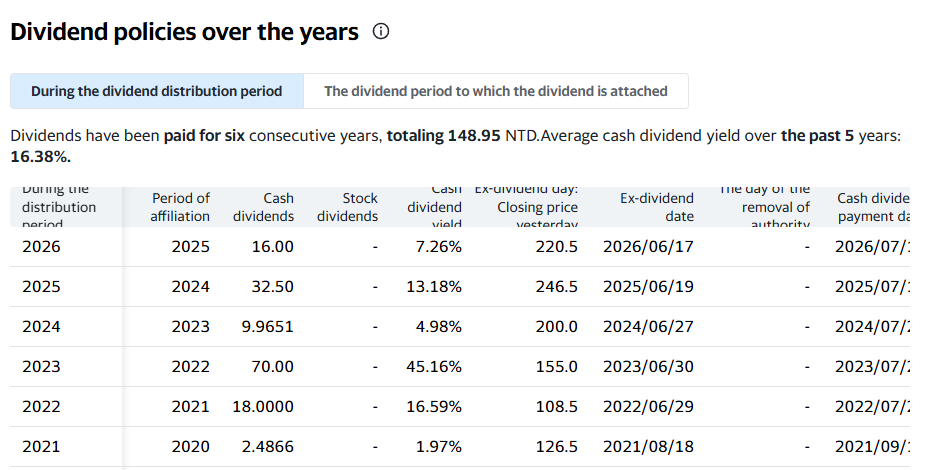
Based on a share price of around NT$237 in early June, the NT$16-per-share dividend represented a cash yield of approximately 6.75%. Based on Evergreen’s closing price when the dividend proposal was approved by its board in March, the implied yield was closer to 7.7%.
Dividend pay out remains close to half of annual earnings
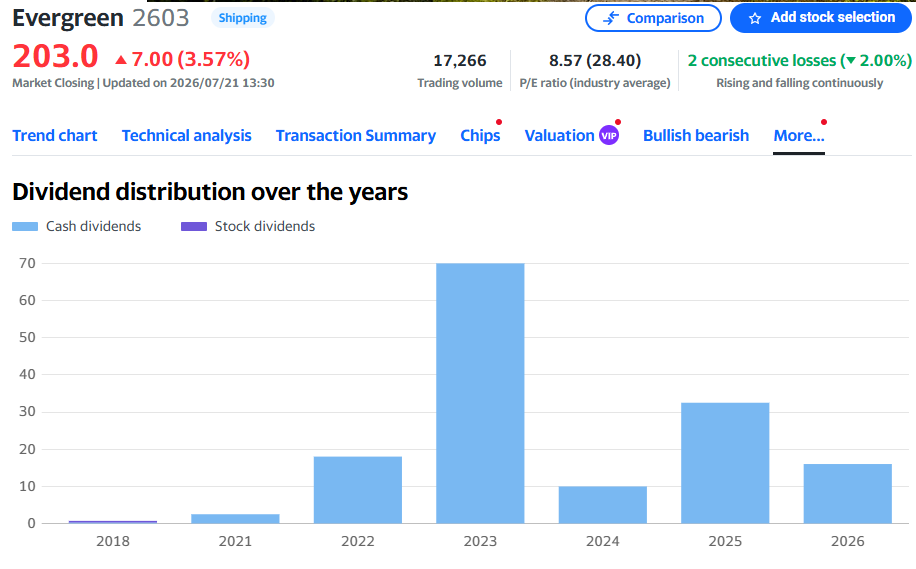
Evergreen’s latest dividend is substantially lower than the NT$32.50 per share distributed in the previous year. However, the reduction largely reflects the decline in annual earnings rather than a fundamental retreat from its shareholder-return policy.
The carrier generated consolidated revenue of approximately NT$379.1bn in 2025, down 18.2% year on year. Net profit attributable to shareholders fell by around 50.8% to NT$68.6bn, while earnings per share stood at NT$31.68.
A dividend of NT$16 per share therefore represents a payout ratio of approximately 50.5%.
This indicates that Evergreen continued to return about half of its annual earnings to shareholders despite the decline in profitability from the exceptionally strong levels recorded during the earlier container shipping boom.
The company has said its dividend policy takes into account annual earnings, shareholder interests, future operating requirements and planned capital expenditure.
That balance is particularly important for Evergreen. The group must maintain attractive shareholder returns while funding newbuildings, container equipment, fleet renewal, working capital and financial reserves for a highly cyclical and increasingly volatile market.
Six years of dividends reflect the shipping cycle
Evergreen’s cash dividends distributed over the past six years have totalled approximately NT$149 per share.
The largest payment came in 2023, when the company distributed NT$70 per share following the record profits generated during the peak of the container shipping market. That payment produced a dividend yield of more than 45% based on the relevant share price.
An earlier NT$18-per-share dividend also generated a yield of more than 16%.
The dividend trajectory closely follows the development of the container shipping cycle.
During the pandemic, port congestion, container shortages, disrupted supply chains and exceptionally strong cargo demand pushed freight rates to unprecedented levels. Evergreen and other leading carriers accumulated profits and cash reserves on a scale rarely seen in the industry.
As spot rates subsequently retreated, annual earnings and dividend payments also declined. Yet the financial strength accumulated during the boom has allowed Evergreen to maintain continuous cash distributions through changing market conditions.
The significance of the six-year payout record therefore extends beyond the dividend declared in any single year. It demonstrates the company’s continuing ability to generate cash and reward shareholders despite freight-rate corrections, Red Sea diversions, trade-policy uncertainty and geopolitical disruption.
Returning cash while expanding the fleet
High dividend payments have not prevented Evergreen from continuing to invest heavily in fleet expansion and renewal.
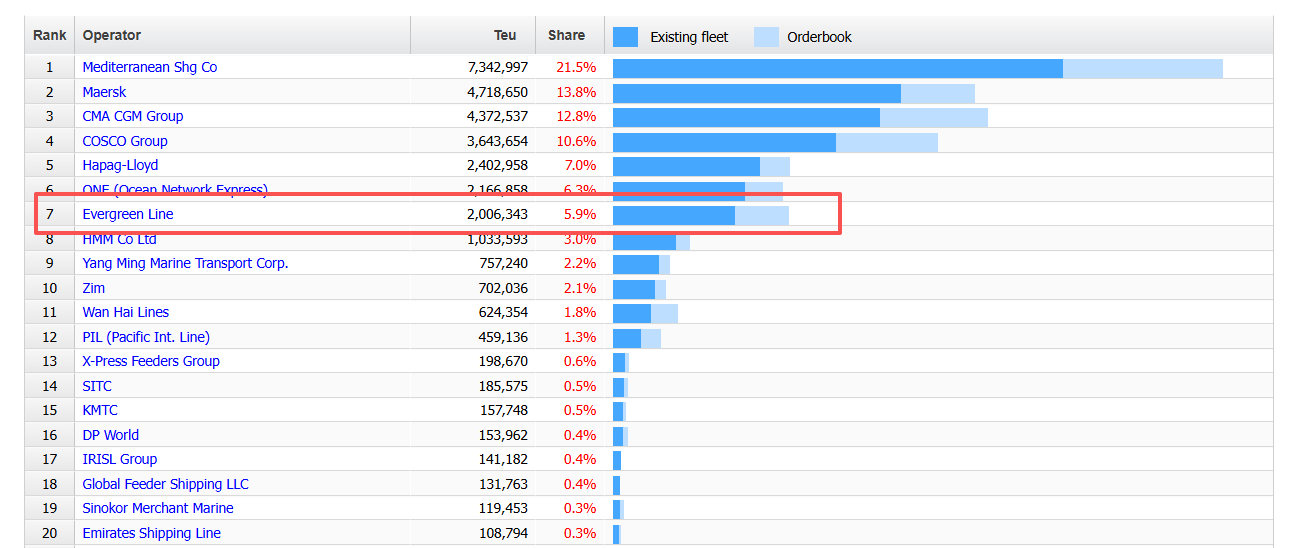
The group operates around 2m teu of container shipping capacity, placing it among the world’s seven largest liner operators.
In January 2026, Evergreen approved an investment in 23 new containerships. The programme included seven vessels of approximately 5,900 teu and 16 vessels of around 3,100 teu, with a combined investment ceiling of about US$1.47bn.
The order added to an already substantial newbuilding programme covering both large mainline vessels and smaller regional ships. Evergreen has also invested in dual-fuel tonnage as it prepares its fleet for tightening emissions requirements and the gradual transition towards lower-carbon marine fuels.
The company’s fleet is relatively young compared with those of many other major container carriers. This reflects its use of profits generated during the recent market cycle to improve fuel efficiency, reduce operating costs and strengthen its long-term competitive position.
Evergreen’s capital-allocation strategy therefore has two parallel components.
One is to return a significant proportion of earnings to shareholders through cash dividends. The other is to reinvest in modern tonnage, future fuel flexibility and the resilience of its global service network.
June revenue rebounds amid higher freight rates
Evergreen’s operating performance strengthened during June as container freight rates rose amid trade-policy uncertainty, front-loading by cargo owners and renewed congestion at several major ports.
The company reported June consolidated revenue of approximately NT$39.14bn, an increase of 12.9% from the previous month and 30% from the same period a year earlier.
The monthly result was the company’s strongest in around 17 months.
However, cumulative revenue for the first half of 2026 stood at approximately NT$191.7bn, still down 2.4% year on year. The June recovery has therefore not yet fully offset the weaker performance recorded earlier in the year.
Evergreen’s earnings outlook will continue to be influenced by freight-rate sustainability, global trade volumes, newbuilding deliveries, port congestion, bunker prices, tariff policies and geopolitical risks.
The large volume of containership capacity scheduled to enter service across the industry remains a particular concern. Carriers must use newer, more efficient vessels to lower unit costs while simultaneously managing the pressure that fleet growth could place on freight rates.
A cash legacy from the container shipping supercycle
Evergreen’s latest NT$34.64bn distribution represents the allocation of profits earned in 2025. The nearly NT$383bn paid over six consecutive years provides a much broader financial record of the previous container shipping supercycle.
The carrier has neither retained all of its cycle-generated profits on its balance sheet nor allowed large dividend payments to halt fleet investment.
It has continued to return cash to shareholders while ordering new vessels, upgrading fleet efficiency and preparing for a shipping market increasingly shaped by emissions regulation, fuel uncertainty and geopolitical disruption.
The central question is therefore no longer simply how much Evergreen will distribute per share next year.
The more important issue is whether the company can continue balancing fleet investment, liquidity, earnings resilience and shareholder returns as substantial new capacity enters the market and operational risks become more complex.
That balance will determine whether Evergreen’s six-year dividend record remains primarily the legacy of an exceptional freight cycle or develops into a durable feature of its long-term capital-allocation strategy.

READ MORE
 Finance
Financing Above 90%: Why Abundant Capital Is Making Shipping Lenders Wary
 Finance
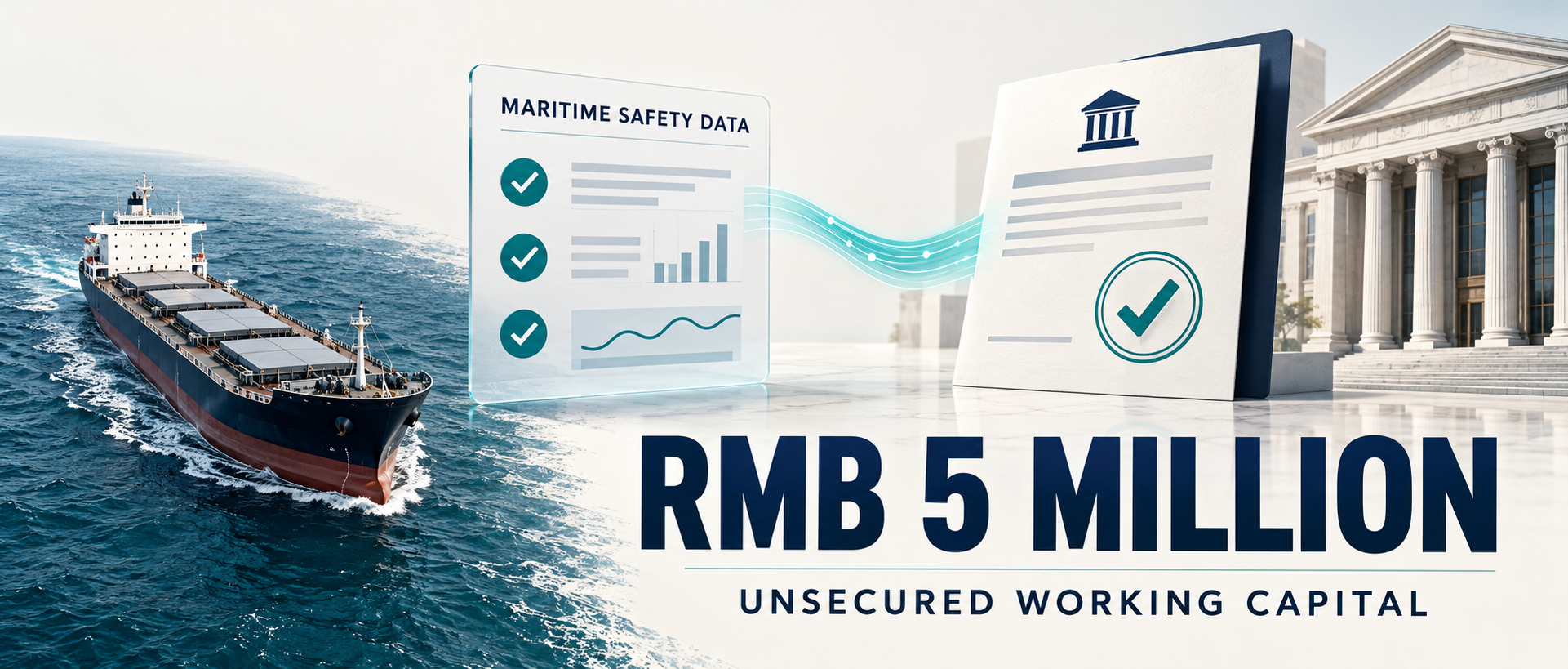
Shanghai links safety records to RMB5m maritime loan
 Finance
“We Are Buying Ships”: NORDEN Raises 2026 Profit Guidance for the Fourth Time
 Finance
Why Is a 40-Year Shipping Investor Expanding into Commodities?
 Finance
Cetus Maritime Advances Oslo IPO Plans with $133.6 Million Seacon Deal
 Finance