


China Merchants Nanjing Tanker Plans Four More MR Newbuildings as Its Fleet Renewal Pipeline Reaches 22 Vessels
China Merchants Nanjing Tanker Corporation, widely known in China as CMNT, is preparing to expand its medium-range product tanker fleet with another four newbuildings, extending a broader fleet renewal programme that now covers up to 22 vessels.
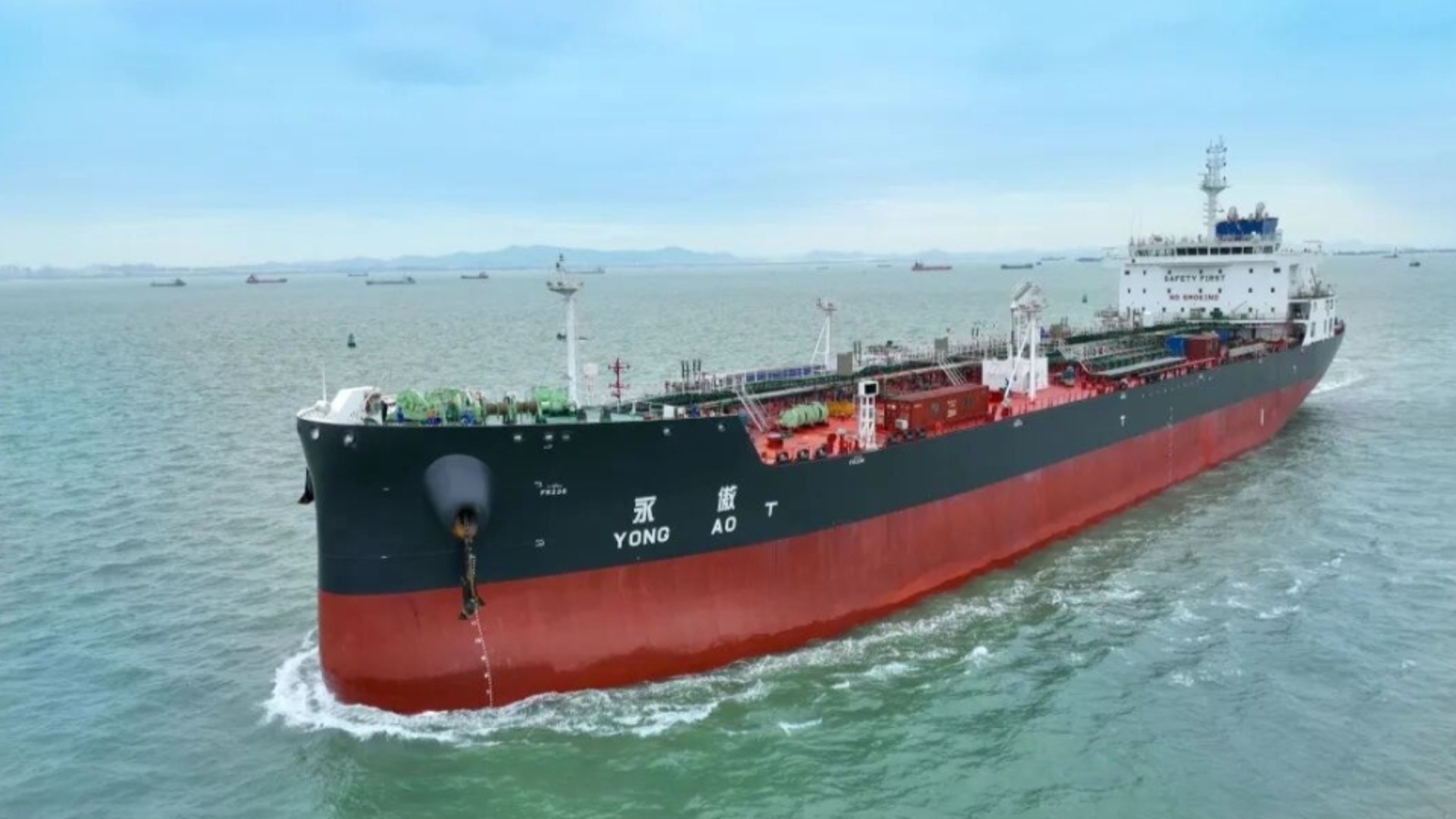
On 17 July, the company’s board approved an investment of up to $182.8m in four 50,000-dwt energy-efficient MR product and chemical tankers at CSSC’s Guangzhou Shipyard International.
The vessels will be ordered through wholly owned subsidiary Nanjing Tanker Singapore or another designated entity. They will sail under flags of convenience and comply with IMO Tier III emission requirements and the third phase of the Energy Efficiency Design Index.
The quartet will also be built methanol dual-fuel ready and is scheduled for delivery between 2028 and 2029.
Based on the approved investment ceiling, the average cost is no more than $45.7m per vessel. That places the project towards the lower end of prices reported for internationally contracted MR newbuildings in 2026.
The comparison, however, is not entirely like-for-like. CMNT disclosed a total project investment ceiling, while many international deals are reported on the basis of shipbuilding contract values. Owner-supplied equipment, supervision, financing expenses and contingency allowances may be treated differently.
Once formally contracted, the four ships will increase the cumulative number of MR tankers built or planned between CMNT and GSI from 16 to 20. They would also take CMNT’s disclosed newbuilding pipeline from 18 contracted vessels to 22 contracted or board-approved projects.
A second four-ship MR programme
MR tankers remain one of the foundations of CMNT’s business.
Typically ranging between 40,000 dwt and 55,000 dwt, these vessels can transport clean petroleum products such as gasoline, diesel and jet fuel, as well as selected liquid chemicals. Their broad port access and deployment flexibility make them the workhorses of regional and long-haul product trades.
The latest project extends an MR fleet renewal programme launched in 2024.
In September that year, CMNT signed contracts with GSI for four 50,000-dwt product and chemical tankers, under an investment plan also capped at $182.8m.
Those vessels are based on GSI’s 16th-generation MR design and incorporate electrically driven cargo pumps, intelligent machinery monitoring and a range of energy-saving technologies. They are capable of consuming biofuels and are also being built methanol dual-fuel ready.
All four are now under construction and are expected to enter service between the second half of 2026 and 2027.
The newly approved quartet will extend CMNT’s MR delivery schedule into 2029 and allow the company to secure a further series of slots at GSI before the yard’s tanker berth availability tightens.
The investment also forms part of a wider fleet replacement cycle.
CMNT disposed of four ageing MR tankers during the first quarter of 2026. The combination of newbuilding deliveries and older-vessel removals should lower the fleet’s average age, reduce fuel consumption and improve compliance with international environmental regulations.
Eighteen contracted vessels, with four more approved
According to Xinde Marine News’ analysis of Clarksons data, CMNT and associated project companies had 18 contracted vessels on order as of mid-July 2026, representing approximately 873,300 dwt.
Including the latest four board-approved MR tankers, its publicly disclosed newbuilding and approved project pipeline would increase to 22 vessels and about 1.07m dwt.
The current programme comprises four contracted 50,000-dwt MR product and chemical tankers, six 65,000-dwt Panamax tankers, two 115,000-dwt LR2 tankers, one 18,500-dwt chemical tanker, three 6,600-dwt stainless-steel chemical tankers, one 9,500-cbm ethylene carrier and one 7,600-cbm ethylene and LPG carrier.
Of the 18 contracted vessels, two are scheduled for delivery in 2026, four in 2027 and 12 in 2028. The latest four MR ships would be delivered across 2028 and 2029.
This makes 2028 the most important delivery year in CMNT’s current fleet renewal cycle, with new capacity due to enter service across the MR, Panamax, LR2, chemical tanker and small gas carrier segments.
Building a broader liquid-bulk platform
CMNT describes its strategic direction as specialised, differentiated and market-leading.
Its fleet covers product oil, crude oil, chemicals and liquefied gases, with operations spanning domestic and international trades as well as river, coastal and deep-sea transportation.
MR tankers remain the company’s core segment. The two batches of four ships at GSI will support CMNT’s position in China’s coastal market, the Far East, Southeast Asia and international clean petroleum product trades.
The six 65,000-dwt Panamax tankers represent an upward extension of that platform. The ships can be deployed in product and crude oil transportation, including selected offshore oilfield lifting operations, while retaining greater port flexibility than larger tanker classes.
The two 115,000-dwt LR2s will return CMNT to the large product tanker sector. LR2s are widely deployed on long-haul routes from the Middle East to Asia and Europe and can also switch into crude oil trades when market conditions are favourable.
The chemical and gas carrier orders show a parallel push into higher-value specialist markets.
Stainless-steel chemical tankers and ethylene and LPG carriers require more sophisticated cargo containment, temperature control, safety management and crew competence. They are also more dependent on established customer relationships and contract-backed employment.
CMNT’s strategy is therefore becoming increasingly layered: MR tankers provide scale, Panamax and LR2 vessels extend trading range, while chemical and gas carriers increase specialisation and earnings diversity.
Earnings recovered in early 2026
CMNT is undertaking this investment programme from a position of relatively stable cash generation and a strong balance sheet.
In 2025, the company reported revenue of CNY 5.82bn, down 10.13% year on year. Net profit attributable to shareholders fell 31.73% to CNY 1.31bn, while adjusted net profit declined 22.29% to CNY 1.30bn.
Operating cash flow remained substantial at CNY 2.08bn.
The weaker performance was largely linked to a downturn in international product tanker markets.
Revenue from product oil transportation declined 18.69% to CNY 3.05bn, while the segment’s gross margin narrowed by 5.63 percentage points. International-trade revenue fell 17.93%, with gross margin down 7.53 percentage points.
Crude oil transportation provided a partial offset, with revenue rising 8.02%.
The decline in reported profit was also amplified by lower gains from vessel disposals and higher impairment charges. CMNT sold only one ageing vessel in 2025, compared with four in the previous year, and recorded impairment provisions against three ships.
Performance improved substantially in the first quarter of 2026.
Revenue rose 14.19% year on year to CNY 1.57bn, while attributable net profit increased 51.73% to CNY 432m. Adjusted net profit rose 24.68% to CNY 352m.
CMNT attributed the improvement in its core business to stronger product tanker freight rates.
The difference between reported and adjusted profit growth partly reflected approximately CNY 79.6m of gains from the disposal of non-current assets. The 24.68% increase in adjusted profit therefore provides a more direct indication of the recovery in underlying operations.
As of 20 July, CMNT had not released its 2026 interim report or a first-half profit forecast.
Global MR earnings rebound
CMNT’s decision to add another four MR ships comes as international product tanker earnings recover and owners accelerate fleet renewal.
The global MR market eased from earlier peaks during 2025. According to figures cited in CMNT’s annual report, average MR earnings in the Atlantic basin were approximately $26,753 per day, down 13% year on year, while average earnings in Asia-Pacific fell 24% to around $22,790 per day.
At the end of 2025, the global MR fleet stood at approximately 1,838 vessels, with an orderbook of 269 ships, equivalent to 14.6% of the existing fleet.
The market strengthened sharply during the first quarter of 2026.
Average Atlantic MR earnings reached approximately $49,825 per day, up 118% year on year, while Asia-Pacific earnings increased 51% to about $30,052 per day. International MR spot earnings remained close to $40,000 per day during the second quarter.
The recovery has been supported by a combination of Red Sea and Middle East security risks, longer voyage distances, sanctions-related restrictions and uneven refinery output across regions.
The repositioning of ships between trading areas has also reduced effective fleet productivity, tightening available tonnage beyond what headline fleet figures suggest.
Around 90 MR orders placed this year
Stronger earnings have quickly translated into newbuilding activity.
Xinde Marine News’ analysis of Clarksons data shows that approximately 90 product and chemical tankers between 40,000 dwt and 55,000 dwt were contracted globally between January and mid-July 2026.
Together, these vessels represent around 4.43m dwt.
Of the total, 49 are scheduled for delivery in 2028 and 36 in 2029, making those two years the main delivery window for the current MR ordering cycle.
Chinese shipyards secured approximately 45 vessels, accounting for half of the total. South Korean yards won 31, HD Hyundai’s Vietnamese yard received 10 and Brazilian builders secured four.
The figures underline the growing importance of Chinese yards in standard and high-specification MR construction.
Hafnia and Asyad lead the ordering wave
Several major product tanker owners and maritime investment platforms have placed substantial MR orders during 2026.
Hafnia, one of the world’s largest product tanker operators, ordered eight MR vessels at HD Hyundai Heavy Industries for approximately $405m. The average price is about $50.6m per vessel, with deliveries scheduled between the third quarter of 2028 and the second quarter of 2029.
Hafnia described the investment as part of a disciplined fleet renewal strategy designed to improve fuel efficiency, scale and long-term earnings quality.
Oman-based Asyad Shipping ordered six MR tankers for approximately $308m, equivalent to around $51.3m each. All six vessels are backed by five-year time charters with an international energy company.
Dubai-based Gulf Energy Maritime has reportedly ordered six MR ships from HD Hyundai Group for around $300m.
Italian owner d’Amico International Shipping has secured four MR2 tankers at a Chinese shipyard for $45.4m each, while Greek owner Thenamaris has split a four-ship MR2 programme between HD Hyundai Heavy Industries and COSCO Shipping Heavy Industry’s Guangdong yard.
CMNT’s average investment ceiling of approximately $45.7m per vessel is close to d’Amico’s reported price and below several South Korean contracts priced above $50m per ship.
That gap reflects the cost competitiveness Chinese yards have developed through mature MR designs, series construction and increasingly standardised production.
GSI’s MR orderbook approaches 40 vessels
Guangzhou Shipyard International is one of the largest beneficiaries of the latest MR ordering cycle.
According to Xinde Marine News’ analysis of Clarksons data, GSI’s Nansha facility had approximately 38 product, chemical and combined product-chemical tankers of between 40,000 dwt and 55,000 dwt on order as of mid-July 2026.
Together, the ships represent around 1.83m dwt.
The customer list includes Shell, TOP Ships and associated project companies, CMNT, Formosa Plastics, Leonhardt & Blumberg, Socatra, d’Amico and Pleiades Shipping.
The figure does not include CMNT’s latest four board-approved vessels. If formal contracts are signed, GSI’s publicly traceable MR-class project pipeline could increase to approximately 42 ships.
GSI has steadily developed successive generations of MR designs, with a growing emphasis on hull efficiency, cargo flexibility, intelligent energy management, emissions compliance and future alternative-fuel capability.
A partnership that could reach 20 MR tankers
CMNT has become one of GSI’s longest-standing repeat MR customers.
By August 2023, GSI had delivered 12 MR tankers across three design generations to the Chinese owner. The delivery of the 12th vessel, Yong Xin, took CMNT’s owned MR product tanker fleet to 30 ships at the time.
The design has evolved throughout the partnership.
Yong Bo, one of the earlier deliveries, was based on GSI’s 13th-generation MR platform and already incorporated IMO Tier III compliance and intelligent energy-efficiency management.
The four vessels contracted in 2024 moved to the yard’s 16th-generation design, with further improvements to hull form, propulsion efficiency, cargo-handling systems and alternative-fuel readiness.
The relationship can currently be divided into three stages: 12 MR tankers delivered, four under construction and four newly approved by CMNT’s board.
Subject to formal contracting of the latest quartet, the cumulative MR collaboration between the two companies will reach 20 vessels.
Their cooperation has also expanded beyond MR tankers.
In November 2024, CMNT ordered four 65,000-dwt Panamax tankers at GSI, deepening the relationship in medium-sized crude and product tanker construction.
Repeated orders from the same yard and technical platform can provide meaningful operational benefits for CMNT, including standardised crew training, common spare-parts inventories, more efficient maintenance and reduced complexity for shore-based technical management.
For GSI, operating feedback from a long-term customer provides valuable data for further optimisation of ship design and fuel performance.
Supply growth remains the central risk
The latest investment combines competitive pricing, a mature technical platform and a clear fleet renewal rationale. The outlook beyond 2028, however, will depend on how rapidly new supply enters the market.
MR earnings remain strong in 2026, while the retirement of ageing ships and restrictions on sanctioned or non-compliant tonnage continue to constrain effective supply.
At the same time, ordering has accelerated sharply, and a large number of vessels are scheduled to enter service in 2028 and 2029.
A normalisation of Red Sea or Strait of Hormuz trading patterns could reduce the tonnage absorption created by diversions and regional dislocation. The ability of the product tanker market to absorb the new ships will ultimately depend on refinery relocation, growth in long-haul product trades, scrapping and the future role of sanctioned fleets.
CMNT’s latest project remains measured at four vessels and is closely linked to the disposal of older tonnage, fleet standardisation and the expansion of specialist liquid-bulk operations.
The new ships reinforce the company’s commitment to its core product tanker business while extending its renewal programme into the end of the decade.
Their long-term returns will depend on whether CMNT can combine modern, efficient tonnage with reliable cargo access, long-term customer relationships and operating performance above the market average.

READ MORE
 Shipbuilding
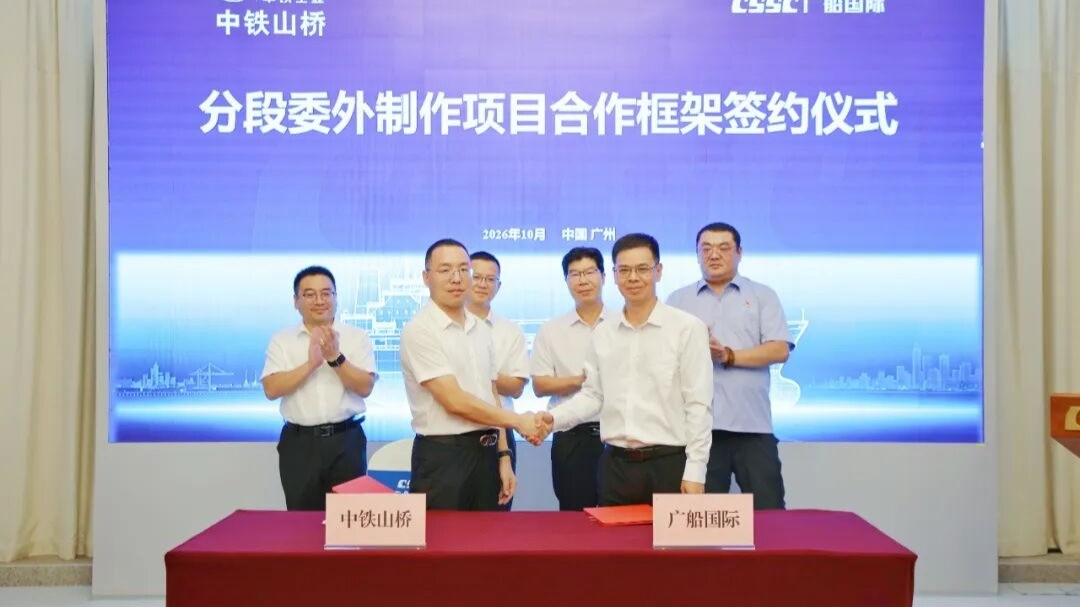
Another Chinese Bridge Builder Moves Into Shipbuilding
 Shipbuilding
Amid China’s Shipbuilding Boom, a State-Owned Yard Quietly Enters Liquidation
 Shipbuilding
Yichang Changyun plans RMB120m inland bulker programme
 Shipbuilding
MISC Signs for Five More LNG Carriers at Hudong-Zhonghua
 Shipbuilding
Steel Giant Shagang Eyes Shipbuilding as a Booming Market Draws Industrial Capital
 Shipbuilding
Hengli Secures 12 Tanker Orders, Retaining World’s Largest VLCC Orderbook
 Shipbuilding
Hengli Signs 11 VLAC Contracts in One Week
 Shipbuilding
China ZWI Enters Ocean Shipping with VLGC Acquisition and Chemical Tanker Newbuild Project
 Shipbuilding
World’s First 325,000-DWT Methanol Dual-Fuel Ore Carrier Delivered
 Shipbuilding