


Profit Seen Rising Up to 628% as China Guohang Ocean Builds a Greener, Technology-Driven Shipping Platform
Guohang Ocean Forecasts Up to 628% Profit Surge as Green Fleet and Maritime Technology Strategy Gains Momentum
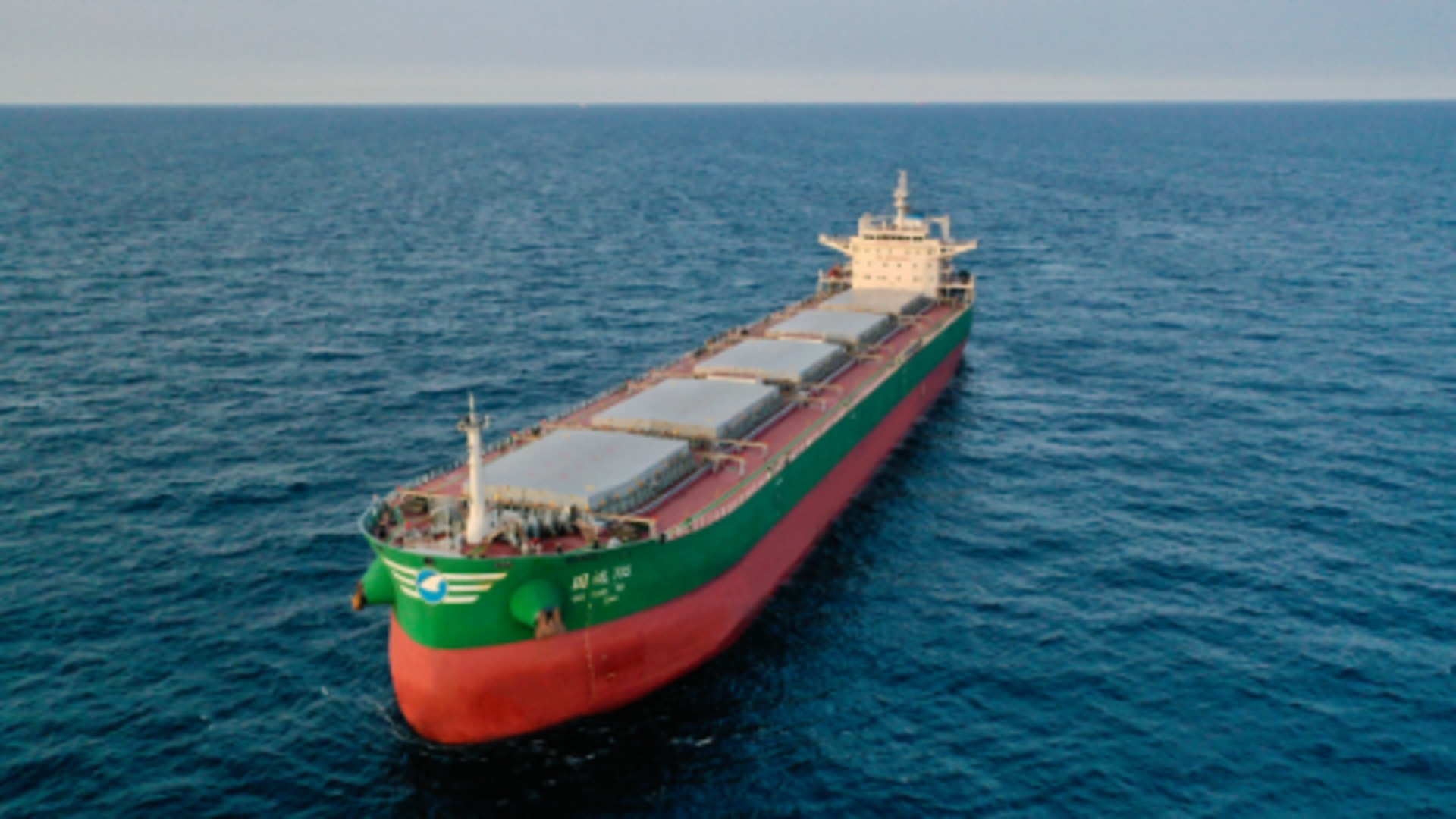
The Beijing Stock Exchange-listed dry bulk owner expects first-half net profit of as much as $19.2 million, as stronger freight markets combine with fleet renewal, methanol dual-fuel newbuildings, wind-energy cargo opportunities and the commercial deployment of unmanned maritime services.
Fujian Guohang Ocean Shipping (Group) Co., Ltd. is entering a new phase of growth as improved dry bulk markets amplify the benefits of fleet renewal and a broader technology-led transformation.
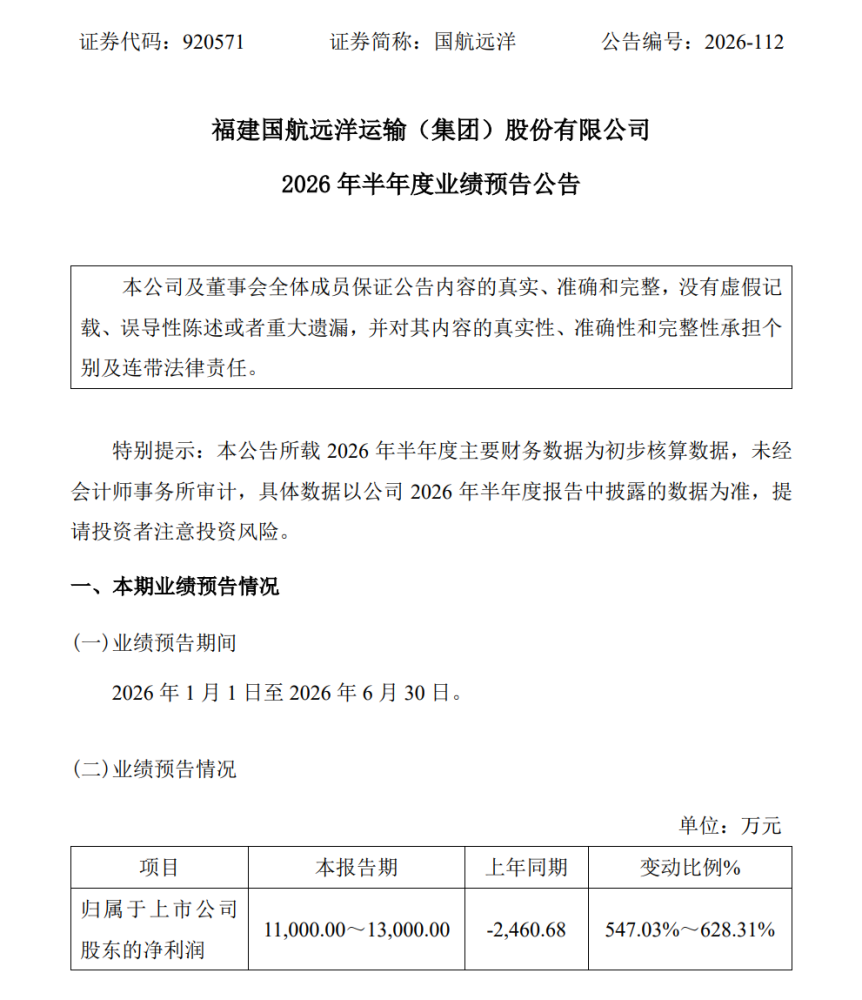
In a preliminary earnings forecast released on 13 July, Guohang Ocean said it expects to record net profit attributable to shareholders of between RMB110 million and RMB130 million, equivalent to approximately $16.2 million to $19.2 million, for the first half of 2026.
Under the company’s disclosure methodology, the forecast represents a year-on-year increase of between 547.03% and 628.31%. At the upper end of the range, first-half profit would be approximately 4.7 times the company’s full-year result for 2025.
The figures remain unaudited and will be confirmed in Guohang Ocean’s formal interim report. Even so, the forecast shows that the company’s earnings momentum has accelerated significantly.
Guohang Ocean generated revenue of RMB997 million, or approximately $147 million, in 2025, an increase of 6.51% year on year.
Net profit attributable to shareholders rose 22.28% to RMB27.71 million, or about $4.09 million, while adjusted net profit increased 31% to RMB25.87 million, or approximately $3.82 million.
Operating cash flow reached RMB495 million, equivalent to about $73 million, representing an increase of 413.8%. The company’s gross margin improved to 23.22%.
The positive trend continued into 2026. First-quarter revenue increased 19.64% to RMB238 million, or approximately $35.1 million, while net profit reached RMB29.27 million, equivalent to about $4.32 million. The first-quarter result alone exceeded Guohang Ocean’s net profit for the whole of 2025.
Based on the first-quarter result and the latest half-year forecast, the company may have generated between RMB80.7 million and RMB100.7 million, or approximately $11.9 million to $14.9 million, in net profit during the second quarter alone.
This is an implied calculation and will need to be confirmed by the interim report, but it points to a clear acceleration in operating performance.
Guohang Ocean attributed the result to the delivery of new vessels, improvements in the overall fleet structure, flexible deployment between domestic and international routes, and a sharp recovery in dry bulk freight markets.
Those market conditions have provided an important tailwind. The company’s recent performance also reflects a wider effort to improve fleet quality, diversify cargo exposure and integrate new technologies into day-to-day shipping operations.
Freight recovery meets a more efficient fleet
International and Chinese coastal dry bulk markets strengthened considerably during the first half of 2026.
According to Guohang Ocean, the Baltic Dry Index averaged 2,346.94 points during the period, up 81.9% from a year earlier. The Baltic Panamax Index averaged 1,920.37 points, representing an increase of 61.5%.
The domestic market also improved. China’s Coastal Bulk Freight Index for coal averaged 918.93 points in the first half, up approximately 40.4% year on year.
These market movements were particularly relevant to Guohang Ocean, whose core fleet includes Panamax, Ultramax and other dry bulk tonnage serving both international and Chinese coastal trades.
The company has long pursued a strategy of combining domestic and foreign-trade operations. Suitable vessels can be repositioned according to freight levels, cargo availability, voyage duration, fuel costs and anticipated turnaround times.
This operating flexibility becomes particularly valuable when different shipping markets move at different speeds. It allows the owner to direct suitable vessels towards the routes offering the strongest returns while maintaining access to established domestic coal and bulk cargo customers.
Fleet renewal has strengthened that capability.
Between 2025 and 2026, several large, energy-efficient newbuildings entered operation. The additional tonnage increased the company’s carrying capacity while reducing fuel consumption, maintenance requirements and the likelihood of extended off-hire periods.
For a dry bulk owner, the commercial effects of new tonnage are visible on both sides of the income statement.
Larger and more efficient vessels can carry more cargo per voyage, consume less fuel per tonne-mile and spend more days in revenue-generating service. Newer vessels also generally require less maintenance and are better positioned to meet increasingly demanding environmental and chartering requirements.
As the vessels complete more voyages and become fully integrated into Guohang Ocean’s trading network, their contribution to operating margins should become increasingly visible.
The latest earnings forecast therefore reflects the combined impact of higher freight rates and improved operating efficiency. A rising market created the opportunity, while the company’s fleet structure and deployment strategy determined how effectively that opportunity could be converted into profit.
Green tonnage becomes a strategic asset
Guohang Ocean’s fleet renewal programme is also preparing the company for a shipping market increasingly shaped by carbon efficiency and fuel flexibility.
The owner currently has four 89,000-dwt methanol dual-fuel dry bulk vessels under construction. The ships will be capable of operating on conventional marine fuel as well as methanol, giving the company greater flexibility as alternative-fuel supply chains and pricing structures continue to develop.
Since 2024, Guohang Ocean has added more than 700,000 dwt of capacity. The average age of its fleet is now around seven years, providing the company with a comparatively modern operating platform.
That low-age profile carries growing commercial significance.
EEXI and CII requirements are already affecting vessel speed, fuel consumption and operational planning. The EU Emissions Trading System and FuelEU Maritime are adding carbon-related costs to European voyages. Charterers, cargo owners, banks and insurers are also paying closer attention to vessel efficiency and emissions performance.
A ship’s competitiveness is consequently determined by a much broader range of factors than carrying capacity and daily charter rates. Fuel consumption, carbon intensity, engine configuration, emissions data and future-fuel compatibility are increasingly important.
Guohang Ocean’s methanol dual-fuel programme gives the company a degree of optionality.
Green methanol remains constrained by cost, availability and bunkering infrastructure. Dual-fuel vessels can adjust their fuel mix according to route requirements, customer demand, regulatory exposure and fuel economics.
When certified renewable or low-carbon methanol becomes commercially available, the new vessels will be able to achieve substantial lifecycle greenhouse gas reductions. Where conventional fuel remains more practical, they can continue operating without depending entirely on an emerging supply chain.
This approach supports current operating efficiency while protecting the fleet against longer-term regulatory and technological changes.
Guohang Ocean also plans to introduce vessels with greater cargo flexibility and multifunctional capabilities as it works towards a self-operated fleet of approximately 4.5 million dwt.
The strategy indicates that fleet expansion is being designed around asset quality, operational adaptability and environmental performance alongside overall scale.
Wind-power exports create a new cargo opportunity
A larger fleet requires a broader and more stable cargo base. Guohang Ocean is therefore looking beyond its traditional exposure to coal, iron ore and grain.
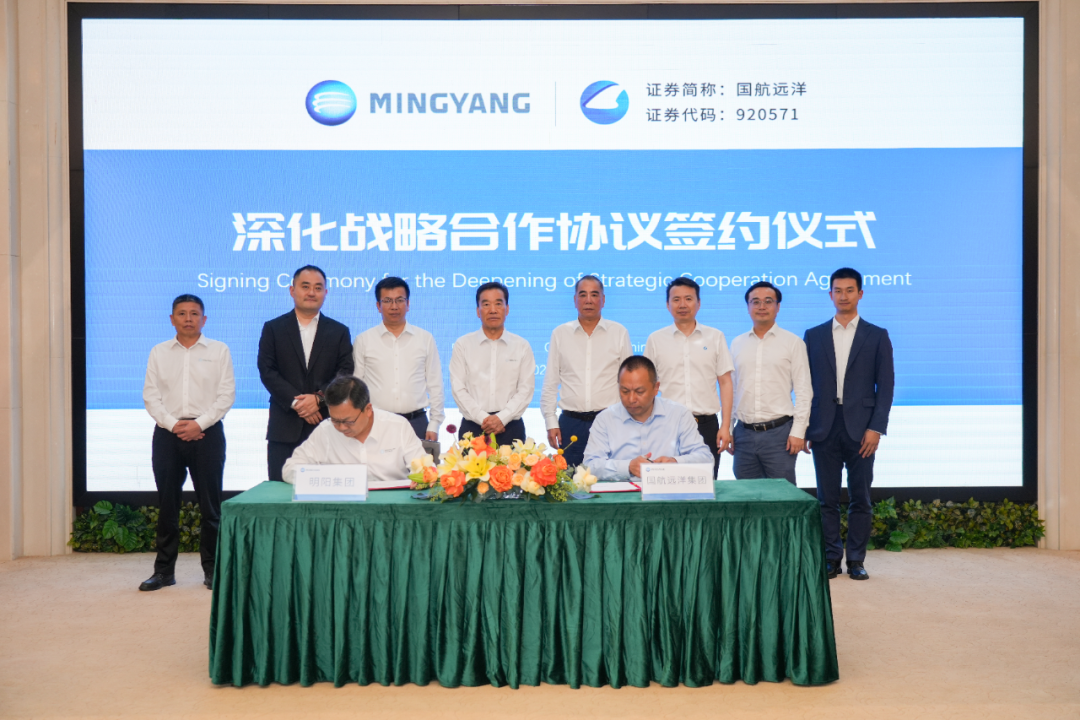
On 15 June 2026, chairman and president Wang Yanping led a company delegation to Mingyang Group, where the two companies signed a strategic cooperation agreement covering offshore wind equipment transportation, the development of a green methanol ecosystem and an integrated unmanned operating system for offshore wind farms.
The cooperation brings together three areas in which Guohang Ocean is investing: greener shipping capacity, energy-equipment transportation and unmanned maritime services.
China’s wind turbine manufacturers are expanding in overseas markets, increasing demand for reliable maritime transportation of blades, towers, nacelles and associated equipment.
These cargoes present a different operating challenge from conventional dry bulk commodities. Wind-energy equipment can be oversized, heavy and sensitive to handling. Transportation may require detailed stowage planning, specialised lashing, port coordination and early involvement by the carrier.
Guohang Ocean’s newer vessels offer greater carrying capacity and improved cargo adaptability. This provides a foundation for the company to develop transportation services for steel structures, wind-power components and other project-related cargoes alongside its conventional bulk operations.
The opportunity extends beyond a single cargo segment.
Wind-equipment transportation connects Guohang Ocean directly with the international expansion of Chinese manufacturing companies. It can diversify the owner’s cargo mix and create additional backhaul or triangulation opportunities on selected routes.
Longer-term cooperation with equipment manufacturers may also support more stable transportation arrangements and reduce the fleet’s dependence on purely spot-driven commodity trades.
Guohang Ocean already serves major international commodity groups, including Rio Tinto and Trafigura. Its cargo portfolio has expanded from coal, iron ore and grain into steel products and bauxite.
Offshore wind equipment adds another dimension to that development. It also creates potential synergies with the company’s work in green methanol and offshore unmanned operations.
Drones move from demonstration to maritime operations
Guohang Ocean’s expansion into low-altitude aviation gives the company one of the most distinctive technology strategies among Chinese dry bulk owners.
The company holds a 60% interest in Zhejiang Yida Low-Altitude Technology Co., Ltd., which is developing unmanned aviation services for ship-to-shore logistics, vessel inspection, offshore wind-farm maintenance and public-sector operations.
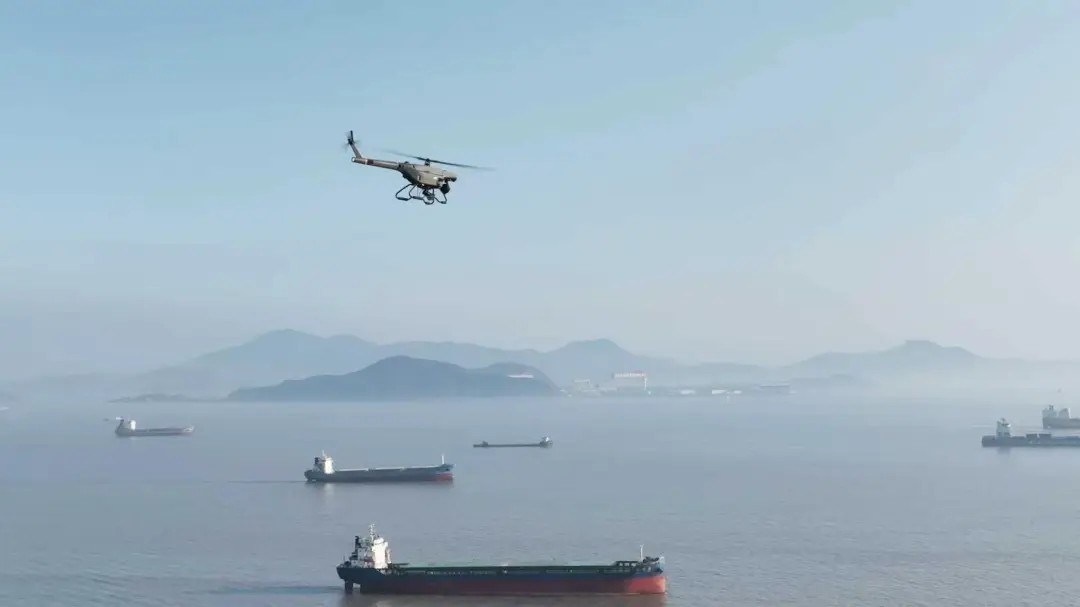
In November 2025, Yida Technology completed an unmanned helicopter delivery to a moving vessel in the waters off Putuo, Zhoushan.
The operation required the aircraft to identify and track a vessel underway, calculate its speed and direction, and complete the delivery in a dynamic marine environment.
A further operation took place in April 2026. An unmanned helicopter flew approximately 16 kilometres from Zhoushan Island and delivered supplies by winch to a vessel approaching the Xiazhimen shipping channel.
The flight took around 20 minutes, and the aircraft was designed to operate in challenging wind conditions.
The company continued to expand the model in May, completing what it described as Fujian’s first fully digitalised low-altitude maritime service scenario.
The operation included the resupply of a vessel underway in wind gusts reaching Force 8 and emergency deliveries to three offshore islands. It also connected the ordering, dispatching and aerial execution processes through a single digital workflow.
On 17 June, Yida Technology completed Hainan’s first unmanned aircraft delivery to a vessel underway in the Qiongzhou Strait.
These projects suggest that the business is moving beyond isolated technical demonstrations. The service network is beginning to extend from Zhoushan towards Fujian and Hainan, covering several of China’s most active coastal shipping regions.
Traditional ship-supply services generally rely on launches, tugboats or manned helicopters. Launches can be affected by sea conditions, port arrangements and the vessel’s position. Helicopters provide speed, but involve substantially higher operating costs.
Unmanned aircraft can fill the final logistics gap between the shore and a vessel that cannot conveniently call at port.
Spare parts, medicines, documents, samples and urgent supplies are all potential cargoes. Drone delivery can also reduce the safety risks associated with launch transfers and personnel boarding operations.
Yida Technology is developing the Guoyuan e-Da platform to connect vessels, shipowners, ports, suppliers and unmanned aircraft operators. The system is intended to manage orders, flight scheduling, route planning and operational records through a single digital process.
The company is also applying artificial intelligence and drone imaging to vessel inspections.
Unmanned aircraft can photograph hull structures, hatch covers, masts and elevated equipment, while image-recognition software can assist in identifying corrosion, cracks and other abnormalities.
Offshore wind farms offer another major application. Drones and unmanned helicopters can inspect turbine blades, towers and offshore structures while reducing the need for personnel to work at height or repeatedly travel by service vessel.
Guohang Ocean has an advantage in developing these services because it can provide real vessels, crews and operating environments for testing. Technical solutions can be refined through feedback from seafarers, superintendents and shore-based managers.
This connection between technology development and real maritime operations may ultimately prove more valuable than the aircraft technology alone.
Digital systems strengthen the operating platform
Guohang Ocean’s technology strategy also reaches deep into its core fleet-management activities.
By the end of 2025, the company had secured one invention patent, two utility-model patents, 41 software copyrights and six certified software products. Thirty-three software copyrights were added during 2025.
The systems cover commercial operations, vessel management, financial settlement, energy-efficiency monitoring and environmental, social and governance reporting.
At the centre of this work is the company’s MOS shipping management system, which has been upgraded to version 4.0 and deployed across its shore-based operations and all owned vessels.
The platform integrates vessel tracking, voyage planning, equipment management, maintenance, spare parts, stores and lifecycle information.
The value of such a system is found in routine operating decisions.
Small changes in vessel speed can affect fuel consumption and arrival times. Delayed maintenance can lead to off-hire and higher repair costs. Excessive spare-parts inventory ties up capital, while insufficient inventory may create safety or operational risks.
When chartering, voyage, fuel, port and technical data are spread across different systems, management teams can struggle to calculate the true performance of an individual vessel or voyage.
A unified data platform allows Guohang Ocean to monitor vessel condition, voyage economics and energy performance more consistently. It also enables the company to expand its fleet without requiring shore-based administrative costs to increase at the same rate.
Guohang Ocean has established Shanghai Guoyuan Green Energy Shipping Technology Co., Ltd. as a dedicated research and development platform.
It is also working with Shanghai Jiao Tong University and Shanghai Maritime University on vessel efficiency, artificial-intelligence assistants, data warehousing and intelligent shipping operations.
Shipping technology ultimately has to prove its value onboard vessels and across voyages. Its success is measured through fuel savings, reduced downtime, better utilisation and lower management costs.
Guohang Ocean’s ownership and operation of a substantial fleet provide the real-world environment needed to test and refine those technologies.
A three-layer growth structure is taking shape
Guohang Ocean’s development can increasingly be viewed through three connected layers.
The first is its core dry bulk shipping business. Freight markets, new vessel deliveries, fleet scale and domestic-international deployment provide the company’s primary earnings and cash flow.
The second is green energy transportation. Methanol dual-fuel ships, wind-equipment cargoes and cooperation across the green methanol supply chain give the company access to new customers and emerging cargo flows.
The third is maritime technology and services. The MOS platform strengthens internal operating efficiency, while drone delivery, unmanned inspections and offshore wind-farm services create products that can potentially be offered to external customers.
These activities share the same commercial foundation: vessels, ports, cargo owners, marine data and offshore operational expertise.
A greener fleet can transport renewable-energy equipment. Wind-farm projects can generate demand for unmanned inspection and supply services. Digital systems can improve both vessel operations and the management of offshore assets.
This combination gives Guohang Ocean’s technology investment a clearer path towards commercial application.
Dry bulk owners have traditionally been assessed through fleet size, vessel age, freight exposure and asset values. Carbon efficiency, digital management and service capability are now becoming part of the same assessment.
Guohang Ocean remains, at its core, a dry bulk shipping company. Its current strategy is expanding that foundation through modern tonnage, alternative-fuel capability, renewable-energy cargoes and technology-enabled maritime services.
The forecast of up to RMB130 million, or approximately $19.2 million, in first-half profit provides additional financial support for fleet renewal and innovation.
As its four methanol dual-fuel bulkers move towards delivery, wind-equipment transportation develops and the low-altitude service network expands, Guohang Ocean is increasingly taking on the characteristics of a diversified, greener and technology-driven shipowner.

READ MORE
 Finance
Shanghai links safety records to RMB5m maritime loan
 Finance
“We Are Buying Ships”: NORDEN Raises 2026 Profit Guidance for the Fourth Time
 Finance
Cetus Maritime Advances Oslo IPO Plans with $133.6 Million Seacon Deal
 Finance
Financing Above 90%: Why Abundant Capital Is Making Shipping Lenders Wary
 Finance
Overtaken by Shanghai, How Can London Keep Shipowners and Capital?
 Finance
Shipowners Have Made a Fortune. How Will They Spend It?
 Finance
HEIDMAR - Scaling for Growth: Capitalizing on Favorable Market
 Finance
Shipping’s Risk Equation Is Being Repriced as Finance, Insurance and Contracts Adapt
 Finance
Shandong Shipping and OSM Thome Form Singapore JV
 Finance