


China Haitong Development Expects First-Half Profit to Surge More Than Fivefold
Haitong Development is forecasting a sharp jump in first-half earnings, as stronger dry bulk freight markets, fleet expansion and improved operating efficiency begin to feed through to its bottom line.


Fujian Haitong Development Co., Ltd. said on 7 July that it expects net profit attributable to shareholders to reach RMB 500 million to RMB 550 million, or approximately USD 73.6 million to USD 81.0 million, for the first half of 2026.
That would represent an increase of RMB 413 million to RMB 463 million, or about USD 60.8 million to USD 68.1 million, from the same period last year. In percentage terms, the company expects year-on-year growth of 475% to 532%.
Recurring net profit, excluding non-recurring gains and losses, is expected to reach RMB 498 million to RMB 548 million, or approximately USD 73.3 million to USD 80.7 million. This represents year-on-year growth of 479% to 537%.
The guidance indicates that the earnings improvement is largely coming from the company’s core shipping operations rather than one-off items.
In the first half of 2025, Haitong Development recorded total profit of RMB 91 million, or about USD 13.4 million. Net profit attributable to shareholders stood at RMB 87 million, or around USD 12.8 million, while recurring net profit was RMB 86 million, or approximately USD 12.7 million.
The company attributed the stronger performance to a combination of internal and external factors. During the reporting period, Haitong Development said it expanded its fleet, optimised its global route network, improved operating efficiency and reduced costs through more refined management.
It also pointed to a recovery in the global dry bulk shipping market, with freight rate levels moving higher compared with the same period last year.
Haitong Development has been expanding its fleet at a rapid pace. In 2024, the company acquired 17 dry bulk vessels. By the end of that year, it controlled 65 vessels with total dry bulk capacity of around 3.77 million dwt.
The company has also signalled a longer-term ambition to build its owned fleet to around 100 vessels by 2028 to 2029, with a more balanced structure across supramax, panamax and capesize tonnage.
The latest earnings forecast suggests that this earlier fleet expansion is now beginning to show up in financial results.
For a dry bulk-focused private shipping company, scale alone does not guarantee stronger profitability. The key is whether additional capacity can be deployed effectively, at the right point in the market cycle, with disciplined cost control and efficient route planning. Haitong Development’s first-half forecast suggests it was able to capture the upside from a stronger dry bulk market in the first six months of 2026.
The broader market backdrop also helped. In the first half of 2026, dry bulk shipping improved from the same period last year, supported by seaborne demand for iron ore, coal, grain and other commodities. Freight rates were also influenced by effective vessel supply, changing trade patterns and port turnaround conditions in certain regions.
Because Haitong Development remains heavily exposed to dry bulk shipping, higher freight rates have a direct impact on its revenue and earnings. The company’s announcement specifically identified the recovery in the dry bulk market and the rise in freight rate levels as key drivers of the expected profit increase.
At the same time, Haitong Development is trying to build additional growth areas beyond conventional dry bulk.
The company has recently increased its exposure to general cargo, multipurpose heavy-lift shipping and project cargo transportation. In 2026, it announced plans to order four 62,000 dwt multipurpose heavy-lift vessels, with total investment capped at RMB 1.2 billion, or approximately USD 177 million.
In March, its vessel Xin Haitong 503 departed from Zhapu port in Jiaxing for Mersin, Türkiye, opening an irregular service from Jiaxing to the Mediterranean. The service combines container and breakbulk cargo, reflecting Haitong Development’s attempt to move beyond pure dry bulk shipping into more diversified cargo flows and logistics scenarios.
These new businesses may take time to make a meaningful profit contribution. However, they show that Haitong Development is seeking to evolve from a single-sector dry bulk operator into a broader shipping platform with multiple vessel types, cargo categories and trade lanes.
The company’s rapid expansion has made it one of the more closely watched private shipping groups in China.
On one side, Haitong Development has been increasing its fleet scale through secondhand vessel acquisitions and newbuilding investment. On the other, it has used sale-and-leaseback arrangements, operating leases, route development and fleet optimisation to improve capital efficiency and operational flexibility.
The 2026 interim earnings forecast provides an important reference point for the market. It shows that, in a stronger freight environment, Haitong Development’s earlier fleet expansion has started to convert into profit growth.
The company noted that the forecast figures are preliminary and unaudited. Final financial results will be disclosed in its 2026 interim report.
Even so, the guidance points to a clear recovery in profitability. For a company pursuing a 100-vessel fleet target while expanding into multipurpose heavy-lift and general cargo markets, the first half of 2026 may mark an important stage in turning capacity growth into earnings delivery.


READ MORE
 Finance
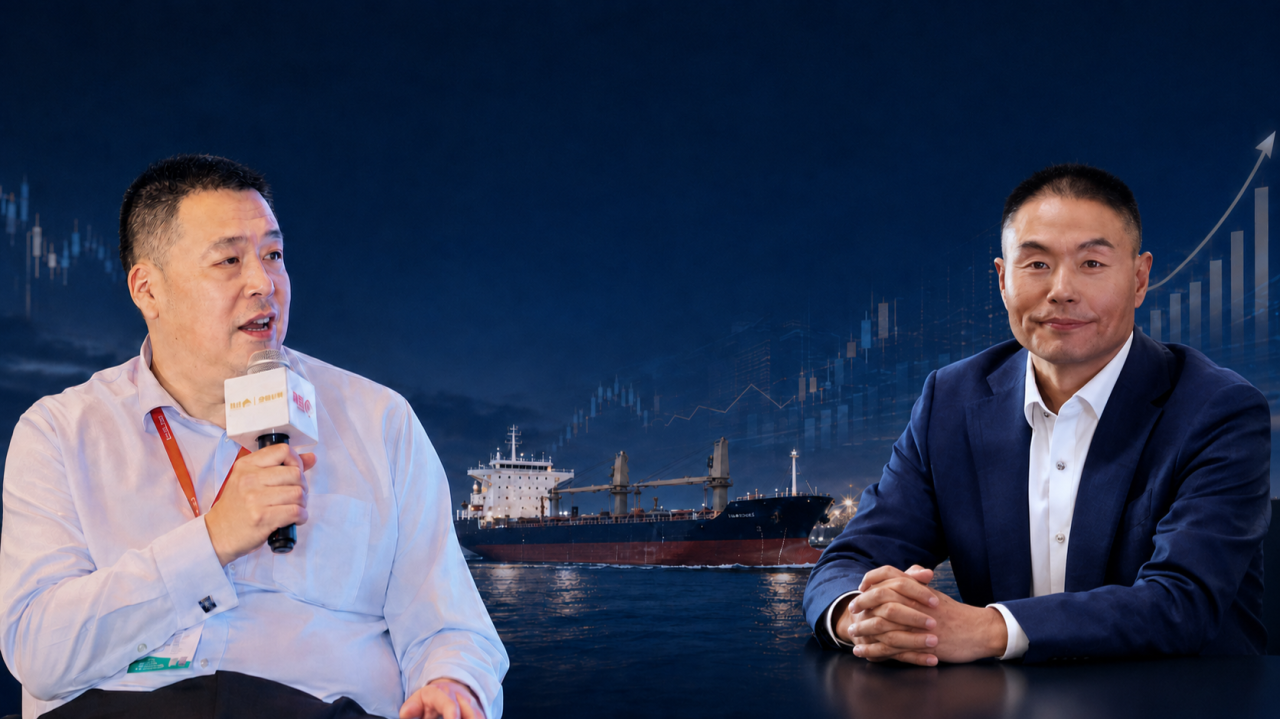
“We Are Buying Ships”: NORDEN Raises 2026 Profit Guidance for the Fourth Time
 Finance
Cetus Maritime Advances Oslo IPO Plans with $133.6 Million Seacon Deal
 Finance
Overtaken by Shanghai, How Can London Keep Shipowners and Capital?
 Finance
Shanghai links safety records to RMB5m maritime loan
 Finance
Shipowners Have Made a Fortune. How Will They Spend It?
 Finance
HEIDMAR - Scaling for Growth: Capitalizing on Favorable Market
 Finance
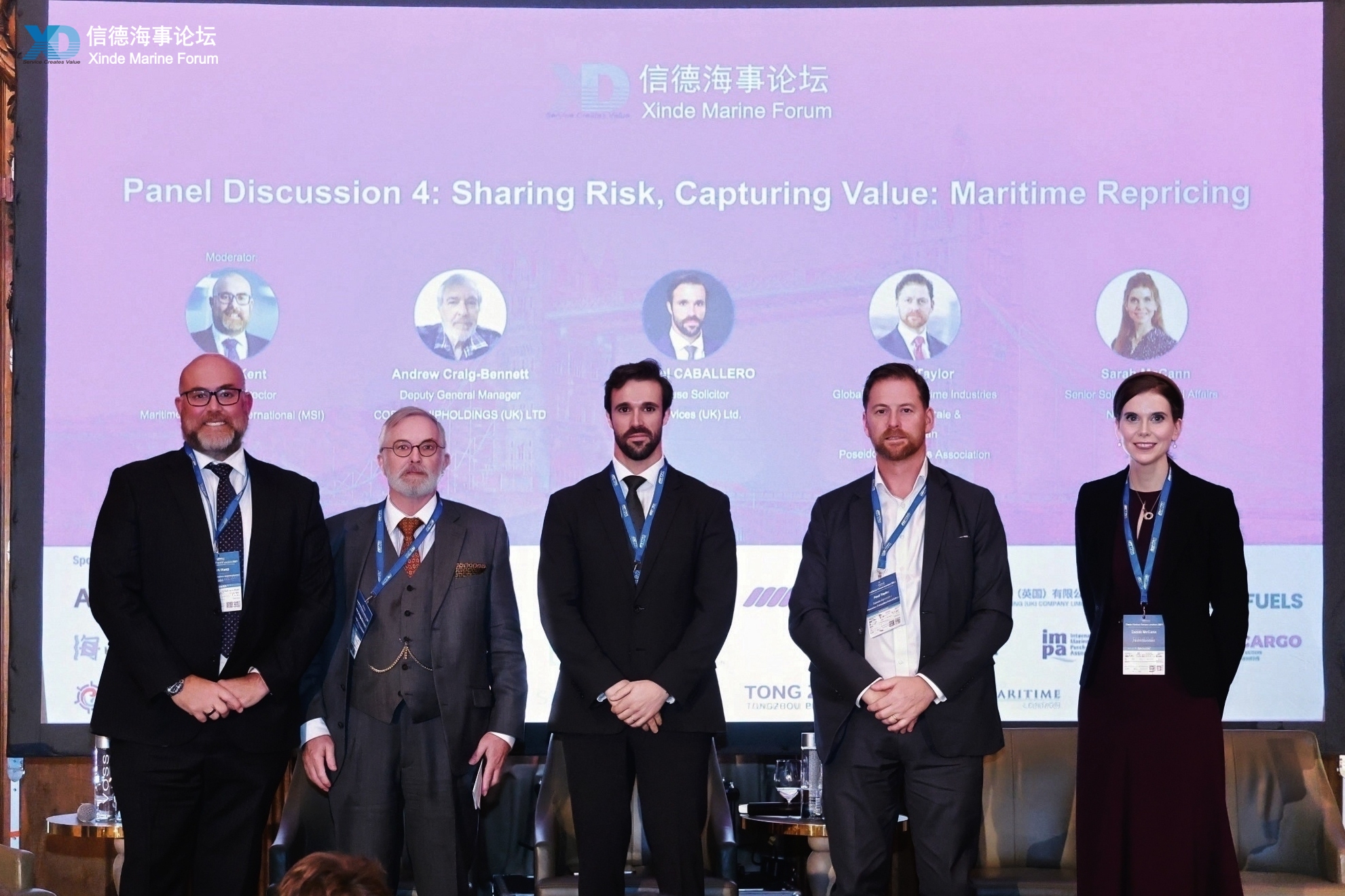
Shipping’s Risk Equation Is Being Repriced as Finance, Insurance and Contracts Adapt
 Finance
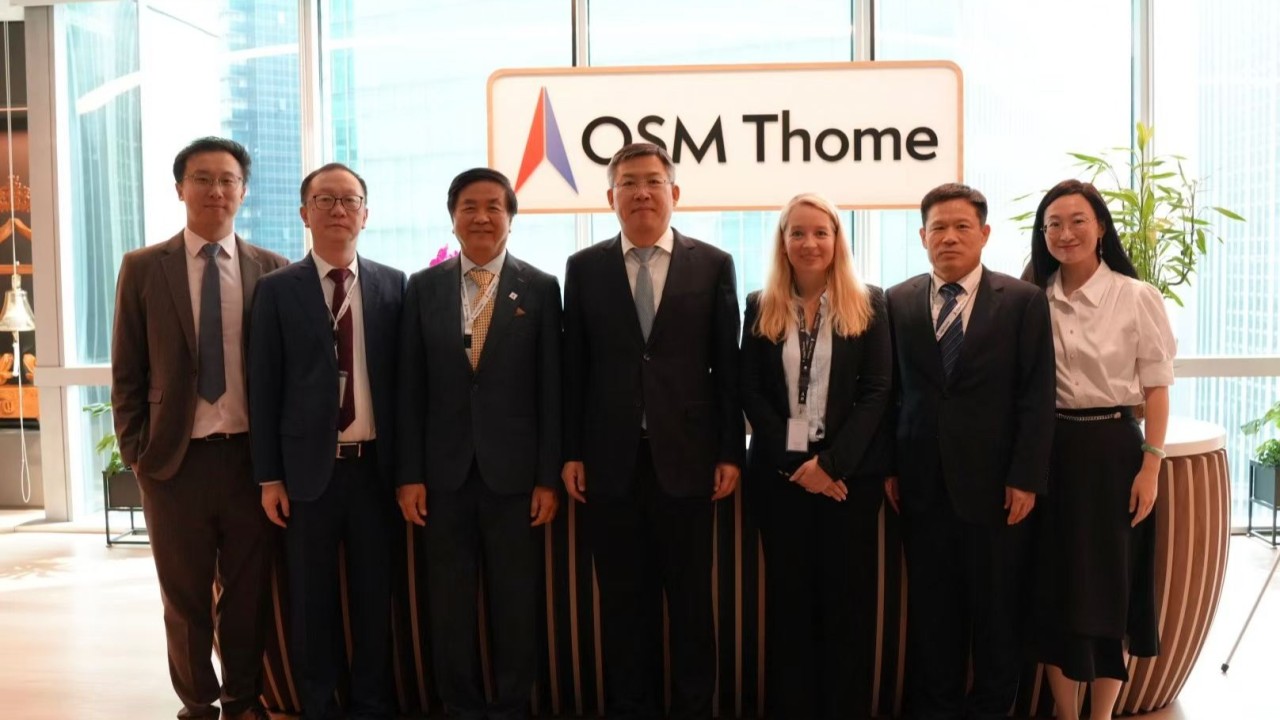
Shandong Shipping and OSM Thome Form Singapore JV
 Finance
From RMB 1.87 Billion to RMB 4.55 Billion: What Changed at COSCO Shipping Energy in One Year?
 Finance