


Capital Is Flowing Back Into Shipping: A New Cycle or a New Bubble?


Xinde Marine News — Capital is once again flowing into shipping. After several profitable years across multiple segments, owners, lenders, investors and capital markets are all asking the same question: is shipping entering a more disciplined investment cycle, or is renewed confidence pushing the industry closer to another top-of-the-market expansion?
That was the central theme of the panel “Will success breed success? Capital and confidence in shipping’s next investment cycle” at the TradeWinds Shipowners Forum Greece 2026, held during Posidonia week.
The discussion, moderated by TradeWinds journalist Joe Brady, covered some of the most important questions facing shipping finance today: consolidation, access to capital, the changing role of banks, alternative finance, public company valuations, dividends, share buybacks, fleet diversification and capital discipline.
The clearest message from the panel was simple: shipping does not lack money today. What it needs is discipline.
Traditional banks, alternative capital providers, public equity markets, private investors and Asian financing channels are all available for high-quality owners. The real question has moved from “Can shipping companies raise capital?” to “Can they structure capital properly, control leverage, preserve flexibility and avoid repeating the familiar mistake of over-investing when sentiment is strongest?”

Diana, Genco and Star Bulk put consolidation at the centre of the debate
The discussion began with one of the most closely watched corporate situations in dry bulk: the proposed transaction involving Diana Shipping and Genco Shipping & Trading.
Hamish Norton, President of Star Bulk Carriers, explained why Star Bulk became involved. Diana had approached Star Bulk with an attractive proposal: if Diana succeeded in acquiring Genco, Star Bulk would have the opportunity to purchase 16 vessels at an agreed price.
For Star Bulk, the logic was straightforward. The vessels were attractive. The price was compelling. And the deal also fitted a broader view that dry bulk still needs more consolidation.
Norton said consolidation remains important for the sector because scale can lower daily running costs per vessel. Star Bulk has long argued that its larger platform gives it structural cost advantages, including lower vessel operating expenses and lower overhead costs relative to smaller competitors.
That point set the tone for a wider discussion: when cash flows are strong, balance sheets are healthier and fleet values remain high, will shipping see more consolidation?
Mark Friedman, Senior Managing Director at Evercore, described the Diana-Genco situation as highly interesting. He noted that if someone had predicted a year earlier that Diana would take such an active corporate move, many in the market would have found it hard to believe. Diana has long been viewed as a conservative shipping company rather than a typical aggressive capital markets actor.
Friedman said hostile or unsolicited takeover attempts are very difficult to execute in practice. Most fail. Although shipping assets are relatively standardised and vessels can be valued and transferred more easily than many other industrial assets, corporate control in shipping still depends on governance, shareholder structure, board response, management willingness and broader market acceptance.
Andreas Povlsen, Managing Director and Head of the Maritime Team at Hayfin Capital Management, viewed the situation from a capital provider’s perspective. He noted that Diana had defensive capacity and financing support. Even though Genco is larger, Diana’s ability to offer cash to common shareholders and secure bank financing should not be underestimated.
The discussion showed that consolidation in shipping depends on much more than vessel compatibility. It requires capital certainty, shareholder support, board strategy and market confidence that a transaction can actually close.
Financing is available, but owners are now focused on optimisation
Philipp Wünschmann, Head of Shipping at Berenberg, gave a clear assessment of today’s financing environment: both public and private capital markets are active, and there is no shortage of capital for strong shipping names.
But the focus has changed.
Shipping companies are no longer simply looking for new money. Many are trying to optimise existing financing structures, extend flexibility and prepare balance sheets for future volatility.
Wünschmann said the current market offers more financing tools than the previous peak in 2007-2008. Finance teams can access capital from Asia, the US and Europe, and can choose between long-term financing, short-term structures, traditional bank loans, alternative credit and more structured products.
Pricing is also relatively attractive. Traditional recourse financing may be available at around 100 to 200 basis points. Non-recourse traditional financing for owners may sit around 200 to 300 basis points. More flexible structured financing may be priced around 300 to 400 basis points.
This does not mean risk has disappeared.
Wünschmann cautioned that banking regulation is much stricter than it was in the previous cycle. Even if banks are willing to provide competitive capital today, policies can change quickly when market conditions deteriorate.
He also pointed to one major positive difference from the last supercycle: leverage is much lower. The industry is not seeing the kind of 80%, 90% or near-100% financing structures that were common during the last boom.
That is healthy.
Still, he also warned that some financing documents are showing signs of looser protective terms and flexibility mechanisms. These protections are designed to help lenders respond when risk changes. If they are weakened during good markets, they can become a hidden source of vulnerability later.
This is the delicate balance in shipping finance today. Capital is cheaper, tools are more diverse and leverage is more conservative. Yet when sentiment improves, contractual discipline is often the first thing to soften.
Large listed companies have easier access to capital
Eri Tsironi, Chief Financial Officer of Navios Partners, said the current capital environment is favourable for large diversified listed shipping companies. Navios has been expanding its financing options, using traditional balance sheet financing as well as financing tools from markets such as China, while also engaging with broader capital markets sources.
Her message was that Navios wants a diversified funding base. When the market is strong, a company should prepare its financing structure so that it remains stable when the cycle turns.
That view is consistent with Wünschmann’s comments. Strong owners are not only raising money because markets are open. They are using the current window to optimise balance sheets and preserve capacity for the next downcycle.
Brady also noted that large, high-quality shipping companies are the preferred clients for banks. Compared with three years ago, more banks are participating in individual project financings, and lending margins have come down.
This reflects a broader divide in the market.
Owners with scale, diversified assets, transparency and strong governance can access lower-cost capital. Smaller companies, single-segment players, less transparent platforms or owners without long-term customer support face a very different financing environment.
Alternative capital sees a more fragmented market
Povlsen, representing the alternative capital side of the market, took a more cycle-focused view.
He recalled the 2007 peak, when a Capesize bulker could be sold for around $150m and almost everyone involved in ship transactions could make money. That was a classic market frenzy.
Today’s market is more complex.
Over the past decade, global logistics chains have been repeatedly disrupted by Covid, wars, sanctions, trade tensions and geopolitical realignments. Highly optimised trade routes have been broken and reconfigured. Some companies have benefited from inefficiencies and trade reshuffling, but market performance has become much more uneven.
Povlsen argued that one of the key trends today is polarisation. Different vessel types, trade routes, cargoes and regions can perform very differently. Geopolitics will continue to affect shipping, but not evenly. Fertiliser trades, energy transportation and regional commodity flows may reprice quickly depending on policy and supply changes.
For alternative capital, this creates opportunities, but also greater risk.
Simply betting on a broad shipping market rise is no longer enough. Capital must understand segment-specific fundamentals, cargo flows, regional exposure and asset-level risk.
Scale is becoming a capital and operating threshold
Friedman also stressed that scale and platform strength are becoming more important in shipping.
In his view, smaller non-institutional players face increasing difficulty in sustaining success. Charterers, banks, suppliers and capital providers prefer larger platforms because they can execute larger fleet transactions, provide more operational stability and obtain more competitive financing.
This trend is visible in both traditional lending and alternative finance. Capital is increasingly drawn to companies with transparency, scale and more stable asset portfolios. Friedman noted that financial institutions are also shifting focus. In the past, many concentrated on vessel-level mortgage lending. Today, more attention is moving toward corporate-level financing, including vessel acquisitions and company-level M&A.
Scale can also create operating benefits. Larger companies can spread management costs, improve bargaining power, attract stronger charterer relationships and support more systematic fleet renewal.
But scale has risks too.
When large companies make poor capital allocation decisions, the consequences are larger. If they expand at the top of the market, future deliveries and falling asset values can create pressure at scale.
Diversification is gaining recognition
Navios Partners’ diversified model was another important part of the discussion.
Navios has built exposure across multiple shipping segments, including containerships, tankers and dry bulk. Tsironi said multi-segment shipping is not new. Many long-standing private owners have operated across sectors for decades.
The value of diversification lies in natural risk balancing. Dry bulk, tankers and containerships do not always move in the same cycle. In many periods, they can move in opposite directions. A diversified platform can allocate capital across segments depending on market timing — investing in containerships when that market is stable, approaching dry bulk selectively when conditions are weak, or capturing tanker opportunities when that sector is strong.
However, diversification also creates challenges for public market valuation. Many analysts and investors are more familiar with pure-play shipping companies. They often find it easier to value a company focused on one vessel type.
A diversified platform needs clearer disclosure, more consistent performance and a well-explained capital allocation strategy if it wants full recognition from equity markets.
This is becoming an important divide in listed shipping. Pure-play companies are easier to understand. Diversified companies may be more resilient. Investors will continue to decide whether they prefer purity or stability.
Star Bulk: dividends, buybacks and capital discipline
Star Bulk’s capital allocation policy was also discussed.
Norton said Star Bulk has remained focused on dry bulk. Since 2020, the company has generally returned operating cash flow after debt service to shareholders. At times, following investor suggestions, Star Bulk also used proceeds from selling older, smaller and less fuel-efficient vessels to buy back shares. Over recent years, the company has repurchased a significant amount of stock to enhance shareholder value.
More recently, Star Bulk has found that shareholders prefer continued dividends from operating cash flow. Different shareholders face different tax considerations, but the overall preference has remained clear: investors want cash returns.
This reflects one of the key decisions for large listed owners in strong markets.
When cash flow is strong, should a company buy ships, reduce debt, pay dividends or repurchase shares?
Norton has previously noted that if a company’s shares trade at a discount to net asset value, buying back stock may create more value than buying ships. But if shareholders prefer recurring cash returns, dividends may be the better tool.
There is no fixed answer. The right decision depends on asset prices, share valuation, shareholder base and available investment opportunities.
On John Fredriksen’s position as a major Star Bulk investor, Norton said his entry had not changed the company’s capital allocation policy. Fredriksen has board representation and provides constructive input, but does not interfere with daily operations or strategic decisions.
That points to a broader shift in large listed shipping companies. Important shareholders can bring experience, market signals and resources. But long-term performance still depends on capital discipline, fleet strategy and management execution.
Will success breed more rational investment?
The panel’s central question was whether success can breed further success.
The answer is complicated.
Capital has returned. Market confidence has returned. Financing costs have improved. Capital sources are broader. Banks and alternative lenders are prepared to support high-quality owners. Shipowners have made money over the past few years, balance sheets are generally healthier than in the last cycle, and leverage is more conservative.
All of this suggests that today’s shipping investment environment is more mature than it was before the financial crisis.
But risks remain.
When money becomes easier to raise, market discipline often weakens. Financing terms may soften. Asset prices may rise. Owners may overestimate future earnings. Orderbooks may expand on optimism. If markets fall later, investments that look reasonable today can become the pressure points of the next cycle.
Wünschmann warned about looser financing terms. Povlsen highlighted market polarisation. Friedman emphasised scale thresholds. Tsironi focused on diversified funding reserves. Norton showed how dividends and buybacks can form part of capital discipline.
Together, these views show that shipping is entering a period of abundant capital, broader tools and more complex structures.
The real question is not whether capital is back in shipping.
The real question is whether capital has learned how to enter shipping more intelligently.
Xinde Marine View: what would make this capital cycle smarter?
Compared with 2007, there are clear improvements in today’s shipping capital market.
Leverage is lower. Funding sources are more diverse. Large listed companies are more focused on capital structure. Alternative capital has become more specialised. Bank regulation is stricter. Investors are more sensitive to governance, balance sheets and cash returns.
The memory of the last supercycle and the financial crisis has not disappeared.
Yet shipping’s cyclicality remains intact.
The stronger the market, the easier it becomes for owners to overestimate the future. The more cash companies generate, the easier it becomes for boards to believe in expansion. The cheaper financing becomes, the easier it is for asset prices to rise. Shipping history has repeatedly shown that the biggest damage is often created not by caution in weak markets, but by confidence at market highs.
Whether this capital cycle is smarter will depend on several questions.
Can large owners maintain low leverage and liquidity? Can banks preserve covenant discipline? Can alternative capital properly understand vessel type and cargo-flow divergence? Can listed companies remain rational when choosing between dividends, buybacks, acquisitions and new ships? Can owners avoid mistaking temporary earnings strength for permanent fundamentals?
For Chinese shipyards, leasing houses and shipping investors, the discussion also has direct relevance. Global owners are reallocating capital. Fleet renewal and the green transition still require enormous funding. But access to low-cost capital will shape who orders ships, who buys secondhand tonnage and who controls the next generation of fleets.
Capital is returning to shipping.
Shipping has never had difficulty attracting capital at the right point in the cycle.
What the industry truly needs is more disciplined capital.
If this cycle’s participants control leverage, watch the orderbook, respect cash flow, understand segment divergence and remain cautious when markets are hottest, this investment cycle may prove healthier than the last one.
If short-term prosperity is once again treated as a long-term trend, success may still breed overconfidence.
Shipping capital markets have shown this many times before: money can arrive quickly, and it can leave quickly.
Only discipline can survive the cycle.

READ MORE
 Finance
HEIDMAR - Scaling for Growth: Capitalizing on Favorable Market
 Finance
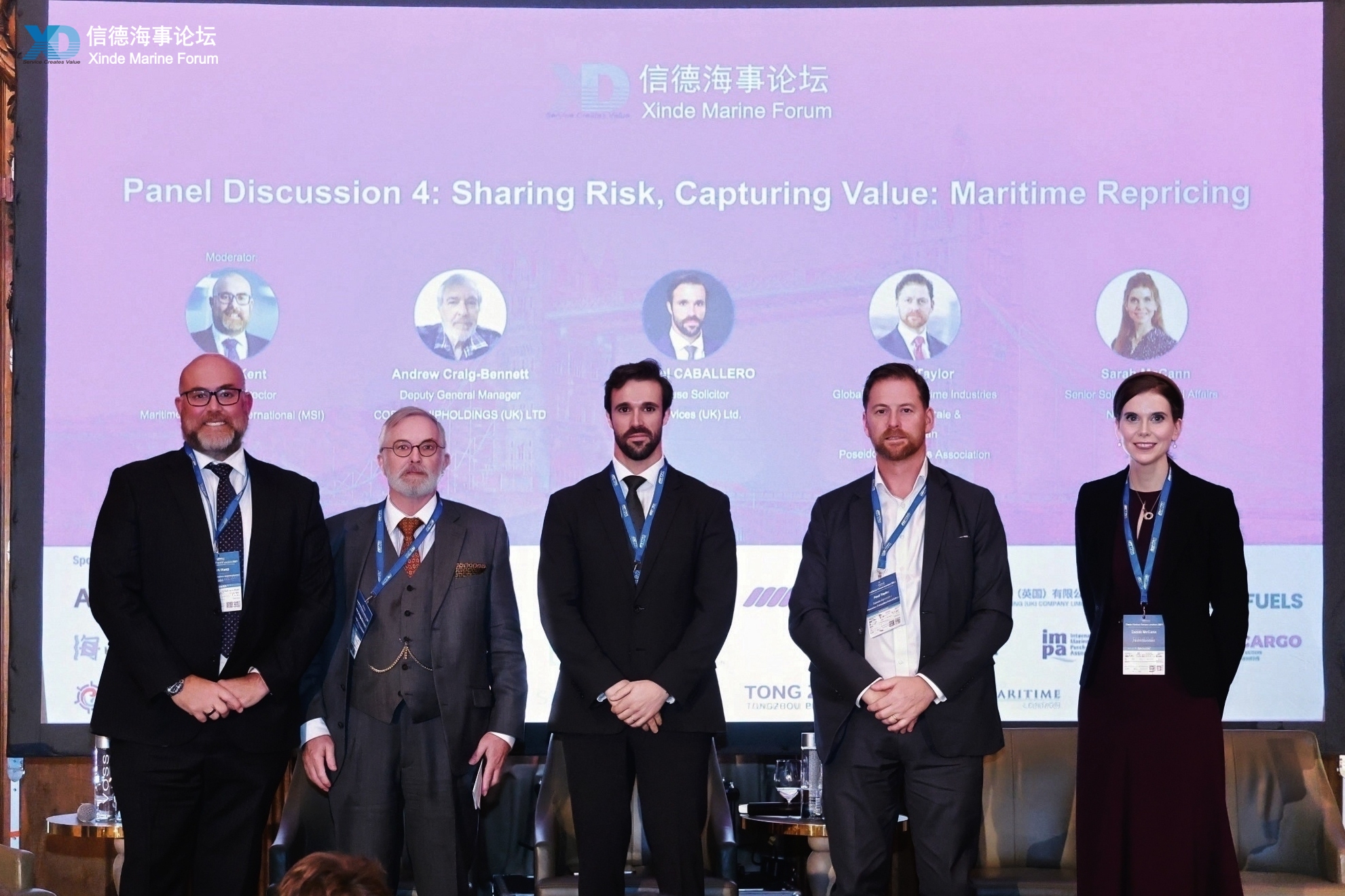
Shipping’s Risk Equation Is Being Repriced as Finance, Insurance and Contracts Adapt
 Finance
Shandong Shipping and OSM Thome Form Singapore JV
 Finance
Shipowners Have Made a Fortune. How Will They Spend It?
 Finance
From RMB 1.87 Billion to RMB 4.55 Billion: What Changed at COSCO Shipping Energy in One Year?
 Finance
Net Profit Jumps 42% as NJTC Reshapes Its Liquid-Bulk Shipping Network
 Finance
Capital Is Available, but Ship Finance Is Repricing the Risk of Buying the Wrong Vessel
 Finance
Plenty of Capital, Yet Ships Still Struggle for Financing: The Structural Mismatch Reshaping Ship Finance
 Finance
COSCO SHIPPING Specialized Posts $202 Million H1 Profit as Second-Quarter Earnings Double
 Finance