


Container Shipping’s Supply Paradox: Ships Are Scarce Today, but Nearly 5 Million TEU Could Arrive in 2028
A temporary delivery lull is supporting today’s strong charter market, while a 13-million-TEU orderbook is building a very different supply outlook for the second half of the decade
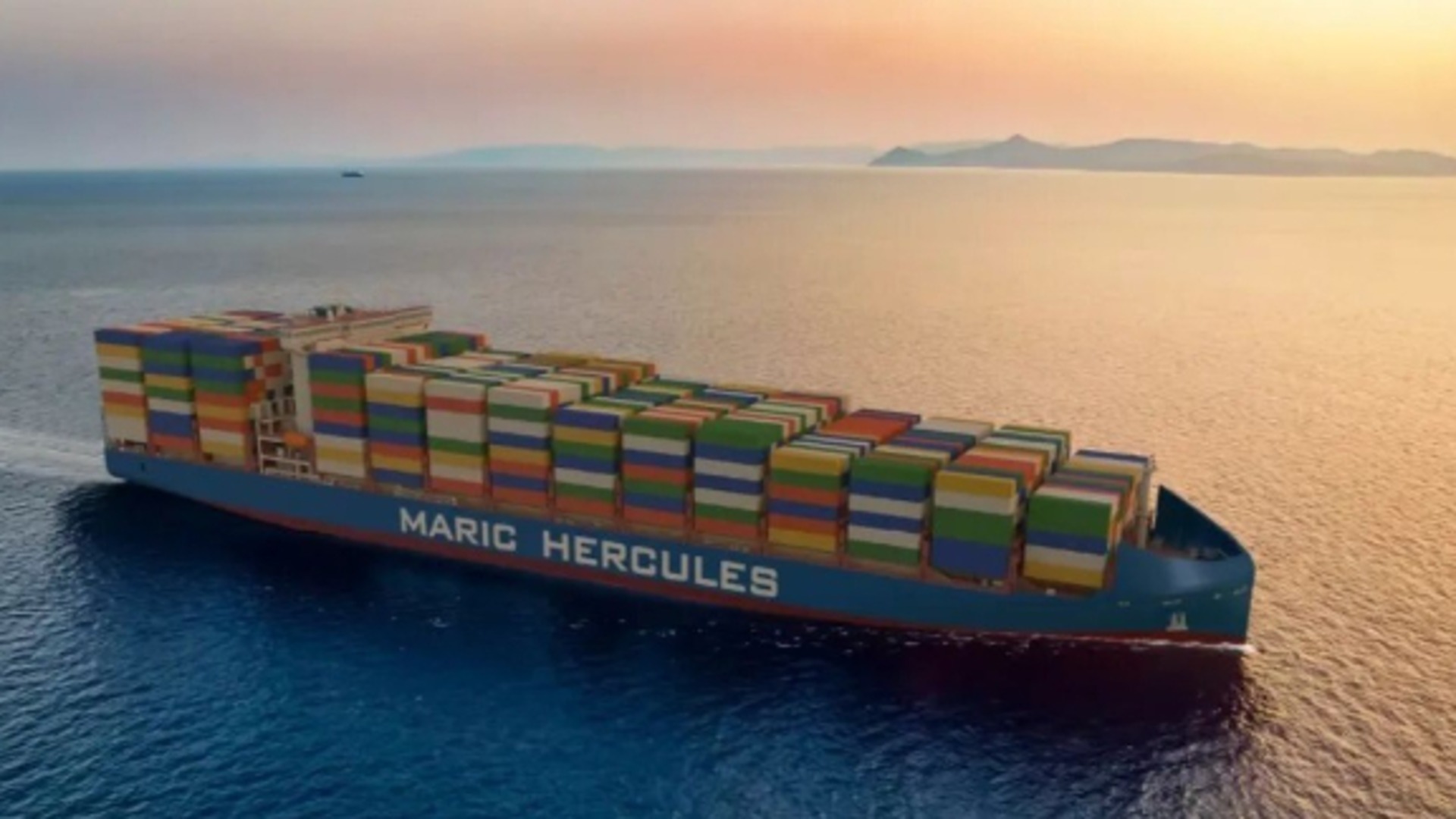

Container shipping entered the first half of 2026 with an unusual combination of conditions.
Charterers are struggling to secure prompt tonnage, commercially idle capacity remains exceptionally low, and several vessel classes have virtually disappeared from the spot market. At the same time, the global containership orderbook is approaching 13 million TEU, while Maritime Strategies International (MSI) expects annual deliveries to rise towards almost 5 million TEU in 2028.
The two conditions are closely connected. A temporary slowdown in deliveries, combined with geopolitical disruption, longer sailing distances and limited vessel availability, has tightened the market in 2026. The underlying fleet expansion cycle, however, remains firmly in place.
The next phase will be shaped less by the headline size of the orderbook than by its composition. Feeder and regional vessels face a substantial replacement requirement, while the large-ship segment is preparing for significant net capacity growth. Differences in vessel age, propulsion technology, trading flexibility and deployment economics will become increasingly important.
A delivery lull has tightened the immediate market
MSI estimates that around 291,000 TEU of containership capacity was delivered in the first quarter of 2026, followed by approximately 212,000 TEU in April and May combined.
The five-month total of about 503,000 TEU represents a marked slowdown from the elevated delivery pace seen in recent years.
First-quarter deliveries were equivalent to only 0.9% of the global fleet at the end of 2025. This was the lowest quarterly ratio since 2022 and the first time since the first quarter of that year that new deliveries fell below 1% of the existing fleet.
Such a low ratio is historically unusual. Across the 65 quarters from the beginning of 2010 to the first quarter of 2026, quarterly deliveries exceeded 1% of the fleet in 57 instances.
This temporary gap in the delivery schedule has helped the market absorb the operational disruption caused by Middle East instability, route diversions and continuing network inefficiencies.
Alphaliner’s figures illustrate how little spare capacity is currently available. As of 15 June, only 74 containerships of more than 500 TEU, representing about 201,000 TEU, were classified as commercially idle. That was equivalent to just 0.6% of the global cellular fleet. No ship of more than 18,000 TEU was commercially idle.
A further group of at least 50 ships, with combined capacity of around 269,000 TEU, had diverted, sheltered or otherwise altered their normal operations because of the Middle East conflict. These ships may not meet the technical definition of commercially idle, but they are equally unavailable to meet open charter demand.
The result is a charter market characterised by strong demand and almost no prompt supply above the smaller feeder classes.
Alphaliner’s late-June assessment showed no immediately available non-operating-owner tonnage above 2,000 TEU. Twelve-month charter indications stood at about $76,000 per day for an 8,500-TEU vessel, $64,000 for a 5,600-TEU ship and $55,000 for a 4,000-TEU classic panamax. The corresponding assessments for 2,500-TEU and 1,800-TEU vessels were approximately $35,000 and $33,000 per day.
The low level of fixture activity in many size segments therefore reflects a shortage of vessels rather than a shortage of demand.
The orderbook is still approaching 13 million TEU
The current scarcity of ships should not be confused with a slowdown in contracting.
Alphaliner calculates that the global cellular containership orderbook has reached 1,592 vessels and 12.98 million TEU, equivalent to 38.3% of the fleet currently in service.
Contracting accelerated sharply in 2025, when 737 ships with combined capacity of 5.05 million TEU were ordered. The final two quarters of the year set successive records by vessel count, with 218 ships ordered in the third quarter and 265 in the fourth.
The momentum carried into 2026. By late June, another 329 vessels of approximately 1.89 million TEU had been contracted. First-quarter ordering exceeded the 177 ships booked in the first quarter of 2021, setting a new record for the opening three months of a year.
This expanding pipeline explains why MSI has raised its delivery forecasts for 2028 to 2030.
MSI expects deliveries to accelerate from 2027 and approach 5 million TEU in 2028. Even if around 500,000 TEU of older tonnage were demolished in 2027, the following year’s deliveries would still represent roughly 13% of the fleet at the end of 2027—the highest annual ratio since 2007.
The muted delivery profile of early 2026 is therefore best understood as a gap between successive waves of shipyard output. It postpones the supply impact without materially reducing it.
Ordering has shifted towards regional tonnage
The latest contracting cycle differs significantly from the post-pandemic ordering boom.
Since July 2025, 74% of new orders by vessel count have been for ships below 6,500 TEU. During the corresponding 12-month period one year earlier, the proportion was below 30%.
Several standardised size clusters have emerged.
Around 52 vessels of approximately 1,200 TEU were ordered between the third quarter of 2025 and the second quarter of 2026. Nearly 150 ships were contracted in the 1,800-TEU Bangkokmax category. Orders for vessels of about 3,100 TEU exceeded 100 units, while the 5,000-to-6,500-TEU range attracted close to 130 orders.
The second quarter of 2026 was also on course to close without a single order for a mainline vessel above 16,000 TEU, something not seen since early 2024.
This change reflects the needs of regional and feeder networks. The earlier phase of the ordering cycle concentrated on neo-panamax and ultra-large vessels, driven by mainline economies of scale, fleet renewal and the competitive expansion of the largest carriers.
The smaller end of the fleet received much less investment during that period. Regional trade growth, tighter charter supply and an ageing feeder fleet have since exposed gaps in several size categories.
Orders below 1,000 TEU remain limited, suggesting that the industry increasingly regards the 1,200-TEU and 1,800-TEU classes as the new entry point for modern feeder deployment. The popularity of vessels around 3,100 TEU also reflects the gradual upsizing of regional services.
The large-ship pipeline remains the greater capacity challenge
The shift in recent orders towards smaller vessels does not alter the overall capacity profile of the orderbook.
A large share of the TEU capacity scheduled for delivery over the next three years consists of neo-panamax, megamax and other large ships ordered during the post-pandemic boom and in early 2024.
Alphaliner estimates that, once the existing orderbook has been delivered, the capacity of the fleet above 18,000 TEU will be almost twice its current level.
This distinction between vessel numbers and TEU capacity is central to understanding the outlook.
The latest orders may be dominated by smaller units when counted by hull, while the aggregate orderbook remains heavily weighted towards large ships in capacity terms. Regional fleets are entering a renewal phase at the same time that the mainline fleet is preparing for another major injection of capacity.
MSI’s comparison between future deliveries and the existing age profile highlights the difference.
For many vessel classes below 12,000 TEU, expected deliveries over the coming five years broadly correspond to the capacity already more than 20 years old. A significant share of the new tonnage can therefore replace ageing ships.
The 2,900-to-3,900-TEU category shows more deliveries than the existing pool of old vessels, although part of that gap reflects upsizing. Ships around 3,000 TEU are increasingly replacing smaller vessels of 1,500 to 2,500 TEU on regional services.
Alphaliner reaches a similar conclusion using a 25-year age threshold: despite the recent surge in orders, the sub-6,500-TEU orderbook still falls short of the capacity that has reached, or is approaching, 25 years of age.
The position above 12,000 TEU is fundamentally different. MSI estimates that only about 36,000 TEU of the existing fleet in this segment is more than 20 years old, compared with projected deliveries of around 9.55 million TEU through 2030.
There is almost no natural demolition buffer large enough to offset this expansion.
Absorbing these ships will require some combination of trade growth, lower sailing speeds, continued diversions, network expansion, congestion and cascading into secondary trades.
Fleet expansion will also widen the technology gap
The orderbook is divided by propulsion technology as well as vessel size.
Alphaliner’s data show that the largest ships are overwhelmingly being ordered with alternative-fuel capability. Among vessels above 18,000 TEU, approximately 88.1% of ordered capacity is LNG-powered and 11.9% methanol-powered.
In the 15,200-to-17,999-TEU category, LNG accounts for about 75.4% of ordered capacity and methanol for 23.6%. LNG also represents around 69.6% of the 10,000-to-12,499-TEU orderbook.
By contrast, conventional propulsion represents more than 90% of orders across most categories between 2,000 and 6,500 TEU.
This technology split will influence the commercial impact of future deliveries.
Large dual-fuel vessels will enter service with younger machinery, improved hull forms and, in many cases, lower unit fuel consumption. Older conventionally powered ships may remain operational, especially if demand remains strong, but they are likely to face a widening disadvantage in fuel economics, emissions compliance, financing and charterer preference.
The adjustment process may therefore appear through weaker utilisation, a wider charter-rate spread and greater differentiation in asset values before it appears through large-scale demolition.
Main engines have become an unexpected bottleneck
Shipyard berth availability is no longer the only constraint on newbuilding capacity.
Alphaliner reports that several projects for containerships of around 6,000 TEU have recently stalled because suitable main-engine production slots could not be secured in time.
Some second- and third-tier Chinese yards have been able to offer internationally specified containerships with relatively early delivery dates around 2028. Owners in certain cases obtained tentative charter support for the projects, yet the yards were subsequently unable to source large two-stroke engines within the promised construction schedule.
Hull-building capacity has expanded more quickly than the production capacity of licensed marine-engine manufacturers.
A comparable shortage last emerged during the 2007 ordering boom, when the global orderbook-to-fleet ratio approached 60%. For much of the following two decades, engine availability was not a major limiting factor in containership contracting.
Auxiliary engines and generator sets are also becoming more expensive and difficult to source. Alphaliner links part of this pressure to the rapid expansion of artificial-intelligence infrastructure and data centres, which consume large numbers of industrial diesel generator sets in power ranges also relevant to marine applications.
Engine constraints could delay individual ships and smooth part of the 2028 delivery peak into later years. They are unlikely to remove the underlying capacity from the orderbook.
The central question is how much effective capacity will return
The present market is absorbing ships partly because a considerable amount of nominal capacity is being consumed by longer routes and operational disruption.
Red Sea diversions, uncertainty around the Strait of Hormuz, port congestion, slower sailing and network inefficiencies have all reduced the effective supply of tonnage.
A sustained reopening of disrupted routes would reverse part of this effect. Ships currently diverted, sheltered or deployed on longer voyages would gradually return to more efficient rotations, increasing effective capacity at the same time as newbuilding deliveries accelerate.
That interaction is likely to define the market between 2027 and 2029.
A supportive scenario would combine steady trade growth, further regional network development, disciplined sailing speeds and a meaningful increase in scrapping. Under those conditions, even a delivery year approaching 5 million TEU could be absorbed with manageable disruption.
A more difficult outcome would emerge if routes normalise quickly, cargo growth weakens and high charter rates continue to discourage demolition. Pressure would first appear on the major east-west trades, before large ships displaced from those services cascade into smaller routes and regional markets.
The current charter market is genuinely tight, and the shortage of prompt ships is supported by measurable supply conditions. That strength, however, offers limited guidance on the balance that will prevail once the next delivery wave arrives.
By 2028, the industry’s challenge will have moved beyond securing enough ships. The decisive questions will concern which vessel classes face surplus capacity, where replacement demand remains unmet, and which operators can deploy a younger, more efficient fleet across the right trades at the lowest sustainable cost.


READ MORE
 Shipbuilding
Yichang Changyun plans RMB120m inland bulker programme
 Shipbuilding
Steel Giant Shagang Eyes Shipbuilding as a Booming Market Draws Industrial Capital
 Shipbuilding
Hengli Secures 12 Tanker Orders, Retaining World’s Largest VLCC Orderbook
 Shipbuilding
Amid China’s Shipbuilding Boom, a State-Owned Yard Quietly Enters Liquidation
 Shipbuilding
Hengli Signs 11 VLAC Contracts in One Week
 Shipbuilding
China ZWI Enters Ocean Shipping with VLGC Acquisition and Chemical Tanker Newbuild Project
 Shipbuilding
World’s First 325,000-DWT Methanol Dual-Fuel Ore Carrier Delivered
 Shipbuilding
CIMC Raffles Extends NOCC Car Carrier Programme to 2030
 Shipbuilding
Grimaldi Advances New ConRo and Multipurpose Projects as Fleet Renewal Continues
 Shipbuilding