


Green Marine Fuel Certification Center Lands in Shanghai
Shanghai moves ahead with certification, trading and the “North-to-South Green Methanol Corridor”
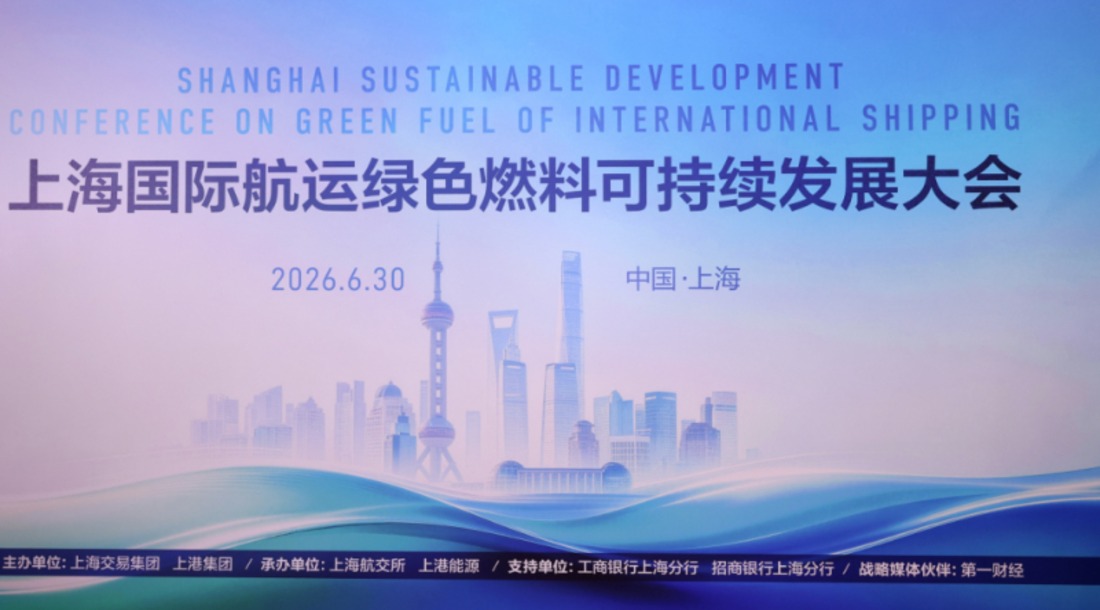

The Shanghai International Shipping Green Fuel Sustainable Development Conference was held in Shanghai on June 30, marking another step in the city’s effort to build a more complete green marine fuel service system.
The conference was co-hosted by Shanghai Exchange Group and Shanghai International Port (Group) Co., Ltd. (SIPG), and jointly organized by Shanghai Shipping Exchange and SIPG Energy.
Under the theme of “Practising the Dual-Carbon Strategy and Leading Green Fuels”, the event focused on the implementation of the national plan to support Shanghai in building an international green marine fuel bunkering center and trading center.
The most important outcomes of the conference were concentrated in three areas: the establishment of an international certification affairs center for green marine fuels, the launch of a green fuel trading platform, and the formation of a cross-regional green methanol supply corridor linking Northeast China with Shanghai.
Certification: GSTC system starts operation in Shanghai
A key highlight of the conference was the landing of the International Affairs Center for the Green Marine Fuel Certification System in Shanghai.
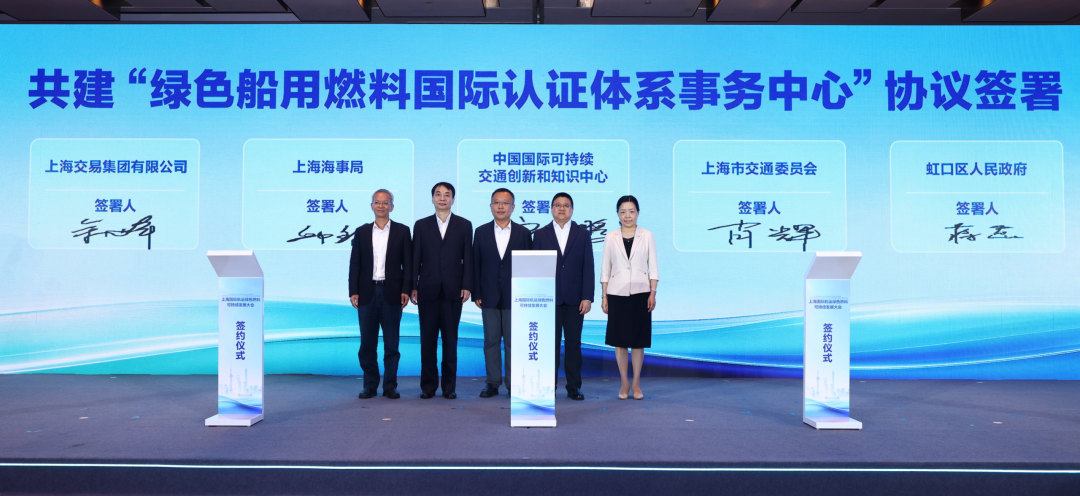
At the conference, China International Sustainable Transport Innovation and Knowledge Center, together with the Shanghai Municipal Transportation Commission, Shanghai Maritime Safety Administration, the People’s Government of Hongkou District and Shanghai Exchange Group, signed a cooperation agreement to jointly build the center.
According to the conference, China’s self-developed GSTC Green Marine Fuel Certification System has now officially started operation in Shanghai.
For green marine fuels, certification is a fundamental part of commercial application. Whether it is green methanol, green ammonia, biofuels or other low-carbon fuels, international shipping will require credible systems to verify fuel origin, lifecycle carbon intensity, traceability and compliance attributes.
The launch of the certification affairs center means Shanghai is not only strengthening its bunkering capability, but also seeking to participate more deeply in the certification and rule-making infrastructure for green marine fuels.
At the certification ceremony, China Energy Engineering Group, The Hong Kong and China Gas Company Limited, Shenergy Group, SIPG Energy and Shanghai Huayi Holdings Group became the first group of market participants certified under the GSTC system. Envision Energy and three other companies also signed letters of intent for certification.
Trading: Shanghai green fuel trading platform to be developed
Another major outcome was the agreement to jointly build the Shanghai International Shipping Green Fuel Trading Platform.
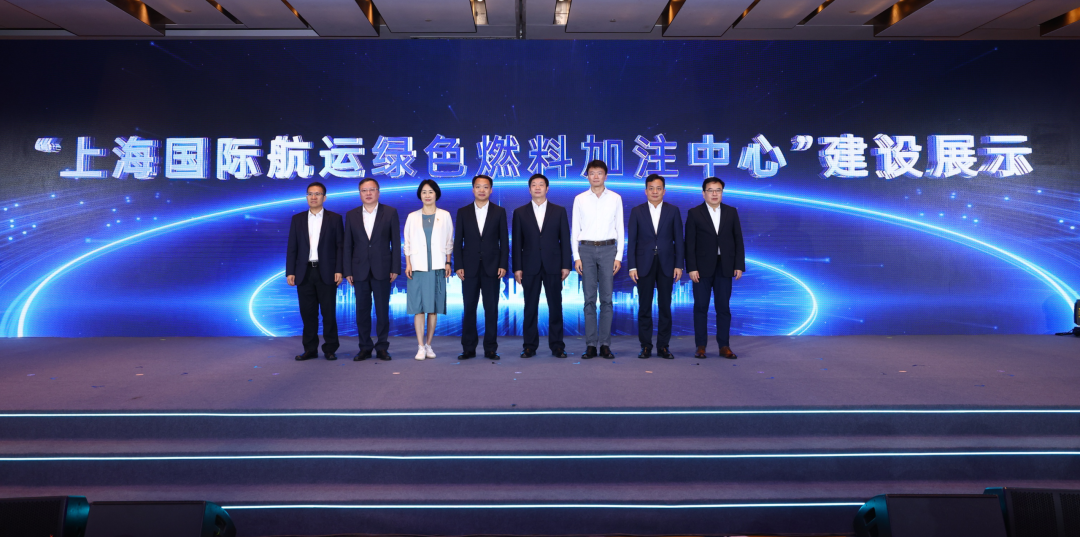
The platform will be developed by Shanghai Shipping Exchange, Shanghai Environment and Energy Exchange, and China Energy Hydrogen Technology Co., Ltd.
According to the conference, the platform will pilot closed-loop services covering green fuel certification confirmation, registration, trading, settlement and cancellation.
This is significant because green marine fuel development requires more than physical supply. For shipping companies, the value of green fuel also depends on certified emission-reduction attributes, transparent ownership records, settlement mechanisms and tradable compliance value.
The platform is expected to support the market-based circulation of green fuels and help Shanghai strengthen its role in green fuel resource allocation and price discovery.
If the certification system, trading platform and port bunkering services can be connected effectively, Shanghai may be able to develop a more influential green fuel pricing mechanism for international shipping.
Supply chain: “North-to-South Green Methanol Corridor” takes shape
The conference also highlighted progress in building a cross-regional green methanol supply chain.
Shanghai, Jilin and Liaoning are working to establish a green fuel cooperation network. The planned route will connect green methanol production in Taonan, Jilin, with transit storage at Dalian Port and bunkering demand at Shanghai Port.
This creates a full-chain green methanol corridor from production to storage, transport and final bunkering, described as the “North-to-South Green Methanol Corridor”.
The logic behind the corridor is clear. Green methanol production is often located in regions with renewable energy, biomass resources or suitable industrial conditions, while bunkering demand is concentrated in major international ports. Connecting upstream fuel production with port-side bunkering demand is therefore essential for green methanol to move from demonstration projects to commercial use.
By linking Jilin’s green methanol resources, Dalian’s transit and storage function, and Shanghai’s international shipping hub status, the corridor could provide Shanghai Port with a more stable green methanol supply route.
Shanghai’s green fuel system becomes clearer
The conference also reviewed Shanghai Port’s progress in green fuel bunkering. Shanghai Port has already developed parallel LNG and green methanol bunkering capabilities, while bonded LNG and green methanol bunkering volumes continue to grow.
During the event, Shanghai also launched its 2030 green fuel bunkering capacity action plan, setting a clearer medium- and long-term direction for expanding green fuel bunkering services.
Professional exchanges were also held during the conference, with representatives from government departments, classification societies, energy companies, shipping companies and port operators discussing green fuel certification, industrial layout and low-carbon shipping pathways.
Overall, the conference shows that Shanghai’s green marine fuel strategy is moving from individual projects to a more structured system.
The certification center addresses how green fuels are verified. The trading platform addresses how green fuels are registered, traded and priced. The “North-to-South Green Methanol Corridor” addresses how green fuels are organized and supplied.
Together, these three elements form the core of Shanghai’s emerging green marine fuel service system.

READ MORE
 Sustainability
Japan Completes Methanol Transport and Bunkering Vessel
 Sustainability
Maersk Bunkers U.S.-Produced Corn Ethanol
 Sustainability
‘While I am President, there will be no global taxes’
 Sustainability
Yantian and Felixstowe Sign Green Shipping Corridor Cooperation Initiative
 Sustainability
When the Future Can No Longer Be Predicted, How Do Shipping Companies Survive?
 Sustainability
Fleet Management Lights Up Anchor Plaza in Blue for World Maritime Day 2026
 Sustainability
COSCO , CMA CGM and SIPG Join Launch of International Green Shipping Corridor Alliance
 Sustainability
Zero-Emission-Capable Ship Orders Slide as IMO Uncertainty Weighs on 2030 Target
 Sustainability
Fueling Now and the Future: IBIA Hong Kong Forum on Alternative Marine Energy
 Sustainability