


Qingdao Port and Singapore MPA Sign Green and Digital Shipping Work Plan

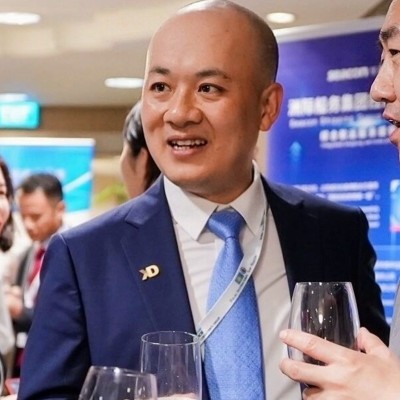
Qingdao Port, part of China’s Shandong Port Group, says it has signed a green and digital shipping cooperation work plan with the @Maritime and Port Authority of Singapore (MPA). The agreement sets out joint action on alternative marine fuels, port data exchange and research, taking cooperation under the Singapore–Shandong and Singapore–China green and digital shipping corridor frameworks into more detailed port operations.
Building on two existing corridor agreements
The work plan follows two earlier agreements that established the wider cooperation framework. On 9 October 2024, MPA and the Shandong Provincial Transport Department signed a memorandum of understanding to establish the Singapore–Shandong Green and Digital Shipping Corridor. That agreement covered cooperation on emerging technologies, training in the safe handling of alternative fuels, shore power, digital information exchange for port clearances, and the sharing of standards and operating practices.
Cooperation subsequently expanded to the national level. Singapore’s and China’s transport ministries signed an MoU on 19 October 2025 to establish the Singapore–China Green and Digital Shipping Corridor, which MPA announced on 25 October. The national framework builds on the earlier corridors with Tianjin and Shandong and seeks to advance maritime decarbonisation, port and supply-chain efficiency, and the technologies, infrastructure and standards supporting those objectives. The Qingdao work plan gives these broader priorities a more specific programme of cooperation between the two ports.
Methanol pilots and demand aggregation
According to Qingdao Port’s announcement, the two sides will explore pilot and demonstration projects for bunkering zero- or near-zero greenhouse gas emission marine fuels, including methanol, for vessels operating direct services between Qingdao and Singapore. They also plan to study the aggregation of methanol bunkering demand and exchange experience on bunkering standards and operational procedures.
In practical terms, pooling demand could give fuel suppliers a clearer picture of the volumes and delivery schedules that ship operators might require. For operators, closer coordination between ports could make fuel availability and bunkering arrangements easier to assess when planning voyages. Whether those benefits materialise will depend on participation by shipping companies and fuel providers, and on demand studies leading to actual procurement and supply arrangements.
Qingdao is pursuing the cooperation alongside its own fuel infrastructure programme. At a municipal policy briefing in September 2026, officials outlined a port green-transition action plan for 2026–2028 that calls for routine green methanol bunkering, the development of LNG ship-to-ship bunkering and liquid ammonia bunkering, and green marine fuel bunkering volumes of 80,000 tonnes a year by 2028. The same programme seeks to add one or two green shipping corridors.
Singapore’s methanol bunkering framework provides a further basis for technical exchanges. In its March 2025 licensing announcement, MPA set requirements for fuel supply, quality assurance, safe handling and emergency response. It also required methanol supplied under the framework to meet specified well-to-wake carbon intensity requirements and have a transparent chain of custody. Those requirements make lifecycle performance and traceability relevant to cooperation on lower-emission methanol supplies.
Connecting port data
The digital workstream will draw on Qingdao Port’s Yungangtong platform and MPA’s OCEANS-X platform, among other infrastructure, to promote the exchange of vessel movement and operational information between the ports. Qingdao Port said the aim is to improve visibility of vessel arrivals and support berth planning, the allocation of port resources and vessel calls.
MPA describes OCEANS-X as an interoperable platform through which government agencies and businesses can discover, access and exchange data. It also supports transactions between systems and cross-border data sharing, including initiatives under green and digital shipping corridors. In operational terms, better visibility of vessel movements could help ports prepare for arrivals and coordinate services, although any efficiency gains would depend on the quality, timeliness and use of the information exchanged.

Research support and implementation
The work plan also envisages technical exchanges and joint research on alternative marine fuels and maritime digitalisation, involving organisations such as the Waterborne Transport Research Institute under China’s Ministry of Transport and the Singapore Maritime Institute. This research workstream is intended to provide technical support for the corridor’s development, linking port cooperation with the expertise needed to assess fuels and digital applications.
There is an existing institutional relationship on which to build. MPA and the Waterborne Transport Research Institute signed an MoU in July 2019 covering information exchange and research cooperation in smart port technology, maritime safety and environmental protection. The new work plan places research alongside the proposed fuel and data initiatives, creating scope for technical findings to inform practical trials and operating arrangements.
Qingdao Port said it would work with MPA to implement the agreed tasks and deepen cooperation in low-carbon operations and digitalisation. For shipping companies using the route, the practical value will emerge as the partners develop bunkering demonstrations, establish usable data exchanges and turn research into operating procedures. Progress on those tasks will show how the corridor can support day-to-day vessel operations.

READ MORE
 Ports & Terminals
US Proposes Extending Port Fee Relief for Chinese-Owned and Chinese-Built Ships
 Ports & Terminals
HONG KONG MARITIME WEEK 2026 10TH ANNIVERSARY 15-21 NOVEMBER
 Ports & Terminals
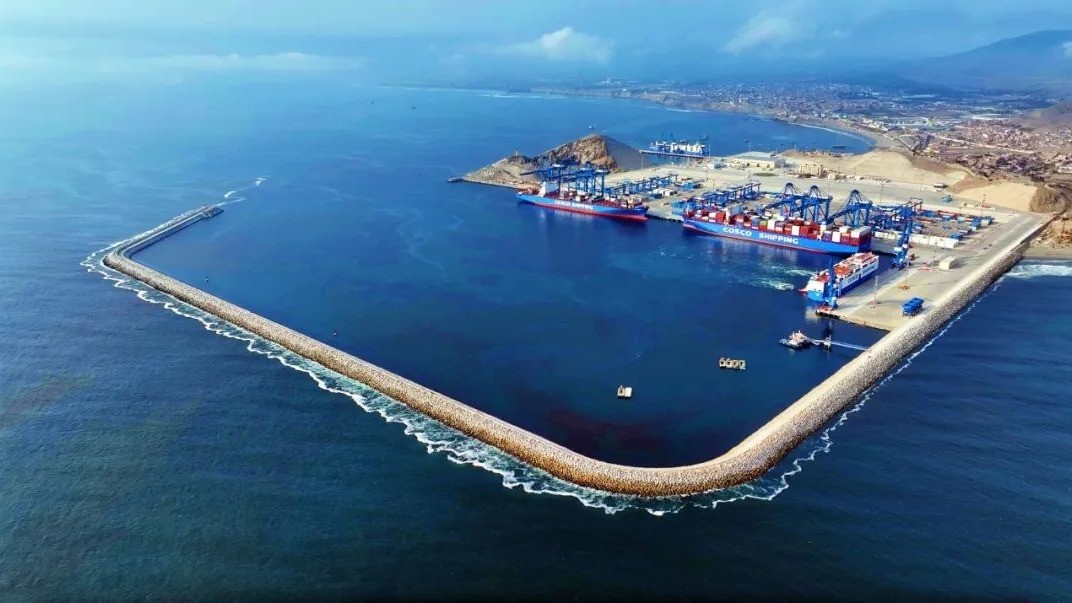
Chancay Port: Defending Legitimate Investment Through the Rule of Law
 Ports & Terminals
Global Dockworker Strike Reaches 113 Ports: Greek Ferry Services Disrupted as Unions Mobilise Worldwide
 Ports & Terminals
Chancay Port: A Gateway for Trade, Competition and Shared Prosperity
 Ports & Terminals
Can a 134-Kilometre Canal Redraw China’s Shipping Map?
 Ports & Terminals
Yantian Port plans RMB3.79bn Zhangjiagang terminal
 Ports & Terminals
Vietnam’s Cai Mep Terminals Open 1,200-Metre Shared Berth
 Ports & Terminals
Ningbo Port’s September Box Volumes Rebound 9.3%
 Ports & Terminals