


IMO Secretary-General: More Shipbuilding Capacity Could Support Shipping’s Green Transition


Arsenio Dominguez recognised China’s leading role in shipbuilding while highlighting opportunities for more countries to meet future vessel demand, with some yards already booked for around five years.
More countries developing shipbuilding capacity could help support shipping’s decarbonisation, IMO Secretary-General Arsenio Dominguez said in Shanghai, pointing to substantial orderbooks at established yards and the need to meet future vessel demand.
Speaking during a media interview attended by Xinde Marine News at the Global Maritime Forum Annual Summit, Dominguez was asked whether efforts to build ships domestically or closer to home, reducing reliance on overseas shipbuilders, could slow the industry’s green transition.
He said a more geographically diverse shipbuilding industry could create opportunities. Asia had been the main centre of global shipbuilding for decades, with China occupying a leading position, while growing orders had placed pressure on available capacity. According to his understanding, some yards were already largely booked for the next five years.
Additional capacity could help meet shipping’s future needs and allow more countries to participate in the energy transition, he said, while supporting the development of their own industries.

Chinese orderbooks extend into the next decade
China’s latest industry figures illustrate the scale of construction already concentrated in its shipyards.
According to the Ministry of Industry and Information Technology, Chinese yards completed 58.05 million deadweight tonnes of ships in the first nine months of 2026 and secured new orders totalling 175.29 million dwt. Their combined orderbook stood at 399.13 million dwt at the end of September.
Measured by deadweight tonnage, China accounted for 63.6% of global completions, 81.8% of new orders and 72.4% of outstanding orders during the respective periods.
Individual yard disclosures show how this workload translates into delivery schedules.
Shanghai-based Hudong-Zhonghua Shipbuilding, part of China State Shipbuilding Corporation, held orders for 57 LNG carriers after signing contracts for five 174,000-cubic-metre vessels with Malaysia’s MISC Berhad in October. A company representative said production schedules extended beyond 2030, according to an October 17 report by Jiefang Daily.
The yard is also building alternative-fuel containerships. Hong Kong-based OOCL contracted 12 LNG dual-fuel vessels of 13,600 TEU each at Hudong-Zhonghua in April 2026. Parent company Orient Overseas (International) Limited subsequently confirmed expected deliveries between 2028 and 2030.
Singapore-listed Yangzijiang Shipbuilding, whose production facilities are in China, reported an orderbook of 256 vessels worth $22.4 billion at June 30, 2026, with deliveries extending through 2030. In its August results announcement, the group said its 2029 delivery slots were nearly full and it was opening slots for 2030.
Availability nevertheless varies by yard, vessel type and production line. Dominguez’s observation about five-year workloads referred to certain shipyards, rather than the global industry as a whole.
Fleet renewal requires years of advance planning
Major owners’ existing contracts demonstrate the time between ordering alternative-fuel ships and bringing them into service.
In December 2024, Maersk announced orders for 20 liquefied-gas dual-fuel containerships at three yards in China and South Korea, with deliveries scheduled from 2028 to 2030.
Yangzijiang is building six 17,000-TEU ships and two 9,000-TEU vessels. China’s New Times Shipbuilding and South Korea’s Hanwha Ocean are each building six 15,000-TEU ships. Maersk said the vessels would replace existing fleet capacity as they entered service.
Alternative-fuel vessels also feature prominently in Yangzijiang’s wider workload. Its June 2026 orderbook included methanol dual-fuel containerships of 9,000 TEU and 13,000 TEU, alongside LNG dual-fuel ships ranging from 9,000 TEU to 24,000 TEU.
These programmes require owners and builders to coordinate fuel choices, machinery procurement and delivery schedules well before the ships enter operation.
Expansion includes specialised construction capability
Established Chinese builders are themselves investing in additional facilities aimed at more technically demanding ships.
Yangzijiang’s Hongyuan yard project, with capital expenditure of approximately RMB3 billion, is designed to build vessels including dual-fuel ships and gas carriers. Located next to the group’s Xinfu yard, it is intended to draw on existing infrastructure and management systems.
The group’s 2026 interim results confirmed that shipbuilding activities had begun at Hongyuan and were already contributing to revenue.
Alongside physical capacity, builders must accommodate evolving requirements for alternative-fuel systems.
In September, IMO’s Sub-Committee on Carriage of Cargoes and Containers finalised revisions to the interim safety guidelines for ships using methanol or ethanol as fuel. According to DNV’s meeting report, the revisions address fuel-tank arrangements, leakage handling, ventilation, bunkering-station design and fire protection, among other matters. They remain subject to further consideration and approval by the Maritime Safety Committee.
For yards entering or expanding in these vessel segments, that work extends across ship design, fuel-system installation, equipment integration and commissioning.
Connecting new ships with fuel and trained crews
During the same interview, Dominguez stressed that shipping’s energy transition must proceed safely. Existing seafarers needed additional skills, while the next generation would have to be prepared to handle alternative fuels and operate new technologies.
He highlighted green methanol bunkering in Shanghai and expressed hope that more ports and countries would undertake similar initiatives. He also noted China’s investment in alternative fuels and its progress in electrifying inland shipping.
The connection between vessel delivery and fuel supply is already visible in individual fleet-renewal programmes. OOIL reported that OOCL Wisdom, its first methanol dual-fuel containership, was delivered in June 2026. The vessel bunkered green methanol at Qingdao on July 3 before beginning its maiden voyage to Europe.
Dominguez also encouraged China to incorporate its experience in automation and decarbonisation into maritime education and share that expertise with IMO, helping inform the development of international requirements.


READ MORE
 People
CMB.TECH’s Jan De Beurme: Shipping Cannot Wait for Perfect Certainty
 People
COSCO SHIPPING Chairman Wan Min Identifies Four Shifts Reshaping Global Shipping
 People
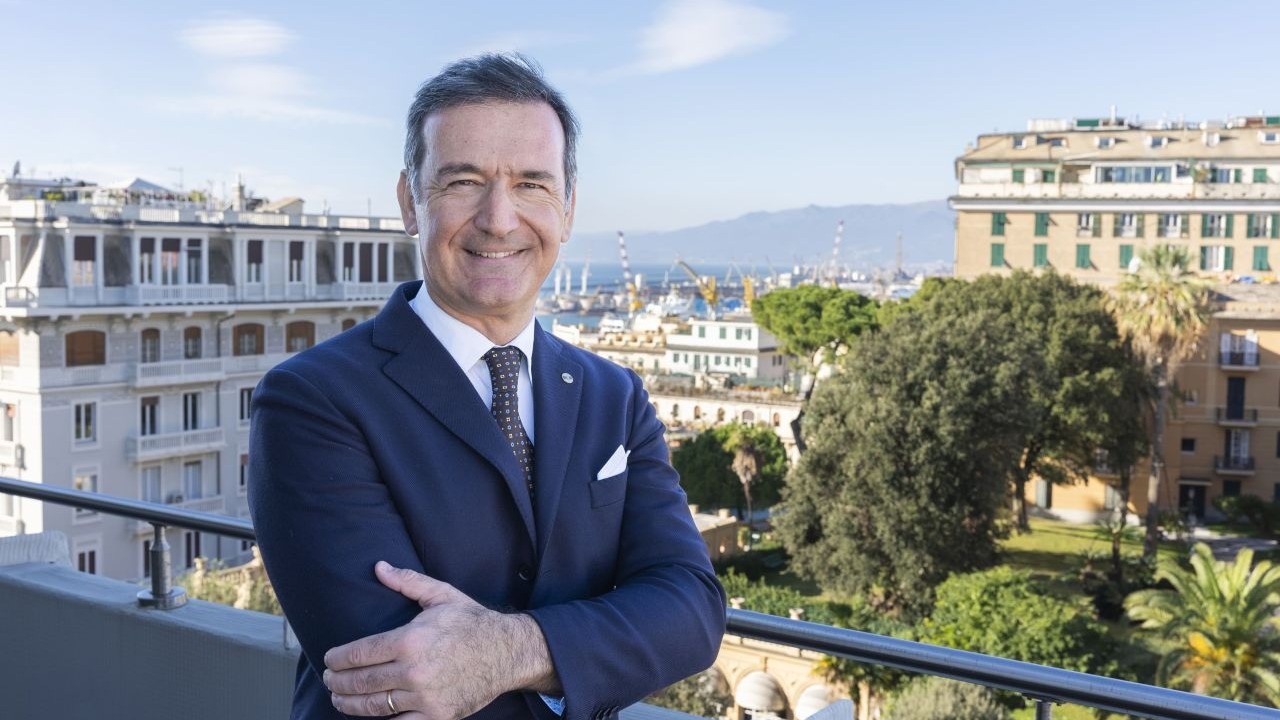
Paolo Moretti Be Named as RINA Group CEO
 People
Private Jets, Luxury Hotels and LNG: US Inquiry Examines Former Envoy’s Greek Business Ties
 People
DP World Promotes Jason Varsamidis to Lead Asia Pacific as Logistics Network Expands
 People
G2 Ocean Names SK Lim CEO as Arthur English Takes the Helm at Gearbulk
 People
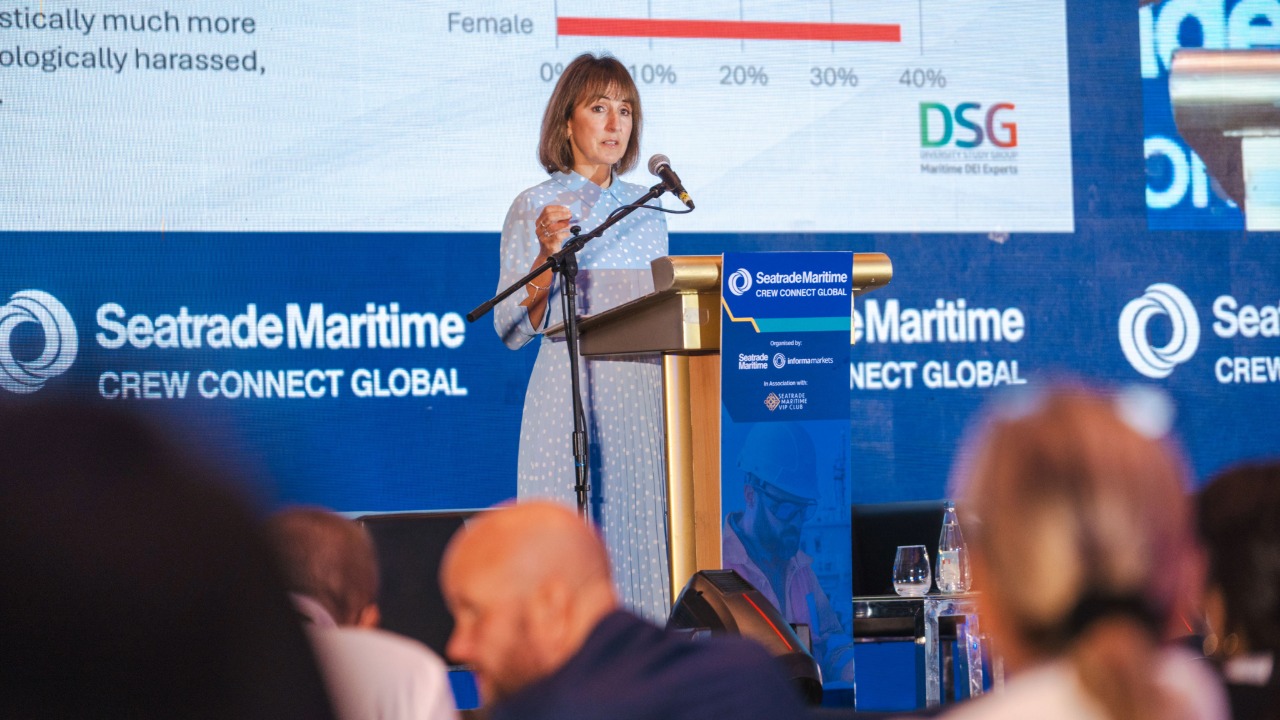
Global Maritime Leaders Arrive in Manila as Seatrade Maritime Crew Connect Global 2026 Opens
 People
Asia is no longer just driving shipping growth – it is shaping the industry’s future
 People
What John Lee’s Speech Signals for Hong Kong’s Maritime Industry over the Next Five Years
 People