


Shipping May Be Waiting for a World That Is Not Coming Back


In 2023 and 2024, a recurring question in shipping was how energy and grain trades would adjust if the Russia–Ukraine conflict ended. By 2025, attention increasingly turned to the Red Sea: how much vessel capacity would be released if containerships could return to the Suez route? In 2026, another question has been added: where would tanker earnings settle if stable passage through the Strait of Hormuz resumed?
The questions have accumulated faster than the crises have receded. The war in Ukraine continues, with unresolved risks to Black Sea navigation. Some services have returned to the Red Sea, but a broad return remains constrained by security and commercial considerations. Conditions around Hormuz remain volatile, leaving owners and cargo interests uncertain about the prospects for sustained, reliable passage.
Shipping must analyse what happens when these disruptions ease. Yet there is an assumption beneath much of that analysis that deserves closer scrutiny: once conflicts subside and waterways reopen, the operating environment familiar to the industry will return.
What if the conditions that supported that environment have changed?
If the drivers of growth, the distribution of wealth, relations among major powers and the political foundations of international cooperation are all shifting, the end of a particular conflict may leave shipping operating in a substantially different world. A waterway can reopen without trade returning to its previous pattern. Military tensions can ease while competition over industries, resources and transport infrastructure continues. Risk can decline in one region and increase elsewhere.
Persistent geopolitical instability, recurring crises and the possibility of new conflicts deserve greater weight in shipping’s long-term decisions. A gradual return to the previous operating environment should be treated as a scenario to test, rather than an assumption on which to build an entire strategy.
Understanding this requires looking beyond freight rates and fleet supply to the relationships between growth, distribution, power and rules.

The familiar order rested on particular historical conditions
The expansion of the post-war economy drew on several sources: reconstruction, industrialisation, technological diffusion, growing labour forces and deeper international specialisation. The recovery and development of Europe and Japan created substantial economic activity. After the Cold War, the integration of additional workers, production capacity and consumer markets into global trade provided another powerful impulse.
The benefits were uneven, and the period was repeatedly interrupted by wars, financial crises and distributional conflict. Nevertheless, for many participating economies, expanding production, entering new markets, acquiring technology and raising incomes reinforced one another. Shipping, ports, shipbuilding, finance and logistics developed alongside this expansion.
An influential expectation emerged from that experience. Closer economic ties could enlarge shared interests, while larger shared interests could raise the cost of confrontation. Companies could organise production across borders around cost, scale and efficiency. Governments could pursue development through access to markets, investment and technology.
Growth also provided room for political compromise. An industry losing market share could seek opportunities elsewhere. Workers facing disruption could hope to enter expanding sectors. Developing economies could accept participation in existing institutions partly because they expected that participation to improve their future position.
That expectation mattered. People and governments are more likely to tolerate an imperfect distribution of present benefits when they believe future opportunities remain open.
Many familiar shipping assumptions developed within this environment: transport networks would keep expanding; commercial efficiency would help determine cargo flows; major maritime routes would generally remain available; and, after a disruption, markets would seek arrangements that reduced costs.
The question now is whether all those conditions can safely be assumed to persist throughout the life of a ship, terminal or logistics investment.
When growth becomes less able to reconcile competing claims
The global economy is still expanding. In its October 2026 World Economic Outlook, the International Monetary Fund projected growth of 3.1% in 2026 and 3.4% in 2027. The argument cannot therefore rest on the claim that global output has stopped increasing.
The more consequential issue is whether the additional income and opportunity being created are sufficient to meet existing expectations—and whether those gains reach enough people to sustain confidence in the system.
An economy can grow while many households experience little improvement. Corporate profits can rise while entry into secure employment becomes more difficult. Asset values can increase while households without those assets face higher barriers to housing and financial security. Aggregate expansion, household experience and confidence in the future can diverge.
There is evidence that the underlying growth challenge has become more difficult. The OECD’s 2026 productivity report found that almost all member countries were more productive in 2024 than two decades earlier, but the pace of improvement had roughly halved since the early 2000s. World Bank research on long-term growth prospects has identified slower investment and productivity growth, population ageing and weaker labour-force expansion as important structural pressures.
Meanwhile, existing commitments remain. Pensions, healthcare, education, infrastructure and debt servicing require resources. Expectations for living standards do not automatically fall when potential growth slows. When additional resources become less able to accommodate these claims, fiscal choices and distributional negotiations become harder.
Concentration of wealth can compound the pressure. Federal Reserve data show that, in the second quarter of 2026, the wealthiest 1% of US households held approximately 32.5% of household net wealth, while the bottom 50% held approximately 2.3%. These are wealth shares, rather than income shares, but they illustrate the substantial differences in households’ positions within the economy.
Distribution can also affect the economic cycle. Research by Atif Mian, Ludwig Straub and Amir Sufi on the “saving glut of the rich” found that increased saving among wealthy Americans was not accompanied by a corresponding rise in domestic investment. It was associated instead with dissaving elsewhere in the household sector and by government.
This offers one mechanism through which an economy can contain abundant investable wealth alongside insufficient purchasing power and limited opportunity for other groups. Credit, public spending and asset appreciation may sustain activity, but can also create additional financial obligations.
The central concern is that growth may become less effective at resolving social tensions. Competition then increasingly concerns who receives the gains, who bears adjustment costs and who has influence over the rules governing both.
Technological progress does not automatically produce broadly shared prosperity
Artificial intelligence makes these questions more pressing.
Earlier technological transformations opened new industries, raised productive capacity and eventually created substantial new forms of employment. Their benefits took time to emerge and were shaped by institutions, investment and the distribution of economic power. AI’s effects will also depend on how it is deployed and how its gains circulate.
There is already evidence of meaningful productivity improvements in particular tasks. A study covering 5,172 customer-support agents found that AI assistance increased issues resolved per hour by an average of 15%. The potential to improve efficiency deserves serious attention.
However, a more productive business does not necessarily create proportionately more employment or household income. Savings may finance expansion, support lower prices, increase investment or accumulate as profits. New occupations may emerge, but their timing, location and accessibility matter to workers whose existing opportunities are changing.
Research from the Stanford Digital Economy Lab found weaker employment outcomes among young workers in occupations exposed to AI, operating primarily through reduced hiring. The authors also reported no evidence of widespread displacement across the entire economy and described their findings as early, descriptive indicators rather than causal estimates.
The international distribution of gains may also be uneven. Economies with strong access to computing capacity, capital, energy, skills and markets are better positioned to participate in new investment. Others may face higher costs without comparable opportunities. The IMF’s October outlook identified energy-importing economies outside the technology value chain as facing particularly difficult conditions.
Even if AI eventually delivers substantial gains in global productive capacity, the transition can therefore generate economic and political strains. Benefits for companies, workers and countries may arrive at different speeds and on different scales.
For shipping, this distinction is practical. Growth in digital services, investment in physical infrastructure and demand for maritime transport are related, but they are not interchangeable. Data centres, electricity networks and manufacturing facilities require materials and equipment. The resulting cargo demand will depend on where investment occurs, which technologies are adopted and how the wider economic benefits are distributed.
Domestic distribution changes the politics of international cooperation
Economic pressures reach geopolitics partly through domestic politics.
When employment, incomes and public services appear reasonably secure, governments generally have more room to negotiate adjustment. When substantial groups believe their circumstances are deteriorating, trade, migration, industrial relocation and international institutions become more politically contentious.
The question becomes personal: who has benefited from participation in the global economy, and who has absorbed its costs?
Trade can improve overall efficiency while imposing concentrated losses on particular industries and regions. If education, employment support, social protection and fiscal policy fail to address those differences, distributional problems can become pressure for changes in external economic policy.
This can strengthen support for leaders promising to restore national control over jobs, production and markets. Political movements may mobilise grievances around foreign competition even when domestic institutions and distribution are also central to the problem.

Policy choices then follow a more complicated calculation. A measure that raises aggregate income may struggle politically if its benefits are diffuse and its losses concentrated. A protective measure that increases overall costs may still attract support if it can be presented as defending employment, industry or security.
Governments also consider relative position. A country may gain from cooperation while worrying that its partner gains more—and can convert that advantage into technological, industrial or military influence. Commercial profitability and national strategic calculation can consequently point in different directions.
Shipping’s decarbonisation debate offers an example of how these interests intersect. The Trump administration has opposed the IMO’s proposed Net-Zero Framework, while US biofuel organisations have pursued opportunities for ethanol in marine markets. Growth Energy and the US Grains and BioProducts Council supported research examining ethanol’s potential as a shipping fuel. The actors and instruments differ, but fuel eligibility, emissions accounting and pricing rules all influence the distribution of costs and commercial opportunities.
International competition can therefore intensify even while the global economy grows. Countries compete over existing resources and over access to future industries, standards, markets and rule-making.
Whether these pressures lead to armed conflict depends on institutions, political mobilisation, security assessments and specific decisions. Reform, negotiation and cooperation remain possible responses. Where those mechanisms are weak, tensions may instead take the form of trade restrictions, economic coercion, domestic unrest or military confrontation.
Economic power has shifted faster than agreement on rules
The challenges facing the international trading system extend beyond the preferences of any individual government.
Global specialisation has changed the distribution of economic strength. More economies have developed sophisticated industrial capabilities and entered sectors that were previously dominated by a smaller group. Relationships that once involved substantial complementarity can become more directly competitive.
Disagreements consequently concern long-term industrial position as well as immediate market access.
The WTO’s 2026 World Trade Report argues that some of the organisation’s present challenges arise from its own achievements. A more integrated economy has produced more diverse membership, more widely distributed economic power and more complex trade frictions. Rules must adapt to that reality. www.wto.org
Institutions require continuing acceptance of their allocation of rights, obligations and benefits. When economic strength changes, established powers may fear losing advantages, while rising participants may believe their influence no longer reflects their contribution or capabilities.
Agreement on reform becomes difficult because participants favour different reforms. Subsidies, technology, development needs, environmental requirements and national security involve competing priorities. When common arrangements prove difficult to negotiate, unilateral measures and smaller groupings become more attractive.
Domestic pressures reinforce this problem. Governments that struggle to explain how openness benefits their citizens may have less political capacity to defend international cooperation. The resilience of the external order is therefore connected to the ability of domestic systems to distribute opportunity and manage adjustment.
Existing institutions nevertheless remain important. The WTO reports that approximately 72% of global merchandise trade still takes place under its most-favoured-nation tariff terms. Established rules continue to support a large share of commerce.
For shipping, the implication is that the political conditions supporting trade are being reassessed. Existing cargo volumes alone cannot establish that the same openness, access and commercial relationships will continue throughout an asset’s operating life.
Interdependence can become a concern about vulnerability
Globalisation created efficiency through specialisation. It also created dependencies.
When political relations are stable, contracts and markets can coordinate those dependencies. One region produces, another consumes, and others supply energy, finance or transport. When trust deteriorates, the same arrangements can acquire a different strategic meaning.
Concentrated production becomes a supply vulnerability. Financial connections become potential channels of restriction. Dependence on technology becomes a concern about future development. Concentration in transport infrastructure raises questions about whether essential deliveries can still be organised during a crisis.
Henry Farrell and Abraham Newman’s research on “weaponized interdependence” explains how this can occur. Global economic networks contain important hubs, and states with jurisdiction over those hubs may be able to restrict others’ access to the wider network.

That possibility changes investment decisions. Governments and businesses may pay more for alternative suppliers, reserve capacity or local production even when the existing arrangement remains cheaper. Such investments can improve resilience for individual participants while increasing duplication and operating costs across the system.
A reinforcing process can emerge. Declining trust encourages economic restructuring. Restructuring can increase costs and reduce routine cooperation. Less cooperation may weaken mutual restraint, making further restrictions easier to impose. Higher costs and weaker growth can then intensify domestic distributional pressures.
The outcomes depend on how such policies are designed. Sensible redundancy can reduce vulnerability. But when participants interpret one another’s capacity-building as a threat, efforts to improve individual security can contribute to a less predictable environment overall.
IMF research published in 2024 documented evidence of trade and investment fragmentation along geopolitical lines following Russia’s invasion of Ukraine. It also identified the growing role of economies connecting different groups, while cautioning that these connections do not necessarily eliminate strategic dependencies.
Cargo can therefore continue moving while passing through different commercial relationships, additional nodes and revised transport arrangements. That restructuring may last longer than the military event that initially accelerated it.
Why a local easing of tensions may not restore stability
These structural arguments provide a framework for examining international conditions. Particular conflicts still require analysis of their own political and security dynamics.
At Xinde Marine News’ Ship Operations and Management Forum 2026 in Shanghai on 19 October, Wang Jin, a professor at Northwest University in China, expressed caution about a rapid stabilisation of the Middle East. He identified weakening mechanisms for mediation, insufficient consensus over regional security and continuing incentives for confrontation.

His analysis directs attention to the conditions required to sustain an agreement. Negotiations need credible intermediaries. Agreements must reach actors capable of influencing events. Implementation needs mechanisms to address new disputes. A lasting arrangement also requires some common understanding of the future security environment.
Where external confrontation is closely connected to domestic political legitimacy and perceptions of national security, compromise can carry significant political costs. Mounting economic damage may still leave participants disagreeing about an acceptable settlement. Progress at the negotiating table must therefore be assessed alongside changes in the incentives sustaining confrontation.
Pressures can also appear elsewhere in different forms. Recent protests across several European countries have concerned living costs, housing, education, public services and governance, with violence in some cities. France’s largely peaceful demonstrations on 24 October also show that developments need not move continuously towards greater disorder. These events differ fundamentally from interstate warfare, but illustrate the continuing importance of economic and institutional support for social stability.
Future geopolitical risk may consequently appear through military conflict, internal instability, sanctions, industrial policy or restrictions affecting transport. These developments will vary across regions and will not affect every shipping market equally.
My assessment is that recurring crises and the emergence of new points of tension should carry greater weight in long-term planning while growth, distribution, power and rules remain under adjustment. An easing in one location offers no assurance that other sources of friction will recede simultaneously.
Reopening a waterway does not automatically restore a trading system
Hormuz and the Red Sea demonstrate why reopening must be examined in operational detail.
The passage of some vessels is different from owners being able to offer sustained, safe and commercially workable transport. Lloyd’s List Intelligence’s 22 October briefing described continuing commercial transits through Hormuz alongside attacks on shipping. Recovery can therefore proceed unevenly across vessels and operators with different risk assessments.
Even after military risks decline, insurance, crewing, port connections and contractual arrangements may require adjustment. Disputes over actual interference and transit procedures remain relevant. The IMO has reaffirmed transit-passage rights through international straits and called for unhindered navigation; unilateral claims and restrictions should not simply be treated as internationally accepted rules.
Investment undertaken during a disruption can also have lasting effects. Cargo owners may develop alternative sources, sign long-term supply contracts or build new storage and distribution facilities. Shipping and logistics companies may retain alternative ports, transshipment operations and inland connections after the original route becomes available.
The result may be a restored corridor operating alongside new networks. Cargo allocation will reflect changing assessments of cost, reliability and security. Some restructuring may extend distances; some regional production may shorten them. The answer requires analysis of particular commodities and supply chains.
Market fundamentals remain essential. A return to Suez can release capacity absorbed by longer voyages, while new deliveries continue to expand fleet supply. Persistent geopolitical risk cannot guarantee sustained high freight rates. Conflict can increase transport work, but it can also damage production, weaken purchasing power and destroy cargo demand.
Strategic value must become part of commercial planning
As access and reliability become less assured, maritime assets require a fuller assessment.
A ship’s value includes earnings, operating costs and residual value. It also includes whether the vessel can be deployed when needed, staffed by qualified seafarers, maintained, insured and supported commercially. A port’s value includes throughput and efficiency, alongside reliable connections to energy, storage, railways, roads and inland markets.
The strategic value of shipping ultimately concerns delivery capability: how much capacity is genuinely available, which alternatives exist when a route is disrupted, how quickly operations can recover and whether customers can still obtain essential goods at an affordable cost.
Governments are already reflecting this perspective in policy. The EU’s 2026 Ports Strategy places competitiveness, resilience, security and sustainability within a common framework. America’s Maritime Action Plan links shipbuilding, the merchant fleet and workforce development with national and economic security. Their eventual results will depend on implementation, but the treatment of maritime capability as an interconnected system is clear.
For companies, this requires practical investment in capability. Vessels must be matched with customer demand, technical management, repair support, personnel and financing. Seafarers’ safety, rights and career development sustain the human capacity on which transport depends. Connections between ports and inland logistics determine whether a completed sea passage becomes a successful delivery.
Commercial sustainability remains central. At the Shanghai forum, Wah Kwong Commercial Director and Wah Kwong Bulk Managing Director Captain C.Z. Chen emphasised profits generated through efficiency and customer service. Seaspan Chairman, President and CEO Bing Chen stressed investment supported by long-term charters and predictable cash flows. Both approaches connect capital commitments with underlying demand and continuing performance.
Companies consequently need to examine several possible futures: a relatively rapid recovery of major routes; repeated interruptions; or improvement in one region accompanied by disruption elsewhere. Each requires assessment of cargo availability, vessel utilisation, operating expenditure, liquidity and recovery time.
Recognising strategic value also strengthens the case for international cooperation. Shipping networks derive much of their usefulness from connection. Protecting civilian vessels and seafarers, maintaining navigation rights, sharing information and coordinating assistance can limit the damage caused by local disruptions.
Technology, institutional reform and cooperation can still improve economic and security conditions. Shipping should prepare for those improvements, including the capacity adjustments they may bring. It should also test the possibility that the political and commercial foundations of its previous operating environment will remain unsettled.
Looking at the future with a different perspective means re-examining the conditions under which past experience remains useful. Supply and demand still matter. Efficiency still matters. Customers still need affordable transport. Access to resources, routes, people and supporting networks will increasingly influence whether companies can meet those needs.
History can help explain recurring pressures. The next operating environment will nevertheless be shaped by different technologies, economic structures and distributions of power. Shipping’s lasting competitive strength will lie in its ability to keep connecting production and consumption safely, reliably and commercially through those changes.


READ MORE
 Safety
The accident often starts when the job feels safe
 Safety
Opinion:Why a Rapid Return to Calm in the Middle East Looks Unlikely
 Safety
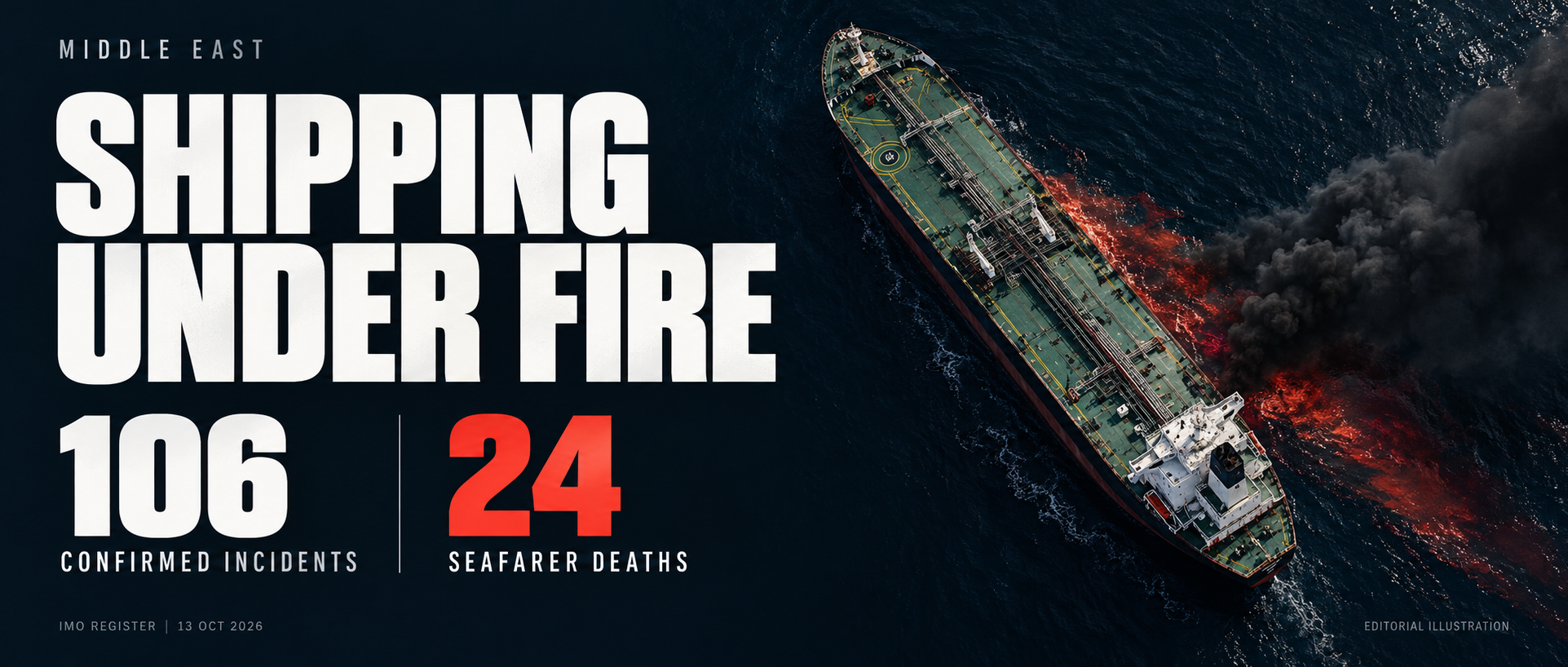
Middle East war leaves mounting toll on merchant shipping
 Safety
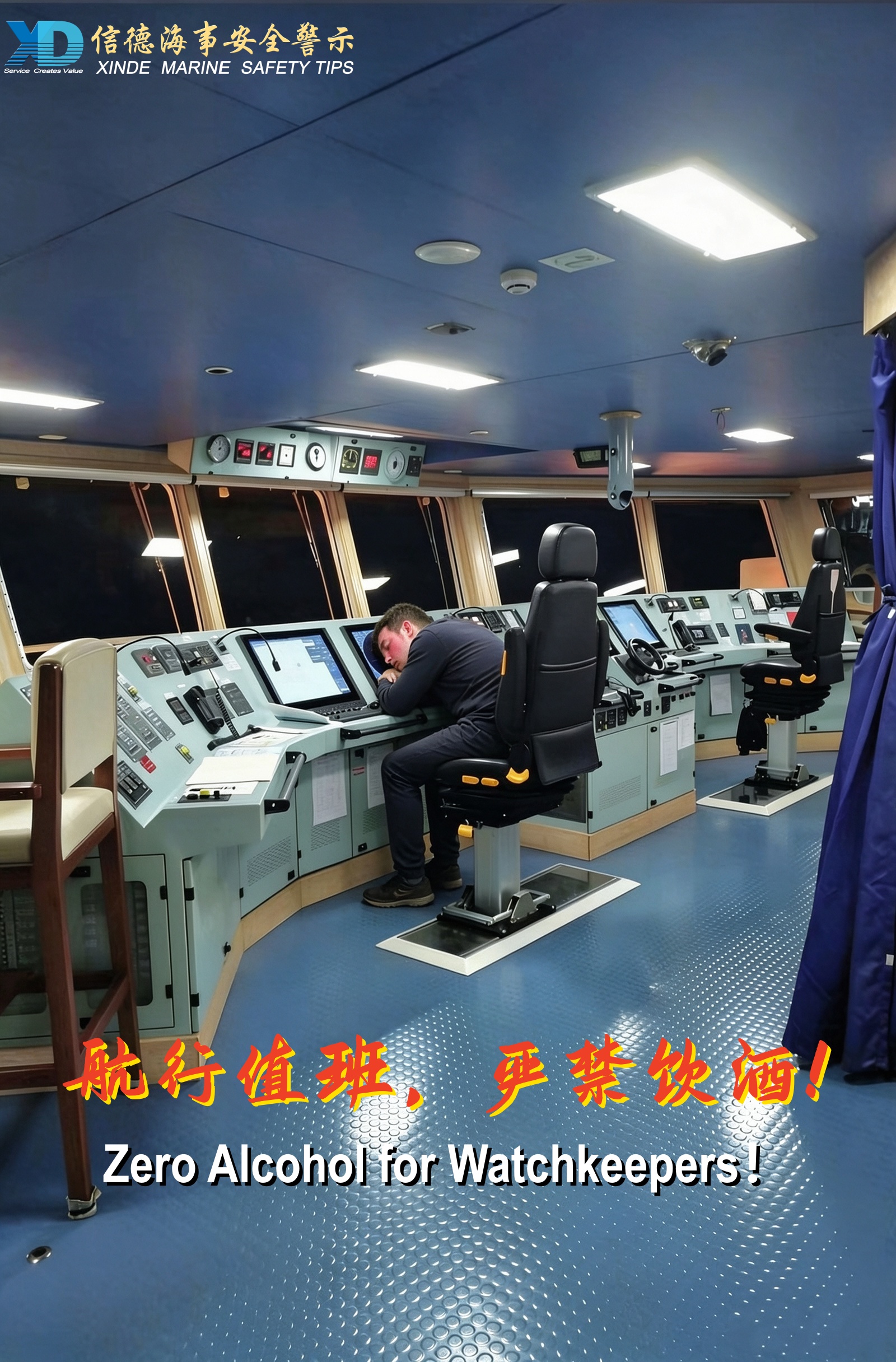
Alcohol‑Control for Seafarers and Key Points for PSC Inspections
 Safety
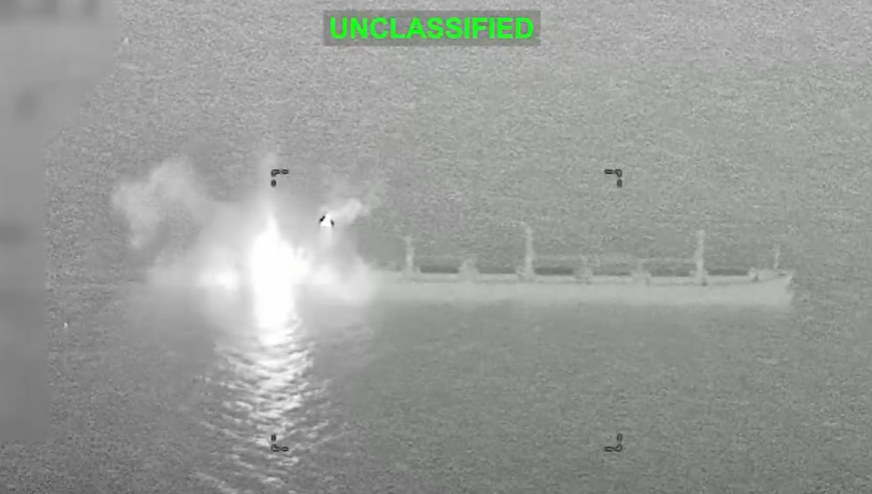
US Says It Disabled Hong Kong-Owned Bulker off Oman
 Safety
Attacked Just 42Days After Delivery: George Prokopiou’s 115,000-Dwt Tanker Hit in Hormuz
 Safety
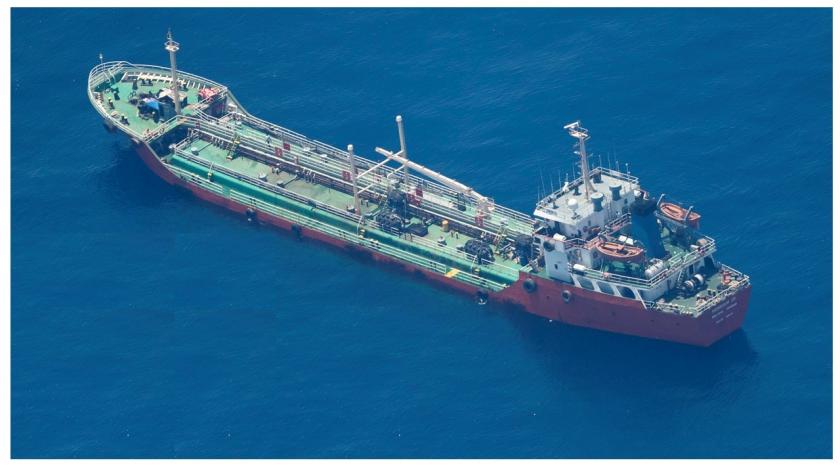
Five Seafarers Reported Dead as Puntland Retakes Hijacked Tanker Honour 25
 Safety
China-U.S. Consensus Highlights Free Navigation: No Country or Entity Should Impose Transit Fees on International Waterways
 Safety
1 seafarer killed, Fatal attack in the Strait of Hormuz: Capesize bulker CAPE DAO hit by unknown projectile
 Safety