


Opinion:Why a Rapid Return to Calm in the Middle East Looks Unlikely


Wang Jin: Why a Rapid Return to Calm in the Middle East Looks Unlikely
A rapid return to stability in the Middle East faces substantial obstacles, according to Wang Jin, a professor at China’s Northwest University, who warned that the political and security forces sustaining regional conflict remain firmly in place.
Speaking at the Ship Operations and Management Forum 2026 in Shanghai on 19 October, Wang argued that accumulated grievances, overlapping interests and shifting alignments could leave the region facing increasingly complex conflicts. A diplomatic breakthrough on one issue, or a reduction in fighting on one front, may have limited reach across this wider network of disputes.
His assessment centred on three problems: weakening mechanisms for mediation, the absence of a shared vision for regional security, and continuing incentives for confrontation. Together, they help explain his caution about an early return to calm and the persistence of risks affecting energy production, maritime trade and global supply chains.

Interlocking conflicts and shifting alignments
Wang placed the latest developments within a longer history of unresolved disputes. An attack, a round of retaliation or a sudden disruption to a shipping route often reflects tensions that have accumulated over many years. As more actors become involved and conflicts spread across borders, restoring diplomatic contact between governments may leave underlying security concerns largely intact.
Sudan and Yemen illustrate the interaction between domestic conflict and external interests. Fighting within one country can draw in neighbouring states concerned about their borders, political influence and economic interests. Those external actors may cooperate on one issue while backing different sides on another, creating relationships that are difficult to reduce to a single regional divide.
In Wang’s assessment, the familiar framework of two opposing camps centred on Saudi Arabia and Iran increasingly struggles to explain these relationships. Iran’s links with regional armed groups do not necessarily give Tehran complete control over their actions. Saudi Arabia and the United Arab Emirates also have differing interests and policy preferences. Such divisions complicate efforts to determine which actors a diplomatic commitment can actually bind.
Wang also urged attention to the western shores of the Red Sea and the Horn of Africa. Maritime security depends on conditions across a corridor involving multiple states and political forces. Developments along either shore can affect a much wider transport network, extending the geographical scope of the risks that shipowners need to understand.
A narrower field of mediators
One reason for Wang’s cautious outlook is the growing constraint on countries capable of mediating effectively between opposing sides.
Oman, Qatar, Türkiye, Pakistan, Egypt, Jordan and Morocco have, in different circumstances, maintained channels with competing actors, hosted talks or helped identify areas for compromise. Wang argued that changing security relationships, direct exposure to conflict and diverging national interests are reducing the space available for some of these roles.
Egypt provides an example. The Suez Canal connects the northern end of the Red Sea with the Mediterranean, while the Bab el-Mandeb Strait links its southern end to the Gulf of Aden. Disruption at the southern entrance affects the wider corridor and Egypt’s economic interests. Wang suggested that deeper involvement of those interests can influence Cairo’s position towards regional actors and make it harder to remain acceptable to all sides as a mediator.
Qatar and Oman may retain important diplomatic channels, but they also operate within constraints imposed by their own interests and regional relationships. For Wang, assessing the prospects for peace therefore requires attention to the practical capacity to broker and sustain agreements. Convening talks, securing implementation and preserving communication when tensions rise again all demand continuing political influence.
A negotiating opportunity consequently leaves several questions unresolved: whether mediators retain the confidence of the parties, whether an agreement reaches the actors able to affect military operations and shipping, and whether new disputes can be contained before they undermine the arrangement.
Competing visions of regional security
A deeper obstacle is the lack of agreement among major regional states over the security order they want to establish.
Wang contrasted the approaches of the UAE, Saudi Arabia and Iran. In his assessment, the UAE favours maintaining and strengthening the US security role in the Middle East, alongside closer security cooperation with the United States and Israel. Saudi Arabia seeks a greater role for regional countries while retaining a US security presence and advancing its own influence. Iran, by contrast, seeks US withdrawal and a reconfiguration of the regional balance.
These positions create fundamental disagreements over external military involvement, security guarantees and the distribution of power. An arrangement that reassures one government may heighten another’s perception of threat. Negotiations can address an immediate crisis while leaving the parties far apart over the order that should follow.
Nor should Gulf states be treated as a single bloc with uniform priorities. Wang highlighted differences between Saudi and Emirati calculations concerning Iran, regional influence and security partnerships. Historical disputes between Iran and the UAE also shape Emirati perceptions of regional security.
For shipping, these disagreements matter because predictable passage depends on arrangements that can withstand political friction. Unresolved questions over responsibility for maritime security, coastal-state demands and the behaviour of armed groups can continue to affect transport even during periods of reduced fighting.

Domestic politics raise the cost of compromise
Wang’s third concern is that confrontation has become closely connected to domestic political legitimacy, leadership standing and national security strategies. These connections can make concessions politically expensive.
Yemen illustrates the problem. Saudi interests there involve border security, regional influence and domestic political considerations. Iran’s relationships with regional forces are connected to its own external security strategy. Governments with substantial interests invested in the same conflict may find it difficult to judge compromise solely through the immediate military or economic balance.
Internal political competition can further narrow negotiating room. Wang argued that concessions in external talks may expose decision-makers to criticism from domestic rivals. He also urged attention to changes within Israeli politics, including the potential influence of harder-line forces, and cautioned against assuming that a change in individual leadership would necessarily produce a more conciliatory direction.
In his assessment, different actors continue to believe that further pressure could improve their position. Where that expectation persists, and retreat carries domestic political costs, the incentives to continue confrontation remain powerful. The economic and security damage caused by war may therefore take time to translate into a willingness to compromise.
This combination of constrained mediation, incompatible security objectives and domestic political pressure underpins Wang’s doubts about a swift return to regional stability.
Energy disruption reaches investment and cargo demand
Wang then traced how prolonged insecurity could affect the region’s economic model.
Threats to energy infrastructure can reduce production capacity and weaken production expectations. Disruption to maritime routes can obstruct exports and delivery. For economies dependent on energy income, simultaneous pressure on production and transport can constrain the resources available for development. Oil prices alone provide an incomplete picture: reliable output, export access and sustained revenue also matter.
The implications extend to Gulf economic diversification plans. Wang noted that energy earnings help finance investment in areas such as renewable energy, artificial intelligence and data infrastructure. Higher security spending, combined with difficulties in producing and exporting energy, can put those funding arrangements under strain. Major projects and investment programmes may consequently progress more slowly than previously expected.
Pressure can also spread through regional financial relationships. Some Gulf states provide investment and fiscal support to countries including Egypt and Jordan. If the providers face tighter financial conditions, recipients may experience additional difficulties, potentially reinforcing the interaction between economic stress and political insecurity.
For shipping, this analysis points to the need to assess cargo demand alongside voyage distance. Rerouting may extend journeys, while slower investment could weaken demand for the movement of equipment, raw materials and project cargo. The consequences may differ considerably between vessel types and trading routes.
Uncertainty over access and operating conditions
Wang identified three broad forms of pressure on international shipping: direct exposure to warfare, coercive interference with navigation, and challenges to the rules and arrangements governing maritime operations.
Military threats affect decisions about deploying vessels and accepting voyages. Restrictions on passage and intervention against particular ships add uncertainty over whether a voyage can be completed. Efforts to incorporate maritime access into wider political or security negotiations can also affect the predictability on which commercial operations depend.
Wang paid particular attention to the significance of the Strait of Hormuz for Iran’s security strategy and regional influence. In his assessment, competition over practical control and passage arrangements could continue for a considerable period. Reduced military intensity may therefore leave important disputes over the operation of the waterway unresolved.
The International Maritime Organization has repeatedly addressed the issue. In a statement dated 28 August, it said that the situation in the Strait of Hormuz remained unresolved six months after the conflict began. The IMO reaffirmed that transit passage through straits used for international navigation must not be threatened, impeded or suspended, and called for a coordinated return to unhindered navigation. Practical interference with passage should not be confused with internationally accepted changes to navigation rights.
Zhang Aiguo, Secretary-General of the China Shipowners’ Association, addressed the operational consequences in opening remarks earlier at the forum. He discussed pressures arising from disrupted access and the association’s work on monitoring, safety coordination, risk alerts and communicating industry concerns. He also described adjustments involving additional maritime transfers, which can tie up more vessel capacity.
Wang referred back to Zhang’s observations when discussing changes in transport organisation. Additional voyages, slower vessel turnaround and more connections between transport stages can affect delivery schedules throughout the supply chain. Operators consequently need to assess the full journey, including vessel safety, port connections, insurance availability and personnel arrangements.
Opportunities depend on cargo and workable routes
Despite his cautious geopolitical outlook, Wang identified opportunities arising from longer voyages, more varied transport requirements and a broader demand for specialist skills.
Rerouting can increase the vessel time required to move a given volume of cargo. Where cargo flows remain intact, longer transport cycles can support demand for shipping capacity. The commercial outcome nevertheless depends on the conditions Wang described earlier: whether cargo remains available, whether voyages can be completed and whether additional costs can be recovered.
Changes in transport organisation may also create demand for transshipment, regional feeder services and alternative connections. Wang suggested that new operating models could provide opportunities for shipping companies and associated service providers. Understanding regional markets, coordinating transport resources and working effectively with local partners will influence which businesses can serve those requirements.
The skills needed within the industry may broaden as well. Greater interaction between regional politics, local regulations and vessel operations increases the value of people able to interpret conditions on the ground and coordinate across jurisdictions. Operational expertise will increasingly need to work alongside regional knowledge and legal and insurance capabilities.
Wang’s assessment leaves international shipping with a continuing set of indicators to watch: whether effective mediation is recovering, whether governments are moving towards a minimum common understanding of regional security, and whether the domestic political constraints on compromise are easing. Until those conditions show sustained improvement, fleet deployment, contractual arrangements, insurance protection and personnel planning will need room to accommodate renewed disruption.


READ MORE
 Safety
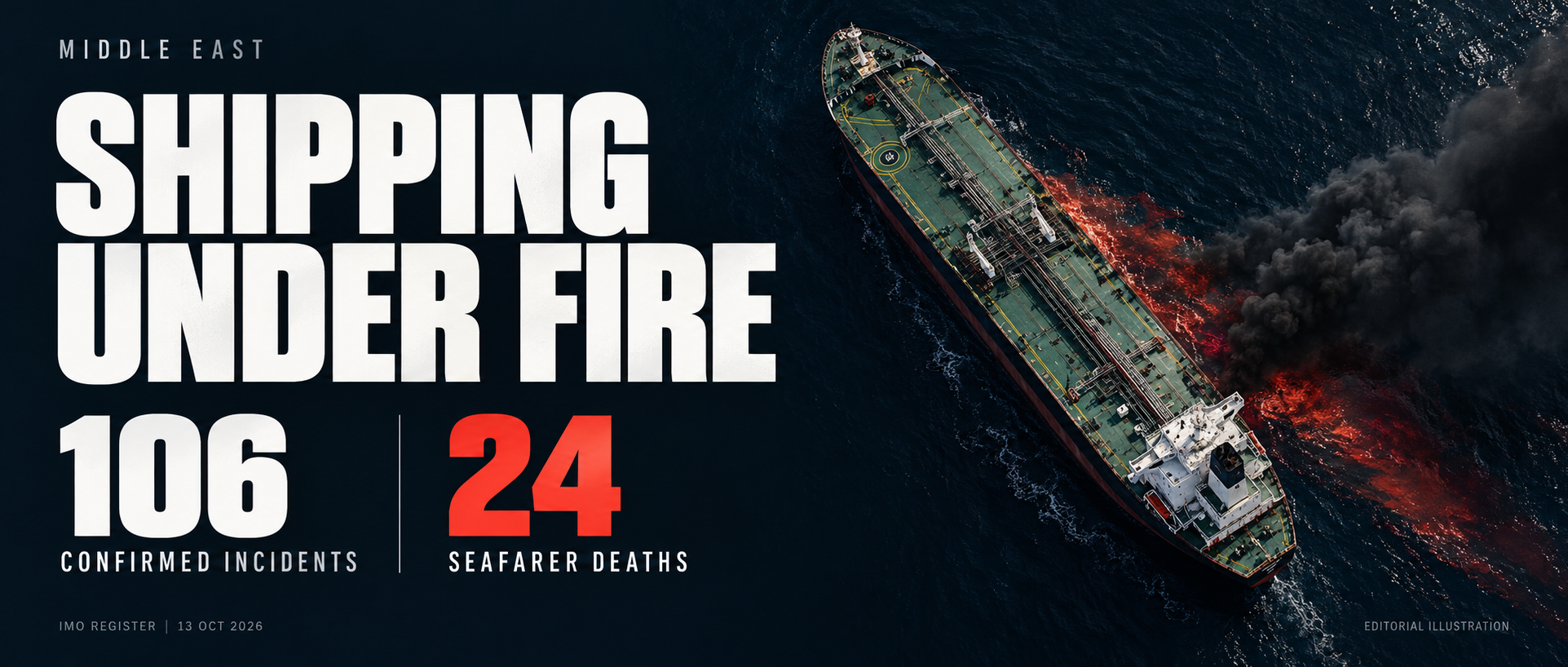
Middle East war leaves mounting toll on merchant shipping
 Safety
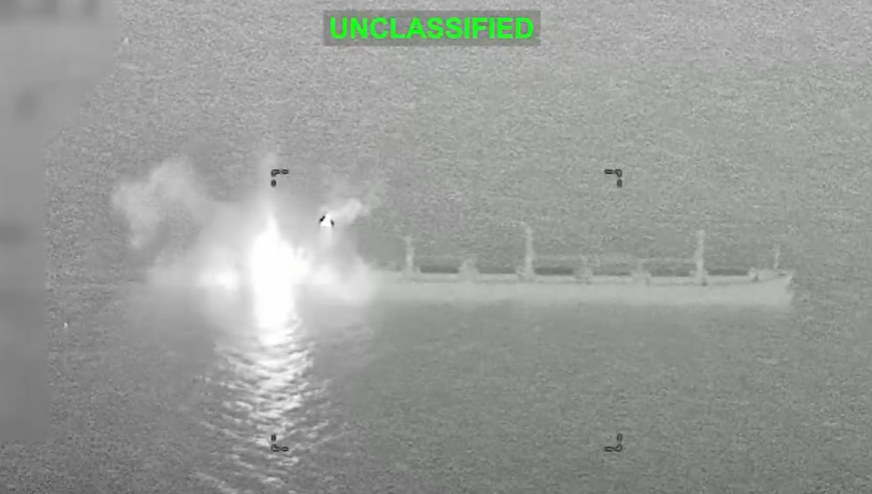
US Says It Disabled Hong Kong-Owned Bulker off Oman
 Safety
Attacked Just 42Days After Delivery: George Prokopiou’s 115,000-Dwt Tanker Hit in Hormuz
 Safety
Alcohol‑Control for Seafarers and Key Points for PSC Inspections
 Safety
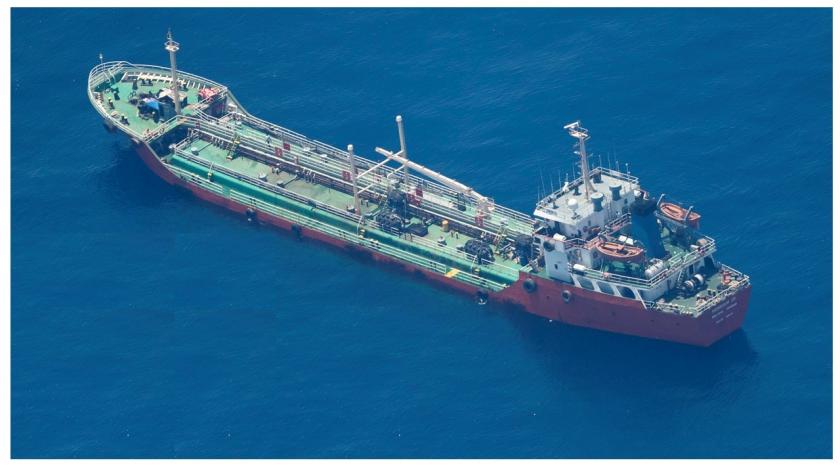
Five Seafarers Reported Dead as Puntland Retakes Hijacked Tanker Honour 25
 Safety
China-U.S. Consensus Highlights Free Navigation: No Country or Entity Should Impose Transit Fees on International Waterways
 Safety
1 seafarer killed, Fatal attack in the Strait of Hormuz: Capesize bulker CAPE DAO hit by unknown projectile
 Safety
25 Crew Abandon MSC Container Ship in the South China Sea — All Rescued, Vessel Still Adrift
 Safety
MSC Hermes III Adrift Unmanned in South China Sea After 25 Crew Abandon Ship
 Safety