


The accident often starts when the job feels safe
A seafarer went aft alone to repair a flagpole. It was a small job, something he clearly felt he could deal with himself.


The accident often starts when the job feels safe
By The Swedish Club’s Jason Wu, Regional Director, Underwriting (Greater China), Team Hong Kong
A seafarer went aft alone to repair a flagpole. It was a small job, something he clearly felt he could deal with himself. He climbed onto the ship’s rail, slipped and fell into the sea. No one saw him go overboard. There was no immediate alarm. He was eventually picked up by a passing tanker the following day. It is an extreme outcome from an everyday job, but that is what makes the case worth thinking about. The work itself did not look particularly dangerous. There was no major operation underway and no obvious emergency. It was simply a job that needed doing. That is often where the problem starts.
The shipping industry knows its high-risk operations. Enclosed-space entry, mooring, hot work and working aloft rightly attract close attention. Crew know these jobs can kill people and there are procedures, permits and safeguards built around them. Routine work can be more difficult. The same job may have been carried out dozens of times without anything going wrong. Gradually, it becomes familiar. And once something feels familiar, it is very easy for the perception of risk to change with it.
Cases reviewed by The Swedish Club show how quickly a seemingly small decision can have serious consequences. In one, crew were dismantling a heater after the steam valves had been shut. It appeared to have been isolated, but pressure remained inside. As the cover was loosened, hot steam escaped and caused serious burns. Closing a valve had become confused with making the equipment safe. Another incident involved a heavy filter cover. The lifting equipment was suitable and the crew were wearing the required protective equipment, but as the cover was being moved, a hand was used to guide it. A finger was caught between the cover and the filter body. There was no dramatic failure in either case. Someone simply made an assumption that, at that moment, seemed reasonable.
This is what makes these accidents difficult to prevent. The weakness is not always an absent procedure or a piece of defective equipment. Sometimes it is the thought that a precaution is no longer necessary. A face shield is lifted because it has fogged and the dangerous part of the job appears to be finished. A ladder is used because fetching something more suitable will take longer. An equipment fault is worked around rather than stopping the job. Someone works alone because it will only take five minutes. Most people who have worked aboard ship will recognise that sort of decision-making. Ships are busy places and seafarers have to solve practical problems every day. Nobody can stop and turn every minor job into a major operation. The challenge is knowing when familiarity has started to hide the risk.
The same applies when someone is injured. A cook reviewed in one case punctured his finger on a fish bone while preparing food. It did not seem serious and he believed nothing remained in the wound, so he carried on. The injury later developed into a serious infection and ultimately osteomyelitis. In another case, a trainee injured his neck while moving a heavy object. He continued working for several days despite being uncomfortable and moving more slowly. Later, while climbing stairs, he missed his footing. Other crew members managed to catch him before he fell. There is a tendency at sea, as there is in many practical industries, to get on with the job. That resilience is often a strength. But there are occasions when carrying on is exactly the wrong thing to do.
This is why safety cannot only be about whether procedures exist. Owners and managers also need to understand what happens when no superintendent, safety officer or auditor is standing there watching. A crew member needs to feel able to stop even a routine job when something does not look right. Working alone, accepting an awkward workaround or assuming isolated equipment is safe can all become normal surprisingly quickly. The same applies to minor injuries: if the prevailing instinct is simply to work through them, an apparently trivial problem can become something much more serious.
The common thread is not that seafarers do not understand safety. It is that people become used to risk. A task that has been completed safely 100 times can start to feel harmless. The absence of an accident becomes reassurance that the way it is being done must be safe. It may simply mean that nothing has gone wrong yet. The serious casualty does not always begin with the job everyone is worried about. Sometimes it begins with the job nobody thought twice about.
And very often, the most dangerous words are the simplest ones: I’ve done this before. It will be fine.


READ MORE
 Safety
Opinion:Why a Rapid Return to Calm in the Middle East Looks Unlikely
 Safety
Middle East war leaves mounting toll on merchant shipping
 Safety
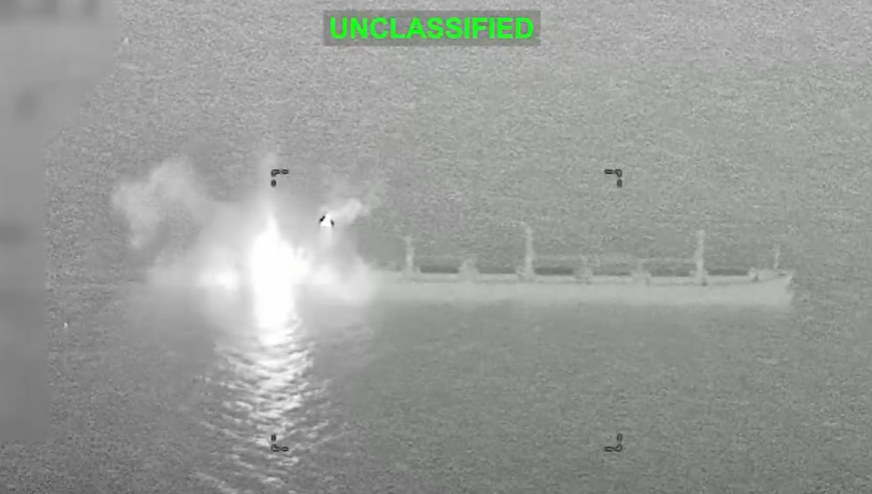
US Says It Disabled Hong Kong-Owned Bulker off Oman
 Safety
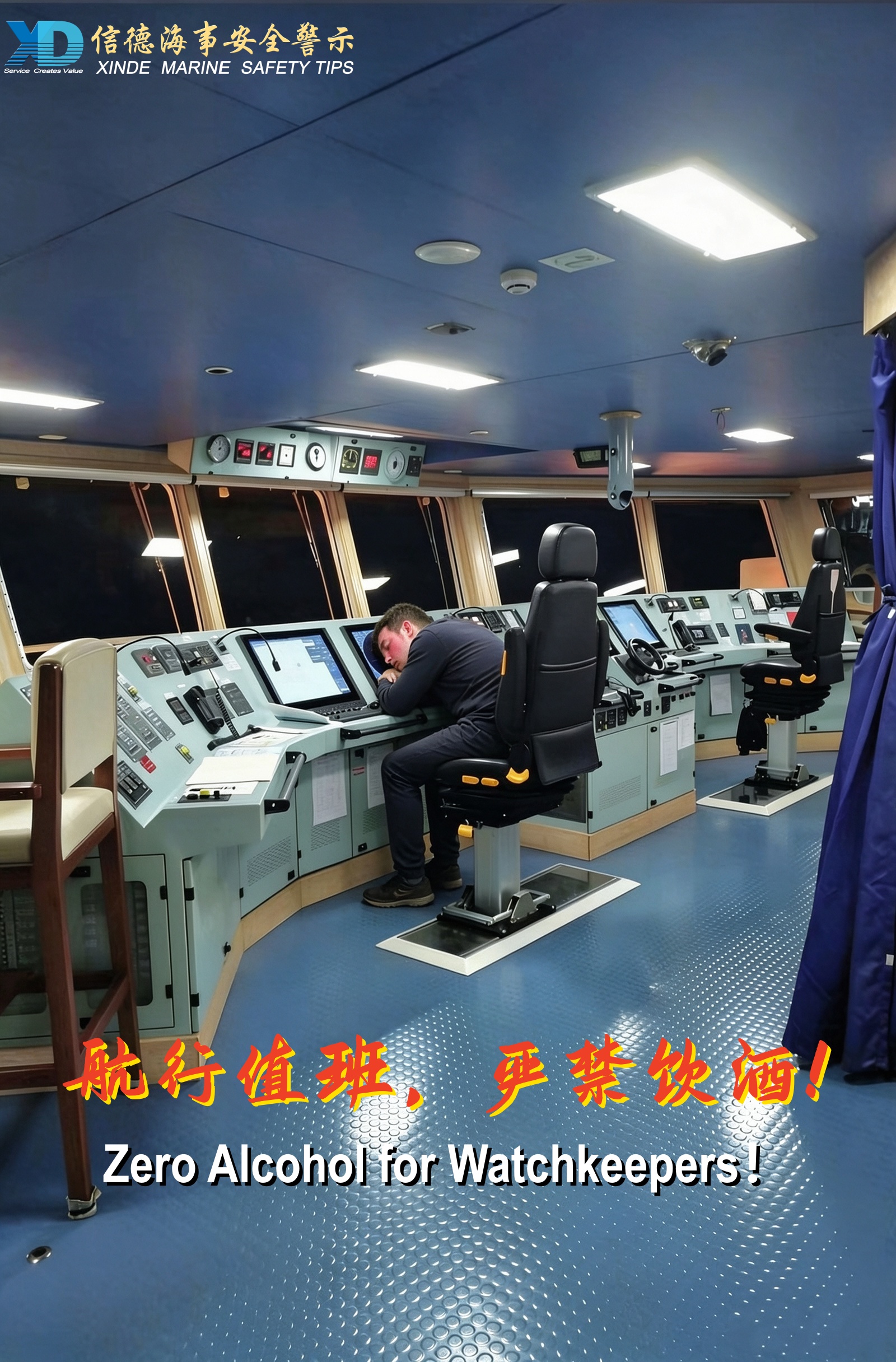
Alcohol‑Control for Seafarers and Key Points for PSC Inspections
 Safety
Attacked Just 42Days After Delivery: George Prokopiou’s 115,000-Dwt Tanker Hit in Hormuz
 Safety
Five Seafarers Reported Dead as Puntland Retakes Hijacked Tanker Honour 25
 Safety
China-U.S. Consensus Highlights Free Navigation: No Country or Entity Should Impose Transit Fees on International Waterways
 Safety
1 seafarer killed, Fatal attack in the Strait of Hormuz: Capesize bulker CAPE DAO hit by unknown projectile
 Safety
25 Crew Abandon MSC Container Ship in the South China Sea — All Rescued, Vessel Still Adrift
 Safety