


Maersk’s Decade-Long Transformation: Has Its End-to-End Logistics Strategy Worked?
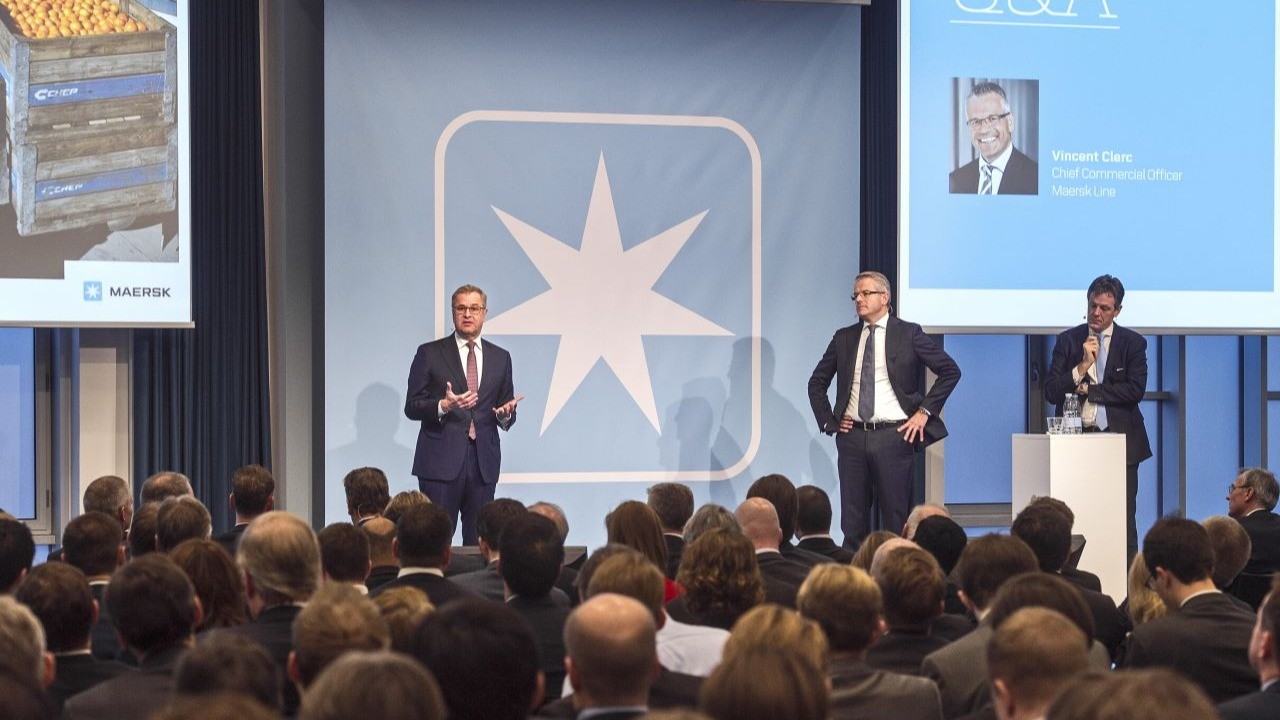

Maersk is taking stock of a corporate reconstruction that has now been under way for a decade. In a recent reflection on the group’s Integrator Strategy, Chief Executive Vincent Clerc recalled that Maersk set out in 2016 to become a global integrator of container logistics, capable of providing customers with end-to-end solutions across their supply chains. Ten years later, he believes that strategic direction is even more relevant than management anticipated at the time. He also singled out the Gemini Cooperation, arguing that a more reliable ocean network and closer connections among Ocean, Logistics & Services and Terminals are creating a stronger foundation for customer value.
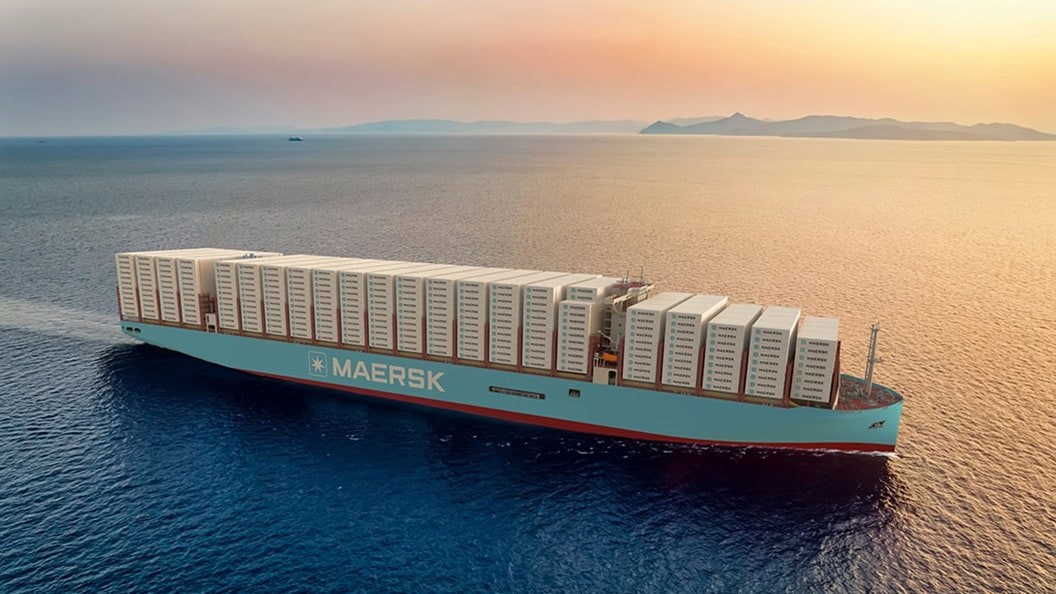
When the strategy was launched, Maersk was still the world’s largest container shipping company and the centre of a Danish industrial conglomerate spanning liner shipping, oil production, drilling, tankers and offshore services. The Maersk of 2026 has a fundamentally different structure. The energy businesses have left the group, Ocean, Logistics & Services and Terminals form its three core pillars, and MSC has overtaken Maersk in fleet capacity. Maersk, meanwhile, increasingly defines its competitive position through schedule reliability, end-to-end delivery, supply-chain resilience and the total value of each customer relationship.
The shift from the world’s largest container line to an integrated logistics provider has therefore involved much more than adding new business units. Maersk has attempted to redesign the product sold by a liner company, the nature of its customer relationships and the structure of its earnings.
Whether the strategy has worked depends on which layer of the transformation is being examined. The strategic direction has been validated by a decade in which geopolitical conflict, port congestion, route disruption and changing trade flows have increased demand for resilient supply chains and alternative transport options. The operating model has begun to prove itself: Gemini’s schedule reliability of more than 90% and the rerouting and delivery of approximately 44,000 containers during the disruption of traffic through the Strait of Hormuz show that ocean shipping, terminals and inland logistics can work as a coordinated system. The economic model, however, has not yet been tested convincingly through a full cycle. Growth and margins at Logistics & Services remain below Maersk’s own targets, while Ocean still controls the largest lever behind group earnings volatility.
The most balanced assessment of the past ten years is therefore straightforward: the strategic direction is sound, the network is taking shape, but the commercial loop is not yet fully closed. Maersk has assembled much of the infrastructure required to act as an end-to-end supply-chain integrator and has shown that the individual components can work together. It must now demonstrate that the network can consistently earn returns above its cost of capital and reduce the group’s dependence on container freight rates during the next shipping downturn.
The 2016 Decision: Leaving the Conglomerate Model Behind
Maersk’s transformation began against a backdrop of financial pressure. In 2016, A.P. Moller - Maersk recorded a net loss of $1.9 billion and an underlying profit of only $711 million, while Maersk Line itself fell into loss. Then chief executive Søren Skou described the group’s performance as “clearly unsatisfactory”. That same year, Maersk reorganised itself into two divisions—Transport & Logistics and Energy—while making container shipping, logistics and ports the focus of its long-term development and seeking new ownership structures for its oil and oil-services businesses.
The role of diversification in this decision requires some precision. Energy and container shipping were driven by different variables and could produce a degree of timing mismatch. Lower oil prices damaged upstream returns and offshore investment while potentially reducing bunker costs for a liner company; drilling earnings also tended to lag the spot oil market because rigs were covered by multi-year contracts. In 2015, that partial mismatch was still visible: Maersk Line earned $1.3 billion, while Maersk Oil reported a $2.1 billion loss after a $2.6 billion impairment, although the oil business still generated an underlying profit of $435 million.
By 2016, however, any limited benefit from that timing difference was insufficient to protect the group. World Bank commodity data show that the annual average Brent price fell from approximately $99 per barrel in 2014 to $52 in 2015 and $44 in 2016. The fall in oil prices reduced the returns available from upstream projects and led energy companies to cut investment, which in turn depressed utilisation, charter rates and asset values in drilling and offshore support markets. Container shipping was simultaneously suffering from chronic overcapacity and collapsing freight rates. UNCTAD estimated that liner operators collectively lost around $3.5 billion in 2016, while Maersk’s average freight rate fell 19% to $1,795 per FFE and Maersk Line moved from profit to a loss of $376 million.
The accounting results of Maersk’s energy businesses do not mean that every unit was producing an operating loss. Maersk Oil still made a reported profit of $477 million in 2016, helped by a 36% reduction in costs, lower exploration expenditure and improved production efficiency. Maersk Drilling generated underlying profit of $743 million, supported by legacy contracts and approximately $150 million in termination fees. Yet its reported result was a loss of $694 million after a $1.4 billion impairment, while the number of rigs that were idle or partly idle rose from three to ten. Maersk Supply Service lost approximately $1.2 billion, including a similarly sized impairment. The distinction matters: strong assets, existing contracts and aggressive cost reductions delayed part of the earnings impact, but the upstream oil, drilling, offshore support and container shipping markets were all under severe pressure.
The lesson from 2016 was that a portfolio of heavy-asset businesses with different immediate earnings drivers did not necessarily provide a dependable group-level hedge. Global demand weakness, excess capacity and falling commodity prices could push several apparently distinct cycles down at the same time. Maersk’s energy interests had provided some episodic diversification, but they had not created a stable negative correlation with liner shipping.
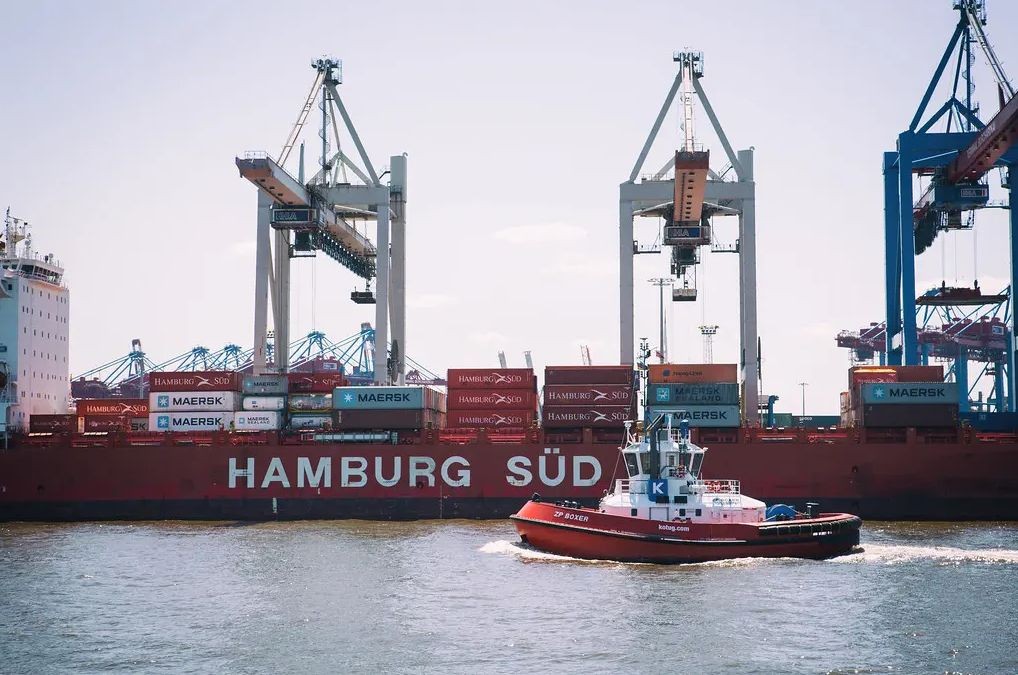
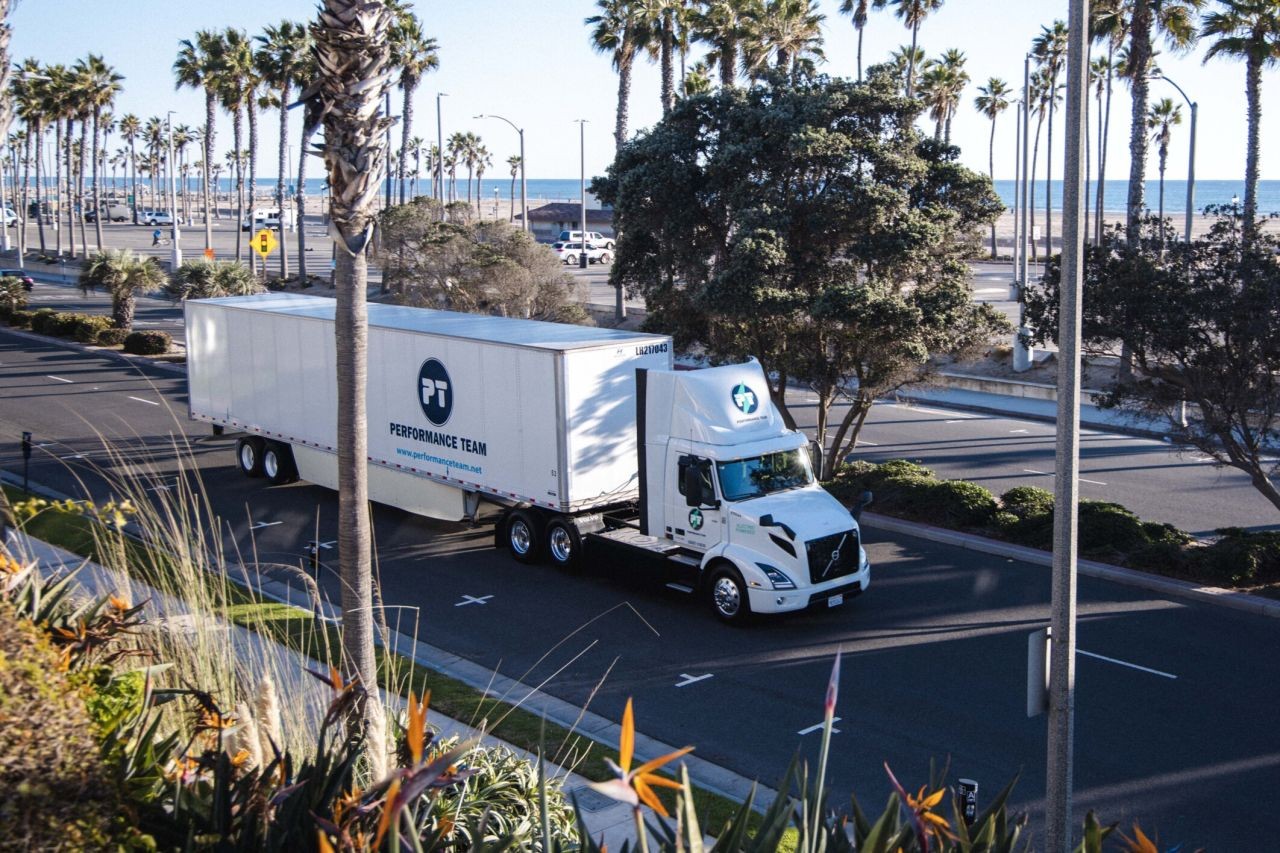
Over the following years, Maersk Oil was sold to Total, Maersk Tankers was transferred to a company controlled by A.P. Moller Holding, Maersk Drilling was demerged and listed, and the offshore support business was progressively removed from the group’s core portfolio. Maersk said that transactions connected with the separation of its energy businesses amounted to more than $12 billion. At the same time, it redirected capital along the container supply chain. The acquisition of Hamburg Süd expanded its liner network and north-south coverage, while subsequent purchases—including Performance Team, Visible Supply Chain Management, Senator International, Pilot Freight Services and LF Logistics—added warehousing, e-commerce fulfilment, parcel delivery, air freight, forwarding, contract logistics and last-mile capabilities.
At the corporate level, this was a contraction. Along the supply chain, it represented a significant expansion. The former Maersk combined oil, drilling, tankers, offshore services and liner shipping within one industrial group. The new Maersk concentrated capital around the flow of containerised cargo and sought to participate in more of the journey from factory and warehouse to port, ocean vessel, inland network and final consignee.
That decision also concentrated Maersk’s strategic exposure. The group exchanged cross-industry diversification for deeper exposure to global containerised trade and the logistics demand generated by it. Its central assumption was that manufacturing locations, trading patterns and transport routes would continue to change, but cargo owners would still require cross-border transportation, terminals, customs clearance, warehousing and distribution. A company capable of organising those nodes into a reliable, transparent and reconfigurable network could build a more durable customer relationship than one selling an ocean slot alone.
What Does It Mean to Become an End-to-End Supply-Chain Integrator?
“Supply-chain prime contractor” is not Maersk’s formal description of itself, but the analogy captures the commercial ambition behind the Integrator Strategy. Under the conventional port-to-port model, the liner company provides an ocean leg while freight forwarders, customs brokers, terminal operators, trucking companies, rail providers, warehouses and distribution firms manage the remaining links. Cargo owners must coordinate several contracts, data systems and points of responsibility.
Maersk wants to become the customer’s principal interface: the party that designs and organises the transport chain and continues searching for a delivery solution when the original ocean route is interrupted. This does not require Maersk to own every truck, warehouse or railway connection. The commercial advantage lies in controlling solution design, the orchestration of critical nodes, the data interface and the customer relationship, while combining owned assets with third-party capacity.
Ocean provides the intercontinental backbone, Terminals gives Maersk influence over selected gateways and hubs, and Logistics & Services connects factories, ports, warehouses and destination markets. Digital systems are intended to preserve visibility across bookings, containers, inventories and transport status. The product being sold therefore expands from a port-to-port movement into a defined supply-chain outcome.
The economic rationale is clear. Ocean freight is highly standardised, and slot prices on a given trade are heavily influenced by capacity supply, demand and competitors’ expansion decisions. Contract logistics and supply-chain management sit closer to customers’ procurement, inventory, production and sales planning. Contracts can be longer, switching costs can be higher and the provider gains access to more operational data. By moving into these activities, Maersk can increase revenue per customer, cross-sell ocean freight, customs services, warehousing, inland transport and air freight, and extend a relationship that once began and ended with a single booking.
Maersk is also competing for one of the most valuable positions in global logistics: control of the customer interface. The company that designs the transport plan, manages the data and resolves exceptions is more likely to influence cargo allocation, service selection and the distribution of profit across the chain. This creates a more complicated relationship with freight forwarders. Forwarders remain important sources of cargo for liner companies, yet some may fear that carriers can use their control of underlying transport capacity and cargo-flow data to enter the customer relationship directly. Expanding direct business while protecting channel relationships and maintaining credible data boundaries will remain a long-term test of the integrator model.
Buying Logistics Capabilities Was Only the First Half of the Transformation
Acquisitions make new warehouses, forwarding operations, aircraft capacity, fulfilment centres and last-mile networks visible to investors. Converting those assets into one coherent product is much harder. When several divisions serve the same customer, internal questions about sales ownership, revenue attribution, cost allocation and responsibility for service failure directly affect whether integration works. If brands, contracts, customer accounts, digital platforms and operating processes remain fragmented, the group owns a collection of logistics assets rather than an integrated service.
Maersk’s gradual consolidation of Maersk Line, Damco, Hamburg Süd, Sealand and other operations under a unified Maersk brand was an attempt to shorten those internal boundaries. The objective was to allow customers to purchase ocean transport, customs services, warehousing and inland delivery through one commercial interface while enabling business units to share information around the same shipment. The process is considerably more difficult than completing an acquisition. It creates overlapping customer ownership, systems migration, organisational integration and cultural challenges that can take years to resolve.
In 2026, Maersk reorganised Logistics & Services into three subsegments: Landside, Forwarding and Solutions. Landside was placed more heavily under local country management, while Forwarding and Solutions continued to operate through global product structures. The change reflects a central tension in integrated logistics. Ocean networks, air freight and supply-chain solutions can be standardised globally to a considerable degree, but trucking, customs clearance, warehousing and distribution depend heavily on local regulation, infrastructure and customer conditions. A global network can define the product; local execution determines whether the promise is kept.
The first half of Maersk’s transformation was therefore about capital allocation: selling energy assets and purchasing logistics capabilities. The second half is about operating integration—making Ocean, Terminals and Logistics & Services work around the same customer, the same data and the same delivery objective. Clerc’s acknowledgement that much work remains to be done indicates that management’s focus has moved from expanding the asset perimeter to improving network efficiency, service consistency and returns on capital.
Gemini Is More Than an Ocean Alliance: It Is the Clock for the Entire Network
Clerc’s decision to highlight the Gemini Cooperation in his ten-year review is significant because an integrated logistics system requires a dependable ocean backbone. When vessel arrivals repeatedly drift away from schedule, berth planning, yard operations, rail connections, trucking, warehouse shifts and final delivery all lose predictability. Even a broad portfolio of inland capabilities is then forced to absorb delays created upstream. For Maersk’s integrator model, schedule reliability is no longer merely a feature of the ocean product; it is a prerequisite for the efficient operation of the wider supply chain.
Gemini seeks to limit the propagation of delays by reducing calls on selected mainline services, shortening vessel rotations and connecting additional markets through hubs and feeder networks. Maersk says that, after Gemini became fully operational in 2025, schedule reliability across the east-west network remained above 90% according to independent Sea-Intelligence measurements. In its review of the network’s first year, the company said the greater stability had improved berth and yard planning at terminals while giving trucking providers, warehouses and customers more predictable inventory schedules.
The network is also expected to generate measurable financial synergies. In its 2025 full-year investor presentation, Maersk estimated that Gemini could deliver annual savings of approximately $820 million to $1.1 billion once fully implemented. The projected benefits include lower fuel consumption, faster vessel turnaround, fewer and more efficient mainline port calls, and additional volume flowing through selected APM Terminals gateways. Gemini therefore affects Ocean’s unit costs, Terminals’ throughput and the planning stability of Logistics & Services at the same time. It is one of the most important interfaces through which Maersk’s three core businesses can produce group-level synergies.
The hub-and-spoke structure also introduces concentration risk. When mainline vessels make fewer direct calls, a larger proportion of cargo must move through key hubs. Weather disruption, strikes, congestion or security incidents at those locations can affect a greater share of the network, making redundancy, alternative gateways and feeder recovery capacity essential. Gemini’s long-term performance should therefore be judged not only by schedule reliability during normal operations, but also by how rapidly the network returns to plan after a serious disruption. The objective is to create a system that absorbs delays and contains their spread, rather than a collection of individual services that perform well only under stable conditions.
The Hormuz Disruption Gave the Integrator Model a Real-World Test
When traffic through the Strait of Hormuz was severely disrupted in 2026, some Maersk containers bound for markets in the Persian Gulf could no longer follow their original routes. The group said in its second-quarter report that approximately 47,000 containers were affected. Ocean discharged the cargo at alternative ports outside the Gulf, after which Logistics & Services used a regional land bridge to move it towards its final destinations. Approximately 44,000 containers were ultimately delivered. Maersk described the response as “the integrator model in action”.
The episode illustrates the difference in responsibility between an end-to-end integrator and a conventional ocean carrier. When a maritime route becomes unavailable, a stand-alone shipping product can generally offer delay, diversion or return of cargo. An integrated logistics network can combine alternative discharge ports, terminal handling, inland corridors and revised delivery plans so that the cargo continues moving towards its target market. The customer is purchasing more than a slot between Port A and Port B; it is purchasing a solution for reaching the destination.
The Hormuz operation demonstrated the coordination value of Maersk’s network under extreme conditions. It did not, by itself, prove that the business model can produce consistently attractive returns. The same crisis that created demand for land bridges and alternative logistics solutions also tightened ocean capacity and lifted spot freight rates, generating additional earnings for Ocean. A fuller assessment requires evidence that, once routes normalise and shipping capacity becomes abundant again, customers will continue paying for end-to-end delivery, reliability and contingency options.
The Financial Evidence: Ocean No Longer Stands Alone, but It Still Drives Earnings Volatility
Maersk generated revenue of $54 billion, EBITDA of $9.5 billion and EBIT of $3.5 billion in 2025. Ocean volumes rose 4.9%, Gemini achieved schedule reliability above 90% and produced cost savings ahead of expectations, Terminals delivered its strongest performance on record, and profitability at Logistics & Services continued to improve. By the second quarter of 2026, group revenue had risen 20% year on year to $15.757 billion, EBITDA reached $2.992 billion and EBIT reached $1.571 billion, with all three core businesses reporting double-digit revenue growth. These figures show that integrated logistics has achieved meaningful scale and that terminals are providing strong returns and cash flow.
The distance between divisional performance and Maersk’s own targets offers a more demanding test. In 2025, organic revenue growth at Logistics & Services was 1.2%, below the group’s medium-term objective of more than 10%, while its EBIT margin of 4.8% remained short of the target above 6%. Group return on invested capital over the preceding 12 months was 5.7%, below the annual target of more than 7.5%. Terminals was considerably more mature, with return on invested capital of 16.1% against a target above 9%. Ocean’s normalised EBIT margin was 4.0%, also below its 6% target. Maersk has acquired many of the capabilities it needs; it has not yet proved that the combined network can consistently convert them into high-quality growth and adequate capital returns.
The fourth quarter of 2025 provides a useful snapshot of the new earnings structure. As freight rates weakened, Ocean recorded an EBIT loss of $153 million. During the same quarter, Logistics & Services produced EBIT of $194 million and Terminals contributed $321 million, providing a visible buffer at group level. In the second quarter of 2026, higher spot rates pushed Ocean EBIT rapidly higher to $935 million, while Logistics & Services and Terminals contributed $217 million and $458 million respectively. Logistics and terminals have strengthened the floor under group earnings, but Ocean still determines much of the amplitude on the way up and down.
Maersk’s latest sensitivity analysis makes that dependence explicit. Holding other factors constant, a $100-per-FFE movement in average container freight rates could change annual group EBIT by approximately $700 million. A change of 100,000 FFE in volume would affect EBIT by only around $10 million. Freight-rate movements therefore have a vastly larger earnings impact than incremental volume changes. The Integrator Strategy has added layers of resilience; it has not yet rewritten the most powerful variable in Maersk’s income statement.
Has the Strategy Worked? The Answer Has Three Layers
At the strategic level, the answer is yes. War, route closures, port congestion, trade-policy changes and the relocation of manufacturing have expanded customer needs beyond a single ocean leg. Maersk’s 2016 decision to focus on end-to-end logistics anticipated that shift. CMA CGM has expanded through CEVA Logistics, MSC has continued adding terminal, logistics and air-cargo assets, and other major carriers have moved towards both ends of the supply chain. The industry broadly accepts that liner companies must compete for more of the value generated ashore.
At the operating level, important parts of the model are working. Gemini indicates that a highly reliable backbone can improve vessel utilisation, fuel efficiency and terminal throughput at the same time. The Persian Gulf land bridge showed that ocean and inland logistics can jointly preserve delivery when the planned maritime route fails. Maersk’s next challenge is to convert such high-profile examples into a repeatable capability across more customers, countries and everyday shipments, with a consistent experience through sales, booking, tracking, exception management and invoicing.
At the earnings level, the strategy remains unfinished. Logistics & Services is already a large business, but its organic growth and margins remain below target. Terminals is generating strong returns, while the group as a whole remains below its return objective. Ocean’s profit sensitivity to freight rates is still far greater than that of the other divisions. Capital markets will ultimately judge whether Maersk has become an integrated logistics platform or remains a cyclical liner company with a very large collection of logistics assets.
Four tests will determine the answer. Logistics & Services must lift and sustain its EBIT margin above 6%. Gemini’s projected annual savings of $820 million to $1.1 billion must continue to materialise. End-to-end services must reduce operational and digital friction while increasing long-term contract coverage and customer spending. Most importantly, Logistics & Services and Terminals must materially reduce the decline in group earnings during the next freight-rate downturn. Only when these conditions are met will Maersk’s integrated-logistics proposition become a mature commercial model rather than a strategic aspiration.
The Next Downturn Will Be the Decisive Test
Maersk is pursuing a capital-intensive strategy. The group has indicated capital expenditure of $10 billion to $11 billion for both the 2025–2026 and 2026–2027 rolling periods. Ships, terminals, warehouses, aircraft, trucks and digital platforms can strengthen control over the network, but they also create a substantial fixed-cost base. Every additional owned node must improve network efficiency, customer retention or pricing power. Asset ownership alone does not create a competitive moat.
The next downturn in container shipping will provide the clearest assessment of the past decade. When newbuilding deliveries expand effective capacity and spot freight rates weaken, Maersk will have to show that Logistics & Services and Terminals can support group earnings, that Gemini can maintain its cost and reliability advantages, and that integrated services can generate more stable contractual revenue. Only under those conditions will investors be able to judge how much counter-cyclical resilience Maersk actually obtained after selling its energy businesses and investing heavily in logistics.
Maersk’s transformation is also redrawing the competitive boundaries of the global liner industry. Fleet scale, unit slot costs and route coverage remain fundamental, but terminal control, warehouse footprints, inland networks, supply-chain data, exception management and cross-service contracts now belong to the same competitive system. Large cargo owners are increasingly comparing not only the cost of one shipping route, but the cost, stability and recovery speed of an entire network.
Clerc’s statement that much work remains to be done accurately describes Maersk’s position. The asset framework is largely in place, operating synergies are beginning to emerge, and economic returns have yet to be validated through a complete cycle. Maersk’s service boundary has moved far beyond port-to-port transportation, but its income statement remains strongly exposed to the shipping cycle. The road now reaches deep into the supply chain. Whether it becomes a consistently profitable route will be decided in the next downturn.
Principal sources: A.P. Moller - Maersk annual reports and results materials for 2015, 2016 and 2025; Maersk’s second-quarter 2026 report; Vincent Clerc’s review of the Integrator Strategy; World Bank commodity price data; UNCTAD, Review of Maritime Transport 2017.

READ MORE
 Containers
Maersk overtakes COSCO to become Asia’s largest intra-Asia liner
 Containers
COSCO SHIPPING Heavy Industry launches A-share IPO push
 Containers
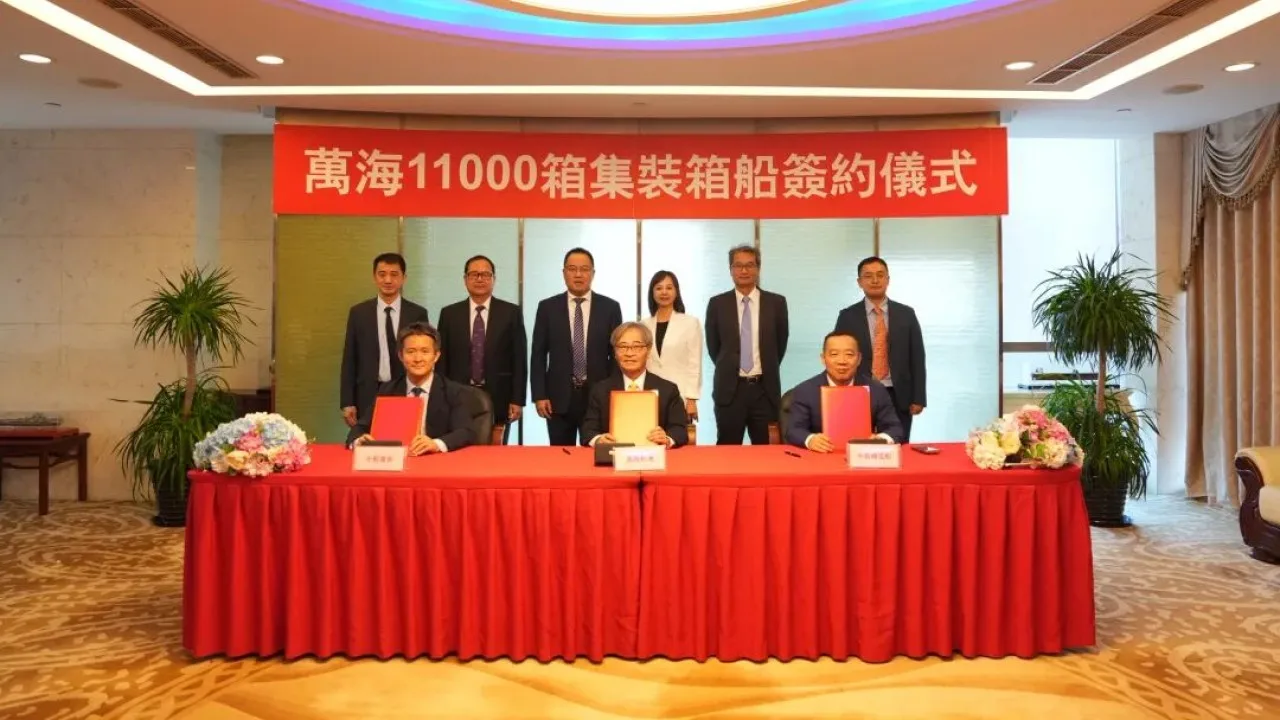
Wan Hai firms up $744m order for six 11,000 teu boxships at SWS
 Containers
Ningbo Containerized Freight Index Weekly Commentary Freight Rate Trends Continued to Diverge; Composite Index Remained Stable
 Containers
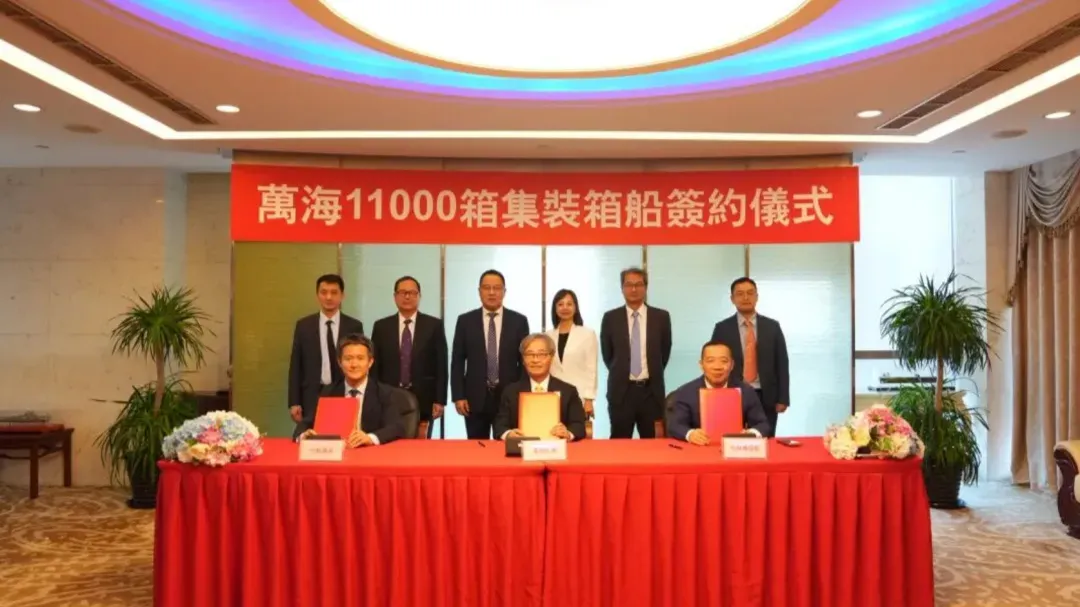
Wan Hai Orders Six 11,000 TEU Containerships in New Fleet Expansion Move
 Containers
Ningbo Containerized Freight Index Weekly Commentary Freight Rates Fluctuated but Composite Index Remained Stable
 Containers
COSCO SHIPPING Bulk and Xiamen ITG to Build Breakbulk Liner Service from Lianyungang
 Containers
Container Trade Hits Record 17.3m TEU as Far East Exports Surge
 Containers
China’s First Arctic Container Service Reaches Europe
 Containers