


In 3 Days, Two LNG Carriers: GasLog Ships Caught Up in Separate Attacks
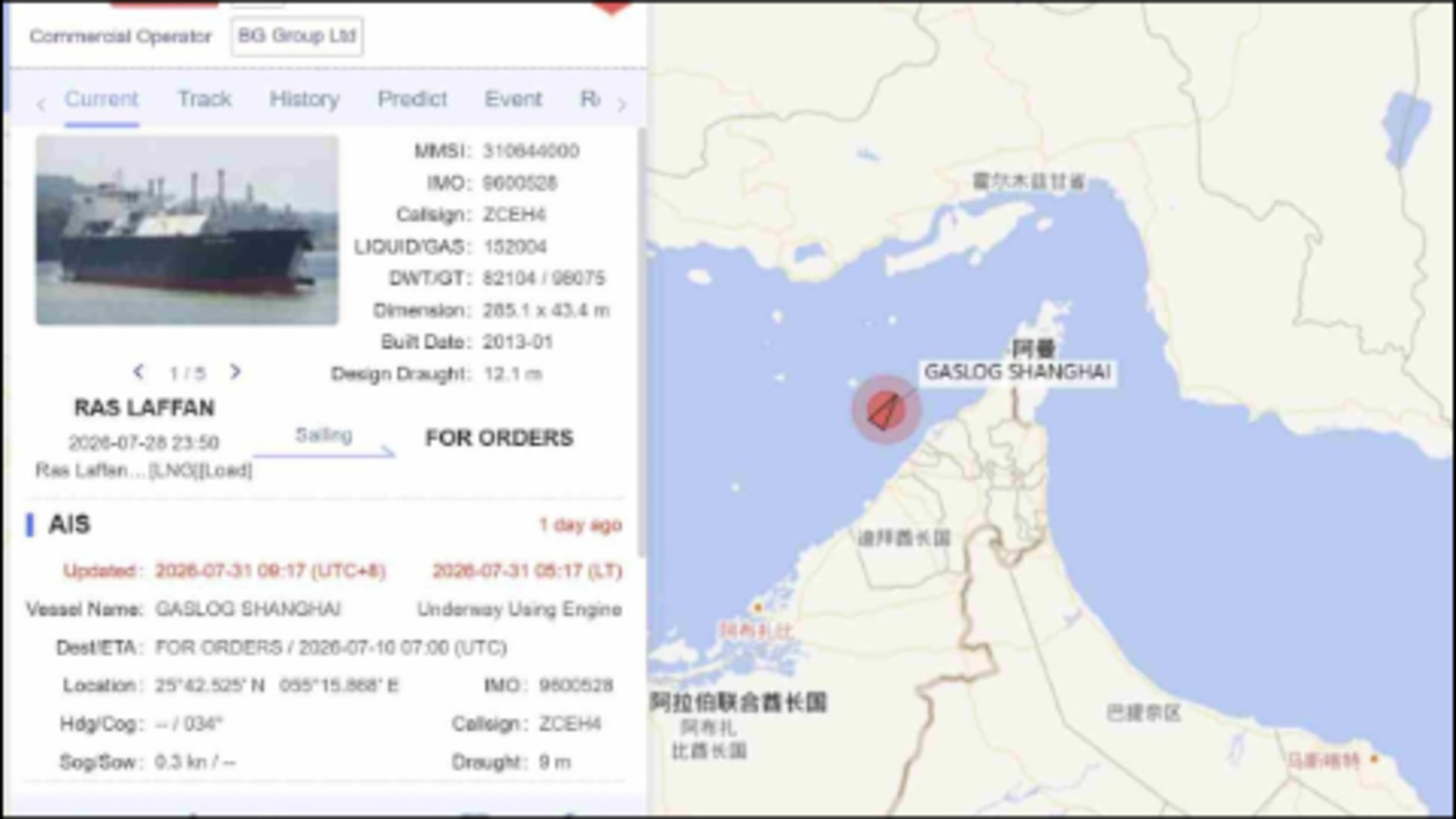

From Egypt’s Damietta port to the Strait of Hormuz, security risks are closing in on both ends of the LNG supply chain
Two LNG carriers in the GasLog fleet have been caught up in separate security incidents within just three days, highlighting the rapid spread of maritime risk across some of the world’s most important energy-trading routes.
On 29 July, the LNG carrier GasLog Salem was affected by a fire at Egypt’s Damietta port after a suspected drone attack reportedly struck the nearby floating storage and regasification unit Energos Winter.
Two days later, GasLog Shanghai was directly hit by an unidentified projectile while transiting eastbound through the Strait of Hormuz. The impact reportedly caused a fire in the vessel’s port-side engine room, followed by a blackout and loss of propulsion.
The two incidents occurred in very different operating environments. One took place inside a major Mediterranean LNG terminal near the northern entrance to the Suez Canal. The other unfolded in the Strait of Hormuz, the world’s most strategically important maritime chokepoint for oil and gas exports.
Together, they demonstrate how the current Middle East conflict is placing pressure on the LNG supply chain at both the port and sea-passage levels.
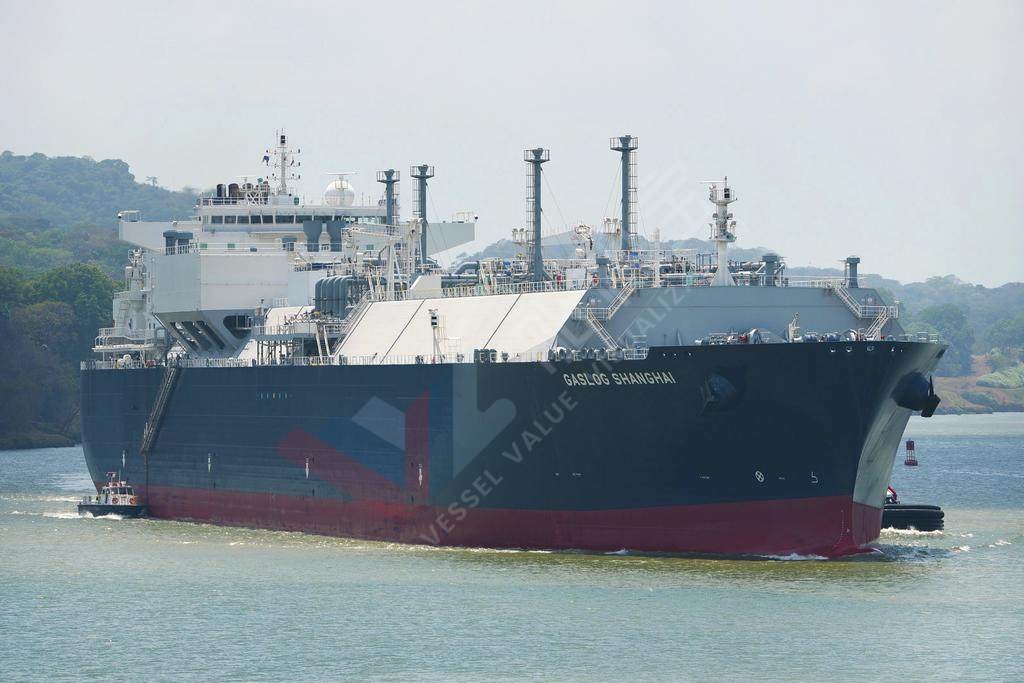
GasLog Shanghai hit while leaving the Gulf
According to the latest maritime security alert issued by Vanguard, the Bermuda-flagged LNG carrier GasLog Shanghai, IMO 9600528, was struck by an unidentified projectile at approximately 23:30 UTC on 31 July.
The incident occurred around 11 nautical miles northeast of Limah, Oman, while the vessel was transiting eastbound through the Strait of Hormuz.
Vanguard said the projectile struck the port-side engine-room area and caused a fire. The crew subsequently extinguished the blaze, but the vessel suffered a blackout and was reported to have no propulsion.
All crew members were reported safe. The Omani Coast Guard was informed and requested to provide assistance.
The United Kingdom Maritime Trade Operations office also confirmed that a merchant vessel had been struck by an unidentified projectile in the Strait of Hormuz and that regional coastguard authorities were responding.
Public vessel information identifies GasLog Shanghai as a 2013-built LNG carrier with a capacity of approximately 155,000 cubic metres. The ship had recently called at ports in Qatar and Kuwait and was sailing eastbound out of the Gulf when the incident occurred.
Its publicly visible AIS signal had already been absent for more than a day. This is consistent with the growing number of vessels reducing their electronic visibility while operating in high-risk Middle Eastern waters.
No reliable information has yet established the type or origin of the projectile, and no group has publicly claimed responsibility. Attribution should therefore remain cautious until further evidence becomes available.
Another tanker narrowly escaped 90 minutes earlier
The attack on GasLog Shanghai was preceded by another incident in the same wider area.
According to Vanguard, a Liberia-flagged tanker was transiting westbound through the Strait of Hormuz at approximately 22:06 UTC on 31 July when an unidentified projectile landed in the water about five metres from its starboard quarter.
The vessel was approximately 21 nautical miles northeast of Khasab, Oman.
The master reported that the crew heard an explosion and observed flames on the water. The ship was not struck, no damage was reported and all crew members were safe.
UKMTO described the incident as a large splash and explosion in close proximity to the vessel.
The two events occurred within roughly 90 minutes and involved ships travelling in opposite directions. This suggests that the threat was not confined to one specific voyage, direction of travel or isolated location.
Second GasLog LNG carrier involved in three days
The GasLog Shanghai incident came only three days after another GasLog LNG carrier became caught up in a suspected drone attack at Damietta.
On 29 July, a fire broke out aboard two gas-related vessels at the Egyptian Mediterranean port. Egyptian authorities subsequently confirmed that the incident had been caused by a drone attack rather than an ordinary industrial accident.
According to information attributed to market and security sources, the drone first struck Energos Winter, an FSRU controlled by US-based Energos Infrastructure. The resulting fire then spread to the LNG carrier GasLog Salem, which was berthed nearby.
Both fires were extinguished and no casualties were reported.
The distinction between the two incidents is important.
Current public information does not establish that GasLog Salem was itself the drone’s direct target. The vessel appears to have been affected after the fire spread from the neighbouring FSRU.
GasLog Shanghai, by contrast, was reportedly struck directly in the engine-room area and subsequently lost electrical power and propulsion.
Even with that distinction, two GasLog LNG carriers being involved in separate attacks within three days represents an unusually concentrated security exposure for one operator.
One incident in port, the other at the world’s most important energy chokepoint
The geographical combination of the two incidents is more significant than the damage to either vessel viewed in isolation.
Damietta is located on Egypt’s Mediterranean coast, close to the northern approaches to the Suez Canal. It plays an important role in Egypt’s LNG receiving capacity and regional gas distribution system.
As security risks increased around Hormuz and the Red Sea, eastern Mediterranean ports and terminals were increasingly viewed as part of the alternative energy logistics network.
The attack on Energos Winter, and the fire that affected GasLog Salem, shows that LNG carriers may remain exposed even after they have entered port and completed berthing operations. The risk has moved from open-sea navigation into port basins and energy infrastructure.
The Strait of Hormuz carries even greater strategic importance.
The waterway connects the Persian Gulf with the Gulf of Oman and is essential to Qatar’s LNG exports, UAE and Saudi crude flows, and a substantial share of the Gulf region’s LPG and refined-product trade.
Commercial traffic through the strait has fallen sharply during the current crisis. Some oil and LNG carriers have transited with AIS switched off, while other owners have delayed voyages pending government coordination, approved routes, insurance arrangements and clearer security guarantees.
Against this background, the direct disabling of an LNG carrier could further undermine confidence in emerging “safe passage” arrangements.
An engine-room hit creates risks beyond the initial fire
From a marine-safety perspective, the most serious consequence of the GasLog Shanghai attack may be the reported loss of propulsion.
The Strait of Hormuz is a narrow and heavily constrained waterway with defined traffic-separation routes, complex naval activity and significant volumes of energy shipping.
An LNG carrier approximately 285 metres long losing power near the strait could face several secondary hazards, including drifting, collision, grounding and obstruction of the navigational channel.
LNG carriers are high-value vessels operating under demanding safety requirements. Even when cargo tanks are not directly affected, damage to the engine room and electrical systems can have implications for ventilation, firefighting, auxiliary power, cargo management and emergency manoeuvring.
The successful extinguishing of the fire and the safety of all crew members are the most positive elements reported so far.
Attention will now turn to whether the vessel can restore power, whether towage assistance is required, the extent of the engine-room damage and the condition of the cargo-containment and supporting systems.
A chokepoint does not need to close to disrupt trade
The latest incident reinforces a central lesson of the current crisis: a strategic waterway does not need to be physically closed to become commercially dysfunctional.
A limited number of successful or attempted attacks can be enough to trigger higher war-risk premiums, tighter insurance conditions and more restrictive chartering decisions.
Shipowners may demand additional compensation. Charterers, banks and cargo interests may decline to approve voyages. Crews may also become unwilling to enter the affected area without further guarantees.
The result is a route that remains technically open but has sharply reduced commercial availability.
Recent adjustments by the London insurance market have already expanded listed high-risk areas around the Middle East. War-risk premiums for some Red Sea and Gulf voyages have risen significantly, while the combination of projectile attacks, administrative interception and electronic interference has made voyage planning increasingly complex.
LNG shipping faces a particularly difficult trade-off
The implications for LNG shipping are more complicated than a straightforward rise in freight rates.
LNG trades are commonly supported by long-term contracts, dedicated vessels, fixed loading programmes, specialised terminals and financing structures tied to specific projects.
When a critical chokepoint becomes persistently unstable, cargo owners cannot always switch routes or vessels as easily as in more flexible commodity trades.
If Qatar and the UAE remain unable to export LNG at normal levels, Asian and European buyers may seek more cargoes from the United States and other Atlantic Basin suppliers. Longer voyages would increase tonne-mile demand and absorb more LNG carrier capacity.
At the same time, if fewer Gulf cargoes are physically available for shipment, the volume of transportation demand could decline.
The LNG shipping market may therefore face two opposing forces: rising security premiums and longer alternative voyages on one side, and fewer available Gulf cargoes on the other.
The GasLog incidents reflect a wider LNG supply-chain threat
The events involving GasLog Salem and GasLog Shanghai extend beyond the circumstances of one shipowner.
Different parts of the LNG supply chain are now exposed simultaneously.
Loading ports may face military disruption. Ships transiting chokepoints may encounter projectiles or administrative interception. Receiving terminals and FSRUs may also become targets. Insurance, financing, crewing and charter-party arrangements are consequently being placed under greater pressure.
Owners assessing Middle East LNG voyages can no longer focus solely on the few hours required to transit the Strait of Hormuz.
Risk assessment must now cover the complete chain, including waiting at the loading terminal, passage through the strait, the long-haul voyage and arrival at the receiving port.
For GasLog, the immediate issues are the technical condition, off-hire exposure and contractual status of the two vessels.
For the wider LNG shipping industry, the larger question is whether existing insurance, chartering and fleet-deployment structures remain adequate when both ports and sea lanes can no longer be treated as comparatively safe operating environments.
Hormuz enters a low-traffic, high-consequence phase
The Strait of Hormuz remains open, and selected oil and LNG carriers continue to pass under government-backed or specially coordinated arrangements.
The attack on GasLog Shanghai, however, shows that limited traffic does not equal reduced danger.
The strait is increasingly operating under a low-traffic, high-consequence model: fewer vessels are transiting, but every incident has an amplified effect on insurance pricing, energy markets and commercial confidence.
The industry will now be watching whether GasLog Shanghai can restore propulsion, whether Oman arranges towage or escort assistance, whether similar incidents are reported and whether insurers impose further restrictions.
The most important question is how other LNG owners respond.
Should operators begin collectively delaying or refusing Gulf voyages, the Strait of Hormuz could return to a state of effective commercial paralysis even while remaining physically open.
When an LNG carrier can be struck in its engine room and left without propulsion while passing through a supposedly open waterway, “open” is no longer an adequate description of the real operating environment.


READ MORE
 Safety
Engine Room Fire Epidemic Prompts Global Safety Alert After Qingdao Shipyard Tragedy
 Safety
Major Collision Off India: 21 Crew Evacuated After KMAX EMPEROR Suffers Heavy Damage
 Safety
Houthis Seize Mocha as Bab el-Mandeb Risks Rise — but Signal “Safe Passage” for Non-Saudi Shipping
 Safety
Saudi pipeline attack exposes limits of Hormuz bypass strategy
 Safety
Shipping’s New Risk Equation: Flexibility Becomes the Premium Asset
 Safety
25 Killed in Fire Aboard Ocean Melody at Qingdao Beihai Shipyard
 Safety
Hormuz Crisis Exposes Shipping’s Three Fault Lines. Shipping Leaders Confront the Lessons of the Hormuz Crisis
 Safety
Forged PSC Follow-Up Inspection Leads to Vessel Detention and Fines
 Safety
Two Tankers Collide Off Yangtze River Estuary
 Safety