


CMES Approves 10-Vessel Newbuilding Plan, Securing 2028–2029 Delivery Slots
Five Aframax tankers, four 1,800-TEU feeder ships and one 210,000-dwt Newcastlemax added to fleet renewal pipeline
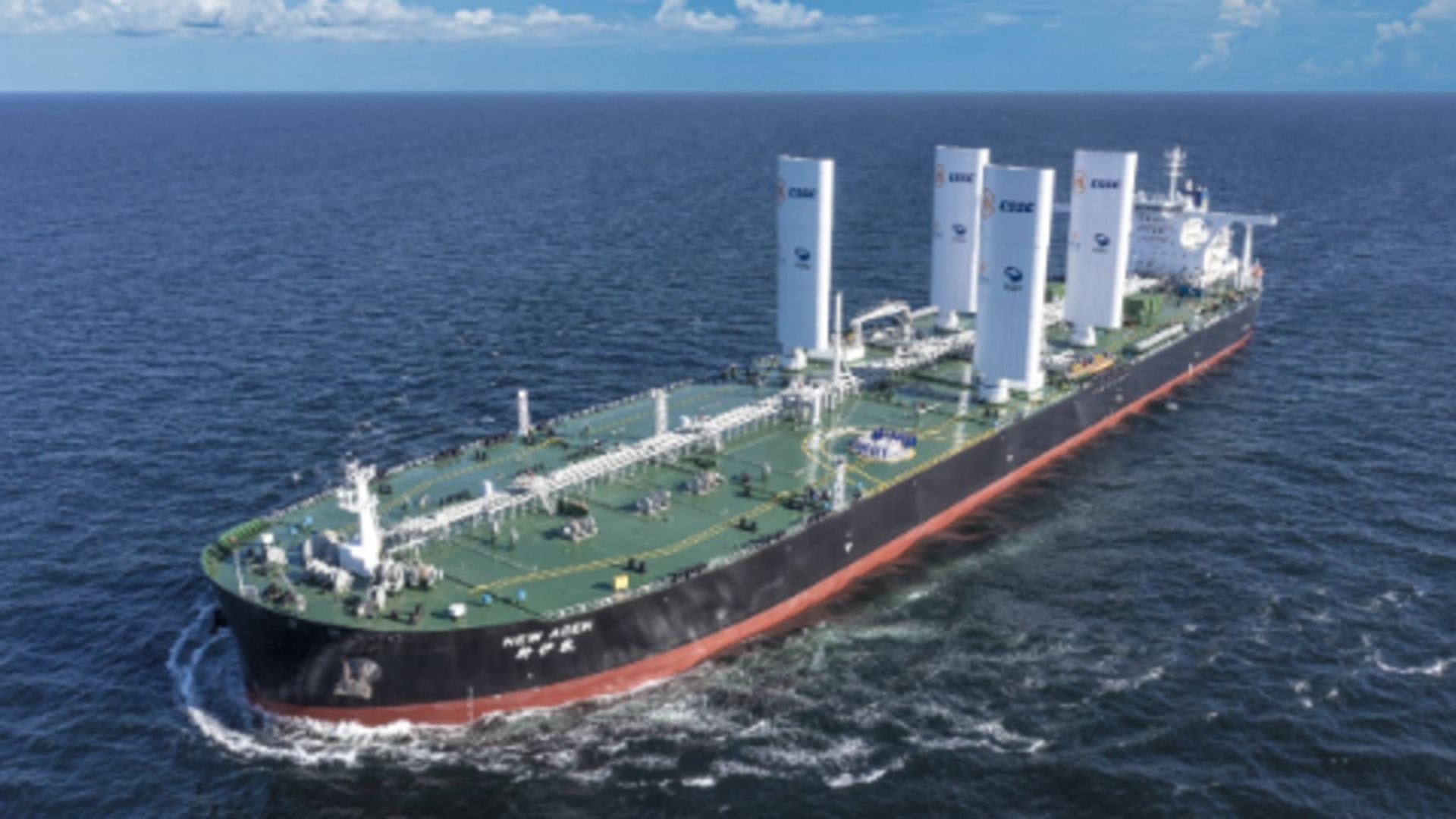
China Merchants Energy Shipping Co., Ltd. (CMES) has approved a new round of fleet investment covering 10 vessels across the tanker, container shipping and dry bulk segments.
At a board meeting held on 10 July, the Shanghai-listed shipping group approved plans to build five Aframax tankers, four 1,800-TEU feeder containerships and one 210,000-dwt Newcastlemax bulk carrier.
Based on the delivery schedules disclosed so far, the vessels are expected to enter service between 2028 and 2029, adding to a growing newbuilding pipeline that already includes VLCCs, shuttle tankers and several classes of containerships.
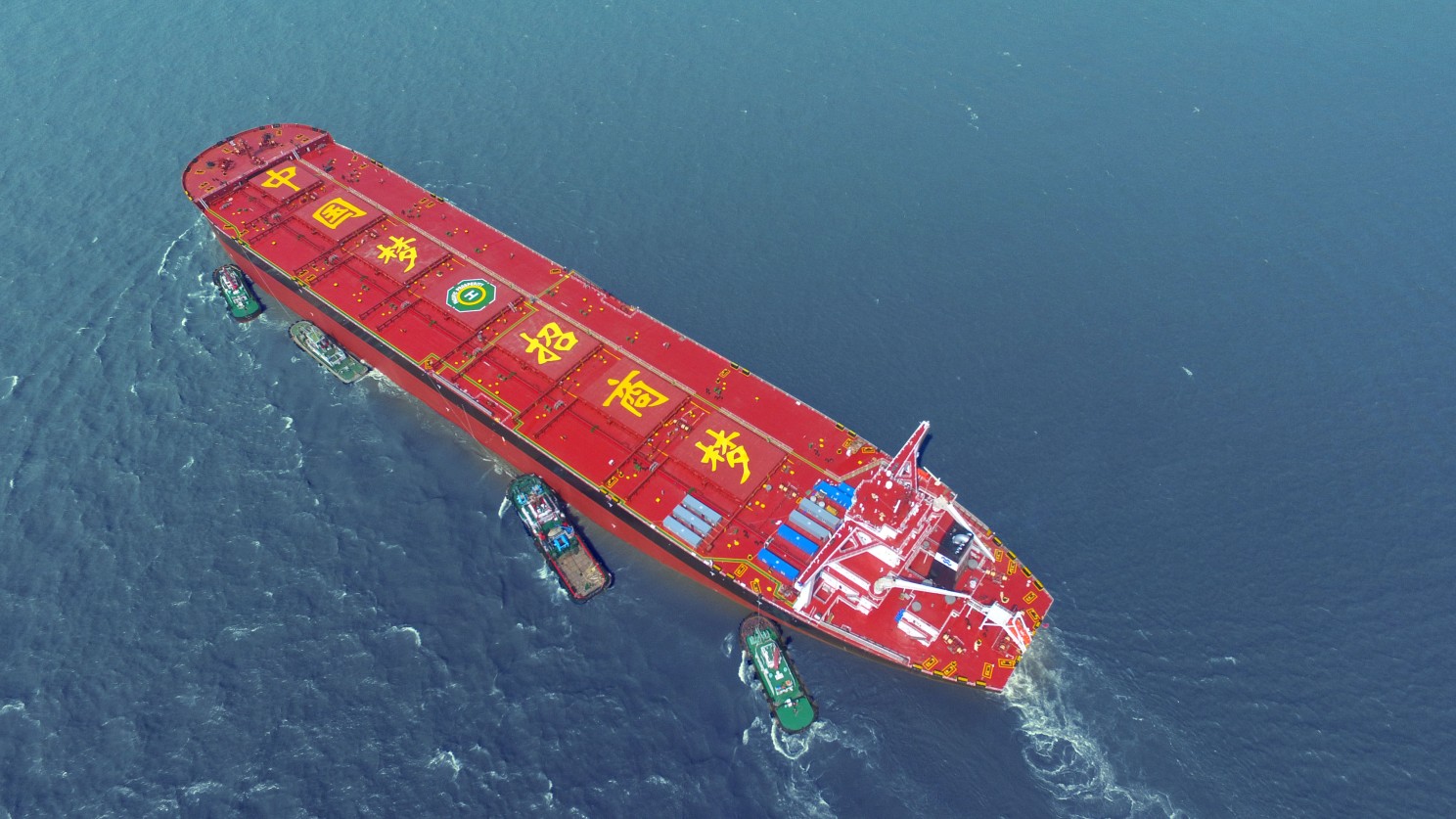
Five Aframax tankers planned at DSIC
The largest part of the latest programme is a series of five new-generation, energy-efficient Aframax tankers to be built by Dalian Shipbuilding Industry Co., Ltd. (DSIC).
The vessels will be equipped with exhaust gas cleaning systems and shaft generators, with deliveries scheduled to begin in 2029.
CMES said the investment would support the continued renewal and optimisation of its tanker fleet. The ships are also intended to provide capacity for an Aframax pool that CMES plans to establish with a leading international oil company.
The identity of the oil company, the contract value and the full delivery schedule have yet to be disclosed.
The planned pool is a significant element of the project. Pooling arrangements allow vessels to be marketed and deployed as a larger commercial fleet, improving cargo coverage, scheduling flexibility and fleet utilisation.
For CMES, the addition of Aframax tonnage will broaden a tanker portfolio that has traditionally been led by VLCCs. Aframaxes are widely deployed in regional crude oil trades, shorter-haul inter-regional routes and selected fuel oil and petroleum product markets.
The ships would therefore give the company greater exposure to regional oil flows while expanding its commercial options across different vessel sizes and trading patterns.
Up to RMB1.51bn for five container and dry bulk vessels
In a separate related-party transaction announcement, CMES disclosed plans to invest up to RMB1.51bn, equivalent to approximately $210m, in four 1,800-TEU containerships and one 210,000-dwt Newcastlemax bulk carrier.
The vessels are expected to be built by yards affiliated with China Merchants’ shipbuilding business and delivered in 2028.
CMES intends to establish overseas single-ship companies through its wholly owned subsidiaries to enter into the shipbuilding agreements.
The Newcastlemax will be fitted with a scrubber and shaft generator and will use a high-performance antifouling coating. These features are intended to reduce fuel consumption, hull resistance and long-term operating costs.
The four feeder containerships will support CMES’s regional container shipping operations through China Merchants’ subsidiary Sinotrans Container Lines.
The 1,800-TEU design offers flexibility for coastal, short-sea and intra-Asia services, where port restrictions and cargo volumes often favour smaller and more adaptable vessels.
CMES said it had compared proposals from several shipyards, taking into account pricing, delivery slots, technical specifications, payment terms and construction capability. The selected China Merchants-affiliated yards offered competitive delivery timing and overall commercial terms.
The final price for the five vessels has yet to be agreed, and the shipbuilding contracts had not been signed as of the announcement date.
As the transaction involves companies under the common control of China Merchants Group, it is classified as a related-party transaction. The proposal has received board approval but remains subject to consideration at CMES’s first extraordinary shareholders’ meeting of 2026.
The RMB1.51bn investment ceiling applies only to the four feeder containerships and the Newcastlemax. It does not include the five Aframax tankers.
Container newbuilding pipeline could rise to 16 vessels
The latest four 1,800-TEU vessels would add to a 12-ship container newbuilding programme already announced by Sinotrans Container Lines.
That earlier programme includes:
Four 8,200-TEU containerships at China Merchants Heavy Industry (Jiangsu)
Four 3,000-TEU containerships at China Merchants Jinling Shipyard
Four 1,800-TEU feeder vessels at Wuhan Qingshan Shipyard
If the latest four-vessel project proceeds to contract, CMES will have disclosed 16 container newbuildings during 2026, spanning the 1,800-TEU, 3,000-TEU and 8,200-TEU segments.
The range of ship sizes reflects a tiered fleet strategy.
The 1,800-TEU ships are suited to feeder and regional services. The 3,000-TEU vessels can serve intra-Asia and medium-haul routes, while the 8,200-TEU units provide additional capacity for larger regional and intermediate trades.
The investment programme should strengthen Sinotrans Container Lines’ owned fleet, reduce its average vessel age and provide greater flexibility in network deployment as the ships are delivered.
Tanker investment remains the main expansion driver
The five Aframax vessels follow a much larger VLCC order placed by CMES earlier this year.
In March, the company’s Hong Kong-based subsidiary, Associated Maritime Company (Hong Kong) Limited, signed contracts with DSIC for 10 VLCCs at a total price of approximately RMB8.57bn.
Those vessels are scheduled for delivery between 2028 and 2030.
CMES has also signed a contract with DSIC for one firm plus one optional 154,000-dwt DP2 shuttle tanker. The firm vessel is expected to be delivered in 2028.
Shuttle tankers are designed to transport crude oil from offshore production facilities to onshore terminals or conventional tankers. They require advanced dynamic positioning, cargo handling and safety systems, particularly when operating in harsh offshore environments.
The combination of VLCCs, Aframaxes and shuttle tankers will give CMES a more diversified oil shipping platform.
The VLCCs will remain central to long-haul crude transportation. The Aframaxes will add flexibility in regional and shorter-haul markets, while the shuttle tanker project will extend the company’s presence in specialised offshore oil logistics.
Earnings growth supports higher capital expenditure
CMES’s latest fleet investments come as the company expects a sharp increase in earnings for the first half of 2026.
According to its preliminary earnings announcement, the company expects first-half revenue of between RMB18.7bn and RMB20.6bn, representing year-on-year growth of 48% to 63%.
Profit before tax is forecast at RMB7.7bn to RMB8.6bn, an increase of 208% to 244%, while net profit attributable to shareholders is expected to reach RMB6.6bn to RMB7.3bn, up 214% to 248%.
The improvement has been driven primarily by a strong international tanker market, with spot earnings on several routes reaching historically high levels.
Dry bulk fundamentals have also improved, while the company’s container shipping and vehicle transportation businesses have contributed additional earnings support.
The stronger financial performance gives CMES greater capacity to fund newbuilding instalments, combine internal resources with external financing and secure delivery slots at major Chinese yards.
A concentrated delivery cycle from 2028
CMES’s recent announcements show that the company is preparing for a significant fleet renewal cycle from 2028 onwards.
Its newbuilding pipeline now covers three major business areas.
The tanker programme includes VLCCs, Aframaxes and DP2 shuttle tankers. The dry bulk investment includes additional Newcastlemax capacity, while the container fleet is being expanded across feeder, regional and larger intermediate vessel sizes.
Energy-saving equipment is also becoming a standard feature across the latest projects. Scrubbers, shaft generators and advanced antifouling coatings feature prominently in the disclosed specifications, reflecting a continued focus on fuel efficiency, operating cost control and regulatory compliance.
Most of the vessels announced so far remain conventionally fuelled, although their efficiency specifications are significantly higher than those of older tonnage they may eventually replace.
CMES currently operates and manages more than 360 vessels with aggregate capacity exceeding 50m dwt, according to company information. Its VLCC and very large ore carrier fleets rank among the largest globally, while the group also maintains substantial LNG, dry bulk, container and vehicle shipping operations.
As the newly ordered and proposed vessels begin arriving between 2028 and 2030, CMES will enter a concentrated phase of fleet renewal across several markets.
The programme will increase its owned capacity, improve the age and efficiency profile of the fleet and provide a broader range of assets for long-haul, regional and specialised shipping services.

READ MORE
 Shipbuilding
Yichang Changyun plans RMB120m inland bulker programme
 Shipbuilding
Steel Giant Shagang Eyes Shipbuilding as a Booming Market Draws Industrial Capital
 Shipbuilding
Hengli Secures 12 Tanker Orders, Retaining World’s Largest VLCC Orderbook
 Shipbuilding
Amid China’s Shipbuilding Boom, a State-Owned Yard Quietly Enters Liquidation
 Shipbuilding
Hengli Signs 11 VLAC Contracts in One Week
 Shipbuilding
China ZWI Enters Ocean Shipping with VLGC Acquisition and Chemical Tanker Newbuild Project
 Shipbuilding
World’s First 325,000-DWT Methanol Dual-Fuel Ore Carrier Delivered
 Shipbuilding
CIMC Raffles Extends NOCC Car Carrier Programme to 2030
 Shipbuilding
Grimaldi Advances New ConRo and Multipurpose Projects as Fleet Renewal Continues
 Shipbuilding