


Ships Are No Longer Just Ships
Why vessel assets are being revalued in an age of disruption

For years, shipping investors looked at a vessel through a familiar set of numbers: freight rates, age, fuel consumption, asset price, residual value and where the market stood in the cycle.
That view still matters. But it is no longer enough.
A ship is no longer just a transport tool or a cyclical asset. In a world shaped by war risks, sanctions, chokepoint disruptions, energy security concerns and supply chain fragmentation, the strategic value of owning or controlling ships is rising fast.
For shipping groups, commodity traders, industrial companies and governments, the question is no longer simply: “Can this ship make money?”
It is also: “Can this ship move critical cargo when the market is under stress? Can it support customers when routes are disrupted? Can it keep energy, food, raw materials and industrial supply chains moving when normal assumptions break down?”
That is why the global appetite for newbuildings remains strong. It is why secondhand vessel transactions are still active. It is also why major shipping families, commodity traders and state-backed players are once again paying close attention to physical maritime assets.
The future value of ships cannot be judged only by the old metrics.
Capacity is power
The Covid-19 supply chain crisis was a painful reminder of one basic truth: whoever controls ships controls access to capacity.
During 2020 and 2021, many shippers had cargo, orders and customers. What they did not have was reliable space. Container slots became scarce, ports were congested, schedules collapsed and empty boxes were in the wrong places.
In that market, vessel capacity became a form of bargaining power. Container lines earned record profits. Cargo owners with long-term contracts, stable allocations or stronger logistics control were better protected. Those relying heavily on the spot market faced high freight costs, delivery delays and in some cases lost business.
The same principle has reappeared in the Red Sea crisis. When vessels rerouted around the Cape of Good Hope, voyage distances increased and effective capacity tightened. The result was higher rates, longer transit times and greater uncertainty.
The Strait of Hormuz presents the same issue in the energy market. If the safety of a major chokepoint is questioned, tanker availability, insurance, fuel supply and crew safety all become strategic concerns.
These events show that, in a crisis, the scarce asset is often not cargo. It is not even the port. It is the available, compliant and deployable ship.
In normal times, ships move goods. In a crisis, ships create optionality.
“Ships are the new chips”
At Singapore Maritime Week this year, BW Group chairman Andreas Sohmen-Pao made a striking comparison: ships are becoming the new chips.
The point is not that ships and semiconductors are the same. It is that both sit at the base of critical systems.
Chips support modern manufacturing, communications, defence and technology. Ships support energy flows, food security, industrial production and global trade. Without ships, crude oil cannot move at scale, grain cannot reliably reach import-dependent economies, cars cannot reach overseas markets and raw materials cannot feed factories.
Shipping used to be treated as a background service. As long as globalisation worked smoothly, the assumption was that ships would be available, sea lanes would remain open, ports would function and trade rules would remain broadly predictable.
That assumption is weaker today.
The Red Sea crisis, the war in Ukraine, the shadow fleet, sanctions enforcement, port restrictions, war-risk insurance and bunker supply all point in the same direction. The maritime system is still global, but it is becoming more fragmented and more political.
In that environment, vessel assets are being revalued.
A.P. Moller Holding and Ocean Yield: buying a maritime cash-flow platform
One of the clearest recent examples is A.P. Moller Holding’s agreement to acquire Ocean Yield from funds managed by KKR.
The buyer is important. This is not Maersk Line buying ships. A.P. Moller Holding is the parent company of the A.P. Moller Group and the long-term investment platform of the Maersk family and the A.P. Moller Foundation.
Ocean Yield is a ship-leasing platform with interests in more than 70 modern vessels across LNG carriers, gas carriers, containerships, crude tankers, product tankers, chemical tankers and dry bulk vessels. During KKR’s ownership, it invested more than $3bn in fleet growth and renewal, while increasing long-term contracted revenue backlog to more than $5bn.
A.P. Moller Holding is not simply buying a fleet. It is buying a diversified maritime asset platform backed by long-term charters, multiple vessel types, creditworthy counterparties and visible cash flow.
That matters because ship leasing platforms sit between capital, shipowners, charterers and cargo flows. They turn physical ships into structured, long-term maritime exposure.
For long-term capital, this is attractive. For a maritime group, it is also strategic.
The Ocean Yield deal shows that leading shipping family capital is looking beyond short-cycle freight exposure. Ships are being placed inside a wider framework that includes cash-flow stability, industrial positioning, energy transition optionality and supply chain resilience.
MSC: scale, independence and control
MSC offers another example.
Over the past several years, MSC has aggressively expanded its containership fleet through secondhand acquisitions and newbuilding orders. After overtaking Maersk to become the world’s largest container line in 2022, it continued growing. MSC has now reached the 1,000-vessel milestone and its capacity has moved beyond the 7m teu level.
MSC chief executive Søren Toft recently highlighted the significance of that milestone. The number is important, but the deeper message is about network control.
A 1,000-vessel fleet gives MSC a truly global and independent network. It gives the company more room to serve customers, redeploy capacity and respond to changing trade conditions. In an unpredictable geopolitical environment, Toft also said MSC would continue to invest in new vessels, terminals and logistics infrastructure.
That is the language of resilience, not just scale.
MSC’s recent expansion is also no longer limited to containers. Through SAS Shipping Agencies Services, the group has moved to acquire a 50% stake in South Korea’s Sinokor Maritime, giving it joint control with existing shareholder Ga-Hyun Chung. The deal gives MSC exposure to a fast-growing VLCC platform.
Sinokor has been one of the most active names in the VLCC secondhand market. Through this transaction, the Aponte family gains an entry point into large-scale crude oil transportation.
That should not be viewed as a simple tanker play.
MSC has also acquired Gram Car Carriers, a car carrier tonnage provider, and bought control of Wilson Sons, the Brazilian port, towage and maritime services group. Containerships, car carriers, VLCCs, terminals, towage and logistics infrastructure are increasingly part of the same strategic map.
For MSC, ships and maritime nodes are not separate assets. They are the foundations of network control.
Containerships support global consumer and industrial supply chains. Car carriers support vehicle exports. VLCCs are tied to energy flows. Ports and towage are critical logistics nodes. Taken together, they give a shipping group more options when markets are disrupted.
In an uncertain world, physical control matters.
Trafigura: ships and ports are becoming strategic
The same shift is visible in commodity trading.
In a recent interview with Xinde Marine News, Andrea Olivi, Global Head of Shipping at Trafigura, described how the company’s shipping business has changed over the past decade. When he joined Trafigura, the company controlled fewer than 100 vessels. Today, it controls around 450 to 500 vessels across wet and dry shipping. More than 60% of its shipping business now comes from third-party clients, including Asian refineries, other trading houses and national oil companies in the Middle East and North Africa.
That is a significant evolution. Trafigura’s shipping function has moved from an internal support role into a global shipping platform.
Asked about the idea that “ships are the new chips”, Olivi agreed with the direction of the argument and added ports to the equation. In his view, both ships and ports are becoming increasingly strategic.
This is important. For a commodity trader, ships are not isolated assets. They are connected to cargo flows, customer commitments, risk management and market access.
Trafigura’s move into VLCC newbuildings illustrates the point. Olivi has been clear that Trafigura does not aim to become a traditional shipowner. But when the right opportunity appears, the company is willing to own assets. For a platform already controlling around 500 vessels, owning a small percentage of the fleet can provide meaningful flexibility.
The VLCC logic is also structural.
New crude oil growth is increasingly coming from regions such as Guyana, Venezuela, Argentina and West Africa. These sources are farther from Asian demand centres, supporting tonne-mile growth. At the same time, the VLCC fleet is ageing and some vessels linked to sanctioned or shadow-fleet trades will eventually need to leave the mainstream market.
For Trafigura, this is not simply a short-term tanker bet. It is about controlling freight capacity in a changing energy trade map.
Olivi also made a key distinction: control does not always mean ownership. It can come through owned ships, long-term time charters, operating control, leasing structures or other arrangements. The real issue is whether a company can access and deploy ships when it matters most.
That point is highly relevant to Chinese leasing. Olivi described Chinese leasing as a major success story and noted that many of Trafigura’s shipping asset transactions have involved Chinese leasing. As vessel control becomes more strategic, leasing is no longer just a financing tool. It is becoming part of the architecture of global tonnage control.
The ZIM case: national security enters the shipping transaction
The proposed acquisition of ZIM by Hapag-Lloyd shows the same issue from a government perspective.
In February 2026, Hapag-Lloyd and ZIM announced a transaction under which Hapag-Lloyd would acquire ZIM for $35 per share in cash, valuing the company at about $4.2bn. The structure also included the creation of a new Israeli company, New ZIM, which would take over part of ZIM’s business and assume obligations linked to Israel’s golden share.
On paper, this is a liner-company transaction.
In Israel, however, it has become a national security debate.
According to Israeli media reports, the Ministry of Defense has formally opposed the current structure. Its concern is that New ZIM may have a much narrower network, potentially focused mainly on the Mediterranean, with reduced service to the United States and uncertainty over Far East routes.
The defence logic is direct. Israel depends heavily on seaborne trade. Direct maritime links to the United States and Asia are strategically important, especially in wartime or emergency conditions, when military equipment and other critical supplies may need to be imported quickly and reliably.
Other Israeli ministries and agencies have also reportedly raised concerns, citing maritime independence and supply chain security. Israel’s high dependence on seaborne imports makes the ownership and network structure of a major shipping company a matter of national interest.
This is the real meaning of a golden share. It gives the state a final say when control of a key transport company may affect national security.
The ZIM case shows that fleets and liner networks are no longer viewed only as commercial assets. For countries dependent on maritime trade, they are strategic infrastructure.
Bunkering is becoming strategic too
The boundary of maritime assets is also widening.
Ships need fuel. If a ship cannot bunker, it cannot sail. The recent instability around the Strait of Hormuz has reminded the industry that bunkering is not simply a procurement function. It is part of operational security.
Olivi made this point clearly in the Trafigura interview. A crisis can lead to fuel shortages, higher bunker premiums and greater quality risk. For a ship earning strong daily rates, off-spec fuel that forces a vessel to stop and de-bunker can become a major commercial loss.
That is why bunkering platforms are becoming more important.
TFG Marine, backed by Trafigura, Frontline and CMB.TECH, is one example. Such platforms offer more than fuel supply. They provide scale, transparency, quality control and physical reliability.
In a multi-fuel future, the importance of these platforms will increase further. LNG, methanol, ammonia, biofuels and conventional fuels are likely to coexist for many years. The winners will be those able to provide reliable, compliant and traceable fuel supply across key regions.
In the old model, the central question was who controlled the ship. In the new model, the question is broader: who controls the ship, the port access, the fuel supply, the financing and the compliance framework?
Why newbuilding and secondhand markets remain hot
There are many traditional reasons why newbuilding and secondhand markets are active.
Many fleets are ageing. Environmental rules are pushing renewal. Recent high freight earnings have created cash for owners. Quality yard slots are scarce. The shadow fleet and future compliance pressure may reduce mainstream available tonnage.
All of that is true.
But another reason is becoming more important: companies and states are reassessing the strategic value of ships.
For shipowners, a newbuilding order is future capacity, future efficiency and future fuel optionality. For commodity traders, controlled tonnage is a supply chain tool. For energy companies, tankers and LNG carriers are tied to export and import security. For governments, strategic fleets are part of national resilience. For financial institutions, ships backed by long-term contracts are investable cash-flow assets.
The secondhand market follows the same logic. Newbuildings take years to deliver. Secondhand ships provide immediate control. For buyers that need fast exposure to a vessel type, route system or energy transport segment, secondhand tonnage is the quickest route.
That is why VLCCs, PCTCs, product tankers, LNG carriers and some dry bulk assets have attracted strong interest. The market is not only buying freight upside. It is buying control.
China’s opportunity
This shift matters greatly for China.
China is one of the world’s largest trading nations and the world’s largest shipbuilding country. It has massive seaborne demand for energy, grain, iron ore, vehicles, equipment and industrial goods. It also has a leading port system, a growing shipping finance and leasing sector, and increasingly competitive shipyards.
The question for China is no longer only whether it can build ships or win orders. It is whether shipbuilding, vessel ownership, cargo control, leasing finance, port networks, fuel supply and seafarer capability can be connected into a more resilient maritime system.
The competition is moving from company-level asset ownership to system-level capability.
Whoever controls cargo, ships, finance, yards, ports and fuel nodes will have stronger resilience in a crisis.
This is why concepts such as national cargo carried by national fleets, national ships built by national yards, shipping finance and maritime power are becoming more relevant again. They all point to the same issue: critical maritime capability needs a solid base.
Strategic value does not remove cycle risk
There is one important warning.
The strategic value of ships is rising, but ships remain heavy assets. High newbuilding prices, long delivery schedules, uncertain fuel pathways and evolving regulations all create risk.
Olivi also warned that while the VLCC story looks strong over the next two years, the industry needs to watch the orderbook beyond 2030 and 2031. Fleet renewal is needed, but overbuilding remains a danger.
That discipline matters.
A valuable ship is not just a ship that exists. It needs cargo, customers, financing, compliance, energy efficiency, fuel optionality and an operating network. Without those elements, a vessel can still become a burden in a downcycle.
The next stage of competition will not be defined only by fleet size. It will be defined by the ability to organise vessel assets.
Ships, cargoes, charters, finance, ports, fuel and compliance need to work together.
The new value of ships
A.P. Moller Holding’s acquisition of Ocean Yield, MSC’s expansion into Sinokor and other maritime platforms, Trafigura’s growth in controlled tonnage, and BW Group’s “ships are the new chips” argument all point to the same trend.
Ships are moving from efficiency tools to security tools.
Their value is no longer determined only by day rates, age, fuel consumption and residual value. It also depends on whether they can be deployed when needed, whether they can enter core trades, whether they meet compliance requirements, whether they can secure fuel, whether they support long-term customers and whether they provide certainty when supply chains are under stress.
For companies, ships are commercial capability. For traders, they are performance capability. For energy groups, they are import and export capability. For states, they are supply chain security capability.
That is why newbuilding and secondhand markets remain active. The market is buying more than capacity. It is buying optionality, resilience and strategic room to manoeuvre.
In the future, the truly scarce asset may not be a temporary freight-rate peak. It may be a high-quality ship that is controllable, compliant, modern, financeable and deployable.
Future ships can no longer be judged through the old lens.

READ MORE
 Sustainability
Singapore Offers Up to S$250,000 for Electric Harbour Craft
 Sustainability
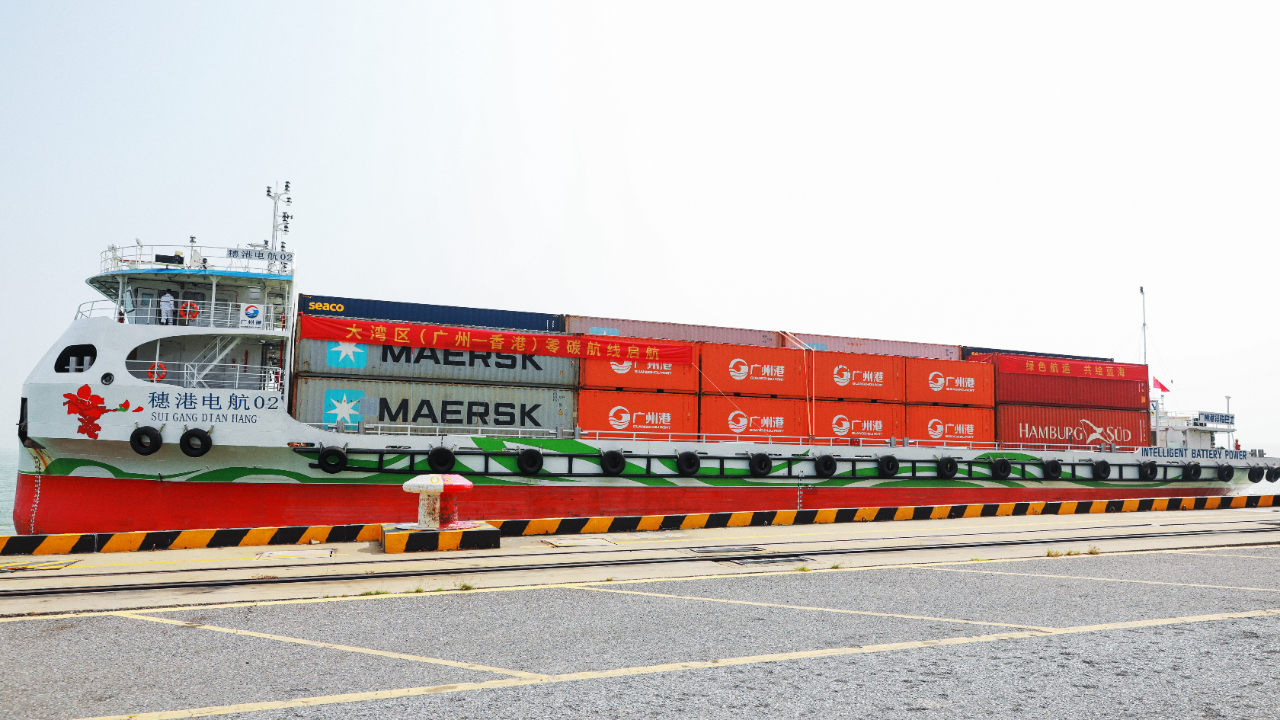
Greater Bay Area Launches First Zero-Carbon Container Shipping Route Between Guangzhou and Hong Kong
 Sustainability
1000Ton! CMB.TECH in World First Commercial STS Green Ammonia Bunkering
 Sustainability
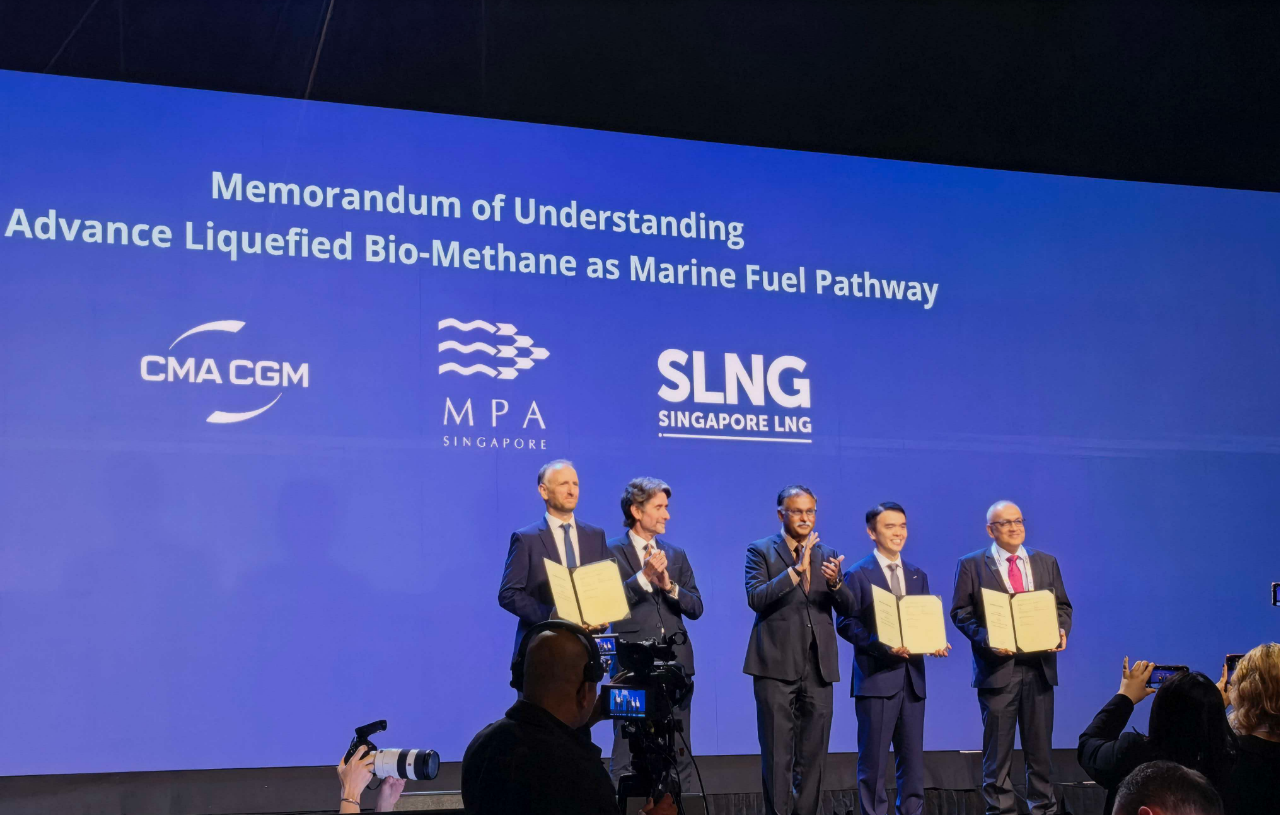
MPA, CMA CGM and SLNG Join Forces on Bio-LNG Bunkering
 Sustainability
China Sets 2028 Targets for Electric and Methanol-Powered Inland Vessels
 Sustainability
China Merchants Takes Delivery of Third Methanol Dual-Fuel Car Carrier
 Sustainability
Alexander Saverys :Green Ammonia Will Be Cheaper Than Diesel—Sooner Than You Think
 Sustainability
Beihai Delivers First Ammonia-Powered Bulker as Mineral Europa Sets Sail
 Sustainability
World's First Ammonia Dual-Fuel Bulker Delivered in China
 Sustainability