


WS 897! A Single VLCC Voyage Could Earn $30 Million: How Sinokor Capitalized on Persian Gulf Risks for an Astronomical Premium
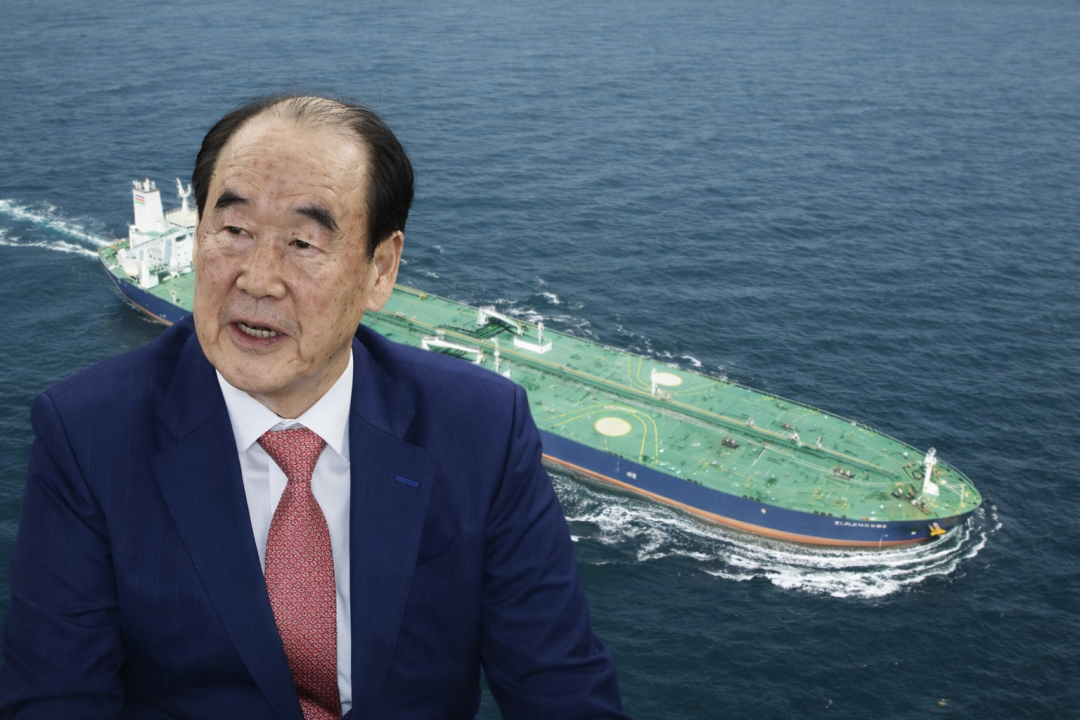

Just as the Strait of Hormuz experienced a temporary easing of tensions, the Persian Gulf VLCC (Very Large Crude Carrier) market struck first with an extreme, record-breaking price.
According toBloomberg, South Korean shipowner Sinokor has provisionally fixed a VLCC to load crude oil from the Persian Gulf for transport to India. The freight rate for this fixture hit a staggering WS 897, which is nearly nine times the Worldscale baseline rate.
Shipbrokers noted that this is one of the highest known freight levels recorded in the region this year. As the deal is still being finalized, specific laydays, buyers, and ports have not yet been disclosed. Sinokor has not responded to inquiries regarding the matter.
However, even with the final details pending, the figure WS 897 speaks volumes on its own. This is no ordinary tanker fixture; it is the perfect storm of Persian Gulf geopolitical risk, transit uncertainties in the Strait of Hormuz, a shortage of effective capacity, and immense shipowner bargaining power.
To put it bluntly: this single VLCC voyage could bring in roughly $30 million in gross revenue, pushing equivalent daily earnings into the million-dollar club.
What Exactly Does WS 897 Mean?
Worldscale (WS) is the standard freight index used in the tanker voyage charter market. It works by setting a baseline rate (WS 100) for different routes each year, with market fixtures quoted as a percentage of that baseline. Thus, WS 200 means double the baseline, and WS 897 means the freight rate is nearly 8.97 times the standard baseline.
According to brokers, this transaction uses the "Persian Gulf to Singapore" route as the pricing basis, even though the actual cargo is bound for India. While such "basis" arrangements are common in the tanker market, the real shocker is that the charterer willingly accepted a quote nearly nine times the baseline rate.

Doing the Math: $30 Million and Million-Dollar Daily Earnings
-
Total Freight: A standard VLCC carries about 2 million barrels of crude oil, roughly equivalent to 270,000 to 280,000 metric tons. Assuming the WS 100 baseline rate for the Persian Gulf-to-Singapore route is around $10 to $13 per ton, a WS 897 rate places the total freight for a single voyage between $25 million and $35 million, most likely landing right around $30 million.
-
Per-Barrel Cost: Broken down, this translates to an astounding $12 to $17 per barrel in transport costs. For a short-to-medium-haul Asian route, this is an extraordinarily extreme cost level.
-
Time Charter Equivalent (TCE): The daily returns are even more eye-popping. Based on a gross freight of $30 million, even after deducting bunker fuel, port fees, insurance, and other voyage expenses, the net income for the voyage could still reach $25 million to $28 million.
If measured by the standard Persian Gulf-to-Singapore round-trip duration of 25 to 30 days, the TCE for this VLCC would likely sit between $900,000 and $1.1 million per day.
However, if the ship actually executes the shorter Persian Gulf-to-India run while maintaining the Singapore basis rate, the voyage cycle shortens significantly. Assuming a full round-trip of 15 to 18 days, the daily equivalent earnings could skyrocket to the $1.5 million to $2 million per day range.
The Reality Check: In a normal market, a VLCC making $100,000 a day is a massive headline. Today, a single Persian Gulf fixture hitting the million-dollar daily mark proves that the market is no longer paying for mere transportation—it is paying for risk tolerance and guaranteed delivery.
The Persian Gulf Doesn't Lack Ships; It Lacks Ships That Dare to Go
On the surface, the Persian Gulf region isn't completely devoid of tonnage.

Bloomberg cited broker estimates showing that around 65 ballasting VLCCs could reach the Gulf of Oman within a week, with about 25 of them belonging to Sinokor. But this does not mean all these vessels can instantly be converted into available capacity.
With Hormuz risks far from fully resolved, a shipowner's willingness to enter the Persian Gulf depends on a complex web of variables:
-
For Shipowners: They must weigh security risks, war risk insurance premiums, underwriter willingness, crew arrangements, charterparty liabilities, sanctions compliance, and the uncertainty of safely exiting the Gulf.
-
For Charterers: They must evaluate loading windows, cargo title arrangements, port safety, and overall route viability.
Therefore, the real shortage in the current market is not the nominal number of VLCCs on paper, but rather the effective capacity—ships that charterers can actually lock down, whose owners are willing to shoulder the risk, and that can successfully load and exit the Gulf.
This explains why, even as transit through Hormuz shows signs of recovery, freight rates have spiked to extreme highs. An open channel does not equal zero risk. Seeing ships move on AIS does not mean the market has ample available capacity.
For charterers, the metric that matters isn't how many ships are nearby, but which specific ship is guaranteed to enter, guaranteed to load, and guaranteed to leave. WS 897 is the price of that certainty.
Big Move! Sinokor and MSC Partnership Surfaced
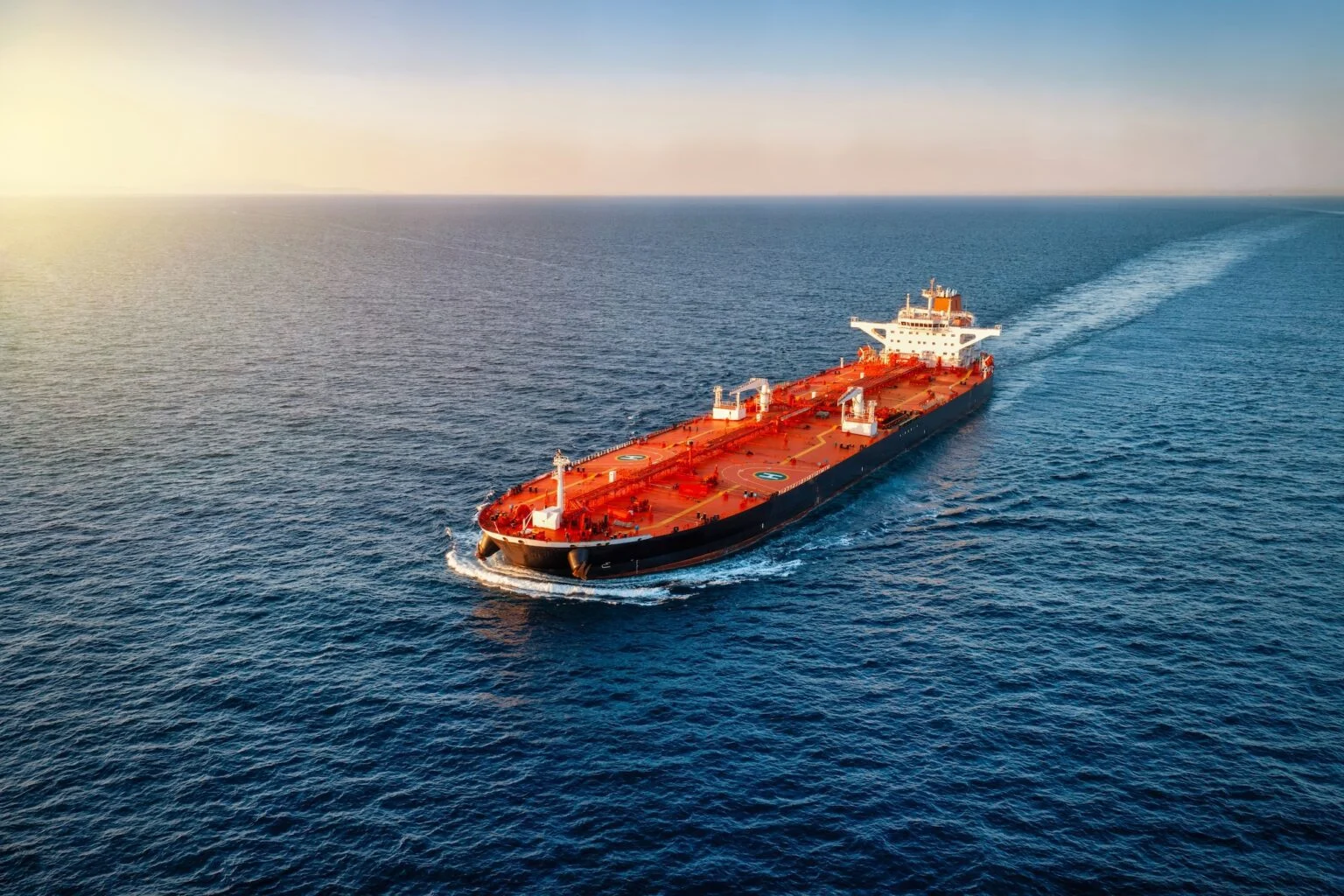
Since late last year, Sinokor has aggressively expanded its VLCC fleet through secondhand acquisitions and period charters. The company locked up a vast amount of modern VLCC capacity in a short window, maintaining a highly active presence across key markets like the Persian Gulf, the US Gulf, and Asia.
By locking down substantial VLCC tonnage early on, Sinokor gained significant marginal pricing power when regional capacity tightened.
In the tanker market, marginal capacity dictates the marginal price. When only a handful of shipowners are willing to deploy vessels into a high-risk zone, charterers have no choice but to pay a premium for certainty.
From this perspective, WS 897 is not a random, isolated outlier; it is the direct dividend of Sinokor’s aggressive expansion over the past few months. By securing operational control through buying and chartering ships, they successfully monetized that control during the Hormuz risk window.
This also explains why Sinokor's every move in the VLCC market is under a microscope right now. They are no longer just a standard player—they have become a dominant tonnage provider with clear market-moving influence in specific regions.
⚠️ High Risk, High Reward
Entering the Persian Gulf is about much more than just throwing out a high quote. It involves crew safety, insurance liabilities, sanctions compliance, charterparty execution, and emergency contingency plans. If the security situation deteriorates again, these astronomical returns will come with equally massive risk exposure.
In the short term, WS 897 will likely stand as the landmark benchmark for this specific Hormuz risk window. While it may not represent a long-term trend, it proves that before high-risk straits fully normalize, the tanker market can violently reprice effective capacity.
For shipowners, this is a window of staggering returns but extreme danger. For charterers, it is a stark alarm sounding across supply chain costs. And for the broader shipping market, it serves as a reality check: freedom of navigation and low-cost transit can no longer be treated as guaranteed business defaults.
In this shifting market environment, the sheer ability to execute a voyage safely, compliantly, and reliably has become a scarce commodity. And right now, the tanker market is repricing that commodity in cold, hard cash.


READ MORE
 Tankers
Transpetrol Makes LR1 Debut with Two 75,000-dwt Tankers at Yangzijiang
 Tankers
Nanjing Tanker Seeks Four More LR2s as Product Tanker Expansion Accelerates
 Tankers
Trafigura Moves Deeper into Shipowning as Volare Shipping Heads for an Oslo Listing
 Tankers
Tankers Are Earning $1 Million a Day. Why Shipowners Fear “World Peace”
 Tankers
$64,569 !!! Record ClarkSea Index Masks a Shipping Boom Built on Different Forces
 Tankers
Trump angin. US Shadow Fleet Law Raises New Risks for China’s Russian Oil Trade
 Tankers
Seven Months, $78 Million: George Procopiou Reaps Windfall on Hengli-Built VLCC
 Tankers
VLCCs top $1m a day — but what price is TD3C actually discovering?
 Tankers
Nearly $1 Billion: Dynacom Orders 8More Ships as Hengli Tops Global 2026 VLAC Orders
 Tankers