


George Economou,He Chose Shipping Over Mathematics — and Built a Shipping Empire
From DryShips to TMS: George Economou’s Shipping Capital Lesson
- “To succeed, you have to love what you do and devote yourself fully to it.”
- “Even today, only a small circle of people truly understand listed shipping companies.”
- “Anything can be turned into an opportunity, provided you react fast enough.”
- “If you want to score, you have to be on the field. Nobody scores from the sidelines. Once you are on the field, you have to accept the blows, the disappointments, the moments close to failure — and the satisfaction when you reach your goal.”

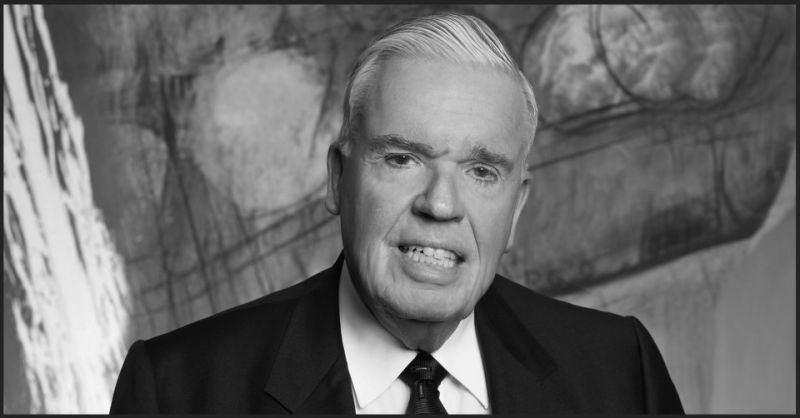
Xinde Marine News, Greece — At the TradeWinds Shipowners Forum Greece 2026, held during Posidonia week, George Economou, Founder and CEO of TMS Group, sat down with TradeWinds journalist Joe Brady for a one-on-one interview.
The session, part of the forum’s “Smart Money” segment, lasted only around 20 minutes. Yet it covered a career that has spanned some of the most dramatic chapters in modern shipping finance: from a non-shipping family background in Athens to the US capital markets; from the rise of DryShips to the collapse of Ocean Rig; from controversial public company financings to privatisation; and from operating companies to activist investing.
When combined with Economou’s recent appearance alongside Petros Pappas, CEO of Star Bulk Carriers, at the Capital Link Maritime Leaders Summit – Greece, a fuller picture emerges.
Economou is a shipowner, a capital markets player, a risk-taker, and a survivor of multiple cycles. He has made money, lost money, fought public market battles, used leverage aggressively, and later questioned whether shipping is always the best place to deploy capital at scale.
He is also one of the few Greek shipowners willing to speak openly about failure, dilution, bond workouts, investment losses, public market discounts and the brutal economics of shipping.
From mathematics to shipping
George Economou was born and raised in Athens, but he did not come from a traditional shipping family. His father was in the paper products business.
Asked why he chose shipping, Economou gave a direct answer. As a young man, he had a choice between mathematics, which he loved, and shipping. At the time, in Greece, shipping was one of the few sectors where someone could earn a decent living with a regular salary.
So he chose shipping.
The original reason was practical: to make money, secure a career and enter an international business.
That point matters. Greek shipping is often associated with old families and inherited fleets. Economou’s story shows another side of the industry. For his generation, shipping was also a path of social mobility, global exposure and access to international capital.
After high school, Economou continued his studies, earning two bachelor’s degrees, a master’s degree and an MBA. He then spent around 10 years working in Richmond, Virginia, and later in New York.
Many of his classmates stayed in the US. Economou returned to Greece and started his own business.
Together with a classmate — later known globally as Star Bulk CEO Petros Pappas — he launched a shipping venture with about $800,000 in initial capital. From there, the pair used leverage and market timing to grow.
That early history is important because it reveals a central theme in Economou’s career: he never saw shipping simply as operating ships. For him, shipping was always also about capital structure, financing capacity, timing and risk appetite.
Risk appetite shaped the path from the beginning
At Capital Link, the relationship between Economou and Pappas was discussed in more depth.
The two men knew each other from their student days. Their early venture was built with very limited resources: family loans, personal savings and even the sale of property. After buying their first ship, they had very little cash left. They then continued to finance vessels and expand in favourable markets.
That experience belongs to a familiar tradition in Greek shipping. Some of today’s major shipowners did not begin with large inherited fleets. They started with judgment, leverage, personal credit and an unusually high capacity to tolerate risk.
Pappas admitted that he later became more conservative. Age, experience and several moments close to bankruptcy may have changed his attitude. He also suggested that his split with Economou was connected to differing risk appetites. Pappas felt he had earned enough and chose to sell. Economou kept holding, kept betting and kept growing.
Economou’s own language around risk is more physical and direct. He has compared shipping to being in the ring: if you enter, you may get knocked down. The important thing is not to be destroyed by the blow. You get up, dust yourself off and go again.
For him, near-failure, sleepless nights and market punishment are not exceptional events in shipping. They are part of the game.
This helps explain many later decisions: DryShips’ public listing, the Ocean Rig expansion, the use of complex financing structures, and more recently his activist positions in other listed shipping companies.
Economou’s career has never been built around a pure “steady operations” model. It has been driven by a strong belief in capital judgment and the willingness to act when risk and opportunity converge.
Why US capital markets?
Economou said he turned to US capital markets because he was ambitious and wanted to grow quickly. Public capital seemed the fastest route.
At the time, US investors had limited understanding of shipping, especially dry bulk. Economou recalled that when Americans heard the word “shipping”, many thought of UPS, not maritime transport.
Over time, container shipping, globalisation and supply chains made the broader market more aware of how critical ocean transport is.
Economou was among the early private shipping entrepreneurs to pursue US capital market access. The first major step came through the bond market. In hindsight, the timing was difficult. The Asian financial crisis arrived soon after.
That led to a complex bond restructuring.
Economou said many people believed he could not complete the workout without banks or professional advisors. In the end, he did it with only his lawyer, negotiating day after day with different groups of bond investors in the secondary market in New York.
The deal eventually satisfied all sides.
His explanation of bond markets was revealing. Bonds are standardised financial instruments. Investors can assess risk, expected return and recovery value through ratings and market pricing. European companies, by contrast, have historically relied more heavily on bank finance and are often less familiar with bond market discipline.
That experience shaped Economou’s later understanding of public capital. If a shipping company wants access to the capital markets, it must understand more than ships. It must understand financial instruments, investor psychology, legal structures and crisis negotiation.
At Capital Link, Economou returned to the IPO question. In his view, public listings generally serve three purposes: raising capital for growth, creating an exit route for shareholders and generating management income. He also made clear that management fees should never be the core reason for going public.
That view contrasts interestingly with Petros Pappas’ perspective. Pappas sees real value in public markets because stock can become a currency for consolidation. Star Bulk has used that route several times to build scale. For a large listed company, scale can bring operating cost advantages and greater appeal to charterers.
Economou’s warning is that many listed shipping companies trade at persistent discounts to net asset value. When that happens, the advantages of a listing weaken. Buying back stock may create more value than buying more ships.
In other words, an IPO is not automatically a good outcome. It only works if the company can genuinely use the platform rather than be trapped by discounts, liquidity constraints and investor sentiment.
DryShips: the boom and the frenzy
The company that made George Economou a global capital markets name was DryShips, which listed in the US in 2005.
Joe Brady described DryShips as perhaps the most famous publicly listed dry bulk company of all time. Economou said the model was new to the market. Investors liked the concept, and the story spread quickly.
DryShips priced its IPO at $18 per share and raised around $240m. By September 2007, the stock had reached $131. At one point in 2007, DryShips’ daily trading volume reportedly exceeded $1bn — more than Google at the time.
It was a textbook case of shipping cycle and capital markets enthusiasm feeding each other.
The dry bulk market was in a supercycle. Chinese demand was surging. The Baltic Dry Index was soaring. Global investors suddenly discovered that dry bulk shipping companies could generate enormous cash flows.
DryShips became a key window through which Wall Street learned about dry bulk.
But Economou added an important reminder. His own shares were locked up at the time, so he could not sell at the peak. He also said there was very limited professional research coverage of the company in those days. It took the market a long time to understand the business.
Even today, he said, only a small circle of people truly understand listed shipping companies.
That is one of the permanent tensions in shipping equities. Public markets can provide capital and liquidity, but investors may not fully understand asset values, cyclicality, leverage, charter coverage and freight volatility.
Ocean Rig: the cost of leaving familiar waters
After DryShips’ rise, Economou used the platform to invest in Ocean Rig, the offshore drilling company.
He explained that after decades in shipping, he felt the traditional shipping sector was limited in scale. He wanted to expand into a more industrial business. Ocean Rig became the vehicle for that ambition.
DryShips invested in and restructured Ocean Rig in Norway and helped build the company.
The result was painful.
When Joe Brady suggested that Economou and other investors lost roughly $2bn on the investment, Economou broadly confirmed the figure. He added that total equity and debt exposure reached into the billions of dollars, and most of the capital was eventually lost.
This gives the story an important counterweight.
Economou was not only a winner of the shipping equity boom. He also experienced one of the most punishing downcycles in offshore and shipping-related investment.
Offshore drilling once appeared to offer scale, industrial depth, technology barriers and longer-term cash flows. But falling oil prices, oversupply and leverage destroyed vast amounts of capital across the sector.
For Economou, Ocean Rig showed that moving beyond familiar shipping cycles into a larger industrial arena does not necessarily produce more stable returns.
The cost of being public
The interview also addressed one of the most controversial later chapters in DryShips’ history.
Around 2016, DryShips undertook a series of financial transactions that brought significant capital into the company but heavily diluted existing shareholders.
Economou said these transactions were not designed to make easy money. They were undertaken to keep the company alive. Without continuing to raise funds, he argued, the business could have collapsed.
He made a clear distinction between actions taken to save a company and actions taken for speculation. He also said the company never accepted what it regarded as unfounded accusations and believed its operations were legal.
In 2019, Economou took DryShips private.
His conclusion on public markets was direct. If a company already has capital, assets and internal cash flow, an IPO may no longer be the best option. He said he has no reason to go public again and prefers to maintain the dividend distribution model inside his group.
This is an important shift. Over the past two decades, Greek owners have created many US-listed shipping companies. Some became success stories. Others became controversial. Many traded at deep discounts. Some faced activist campaigns. Some were eventually taken private.
Economou’s view reflects a broader reassessment among experienced owners: public markets can be useful, but they come with costs.
Orderbooks: the danger owners create in good markets
At Capital Link, Economou and Pappas discussed another crucial issue: the orderbook.
Economou recalled that in January 2007, he saw the dry bulk orderbook rising rapidly. By around October that year, he had concluded that the market could collapse within two and a half years.
He returned to the office and proposed selling vessels. At the time, the group had around 65 bulkers. They managed to sell about 15 and fixed the remaining 50 ships on four-, five- and ten-year charters.
The market collapsed earlier than expected because of Lehman Brothers.
Pappas made a related point: the orderbook is a threat. Strong markets encourage owners to order ships, but the key question is whether strength comes from real fundamentals or temporary inefficiency.
If strength comes from fundamentals, newbuilding orders may make sense. If strength comes from rerouting, war, congestion or other disruptions, those inefficiencies may disappear before the vessels are delivered.
This is one of shipping’s oldest problems. Owners often order most aggressively when cash flows are strong, sentiment is high and asset prices are expensive. By the time the ships are delivered, the market may look completely different.
Economou’s career shows both sides of that reality. He has used orderbook signals to act defensively. He has also paid heavily for timing errors in other markets.
His capital lesson is deeply cyclical: when making money, watch future supply; when raising capital, think about recovery value; when expanding, know how much punishment you can withstand.
Geopolitics: opportunity depends on reaction speed
At Capital Link, Economou was also asked whether geopolitics should be seen as an opportunity, threat or challenge.
His answer was direct: anything can be turned into an opportunity, provided you react fast enough.
He cited the Russia-Ukraine war. Few people predicted the war in the form it took. Yet it later created strong tanker market conditions. Economou said TMS captured opportunities within the legal framework, including trades shaped by the price cap mechanism.
His broader point was that geopolitics cannot be predicted with precision, but owners must monitor developments constantly and move quickly when rules allow.
He used a football analogy: if you want to score, you have to be on the field. Nobody scores from the sidelines. Once you enter the field, you must accept hits, disappointment and near-failure. You also get the satisfaction of reaching your target.
That line captures Economou’s commercial character. He does not present risk as something to be ignored. He sees risk as something that must be understood, priced and entered deliberately.
Pappas added that geopolitics is pushing countries toward energy self-sufficiency and energy security. Commodity trade is shifting from “just in time” to “just in case”. That can benefit shipping by increasing inventories, diversifying supply sources and reducing efficiency.
But geopolitics is not a one-way benefit. It creates ton-miles and compliance risk at the same time. It raises earnings and uncertainty. It creates arbitrage but requires faster judgment and a stronger tolerance for pressure.
Activism, Genco and listed company discipline
Since 2023, Economou has also returned to public attention as an activist investor.
He has taken positions in several listed shipping companies, including situations involving Genco Shipping & Trading, Diana Shipping-related disputes, companies linked to the Palios family, and Performance Shipping. Some campaigns produced profits. Others did not succeed.
Economou said that when a company is public, discussions should be open and transparent. A listed company must accept scrutiny and challenge from all shareholders.
He was also blunt about his motive: activist investing is for profit. He said he did not aim to take over those companies, although in some cases he had hoped to obtain a senior management role.
At Capital Link, Pappas also discussed Genco. He noted that stock can be used as a currency in consolidation and argued that certain offers may be attractive for shareholders.
Economou, speaking as an activist investor, said his objective in these positions was to make money: buy, sell, buy again and profit from price movements. He made clear that he does not want to own another public shipping company.
The role reversal is striking. Economou was once the controlling shareholder of a controversial public company. Now he is the outside shareholder demanding accountability from other listed companies.
That illustrates one of the deeper truths of shipping capital markets. An IPO can help owners grow, but it also exposes them to outside scrutiny, shareholder activism, valuation pressure and governance disputes.
Public capital is not just funding. It is a permanent negotiation with the market.
Scale, flexibility and holding assets
Scale was another point of contrast between Economou and Pappas.
Pappas argued that scale matters for listed companies. It brings cost advantages and commercial relevance. Charterers often prefer large platforms with more available tonnage and stronger execution capacity. Star Bulk has used mergers and public equity to build that scale.
Economou does not deny the value of scale, but he places more emphasis on flexibility.
Private companies have more freedom. They do not need to explain every move to public investors. They can enter different sectors, diversify assets and reposition capital based on their own judgment.
He also noted that smaller companies may have advantages in certain cycles. They can buy, sell, pivot and take concentrated positions more easily. A company with hundreds of ships cannot change its destiny through one transaction.
Scale brings stability, but it can reduce agility.
This connects to another part of Economou’s philosophy: holding and operating assets. He suggested that he has often made more money by holding and operating ships than by trading them frequently.
There are many ways to make money in shipping. The right model depends on size, capital structure, risk appetite and market position.
People may become the real scarce resource
At Capital Link, when asked what the industry should focus on over the next two to three years, Economou did not first mention asset prices, freight rates or financing.
He spoke about people.
He said shipping companies should focus on the quality of crews and shore-based teams. The global fleet is growing, but the pool of experienced seafarers is not growing at the same pace. Europe historically produced many highly experienced seafarers. Today, more seafarers come from Southeast Asia and other regions, and training takes time.
The same applies ashore. Companies compete for talent by hiring from one another, but the talent pool is not unlimited.
Economou said shipping, especially in Greece, pays better than many other industries. But it remains a people business. Entrepreneurs matter, but companies also need strong teams at sea and ashore.
This point fits the wider mood in global shipping. Green fuels, AI, sanctions, complex contracts, compliance, geopolitics and digitalisation are all raising the demand for better people. The next phase of competition may depend as much on human capability as on tonnage.
Pappas added that larger companies may find it easier to attract and retain talent because they can offer clearer career paths, more systems and broader resources. Smaller companies can offer agility. Each model has strengths.
Shipping is a hard business
Near the end of the TradeWinds interview, Joe Brady asked Economou whether he had any guiding principles or advice for younger people in the industry.
Economou’s answer was simple: to succeed, you must love what you do and devote yourself fully to it.
He did not mean simply working a “996” schedule. He meant staying focused 365 days a year. Business is full of noise and distraction. The key is to filter out what does not matter and focus on the core issues. If you put in enough effort and energy, he said, you will have a chance to succeed.
Asked about his outlook at the age of 73, while still active in newbuilding and investment markets, Economou said the future belongs to the next generation. They are already taking charge and will decide whether to expand or maintain the current scale.
He then offered a sober assessment of the industry.
Once a shipping business reaches a certain size, he said, it becomes very difficult to achieve an 8% internal rate of return over the next eight to 20 years. A well-run family office with deep experience may find it easier to achieve that target.
Shipping, in his view, is a hard business with tough margins and heavy workload. Many established Greek and international shipping families have diversified into other sectors over generations. Younger family members may still run shipping businesses, but they also expand elsewhere to earn profits.
Shipping is not the only way to make money.
That comment is realistic and important. Shipping can create enormous wealth, but that wealth often comes from cycles, leverage, asset timing and execution under pressure. It is not a stable, high-margin, easy business.
For large shipping families, diversification often becomes a natural next step.
Xinde Marine View: no mythology in shipping capital markets
The value of Economou’s recent interviews lies in their complexity.
DryShips represents one extreme example of a shipping company entering the US capital markets. It rode the dry bulk supercycle, became a market sensation, then faced controversy, dilution, public market pressure and eventual privatisation.
Ocean Rig represents the cost of expansion beyond familiar cycles.
Economou’s activist investing shows his deep understanding of governance, capital structures and public market tactics.
His Capital Link discussion with Petros Pappas adds another layer: risk appetite, orderbook discipline, scale versus flexibility, public market discounts, geopolitical reaction speed, and the quality of crews and shore teams.
Together, these themes matter more than any single company story.
Shipping capital markets do not produce simple myths.
A listing can help owners raise capital, expand fleets and increase visibility. It can also magnify value at the top of the cycle. But a public listing also demands transparency, liquidity, governance, communication and investor trust. If the market does not understand shipping, if capital structures become too aggressive, or if asset prices reverse, public markets can turn from accelerator to pressure source very quickly.
Economou’s career also shows that shipping entrepreneurship is not just about buying ships, selling ships and fixing ships.
Finance, debt restructuring, investor communication, legal design, crisis negotiation, orderbook analysis, talent organisation and psychology are all part of the same business.
His views are not always gentle, but they are grounded in experience.
IPO is not a mandatory path for every shipping company. Scale does not always guarantee superior long-term returns. Families need to think about dividends, succession, diversification and the choices of the next generation. Young people entering shipping should understand that cycle upside comes with pressure, losses and deep focus.
For today’s shipping companies, the return of capital to the sector does not automatically mean a smarter investment cycle.
Truly smart money in shipping must understand cycles, respect assets, control leverage, watch the orderbook, value people and remain disciplined when the market is most enthusiastic.
George Economou’s story is a reminder to the industry: shipping can make people famous quickly, and it can destroy capital just as quickly.
Those who survive the cycle are rarely just the best storytellers.
They are the ones who understand risk, can absorb pain, and know exactly why they are stepping onto the field.

READ MORE
 People
PIL Names Wan Chee Foong as Next CEO: A New Chapter Driven by Ports, Logistics and Strategy
 People
DNV’s Norbert Kray: China’s Shipbuilding Edge Now Extends Far Beyond Cost and Scale
 People
Exclusive Interview with Hapag-Lloyd’s Rajiv Ghose: How Gemini’s 90% Schedule Reliability Is Reshaping Shipping Resilience
 People
What John Lee’s Speech Signals for Hong Kong’s Maritime Industry over the Next Five Years
 People
Martin Roolvink has been appointed Managing Director of Bernhard Schulte Shipmanagement (Deutschland),
 People
Tung Chee-hwa Dies at 89: From Shipping Executive to Hong Kong’s First Chief Executive
 People
India Declares Its Maritime Ambition in Hamburg: Becoming a Global Shipping and Shipbuilding Power
 People
Euroseas Ltd.: Sustained Earnings, Disciplined Growth and Further Upside
 People
Nautical Institute (Singapore) Conference 2026 Brought Seaworthiness and the Future of Seafarers to Centre Stage
 People