


Greek Shipping’s Next Generation Steps Forward: How They Are Inheriting the World’s Strongest Maritime Tradition
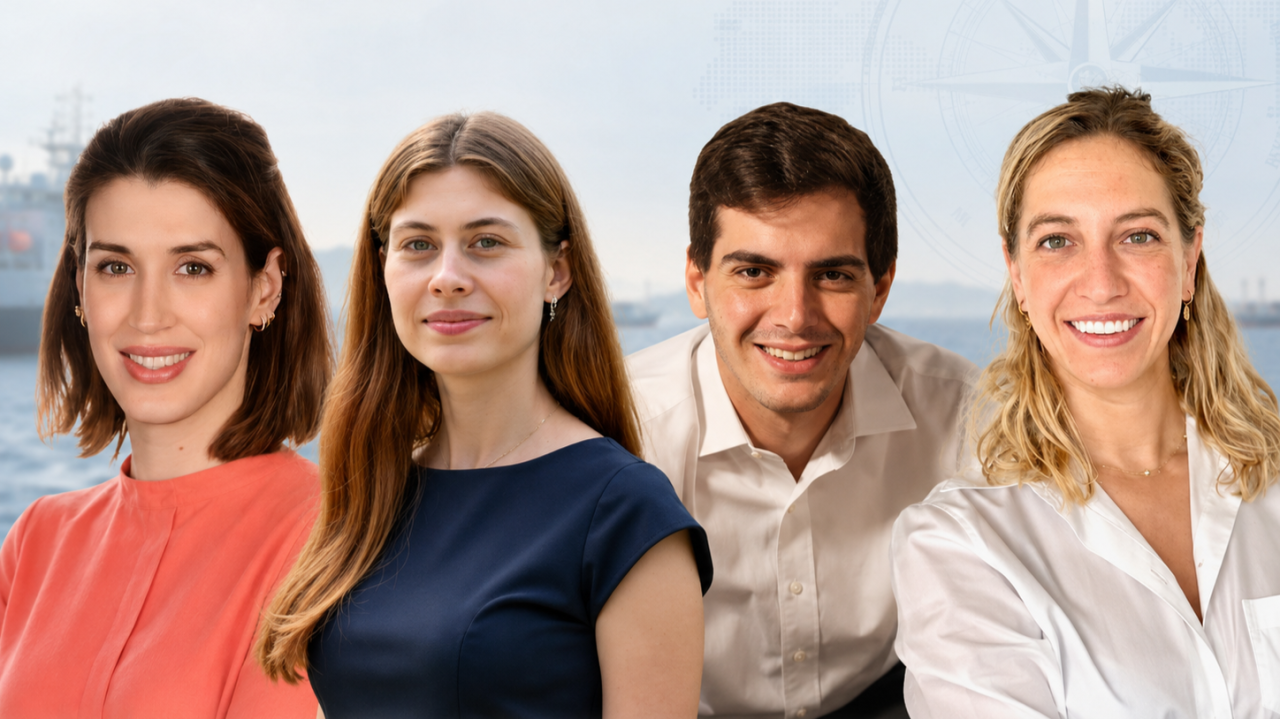
Xinde Marine News, Athens — At the Capital Link Maritime Leaders Summit – Greece, the panel “Bridging Legacy, Leadership & Transformation – Shaping the Next Chapter of Greek Shipping” offered a rare look into how a new generation of Greek shipping leaders sees succession, capital, technology, talent and responsibility.
The discussion was moderated by Paillette Palaiologou , Senior Vice President, South East Europe, Mediterranean, Middle East, India & Africa at Bureau Veritas | Marine & Offshore . The panellists included Marielena Procopiou , Founder and CEO of Delos Navigation Ltd. and Akrotiri Tankers Ltd. ; Eirini Pitta , Investor Relations Officer at Euroseas Ltd. and EuroDry Ltd. and Management Consultant at EUROBULK LTD ; Diamantis Pateras , Deputy CFO of Contships Management Inc ; and Amalia Miliou-Theocharaki , Deputy Managing Director of Teo Shipping Corporation .
The title of the session was about legacy and transformation. In practice, it was about something even more direct: how the next generation of Greek shipping families intends to take over, adapt and compete in a very different world.
Capital is more diverse. Regulation is more complex. Artificial intelligence is advancing quickly. Seafarer shortages are becoming more severe. Younger employees expect different career paths, recognition and work-life balance. At the same time, several speakers made clear that Greek shipping’s core strengths remain deeply rooted in long-term thinking, fast decision-making, hands-on knowledge of ships and markets, and the willingness to take risk when others hesitate.

A panel shaped by shipping family legacy
The family background of several panellists gave the discussion particular weight.
According to Xinde Marine News’ checks of public information, Marielena Procopiou comes from the George Procopiou family, one of the most prominent names in Greek shipping. George Procopiou’s platforms, including Dynacom Tankers Management, Ltd. , Dynagas Ltd. and SEA TRADERS SA , have long been active across tankers, LNG carriers and dry bulk. Marielena has built her own dry bulk and tanker platforms through Delos Navigation and Akrotiri Tankers, showing how a new generation can emerge from a major shipping family while creating an independent business path.
Eirini Pitta comes from the Pittas family, associated with Eurobulk, Euroseas and EuroDry. That group represents a Greek family shipping platform that has evolved from traditional shipowning into listed companies and a more diversified capital structure.
Diamantis Pateras belongs to the Pateras shipping family. Contships has described him as part of the family’s seventh generation in shipping. His father, Nikolas D. Pateras, is Chairman and CEO of Contships Management.
Amalia Miliou-Theocharaki is part of TEO Shipping, a family-linked dry bulk ship management company.
This made the panel more than a conversation among young executives about AI, finance and talent. It became a concentrated expression of how several Greek shipping families are thinking about succession, transformation and competitiveness.
Capital is changing, but trust still matters most
Eirini Pitta opened the discussion on how capital has changed decision-making in shipping.

She said shipping capital has become more diversified in recent years. Alternative investors, private equity, public market shareholders and traditional banks now all sit around the table. These capital providers can bring shorter investment horizons, stronger return expectations and more formal governance structures.
That changes some parts of decision-making. More stakeholders mean more alignment is required. More capital sources also mean more active consensus-building.
Yet Pitta argued that the core foundation remains the same: trust, transparency and open dialogue.
She used Euroseas’ Nasdaq listing as an example. The company had to adjust to higher transparency requirements, public accountability, quarterly reporting and more formal governance. But she said the company did not see this as a burden. It was part of good business practice.
She also recalled a 2010 joint venture with two private equity firms, which included board representation for the investors. The venture went through difficult markets during the 2010s, but the relationship remained strong. Her father remains close with the fund owners, which she said shows how these partnerships should be managed.
This reflects a broader shift in Greek shipping. Family owners are accepting more transparency and institutional governance, but they are not abandoning the relationship-based culture that has long supported the industry. For the next generation, one of the key skills will be balancing family trust, long-term partnerships and modern capital market discipline.
AI is not mainly a technology challenge
Marielena Procopiou gave one of the most direct views on artificial intelligence.

She said one of the biggest misconceptions is that digitalisation or AI itself is the challenge. In her view, the real challenge is people and processes.
The goal should not be to introduce AI just to look innovative. The real questions are practical: Can it improve daily operations? Can it reduce unnecessary administrative burden? Can it improve monitoring, communication, productivity, decision-making and safety?
For Procopiou, AI only creates value when the underlying data, processes and standards are solid. If the input is poor data, outdated manuals, inconsistent reports or fragmented information across departments, AI will simply produce poor outputs faster. It may also create overconfidence in results that have not been properly checked.
That makes basic operational discipline even more important. Accurate reporting, clear procedures, strong standards and defined accountability matter more in an AI-enabled business environment.
Procopiou also stressed that operational change needs organisational alignment. People must understand how current processes work, why change is needed, how their roles will be affected, what support the company will provide and how their feedback will be used. Change for the sake of change can easily create confusion and unintended consequences.
When asked whether AI had already changed decision-making in her company, she gave an interesting answer: it has made hiring the right people even more important.
AI does not reduce the need for smart people. It exposes very quickly who understands the business and who is simply repackaging information. Today, anyone can generate a polished-looking report in seconds. But if nobody checks the source data, challenges the assumptions or applies critical thinking, bad decisions can be made faster and at larger scale.
That is a useful lesson for shipping. AI is not just a cost-cutting tool. It is changing the way companies judge talent. The valuable people of the future will not simply be those who can use AI tools. They will be those who can understand the limits of those tools, judge data quality, understand the business and take responsibility for decisions.
The seafarer shortage is now impossible to ignore
Diamantis Pateras focused on people, especially seafarers and the career expectations of younger generations.

He said one of the biggest challenges facing shipping, and Greek shipping in particular, is the shortage of skilled seafarers. Attracting young people into the industry, both at sea and ashore, is becoming harder.
Generational differences are real. Younger professionals have different priorities and expectations. They want better work-life balance, faster career development, more recognition and a clearer sense of purpose.
Shipping remains a demanding industry. Long periods away from home, high pressure, heavy responsibility and unexpected situations are still part of the job. The industry requires discipline, resilience and personal sacrifice. Not everyone is willing to accept that lifestyle.
This theme echoed many other discussions at the summit. Shipping can use digital tools to improve shore-based efficiency. Newer ships can improve onboard conditions. But the core challenges of seafaring will not disappear automatically.
For next-generation shipping companies, the question is how to make maritime careers attractive again. That means better training, clearer promotion paths, improved onboard living standards and more credible shore-based opportunities for those who have served at sea.
Agility, scale, specialisation and reliability define competitiveness
Amalia Miliou-Theocharaki put agility at the centre of competitiveness.

She said volatility is a permanent feature of shipping. Many operators disappear not simply because markets turn against them, but because they cannot survive timing mismatches or adapt quickly to commodity cycles, sanctions regimes and geopolitical shocks.
For her, modern shipping agility includes chartering flexibility, voyage and fuel optimisation, regulatory adaptation, AI-supported decision-making and the ability to act opportunistically within shorter commercial cycles.
At the same time, agility does not reduce the importance of scale. Large fleets can lower operating costs, improve bargaining power, access better financing and support crew deployment, R&D and technological investment. Larger companies may also have more ability to shape trends, especially in alternative fuels, technology adoption and new standards.
Specialisation also matters. Specialist owners often have deeper technical and operational expertise. They can protect themselves better during crew shortages and market volatility because they understand their specific segment more deeply.
Miliou-Theocharaki also highlighted reliability as a competitive advantage. Charterers, banks, insurers and seafarers all need to know that a counterparty can be trusted when things become difficult. In shipping, many business relationships are built not only on price, but also on operational performance, commercial integrity and long-term consistency.
Her comments captured an important change in shipping competitiveness. Scale, specialisation, agility and reliability can all matter at the same time. Companies need to build resilience around their own strengths rather than copy one single model.
Digitalisation, regulation and talent are connected
Eirini Pitta later returned to the factors that will most affect operational performance in the coming years.
She said capital is probably not the main concern in the near term. Over the past six years, many shipping companies have generated significant cash. Banks and capital markets also remain available. The more important factors are digitalisation, regulation and talent, and these three are closely linked.
Technology always comes in waves. The personal computer, the internet, social media, mobile connectivity and now AI have each required businesses to adapt. This new AI wave may be faster than previous transitions.
Pitta said that when she joined the company several years ago, she was surprised by how “old-school” some systems still were. Over the past three years, however, many maritime technology start-ups have emerged, offering tools to use data more effectively, improve decision-making and streamline workflows. She said she was sceptical about AI only a few months ago, but has already seen AI agents and copilot tools being deployed in areas such as technical troubleshooting, compliance and operational optimisation.
For her, the direction is clear: shipping companies must find a way to integrate these tools, or they will fall behind.
On regulation, Pitta noted that shipping has always advanced through regulatory change, from MARPOL and STCW to sulphur rules and the IMO framework. Regulation reflects society’s rising expectations around safety, environmental protection and seafarer welfare. Excessive regulation can affect innovation and competitiveness, but the industry has always adapted.
She then brought the discussion back to people. Human interaction, judgement and critical thinking will not be replaced by AI. People at sea and ashore remain the heart of the industry. The shortage of skilled seafarers is already serious, and women account for only around 1% to 2% of seafarers, which shows how much untapped talent remains.
As new rules and technologies come in, the existing workforce will also need major reskilling. Digitalisation, regulation and talent should not simply be seen as burdens. They can become opportunities if shipping can inspire and attract the next generation of professionals.
The next generation: boldness remains, but the method is changing
Toward the end of the panel, the moderator brought the discussion back to Greek shipping’s legacy. Greek owners have long been known for boldness, counter-cyclical investment and entrepreneurial instinct. Will the next generation keep that character?
Marielena Procopiou said the mindset that distinguishes Greek shipping is the willingness to move where others hesitate, to see challenges as opportunities and to keep learning and reinventing when circumstances change.
She also highlighted the advantage of family ownership. In Greek shipping, a family owner can make a decision in one afternoon, while a large corporate board may take a quarter to discuss, debate and approve the same decision. In shipping markets, that speed can make a real difference.
In her view, long-term thinking, openness, hands-on involvement, confidence in uncertainty, risk tolerance and growing up close to the sea will remain important traits of the next generation.
Diamantis Pateras agreed that the next generation should preserve Greek shipping’s boldness and resilience. But he also said the industry is in a transition period. The future will require a more balanced and structured approach. Experience and instinct still matter, but they need to be combined with stronger risk management, governance and modern tools.
Eirini Pitta stressed another Greek advantage: the ability to integrate resources across regions. A Greek shipping company may operate from Greece, recruit crew from Manila, raise capital in New York and seek opportunities globally. Many next-generation owners have studied or worked abroad before returning to Greece. Their challenge is to connect global perspective with Greek maritime tradition.
Amalia Miliou-Theocharaki said the hardest thing for the next generation to replicate is passion. Older owners developed their understanding of ships, markets and the sea through long experience and deep personal involvement. The next generation needs to find its own passion for shipping. In her view, Greek owners are different from professional managers because they truly own the ships, understand them, follow the market closely and love the business. The next generation will need to combine that inherited shipping instinct with AI, data analysis and more rational decision-making tools.
Would they still choose shipping from scratch?
The final question was simple: if they were starting from zero today, without family legacy, would they still choose shipping?
Miliou-Theocharaki said yes. She made the decision to enter shipping 15 years ago and would make the same decision again. Shipping allowed her to live in Greece while maintaining an international career. Apart from tourism, shipping is one of the few industries in Greece that can connect local life with a global business. She admitted that being a working mother in a 24/7 industry is difficult, but shipping remains fascinating, and she encouraged more people to join.
Pitta gave a more nuanced answer. She joked that if she were starting completely from zero, she might not necessarily choose shipping. Her father was in the audience at the time, and the room laughed. She had built her own career in the United States and worked at the World Bank on climate change and disaster management. Over time, however, she realised that shipping had always been part of her background. Her family has been in shipping since the 1870s, and she is the fifth generation. Shipping gradually moved from the background of her mind to the foreground. Today, she is glad she returned to the industry and hopes to continue the family legacy.
Pateras gave a direct answer: he would still choose shipping. He said it is one of the most interesting and rewarding industries in the world.
Procopiou’s answer was more reflective. She said her relationship with shipping cannot be separated from her upbringing, early exposure and the opportunities she received. Simply answering “yes” without acknowledging opportunity and luck would be superficial. Talent may be equally distributed, she said, but opportunity is not. Recognising her own opportunity also creates a responsibility to open doors for talented people who did not have the same starting point.
That answer moved the discussion beyond family succession. Greek shipping’s future cannot rely only on internal family inheritance. It also needs outside talent, female talent and young people from different backgrounds.
Xinde Marine View: turning old wisdom into new capability
This was not just a panel about the children of shipowners. It was a moment of self-reflection for Greek shipping.
Capital is changing. Listed companies, private equity, joint ventures and traditional family capital now coexist. AI is changing how companies think about data, processes, judgement and people. Talent expectations are changing. Younger generations care more about purpose, balance and growth. Regulation is changing, with higher demands for safety, environment and seafarer welfare. Markets are changing too, with shorter cycles, more risks and stronger geopolitical influence.
Yet Greek shipping’s core strengths have not disappeared. Fast family decision-making, long-term perspective, close knowledge of ships and markets, the ability to integrate global resources and the courage to take risk in uncertain conditions remain powerful advantages.
The task for the next generation is to turn old wisdom into new capability.
They need to remain bold while becoming stronger in risk management. They need to keep instinct while learning to use data and AI. They need to preserve family trust while meeting the transparency expectations of public markets and institutional investors. They need to inherit maritime tradition while attracting people with no family background in shipping.
Greek shipping has remained strong for generations not only because of fleet size, capital strength or history. Its deeper strength lies in the fact that each generation has treated shipping as a combination of lifestyle, commercial judgement and global perspective.
The new generation is not facing the same world as its parents. But if it can combine boldness, resilience, professionalism, data and responsibility, the next chapter of Greek shipping will still be worth watching.
There is also a useful lesson here for Chinese shipping.
As private shipowners, cargo-linked owners, local shipping platforms and integrated logistics companies in China continue to grow, Chinese shipping is also entering a period of generational transition. More second-generation managers are beginning to move into visible leadership roles.
The question for many Chinese shipping companies is how to transform the market instinct, risk appetite and hard-working spirit of the founding generation into the governance, capital capability, technology capability and international mindset required by the next generation.
The Greek experience suggests that succession should not be understood simply as the transfer of shares or positions. It is a reshaping of capability, responsibility and perspective. The next generation must inherit not only assets, but also respect for the market, risk judgement, attention to people and the ability to redefine competitiveness in a changing environment.

READ MORE
 People
PIL Names Wan Chee Foong as Next CEO: A New Chapter Driven by Ports, Logistics and Strategy
 People
DNV’s Norbert Kray: China’s Shipbuilding Edge Now Extends Far Beyond Cost and Scale
 People
Exclusive Interview with Hapag-Lloyd’s Rajiv Ghose: How Gemini’s 90% Schedule Reliability Is Reshaping Shipping Resilience
 People
What John Lee’s Speech Signals for Hong Kong’s Maritime Industry over the Next Five Years
 People
Martin Roolvink has been appointed Managing Director of Bernhard Schulte Shipmanagement (Deutschland),
 People
Tung Chee-hwa Dies at 89: From Shipping Executive to Hong Kong’s First Chief Executive
 People
India Declares Its Maritime Ambition in Hamburg: Becoming a Global Shipping and Shipbuilding Power
 People
Euroseas Ltd.: Sustained Earnings, Disciplined Growth and Further Upside
 People
Nautical Institute (Singapore) Conference 2026 Brought Seaworthiness and the Future of Seafarers to Centre Stage
 People