


How SITC Has Gone 35 Years Without an Annual Loss
SITC's average freight rate fell 43% in 2023. It still earned $536 million.

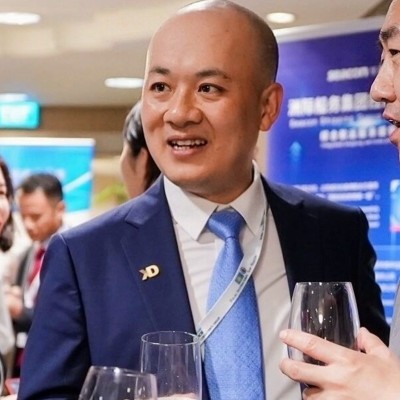
By Chen Yang, Xinde Marine News
Thirty-five years after it went into business, Hong Kong-listed SITC International has yet to report an annual loss. Xinde Marine News’s earlier reporting traced much of that record to small ships and frequent sailings between Asian ports. At a roundtable marking marine insurer NorthStandard’s tenth anniversary in Shanghai on 25 November, Ji Wenguang, president of SITC Shipping, spoke about what happens when those ships are earning good money. With enough cash to buy another vessel or open another route, when should an owner pass up the opportunity? SITC’s answer can be found in the ships it sells, the bank loans it pays down and the cash it hands back to shareholders while freight rates are still high.
What the bad years reveal
At an event ahead of the 2025 North Bund International Shipping Forum, Shanghai Maritime University professor Yu Jun said SITC had never finished a year in the red. Xinde Marine reported his remarks that November, 34 years after the business was founded. The group went on to post a full-year profit for 2025, keeping the record intact across the 35 calendar years from 1991 through 2025. Public filings document the last 19 of those years individually, including profits of $32.5 million in 2009 and $124.2 million in the depressed container market of 2016.
The 2023 accounts show how much the business could absorb. SITC’s average freight rate, excluding slot-exchange income, fell 43.3%, from $1,099.60 to $623.30 per twenty-foot equivalent unit (TEU). Cargo volume slipped only 1.1%. SITC carried almost the same volume, earning $476 less per TEU. Group net profit fell from $1.95 billion to $536 million, then recovered to $1.03 billion in 2024 and $1.23 billion in 2025.
In September 2026, Xinde Marine compared nine major liner and logistics groups that had disclosed comparable first-half results by 20 August. SITC ranked fourth by net profit, at $680 million, and first by net margin, at 36.9%. Of the 120 ships it operated at the end of June, 96 had a capacity of less than 2,000 TEU.
Why so many small ships?
Yu saw the influence of Southwest Airlines in SITC’s frequent regional sailings and of FedEx in the way it connected cargo flows through hubs. He drew two further comparisons. Singapore Airlines kept a young fleet to contain maintenance costs, and Toyota’s lean production methods offered a way to take waste out of everyday operations.
Yang Xianxiang, SITC’s chairman, explained the choice of ships in a 2019 interview published by Xinde Marine, when he was chief executive. The company had generally ordered 1,000-TEU vessels for its services between China, Japan and South Korea. As it reached farther across Asia, each rotation took in more loading and discharge ports. A slot freed when one customer’s box went ashore could be sold to another customer for the next leg. That gave SITC a reason to order more ships of about 2,000 TEU.
More calls also made it harder to keep time. Yang described how the shore team kept in touch with terminals about berths while the ship and shore exchanged information on vessel position, cargo volumes and stowage. A delay of half a day at one port could upset customers’ plans at several more. A shipyard could sell SITC another hull. The local relationships needed to keep it on schedule took years to build.
In April 2026, Xinde Marine wrote about SITC putting its earnings back into the intra-Asian trades it knew best. Its June figures give a sense of what growth can look like there. SITC was running 74 trade lanes, down from 82 a year earlier, and making 441 port calls a week, down from 489. Yet in the first half it carried 1.97 million TEU, about 142,300 TEU more than a year earlier.
“You can choose not to do it”
At the Shanghai roundtable, the moderator raised a familiar dilemma for European shipowners. An owner who sells a ship at the top of the market suddenly has plenty of cash. What is to stop the owner buying the next ship at the top of the same market? Ji, speaking in a personal capacity, put the question back to the room. “Can you control yourself?”
He recalled the low point around 2016, when owners could still make some sense of the market by studying the orderbook and watching which carriers were merging. Since 2020, several of the biggest shocks have originated outside shipping. Ji remembered people starting their careers in the dry bulk boom of 2007 and 2008. If your first deals all made money, how could you tell how much of the profit was down to you and how much the market had handed you?
“Why should I take an even bigger risk?” Ji asked. An owner could carry on serving its existing customers. “You can choose not to do it.” If enlarging the fleet or extending the network meant taking on more than his team could manage, Ji said, “then I won’t do it.” His rule was to “do what’s within your capabilities.” On an established service, booking records tell SITC where the extra cargo is likely to come from. A new route might fill up on its first outward sailing. Someone still has to find a return load, and do it again the following week.
Twelve ships sold in three years
On 13 November, twelve days before the roundtable, Huanghai Shipbuilding delivered the 1,800-TEU SITC Boom. In Shanghai, Ji suggested counting the ships going the other way, too. SITC had sold more than ten in recent years as it replaced less efficient vessels. “We’re making adjustments,” he said. The group sold twelve containerships from 2023 through 2025, six of them in 2024. In 2025 it took delivery of two lower-emission newbuildings and sold three older, higher-emission vessels.
The costs of running that fleet mattered particularly in 2023, when freight rates fell by $476 per TEU. Lower bunker prices and better fuel efficiency together cut SITC’s fuel bill by $136.3 million. The group also spent $59.2 million less on containership costs as owned ships replaced chartered tonnage. Customers still expected their weekly sailing. How much fuel the ship would burn, and whether SITC owed another owner charter hire for the voyage, depended on choices made years earlier.
Why pay out $938 million?
“You feel as though you have a lot of money, and then you want to spend it, don’t you?” Ji said. He was talking first about borrowing. “Our aim is to avoid borrowing and to pay back everything we’ve borrowed.” He had the downturn in mind. “When the market turns down, you still have to pay back what you borrowed.” SITC generated $1.40 billion in operating cash in 2025 and repaid $168.3 million in bank loans. Bank borrowings fell from $166.9 million at the end of 2024 to $18.9 million a year later. In the notes to the accounts, one detail stands out. At the end of 2024, vessels with a combined carrying value of $222.3 million secured the group’s bank loans. By the end of 2025, none of its ships was pledged against those loans. If SITC wanted to sell one of those ships, it no longer had to ask the bank to release the vessel.
The company also paid $937.7 million in dividends that year. Ji described dividends as a way for management to restrain its own spending. “Once you’ve paid the money out, the company has no money left,” he said, then qualified the thought. “Less money.” A proposal to enter a new trade would now have to compete for funds with a replacement ship on a route where customers already booked space every week.
At the end of June 2026, SITC held $932.4 million in cash, cash equivalents and term deposits, including deposits with original maturities of more than three months. Total liabilities stood at $765.3 million, including $33.1 million in bank borrowings. On the group’s net-debt measure, gearing was zero.
The same interim report showed $763.3 million in contractual commitments to buy ships. For the six 1,100-TEU vessels SITC ordered in March, 60% of the price falls due on delivery in 2028, a combined $82.08 million. The shipyard already knows what it will collect. What SITC can charge to carry a container when those ships arrive is still an open question. Ji put the 35 years in perspective. SITC had done reasonably well over three decades, he said. There were companies that had been in business for a hundred years, even two hundred. He still saw plenty for SITC to learn from them.
Ji Wenguang’s remarks were delivered in Mandarin and are translated here.


READ MORE
 Containers
Summit Shipping Plans Eight-Ship Weekly Service to Compete for China–Red Sea Cargo
 Containers
CULines Commits Cargo to Khorfakkan in Ten-Year Deal with Gulftainer
 Containers
No Shipping, No Shopping How COSCO SHIPPING Gets Black Friday Goods Across the Pacific Before Shoppers Click ‘Buy’
 Containers
Why the Flag on Seven CMA CGM Ships Matters to France
 Containers
ZIM’s Q3 Profit Jumps 573% as Nine-Month Earnings Nearly Match Hapag-Lloyd’s
 Containers
What CULines’ Khorfakkan Deal Means for Gulf-Bound Cargo
 Containers
“Replace the Race for Scale”: China Merchants’ Miao Jianmin on Shipping’s Next Competition
 Containers
COSCO, China Merchants, MSC, Maersk and CMA CGM Double Down on End-to-End Resilience
 Containers
Ships Are Easier to Build Than Ports: CMA CGM Executive Makes the Case for Network Resilience
 Containers