


Ships Are Easier to Build Than Ports: CMA CGM Executive Makes the Case for Network Resilience

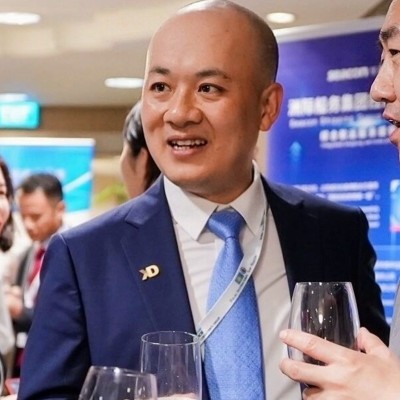
Supply chain resilience depends on having transport alternatives that can actually be used, CMA CGM Executive Vice President for Assets and Operations Christine Cabau Woehrel told the 2026 World Maritime Merchants Forum in Hong Kong on 16 November. Ships, terminals, warehouses and inland facilities create those options; data, artificial intelligence and digital capabilities help operators activate them. Investment must also accommodate future energy requirements and connect the different participants needed to keep cargo moving.
One observation captured the infrastructure challenge directly: building new ships is easier and faster than developing new ports and terminals. As vessel capacity expands, carriers need to consider whether ports, inland logistics, energy supplies and operating systems can support the additional cargo.
Her remarks came shortly after CMA CGM reported third-quarter 2026 container volumes of 6.5 million TEU, up 5.5% year on year. The group also emphasised the complementary roles of shipping, logistics and terminals in providing solutions across the supply chain. Against that operating backdrop, Cabau Woehrel’s presentation offered a framework for understanding how CMA CGM approaches assets, network design and cooperation.
Alternatives must remain usable when disruption occurs
Cabau Woehrel described volatility as an established part of the operating environment. Geopolitical tensions, climate events, port congestion and changing trade flows require shipping networks to deliver efficiency while retaining the ability to absorb shocks, adjust quickly and continue serving customers.
Her starting point was flexibility across routes, transport modes and locations. Multiple gateways, terminals, warehouses and inland connections can give an operator room to respond when an established arrangement becomes unavailable. The usefulness of those alternatives depends on their location, capacity and ability to connect with the rest of the transport chain.
That assessment follows the cargo owner’s journey. Diverting a vessel to another port still leaves discharge, onward transport, storage and final delivery to organise. If the receiving terminal cannot accommodate the cargo, or the inland network cannot move it, an alternative line on a map offers little practical benefit. Flexibility therefore needs to extend from the ocean service through the gateway and into the hinterland.
CMA CGM’s logistics investments provide a foundation for this approach. The group brought CEVA Logistics into its business in 2019 and completed the acquisition of Bolloré Logistics in 2024, subsequently integrating activities under the CEVA brand. Its capabilities span ocean and air freight forwarding, ground and rail transport, contract logistics, finished vehicle logistics and customs services.
From an operating perspective, this wider coverage creates more ways to organise a shipment, together with a greater coordination task. When a customer changes its destination, gateway or transport combination, the ability of different businesses to respond together determines how much flexibility the network can deliver. Assets and service coverage acquire practical value through the way they work together for the customer.
The gap between fleet growth and port development
Cabau Woehrel placed physical assets at the foundation of resilience, identifying transport capacity, terminal capability and access to critical resources as strategic concerns. Her comparison between shipbuilding and port development highlighted the different speeds at which those resources can expand.
A carrier can add ships through newbuilding deliveries, chartering and redeployment. Expanding terminal capacity requires berths, yards, equipment and inland connections to develop together. Where additional vessels enter a service faster than the receiving infrastructure can accommodate them, waiting time, congestion and delivery pressures can reduce the benefit of the new capacity. Network expansion consequently requires an assessment of both ocean transport and shoreside handling.
CMA CGM continues to increase its participation in these nodes. Its published portfolio lists 69 terminal assets within CMA Terminals Holding, organised through platforms including CMA Terminals, Terminal Link and United Ports. The facilities operate on a multi-user basis, serving different shipping lines. For the group, terminal investment combines an infrastructure business with an interest in the capacity and performance supporting its shipping network.
In August 2026, CMA CGM and Red Sea Gateway Terminal signed definitive agreements to jointly develop and operate Terminal 4 at Jeddah Islamic Port in Saudi Arabia. Initial investment of approximately US$434 million is intended to add up to 2.6 million TEU of annual handling capacity, including new deepwater berths and 10 ship-to-shore cranes.
Jeddah serves Saudi import and export demand and sits on the Red Sea corridor connecting Asia, Europe and Africa. Coordinating terminal development with shipping and logistics services can increase the capacity available to the wider network. The resulting benefits will develop through construction, commissioning and the connections established with shipping services and cargo flows.
Assessing what an asset contributes to the network
In Cabau Woehrel’s analysis, assets need to be assessed through their contribution to the overall system. Investment should place suitable assets in appropriate locations, connect them effectively and improve their digital and environmental performance.
This adds a network dimension to capital allocation. An investment can be evaluated through the transport stages it improves, the bottlenecks it helps relieve, the service alternatives it supports and its contribution to dependable delivery. A terminal, warehouse or inland connection may create value through improvements in the efficiency and stability of the entire cargo journey.
Financing and operating arrangements are part of that assessment. According to the completion announcement issued by CMA CGM and infrastructure investment firm Stonepeak, Stonepeak invested US$2.4 billion for a 25% stake in United Ports, while CMA CGM retained 75% ownership and full operational control. The partners identified terminal expansion, equipment modernisation, rail and inland connections, electrification and shore power among their investment priorities.
The partnership brings long-term infrastructure capital into the terminal platform while retaining CMA CGM’s operating control. It provides a way to organise funding and operational capability around continued network development. Its performance can be assessed through financial returns, asset utilisation, service quality and the strength of connections with other parts of the transport system.
Resilience also has an economic cost. Maintaining alternative capacity and additional connections requires investment that must be supported by actual demand and operating requirements. Location, development schedules and partnership structures need to fit together so that resources can serve everyday business and remain useful during disruption. Evaluating assets in this wider context connects investment decisions more closely with customers’ transport needs.
Assets create options; data helps operators use them
Cabau Woehrel’s discussion of digitalisation centred on the relationship between physical choices and timely decisions. Assets provide options, while data enables operators to use those options at the appropriate moment.
The usefulness of an alternative route depends partly on how quickly a business detects a problem and reorganises the affected cargo. Late identification of a disruption, or a slow response once it has been recognised, can sharply reduce the value of contingency arrangements. Real-time visibility, predictive maintenance, weather and congestion forecasts, and AI-supported decisions can strengthen anticipation and response.
These capabilities need to reach actual operating processes. Weather information must reach route planners and dispatch teams in time to influence decisions. Expected congestion needs to inform schedules. A revised plan needs support from terminals, warehouses, inland operators and customers. Data can improve the assessment; operating teams and their partners must turn that assessment into a completed movement.
CMA CGM is deploying technology within this environment. MAIA, developed with Mistral AI, is being progressively rolled out to group employees. According to the group’s description, the platform connects business knowledge and internal applications, supports access to operational data and helps employees handle tasks and requests.
Considered alongside Cabau Woehrel’s remarks, this deployment raises practical measures of digital performance: whether warnings arrive earlier, information travels more effectively, revised plans can be implemented sooner and customers receive clearer delivery expectations. Data quality, system connections, professional judgement and decision-making authority all influence those results.
Designing resilience and decarbonisation together
Cabau Woehrel also argued that resilience and decarbonisation need to be considered within the same investment decisions. Ships and infrastructure commissioned today will serve across several market cycles, requiring attention to their future energy and operating needs.
She identified fleet renewal, alternative energy, more efficient terminals and warehouses, route optimisation and greater use of rail, barges and inland waterways as tools that can support both transport resilience and lower emissions. New vessels, in particular, should be able to accommodate future energy requirements.
Achieving those objectives requires coordination within specific networks. Diversions, reserve capacity and higher inventory can add cost and energy use. Alternative-fuel vessels need supplies and bunkering facilities along their operating routes. Ship design, fuel availability, port infrastructure and transport mode therefore need to be planned together, supporting safe delivery while improving energy and emissions performance.
CMA CGM’s methanol bunkering activity in Shanghai provides an example. In August 2026, CMA CGM OSMIUM, a 13,000 TEU methanol dual-fuel containership, received 8,016 tonnes of Chinese-produced biomethanol at the Port of Shanghai. The operation involved CMA CGM, relevant Shanghai International Port Group businesses and Shanghai Electric, connecting production, fuel logistics, port bunkering and vessel consumption.
The example shows the operating arrangements required to put a cleaner vessel into service. Once a ship has the technical capability to use a fuel, dependable delivery, bunkering schedules, data and certification still require continuing cooperation. Energy transition consequently becomes part of network development, affecting where vessels can be deployed and how flexibly they can operate.
Partners must be able to deliver together
Cabau Woehrel emphasised that supply chain resilience extends across organisational boundaries. Carriers, ports, terminal operators, logistics providers, customers, technology businesses, energy suppliers and public authorities all participate in an interdependent transport system. Their connections affect how effectively the network can respond when circumstances change.
She opened by thanking China Merchants Group for its invitation, against the background of an established commercial relationship. Terminal Link, 51% owned by CMA Terminals Holding and 49% by China Merchants Port, connects international shipping networks with terminal investment and operating resources through a joint venture platform.
CMA CGM’s Jeddah development with RSGT, its United Ports partnership with Stonepeak and its green fuel bunkering operations in Shanghai illustrate other forms of participation. Local operating expertise, infrastructure capital and energy services each contribute resources needed by the wider network.
Those partners perform different but connected tasks. Ports provide handling capacity, logistics businesses arrange onward movement, energy suppliers deliver fuel, and technology providers support information and decisions. Customers influence the network through transport plans and commercial demand. The quality of cooperation becomes visible in whether those participants can jointly complete the service during routine operations and disruption.
In Xinde Marine News’s assessment, Cabau Woehrel’s central argument is that resilience must be expressed through capabilities operators can actually deploy: capacity at important locations, executable alternatives when transport is disrupted, timely information, partners able to adjust together and investments compatible with future energy requirements.
Fleet, terminal, warehouse, energy and digital investments ultimately meet the same operating test. When the original transport plan is interrupted, cargo needs to keep moving, customers need credible expectations, and seafarers and operating teams need effective support. The reliability of those connections will continue to determine how much competitive value a shipping network can deliver.


READ MORE
 Containers
COSCO, China Merchants, MSC, Maersk and CMA CGM Double Down on End-to-End Resilience
 Containers
CMA CGM Tops Maersk’s Q3 Revenue as Profit Hits $2.32 Billion and Volumes Rise 5.5%
 Containers
COSCO Chairman Wan Min Identifies Four Forces Reshaping Global Shipping
 Containers
“Replace the Race for Scale”: China Merchants’ Miao Jianmin on Shipping’s Next Competition
 Containers
Nearly $100 Million in Quarterly Profit: Why Global Ship Lease Is Backing 17 Mid-Sized Containerships
 Containers
Maersk: Why a Newbuilding Boom Has Not Ended Space Shortages and Rate Spikes
 Containers
1,023 Ships and Still Expanding: MSC’s CEO Sets Out the Next Priorities
 Containers
MSC Deepens Shanghai Port FC Sponsorship as Shipping Ties Extend Into Football
 Containers
No Boxship Delivered Yet, Already No. 2: How Hengli Is Reshaping Shipbuilding
 Containers