


COSCO, China Merchants, MSC, Maersk and CMA CGM Double Down on End-to-End Resilience

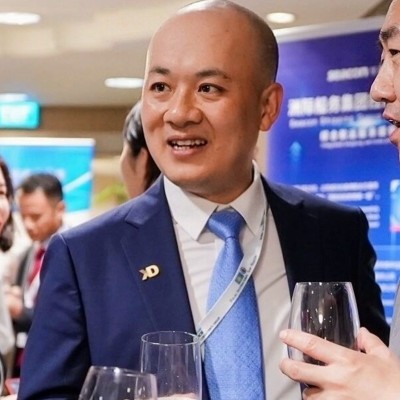
Building new ships is easier and faster than developing new ports and terminals, CMA CGM Group Executive Vice President for Assets and Operations @Christine Cabau Woehrel told the 2026 World Maritime Merchants Forum in Hong Kong on 16 November. Her discussion of supply chain resilience addressed a challenge facing major shipping groups: growing vessel capacity requires compatible ports, warehouses, inland transport and digital capabilities, organised into a network that can continue delivering when conditions change.

In her assessment, resilience depends on transport alternatives that can actually be used. Multiple routes, transport modes and gateways create room to respond, provided that terminals, warehouses and inland facilities can work together. When cargo must be diverted, the receiving port needs capacity, onward transport must be available and the revised arrangement must still serve the customer’s delivery requirements.
She also connected physical assets with the information needed to deploy them. Assets provide options; data helps operators decide when to use those options. An alternative route has limited practical value if disruption is detected too late or if terminal, warehousing and inland transport arrangements cannot be reorganised in time. Investment in ships and infrastructure therefore needs to be accompanied by visibility, forecasting and effective operating decisions.
Her message echoes a warning delivered at the same forum a year earlier by Maersk Chief Executive Officer Vincent Clerc: fleet expansion and port development are moving at different speeds.
Maersk’s earlier warning: infrastructure is struggling to keep pace
At the 2025 World Maritime Merchants Forum, Clerc called for faster investment in ports and logistics infrastructure. As reported by Xinde Marine News at the time, he contrasted expected annual container fleet growth of around 5–6% with port capacity growth of approximately 2–3% at the prevailing pace of investment. Those figures expressed his assessment in 2025 of the gap between capacity development at sea and ashore.

His proposals covered both additional infrastructure and better use of existing facilities. Digital twins, automated equipment and AI-supported yard planning could improve scheduling and throughput where land and waterfront space were constrained. Shore power and support for alternative fuels would also be necessary to accommodate the operating requirements of cleaner vessels. Port investment consequently needed to reflect the technology and energy requirements of future fleets.
During 2026, Clerc extended his concerns to railways, trucking, barges and other inland infrastructure. He argued that bottlenecks were appearing in some markets even under normal demand growth, requiring investment beyond terminal boundaries. A container still needs to clear customs, leave the port and reach its destination after discharge. Persistent congestion at those stages can fill yards and eventually disrupt vessel handling as well.
Ships can be chartered or redeployed between services. A terminal requires waterfront access, land, dredging, equipment, inland connections and durable operating arrangements. Even after an investment decision has been made, usable capacity takes time to develop. Carriers planning their fleets therefore need an accompanying view of which gateways can absorb additional cargo, where transshipment can expand and how ports connect to industrial and consumer markets.
Taken together, the two executives’ presentations address the capacity of the entire transport system to handle cargo. Additional vessels need ports and inland networks through which their cargo can continue moving. Recent terminal investments by shipping groups make commercial sense within that wider operating requirement.
Shipping groups are turning that assessment into investment
Xinde Marine News has repeatedly tracked the growing importance of terminals in carrier strategy, including investments by Maersk, MSC, Hapag-Lloyd and CMA CGM, alongside Evergreen’s interest in further opportunities. Their capital structures and business models vary, but they share an interest in securing dependable capacity at locations important to their networks.
CMA CGM is combining infrastructure development with external investment capital. On 24 August 2026, the group and Red Sea Gateway Terminal signed definitive agreements to jointly develop and operate Terminal 4 at Jeddah Islamic Port. Initial investment of approximately US$434 million is intended to add up to 2.6 million TEU of annual handling capacity. CMA CGM Group Chairman and Chief Executive Officer Rodolphe Saadé linked the growing strategic importance of terminals to securing shipping operations, strengthening trade corridors and improving reliability for customers.
The group’s capital arrangements follow the same network logic. In July 2026, CMA CGM and Stonepeak completed the formation of United Ports. Stonepeak invested US$2.4 billion for a 25% stake, while CMA CGM retained 75% ownership and full operational control. Their stated investment priorities include terminal expansion, new cargo-handling equipment, stronger rail and inland transport connections, equipment electrification and shore power. Long-term infrastructure capital can therefore support expansion while operating responsibility remains with the shipping group.
Maersk’s development in Vietnam provides another example. In April 2026, APM Terminals and Hateco Group announced an agreement to develop, build and operate Lien Chieu Container Port in Da Nang. Estimated investment exceeds US$1.7 billion, with capacity expected to exceed 5.7 million TEU annually when fully developed. The first phase is intended to begin operating in early 2029. Planned links to warehouses, railways, industrial parks and the Da Nang Free Trade Zone place the terminal within a broader industrial and logistics network.
MSC is combining capital, cargo commitments and local partnerships at important gateways. In November 2024, it completed the relevant tender offer and established its partnership with the City of Hamburg concerning HHLA. The partners agreed to provide €450 million, approximately US$494.5 million, in equity to support subsequent investment. MSC also committed to increasing its annual cargo throughput at HHLA terminals to at least 1 million TEU from 2031. This connects infrastructure development with a long-term cargo base and MSC’s wider network planning.
Hapag-Lloyd is expanding its terminal presence through Hanseatic Global Terminals (HGT). In June 2026, HGT completed the acquisition of a 50% interest in the Aracruz container terminal development in Brazil, partnering with the Imetame Group. The terminal is designed for annual capacity of approximately 1.2 million TEU and is expected to start operating in mid-2028. The completed investment establishes the ownership and development partnership; construction and commissioning will subsequently create the additional handling capacity.
Evergreen has also explicitly linked its investment priorities to congestion ashore. At an investor briefing on 8 October 2026, President Wu Kuang-hui said the effects of additional vessel capacity could be offset by port congestion and that Evergreen would more actively assess opportunities to invest in key terminals. No specific new project was announced in that statement. Its existing partnerships include the terminal joint venture established with PSA in Singapore in 2024, which PSA described as providing long-term capacity assurance for Evergreen’s expanding fleet.
These investments serve a common operating purpose: giving shipping networks dependable nodes around which vessels, cargo flows and terminal activity can be planned together. The value of an individual facility increasingly depends on its contribution to the wider network.
COSCO’s approach to competition across the supply chain
The growing connection between vessels, terminals and inland logistics raises a broader question about what carriers need to compete effectively. COSCO SHIPPING Chairman Wan Min offered a framework at the 2026 North Bund International Shipping Forum in Shanghai on 20 October, identifying four industry characteristics: persistent risk, competition across the entire supply chain, resilience as a priority, and the combined advance of green and digital transformation.
He called for closer supply chain coordination, broader global networks, green and digital innovation, and cooperation on rules and governance. The connections between these priorities are practical. A disruption to a shipping corridor changes network requirements; port performance affects vessel turnaround; fuel and technology choices influence how long-lived assets can be deployed.
Competition across the supply chain also reflects customer expectations. Cargo owners need to know when goods will leave a factory, whether they will connect with the intended sailing, how quickly they can be collected after arrival and whether they will reach a production line or sales channel on schedule. As a provider’s commitments extend across more of that journey, its ability to coordinate terminals, warehouses, inland transport and information becomes part of the service being purchased.
COSCO SHIPPING Holdings provides a concrete example. Its 2025 annual report set out an integrated approach to container shipping, ports and related logistics, combining investment, construction and operations with coordinated development of hubs, corridors and networks. For businesses including COSCO SHIPPING Lines, this requires ocean services and shoreside resources to be organised around customer demand. The terminal network associated with COSCO SHIPPING Ports provides important locations for receiving cargo and connecting transport services.
The group’s 2026 interim report described work across end-to-end products, sales, operations and customer service. In the first half, its container shipping segment generated RMB24.090 billion, approximately US$3.59 billion, in supply chain revenue excluding ocean freight, an increase of 11.61% year on year. The report also described an integrated China–Europe solution for appliance customers, connecting domestic land transport, ocean shipping, European final delivery and overseas forward warehouses.
This approach changes how a transport provider organises its work. Sales teams need to understand production and inventory plans; operating teams need to coordinate land and sea movements; customer service teams need continuing visibility of cargo. When a factory changes its sourcing, shipments concentrate around a peak period or a gateway becomes unavailable, the quality of the response depends on those functions working together. Terminal and warehouse investments consequently become more closely connected to customer contracts and delivery commitments.
Terminal returns need to be assessed across the network
The benefits of port improvements can travel through several parts of a shipping business. Less waiting improves vessel productivity. More dependable transshipment reduces the risk of missing an onward connection. Faster collection of imports releases yard space and improves equipment utilisation. Timely return of empty containers supports the next export movement. A change at one important hub can consequently affect several mainline and feeder services, together with the customers using them.
This gives carriers reasons to assess terminal investment beyond the facility’s own handling and storage income. Improved vessel utilisation, schedule reliability and customer retention can create additional operating value. Where a hub connects numerous services, the consequences of its performance extend well beyond its waterfront.
Congestion can absorb vessel capacity and support freight rates in the short term. For an individual operator, however, waiting also consumes ship time, complicates deployment and disrupts customer plans. Improving terminal efficiency allows an existing fleet to perform more useful transport work and gives the carrier a stronger basis for making dependable commitments.
Investment results still depend on the details of each project. Acquiring an interest in an existing terminal changes its capital and governance arrangements. Additional handling capability develops through expansion, equipment and operating improvements. Deepwater berths need compatible yard capacity, and yards need effective rail, road and customs connections. Continued movement of cargo out of the port helps new cranes and berths deliver their intended productivity. Location, cargo demand, operating performance and inland access all belong within the investment assessment.
Why China Merchants places cooperation at the centre
At the World Maritime Merchants Forum on 16 November, China Merchants Group Chairman Miao Jianmin called for ecosystem building to replace the race for scale. His proposals connected vessel capacity, hubs, transport corridors, trade, finance and fuel, reflecting the broader resources required to organise resilient shipping services.

An operator offering services across the supply chain depends on many external participants. Port development involves public authorities, port managers, operators and financiers. Inland transport depends on rail, road and local service networks. Cleaner vessels require energy suppliers and bunkering infrastructure. Customer delivery plans are also shaped by factories and distribution channels. The wider a provider’s commitments become, the more relationships it must coordinate.
China Merchants Port’s partnership with CMA CGM through Terminal Link illustrates one way to organise that cooperation. CMA CGM’s corporate disclosures show Terminal Link as 51% owned by CMA Terminals Holding and 49% by China Merchants Port. The long-term joint venture connects shipping networks with port investment and operating resources, providing a platform for cooperation on facilities, service capability and returns.
Maersk and Hapag-Lloyd’s proposed arrangements at Rotterdam’s Maasvlakte II provide another example. In August 2026, Hapag-Lloyd announced an agreement to acquire a 25% stake in the terminal, with APM Terminals retaining operational control. The announcement explicitly connected the investment to long-term automated handling capacity and the terminal’s role as an important European hub for the Gemini Cooperation. Completion was subject to approval by the relevant authorities.
The carriers continue to offer their own commercial services while cooperating on infrastructure used by their networks. Such arrangements connect cargo demand, funding, operating experience and expansion requirements. Clearer long-term demand can help a terminal plan investment; participation in infrastructure development can help carriers align future fleets with shoreside capability. Equity partnerships, service contracts and joint investment give practical substance to Miao’s call for collaboration.
Data and energy must connect with physical infrastructure
Once facilities are connected, operating teams still need timely information about their condition and availability. Vessel arrival estimates, berth windows, yard utilisation, rail schedules, warehouse receiving capacity and customer deadlines need to inform coordinated decisions. When a voyage changes, the speed at which terminals, forwarders, inland operators and customers receive the revised plan affects whether it can be executed successfully. This is where Cabau Woehrel’s relationship between assets and data becomes operationally relevant.
AI can assist with congestion forecasts, route comparisons and operating plans. Its value is realised when participants can act on those assessments. End-to-end products therefore require compatible information interfaces, clear operating responsibilities and workable arrangements for handling exceptions. Visibility becomes useful to customers when it supports the physical movement of their cargo and a credible expectation of delivery.
Decarbonisation increases the need for coordination. Clerc included shore power and support for alternative fuels in his 2025 infrastructure discussion, while CMA CGM and Stonepeak identified electrification and shore power among their investment priorities. Ports will need to accommodate different vessel energy requirements and align fuel supply, storage, bunkering and ship schedules. Coordinated investment by owners, ports and energy providers can improve the operating conditions for cleaner fleets.
The commercial test is delivery
In Xinde Marine News’s assessment, the results of these investments can be measured through practical operating questions. Has usable capacity increased at important nodes? Are ships and containers turning around more efficiently? Are mainline and feeder connections more dependable? Can customers reduce avoidable waiting and inventory, and can an alternative transport arrangement be activated when disruption occurs?
COSCO SHIPPING Holdings’ end-to-end services depend on coordination between shipping, ports and logistics. Investments by Maersk, MSC, Hapag-Lloyd, CMA CGM and Evergreen likewise need to fit their networks, cargo flows and customer requirements. As service commitments expand, stronger facilities must be accompanied by partnerships capable of working consistently over time. Operating organisation and cooperation continue to influence returns after the capital has been committed.
Wan Min’s assessment describes the expanding scope of competition; Miao Jianmin’s proposals address how the necessary capabilities can be organised. Cabau Woehrel’s presentation brings both back to an operating requirement: assets must provide usable choices, and information must help people deploy them in time. For cargo owners, the test remains concrete—whether goods arrive as planned and, when conditions change, whether the transport provider can deliver a credible, executable alternative.

READ MORE
 Containers
Ships Are Easier to Build Than Ports: CMA CGM Executive Makes the Case for Network Resilience
 Containers
CMA CGM Tops Maersk’s Q3 Revenue as Profit Hits $2.32 Billion and Volumes Rise 5.5%
 Containers
COSCO Chairman Wan Min Identifies Four Forces Reshaping Global Shipping
 Containers
“Replace the Race for Scale”: China Merchants’ Miao Jianmin on Shipping’s Next Competition
 Containers
Nearly $100 Million in Quarterly Profit: Why Global Ship Lease Is Backing 17 Mid-Sized Containerships
 Containers
Maersk: Why a Newbuilding Boom Has Not Ended Space Shortages and Rate Spikes
 Containers
1,023 Ships and Still Expanding: MSC’s CEO Sets Out the Next Priorities
 Containers
MSC Deepens Shanghai Port FC Sponsorship as Shipping Ties Extend Into Football
 Containers
No Boxship Delivered Yet, Already No. 2: How Hengli Is Reshaping Shipbuilding
 Containers