


MSC Shipmanagement Targets Chinese Seafarer Pool of Over 5,000 by 2030, Plans Free 24/7 Internet

MSC Shipmanagement Limited plans to expand its Chinese seafarer pool to more than 5,000 by 2030 and introduce free, round-the-clock onboard internet from December 2026, as the Cyprus-based company works towards a long-term ambition of managing 1,000 vessels.
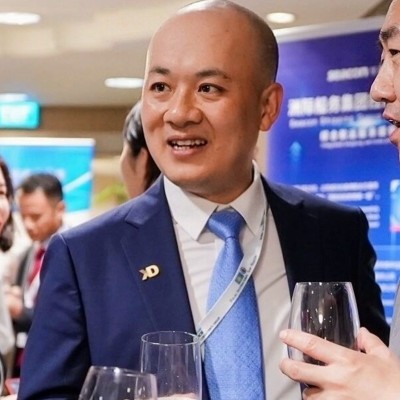
Speaking at the 2026 High-Quality Development Forum on International Seafarers Services in Ningbo on 14 November, and in an exclusive interview with Xinde Marine News, @Prabhat Kumar Jha , Group Managing Director and Chief Executive Officer of MSC Shipmanagement Limited, said the company currently manages 735 vessels and expects that number to rise to approximately 800 in 2027. Its Chinese seafarer pool already stands at 1,854, with Chinese personnel serving across 52 vessels, including 20 with all-Chinese crews.
The plans bring MSC's investment in people into sharper focus. As the group adds ships and introduces more advanced propulsion systems, its ability to recruit, train and retain seafarers will help determine how effectively that fleet can be operated.

From 735 Managed Ships Towards 1,000
Jha's presentation outlined the scale of the business behind the recruitment plans. MSC operates more than 1,000 vessels with capacity approaching 7.5 million TEU, he said, while the group employs more than 250,000 people worldwide. He put the newbuilding orderbook at more than 230 vessels and said container capacity could approach 11 million TEU by 2030.
Within that wider operation, MSC Shipmanagement Limited in Cyprus provides technical management for a substantial part of the fleet. Its managed portfolio has grown from 28 ships in 2008 to 735 today. Jha also described crewing responsibilities involving more than 35,000 cargo-ship seafarers and approximately 14,000 cruise-ship personnel. He expressed confidence that the company would reach its 1,000-ship management ambition, without setting a new firm completion date.
The way MSC has acquired its ships creates distinct management demands. Xinde Marine News previously reported, citing Alphaliner, that MSC's cumulative secondhand containership purchases since August 2020 had reached 500 by August 2026. Alongside newbuilding deliveries, those acquisitions bring ships of different ages, designs and technical histories into the organisation.
Jha highlighted both sides of that challenge. Seafarers need the competence to operate modern newbuildings and the experience to address the additional demands associated with secondhand vessels. Each ship added to the managed fleet also requires technical support, maintenance resources, safety oversight and reliable crew rotations. Growth towards 800 and ultimately 1,000 managed ships depends on developing these capabilities alongside the fleet.
Chinese Seafarer Pool Set to More Than Double
Jha said figures drawn from the company's system on the evening before the forum showed a Chinese seafarer pool of 1,854. Approximately 550 Chinese seafarers have been recruited during 2026, and he reported a Chinese crew retention rate exceeding 98%.

Chinese seafarers now serve on 52 vessels, including 20 staffed entirely by Chinese crews. More ships are expected to move to all-Chinese crewing before the end of 2026. Their assignments already extend to some of MSC's largest and most technically advanced vessels: Jha said Chinese engineering officers are working on 24,000-TEU containerships and LNG dual-fuel vessels.
In the interview with Xinde Marine News, Jha confirmed the ambition to build a Chinese seafarer pool exceeding 5,000 by 2030. A pool of 5,000 would be approximately 2.7 times its current size. Reaching that scale will involve sustained recruitment, training and career development across ranks, supported by personnel planning for onboard assignments, leave and rotation.
The existing all-Chinese crews provide an operational foundation for that expansion. Fully crewing a vessel requires sufficient depth across deck, engineering and supporting roles, together with a team capable of applying the same safety management procedures. Giving more seafarers experience across complete voyages and opportunities to progress into senior positions will influence how quickly that foundation can grow.
Ningbo Develops as a Recruitment and Training Base
MSC's Chinese crewing plans build on a local organisation established over the past two years. Recruitment information previously published by Xinde Marine News showed that MSC Crewing Services (China) Co., Ltd. was established in Ningbo in July 2025 to support the recruitment, training and management of Chinese seafarers for MSC's global fleet. Advertised positions covered masters, chief engineers, deck and engineering officers, electrical personnel, ratings and cadets.
The company's China Seafarer Recruitment and Placement Centre formally began operating in Ningbo on 1 June 2026. Ningbo Daily reported at the time that Ningbo-Zhoushan Port handled more than 16% of MSC's global container volume and received over 800 MSC vessel calls annually. Frequent ship calls, alongside maritime education, crewing services and local maritime administration resources, provide a practical base for recruitment, training and communication between ships and shore teams.
MSC has also extended its cooperation on seafarer assessment. On 21 September 2026, it signed an agreement with the Water Transport Research Institute of China's Ministry of Transport covering seafarer competency assessment and development. According to the institute, the partners plan to develop assessment models and a supporting intelligent system to assist recruitment, training and career planning. MSC also indicated its intention to expand Chinese seafarer recruitment.
Together, these steps establish a broader framework for the 2030 target. As the pool grows, MSC will need to match individual competence, training progress and experience with the requirements of particular ships and positions. The Ningbo operation's development will therefore be measured through recruitment numbers and the readiness of the personnel it supplies.
LNG Fleet Growth Makes Training More Urgent
Changes in MSC's fleet technology add another dimension to its personnel requirements. Jha said MSC operates around 60 containerships exceeding 20,000 TEU. By the end of 2026, its LNG-powered fleet is expected to approach 100 vessels, approximately 90 of which will be managed by the Cyprus platform. Around 4,000 seafarers have already received training for ships using new technologies.
That preparation supports a substantial commitment to dual-fuel tonnage. As Xinde Marine News reported on 13 November, MSC Chief Executive Officer Søren Toft said in a recent business update that the company's LNG dual-fuel fleet would exceed 4 million TEU in the coming years. Delivering and operating a fleet of that size requires the associated expertise to extend across more ships, crews and shore teams.
Jha linked technology choices directly to operational competence. Dual-fuel vessels bring additional training requirements in fuel management, equipment operation and emergency response, while very large containerships require crews to remain familiar with their handling characteristics, systems and safety procedures. Chinese engineering officers already working on these vessels are gaining practical experience relevant to the next phase of fleet development.
Expansion is also taking place elsewhere in the group. Jha said Global Car Carriers, MSC's car-carrier business, has 22 existing vessels and another 26 newbuildings ordered at Chinese shipyards. Different shipping segments have their own personnel requirements, while training, onboard experience and promotion all take time. Preparing people ahead of delivery remains a continuing part of the fleet investment programme.
Free 24/7 Internet and Medical Support Beyond the Ship
Crew welfare featured prominently in Jha's presentation. One of the next planned changes is the introduction of free, round-the-clock onboard internet from December 2026, removing the existing six-hour daily free-use limit. MSC began providing free onboard internet in 2013. The planned extension is intended to make communication with families and access to online learning more convenient throughout a seafarer's time at sea.
Jha also described a team of approximately 20 doctors providing multilingual remote medical support around the clock. Seafarers can obtain medical guidance directly, with the medical team assessing whether treatment onboard is appropriate, a consultation should be arranged at the next port, or more urgent assistance is required. In serious cases, the company can arrange vessel diversions or helicopter evacuation.
Medical insurance also extends into periods of leave. Eligible spouses and children can receive coverage under the applicable arrangements, and Jha said a dedicated team handles insurance matters. For seafarers spending long periods away from home, support during leave and access to family coverage can help address concerns extending beyond their immediate onboard duties. Coverage remains subject to the relevant eligibility requirements and policy terms.
Mental health support has also become part of the programme. Jha said MSC launched its MSC Care app in April 2026, with support provided through a third party that seafarers can contact directly. During 2026, the mechanism has helped identify and support four seafarers facing serious mental health risks. He connected psychological wellbeing with performance and safety, emphasising the value of assistance before problems become more severe.
Across these measures, Jha stressed that seafarer health and safety should take priority over commercial interests. The practical test is whether support is available when needed, from routine medical advice and contact with family to emergency assistance and insurance during leave.
Survey Results Highlight Long-Term Employment Expectations
Jha also presented findings from MSC's 2026 third-party crew survey. Globally, 25,398 seafarers participated, producing an overall Net Promoter Score of 52. Among the 518 Chinese respondents, the score was 40. The measure provides an indication of respondents' willingness to recommend their employer and gives the company one way to assess the experience of its workforce.
Of the Chinese respondents, 329—approximately 64%—said they wanted to work for MSC over the long term. Jha said he would like that proportion to exceed 80% within the next two years. Long-term job security and welfare-related measures scored 6.3 out of seven in the results he presented.
Those findings give the company a more specific personnel objective alongside its recruitment target. A reported retention rate above 98% provides an existing base, while the ambition to increase long-term commitment points towards further work on careers and employment experience. As the Chinese pool expands, new recruits will need support in adapting to the company and its ships, while established personnel will look for training, promotion and continuing employment opportunities.
Safety Standards Must Follow Every Additional Ship
Jha listed zero fatalities, zero pollution, zero cargo damage, zero fires and zero navigational incidents among the company's safety objectives. He stressed that every seafarer joining a ship should return home safely. Those objectives remain central as the company takes responsibility for a larger and more varied fleet.
MSC has developed a specific action plan addressing collisions between merchant ships and fishing vessels in Chinese waters. Jha also encouraged transparent reporting of vessel deficiencies and said shore teams should take responsibility for helping resolve problems once they have been reported. For a company managing both newbuildings and secondhand ships at scale, timely reporting and access to technical resources directly affect vessel condition and operational reliability.
Independent reporting channels allow personnel to raise concerns about non-compliance, discrimination and other management issues. Jha said the company offers a US$50,000 reward for valid reports concerning drug trafficking, as part of its efforts to encourage the identification and reporting of risks.
The next steps are already taking shape: more all-Chinese crews before the end of 2026, the planned internet upgrade from December, further growth in the managed fleet during 2027, and continuing recruitment and development towards a Chinese seafarer pool exceeding 5,000 by 2030. As ships join the fleet, the delivery of those personnel and welfare commitments will help determine whether MSC's management capacity keeps pace with its expansion.


READ MORE
 People
IMO Council Backs Second Term for Arsenio Dominguez, Setting Stage for Four More Years of Maritime Reform
 People
IMO Secretary-General: More Shipbuilding Capacity Could Support Shipping’s Green Transition
 People
Private Jets, Luxury Hotels and LNG: US Inquiry Examines Former Envoy’s Greek Business Ties
 People
Yu Jiajia Becomes First Chinese Recipient of IMO Gender Equality Award
 People
CMB.TECH’s Jan De Beurme: Shipping Cannot Wait for Perfect Certainty
 People
COSCO SHIPPING Chairman Wan Min Identifies Four Shifts Reshaping Global Shipping
 People
Paolo Moretti Be Named as RINA Group CEO
 People
DP World Promotes Jason Varsamidis to Lead Asia Pacific as Logistics Network Expands
 People
G2 Ocean Names SK Lim CEO as Arthur English Takes the Helm at Gearbulk
 People