


COSCO SHIPPING Sets Group Methanol Bunkering Record with 7,500-Tonne Delivery
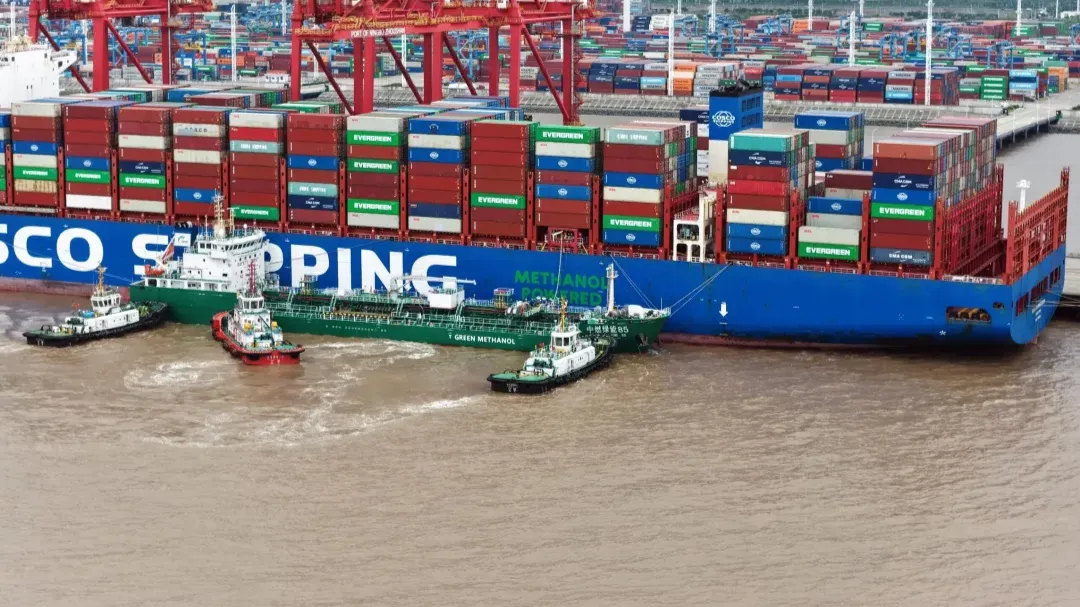
COSCO SHIPPING Holdings has reported two further milestones in its green methanol programme, combining a record fuel delivery at Ningbo with the introduction of at-berth methanol bunkering for international containerships at Guangzhou Port.
The 20,000-TEU-class COSCO SHIPPING GEMINI received 7,500 tonnes of green methanol at Ningbo’s Meishan terminal, setting a new single-operation methanol bunkering record for the COSCO SHIPPING group. Meanwhile, COSCO SHIPPING CARNATION completed Guangzhou Port’s first green methanol bunkering operation for an international containership alongside a terminal.
Announced in the company’s 30 September fleet update, the operations form part of a broader programme combining methanol dual-fuel newbuildings, conversions of existing vessels and the development of supporting fuel-supply capabilities.
A Record Delivery for a Converted Containership
The 7,500-tonne delivery to COSCO SHIPPING GEMINI marks a further step in supplying methanol at the volumes required by large ocean-going containerships.
The vessel also illustrates the company’s approach to adapting its existing fleet. Originally powered by conventional marine fuel, COSCO SHIPPING GEMINI has undergone a comprehensive conversion to methanol dual-fuel propulsion. According to the company, the work encompassed main and auxiliary engine upgrades, additional methanol fuel tanks, associated piping and the integration of automation systems.
The project links two elements of fleet decarbonisation: installing alternative-fuel capability on an existing ship and establishing the bunkering arrangements needed to use that capability in service. COSCO SHIPPING Holdings sees such conversions as a practical model for upgrading other large containerships alongside its newbuilding programme.
Guangzhou Adds At-Berth Methanol Bunkering
At Guangzhou, the operation took place on 28 September, when the bunker vessel DAQING 268 supplied 300 tonnes of green methanol to COSCO SHIPPING CARNATION at the Nansha Phase II terminal.
The Nansha Maritime Safety Administration confirmed that this was the port area’s first terminal-side methanol bunkering operation for an international container liner. It adds an at-berth option to the methanol bunkering services already available at anchorage.
The operational distinction matters for liner schedules. According to the authority, the arrangement allows container handling to continue outside the designated bunkering exclusion zone, subject to strict separation and safety controls. Ships can therefore take on fuel during a scheduled terminal call rather than making a separate trip to an anchorage.
COSCO SHIPPING Ports said preparations included risk assessments, equipment checks, pipeline tightness testing and nitrogen inerting. The terminal also applied staged bunkering controls and continuous monitoring during the operation, followed by line clearing and post-operation checks.
Methanol Newbuildings Across Multiple Vessel Sizes
The bunkering developments are taking place alongside the expansion of COSCO SHIPPING Holdings’ methanol-capable fleet across several capacity classes.
Its 16,000-TEU series includes COSCO SHIPPING YANGPU, delivered in June 2025. The vessel introduced a domestically manufactured methanol dual-fuel main engine into operational service and is equipped with an approximately 11,000-cubic-metre methanol fuel tank. COSCO SHIPPING said this provides sufficient capacity for a one-way voyage from the Far East to the US East Coast without refuelling.
At the larger end of the fleet, OOCL WISDOM, named in May 2026, has a capacity of 24,168 TEU. Built for OOCL by Nantong COSCO KHI Ship Engineering, the vessel was designated for deployment on Far East–Northwest Europe services. Its main engine, auxiliary engines and boilers are equipped with methanol dual-fuel systems, supported by four methanol tanks with a combined capacity of 14,300 cubic metres.
The programme also includes 12 methanol dual-fuel containerships of 14,000 TEU, designed for Latin American trades with substantial refrigerated-container capacity. These vessels were ordered from COSCO SHIPPING Heavy Industry Yangzhou in August 2024, making them part of the company’s established fleet investment programme rather than a newly announced September 2026 order.
Together, these projects show how the company is applying methanol propulsion across different vessel sizes and trade requirements, rather than concentrating its investment in a single ship class.
Connecting Fleet Investment with Fuel Availability
COSCO SHIPPING Holdings’ approach extends beyond ordering alternative-fuel vessels. The company is also developing experience in fuel procurement, bunkering, crew operations and maintenance, while coordinating with ports and marine-fuel suppliers. Its stated objective is to build the operational support needed for a growing methanol-capable fleet.
The latest operations address different parts of that task. Ningbo demonstrated a large-volume delivery to a converted ultra-large containership, while Nansha added a bunkering option that can be incorporated into a normal terminal call.
The emissions outcome, however, depends on more than the ship’s propulsion system. Methanol’s lifecycle greenhouse-gas performance varies with its production pathway. DNV has identified the potential for substantial reductions from certain bio-methanol and e-methanol pathways, while also highlighting fuel cost and availability as major constraints on wider adoption.

READ MORE
 Containers
COSCO SHIPPING Holdings to Launch Third Far East–ECSA Service in December
 Containers
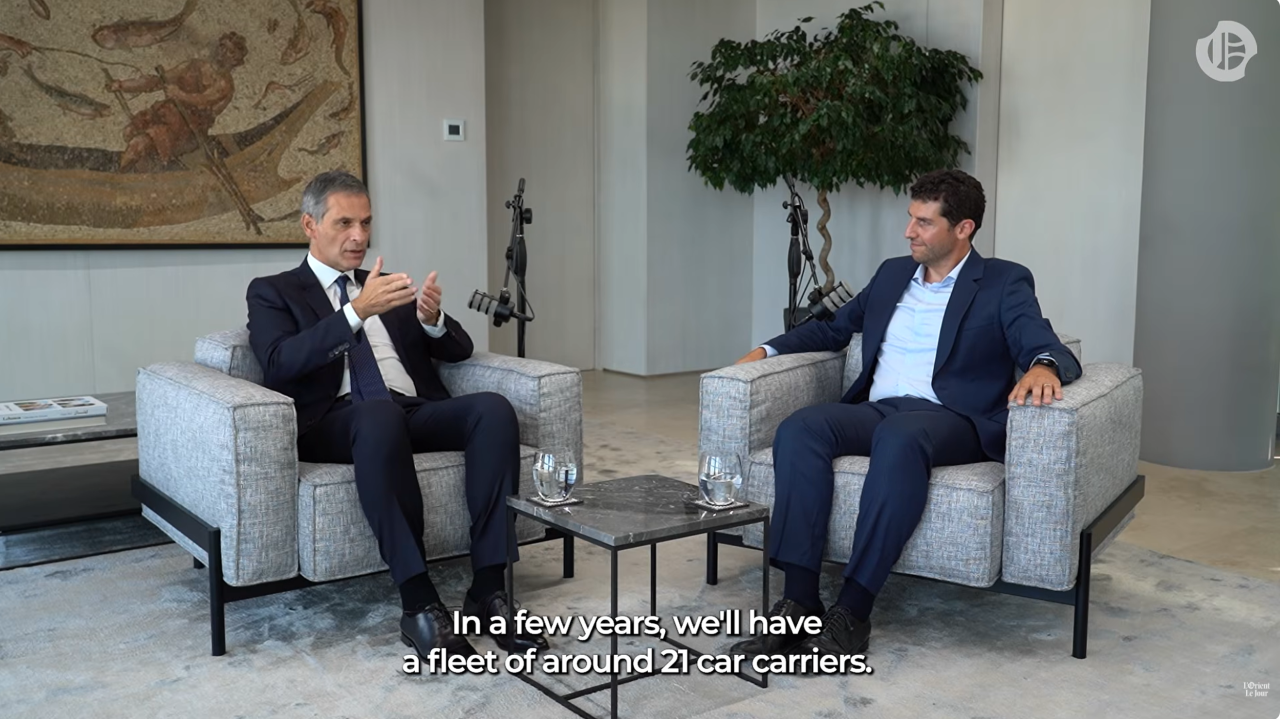
CMA CGM Expects Car Carrier Fleet to Reach Around 21 Vessels
 Containers
CMA CGM’s Reported French Flag Retreat Puts Shipping Taxes in Focus
 Containers
Up to 30 New Feeders: Inside Contships’ Fleet Renewal Strategy
 Containers
CMA CGM Chief Says Zero Carbon by 2050 May Take a Miracle
 Containers
COSCO SHIPPING Holdings Steps Up Asia-Pacific Expansion with Dual-Brand Push
 Containers
Ningbo Containerized Freight Index Weekly Commentary Overall Demand Weakened During the Holiday; Freight Rates Declined on Most
 Containers
SAIC Anji Logistics is moving into the 11,000-CEU class.
 Containers
14m TEU Orderbook Puts Container Shipping on Course for a 2027 Capacity Test
 Containers