


Maersk Bunkers U.S.-Produced Corn Ethanol
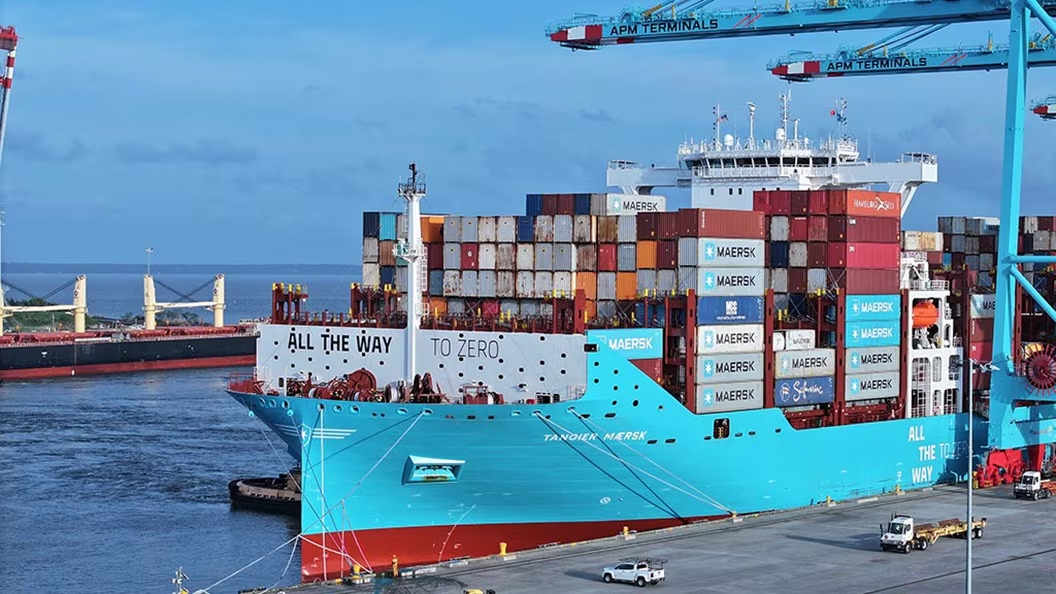

A.P. Moller - Maersk has completed what it describes as the first commercial ship-to-ship bunkering of ethanol for an ocean-going containership in the United States, using 100% U.S.-produced corn ethanol.
The operation, announced on September 28, involved Tangier Maersk, one of the carrier’s dual-fuel containerships.
Significantly, Tangier Maersk was not originally designed specifically for ethanol. The vessel belongs to Maersk’s fleet of methanol-capable dual-fuel containerships, although the company is increasingly using the broader description “dual-fuel alcohol-enabled container vessel” as it explores the use of different alcohol-based fuels.
Maersk said the bunkering operation provided further practical experience with ethanol in a commercial shipping environment, covering vessel operations, infrastructure, fuel sourcing and the wider supply chain.
Ethanol already benefits from an established production base and existing storage and distribution infrastructure, while also offering a degree of compatibility with alcohol-fuelled marine propulsion technology. Its potential for broader use in shipping, however, will depend on fuel availability, regulation and the readiness of the wider maritime supply chain.
Ditlev Blicher, President of Maersk North America, said that achieving lower-emission logistics requires turning new technologies into practical solutions that can ultimately be scaled. The Tangier Maersk bunkering operation, he said, provides important real-world experience in introducing alternative fuels into commercial shipping.
The United States is one of the world’s largest ethanol-producing countries and has a well-established corn ethanol industry covering production, storage and transportation.
Compared with green methanol and green ammonia, where dedicated low-emission production capacity is still being scaled up, ethanol already has substantial existing production volumes and mature logistics infrastructure. That gives it an important practical advantage as the shipping industry evaluates a broader range of alternative marine fuels.
This was not Maersk’s first experiment with ethanol. The company has been testing the fuel for some time on methanol dual-fuel vessels as part of efforts to determine whether its existing alcohol-fuelled fleet could operate on a broader range of fuels.
Early trials were carried out aboard Laura Maersk, initially using an E10 blend consisting of 10% ethanol and 90% e-methanol. The programme focused on areas including ignition, combustion performance, lubrication and material compatibility.
Maersk subsequently increased the share of ethanol in the fuel mixture and began assessing the feasibility of operating on 100% ethanol.
During 2026, the testing programme expanded from smaller demonstration vessels to larger ocean-going containerships. Antonia Maersk has already been involved in operations using 100% ethanol, moving Maersk’s programme beyond initial engine and combustion testing and into the validation of ethanol aboard large commercial vessels and within real fuel supply chains.
The latest operation involving Tangier Maersk represents another step forward. Commercial ship-to-ship bunkering involves far more than demonstrating that an engine can burn ethanol. It also requires fuel sourcing, terminal and storage infrastructure, bunker vessels, operating procedures, safety management and regulatory approvals. In that sense, the U.S. operation more closely resembles the conditions that would be required for ethanol to become a scalable marine fuel.
Maersk has been one of the most active liner operators in deploying methanol dual-fuel containerships. Its growing focus on ethanol suggests that the company is also looking to expand the range of fuels available to that fleet.
Methanol and ethanol are both alcohol-based fuels and share certain characteristics in fuel handling and engine technology. If methanol-capable vessels can also operate safely and efficiently on ethanol, shipowners could gain greater flexibility over future fuel sourcing.
That optionality could become increasingly valuable as shipping companies seek to manage uncertainty over the availability, price and geographic concentration of different low-emission fuels.
The timing is also significant. Since 2025, the U.S. administration under President Donald Trump has strongly opposed the IMO Net-Zero Framework and has repeatedly criticised proposals it characterises as a global carbon tax. The IMO extraordinary session scheduled to formally adopt the framework was adjourned for a year in October 2025, while Trump again criticised the IMO approach during his address to the United Nations General Assembly in September 2026.
At the same time, ethanol is a fuel in which the United States already has a major industrial position.
Earlier this year, the Financial Times reported that Maersk was considering increasing its use of ethanol as part of an effort to diversify its fuel supply and reduce reliance on Chinese supplies of green methanol.
Maersk CEO Vincent Clerc also argued that the political durability of shipping’s energy transition could improve if the associated industrial benefits were distributed across a wider range of countries. Existing ethanol production in the United States and Brazil, he noted, could provide one such pathway.
Against that backdrop, the use of 100% U.S.-produced corn ethanol for the first commercial STS ethanol bunkering of an ocean-going containership in the United States carries significance beyond a single fuel trial.
For Maersk, ethanol offers another potential way to diversify future fuel supply while drawing on an established agricultural, energy and logistics ecosystem in the United States.
With the international regulatory framework for shipping decarbonisation still subject to considerable political debate, the fuels that ultimately achieve scale may be determined not only by their technical performance and emissions profile, but also by supply availability, infrastructure, economics and the industrial interests surrounding them.

READ MORE
 Sustainability
Japan Completes Methanol Transport and Bunkering Vessel
 Sustainability
‘While I am President, there will be no global taxes’
 Sustainability
When the Future Can No Longer Be Predicted, How Do Shipping Companies Survive?
 Sustainability
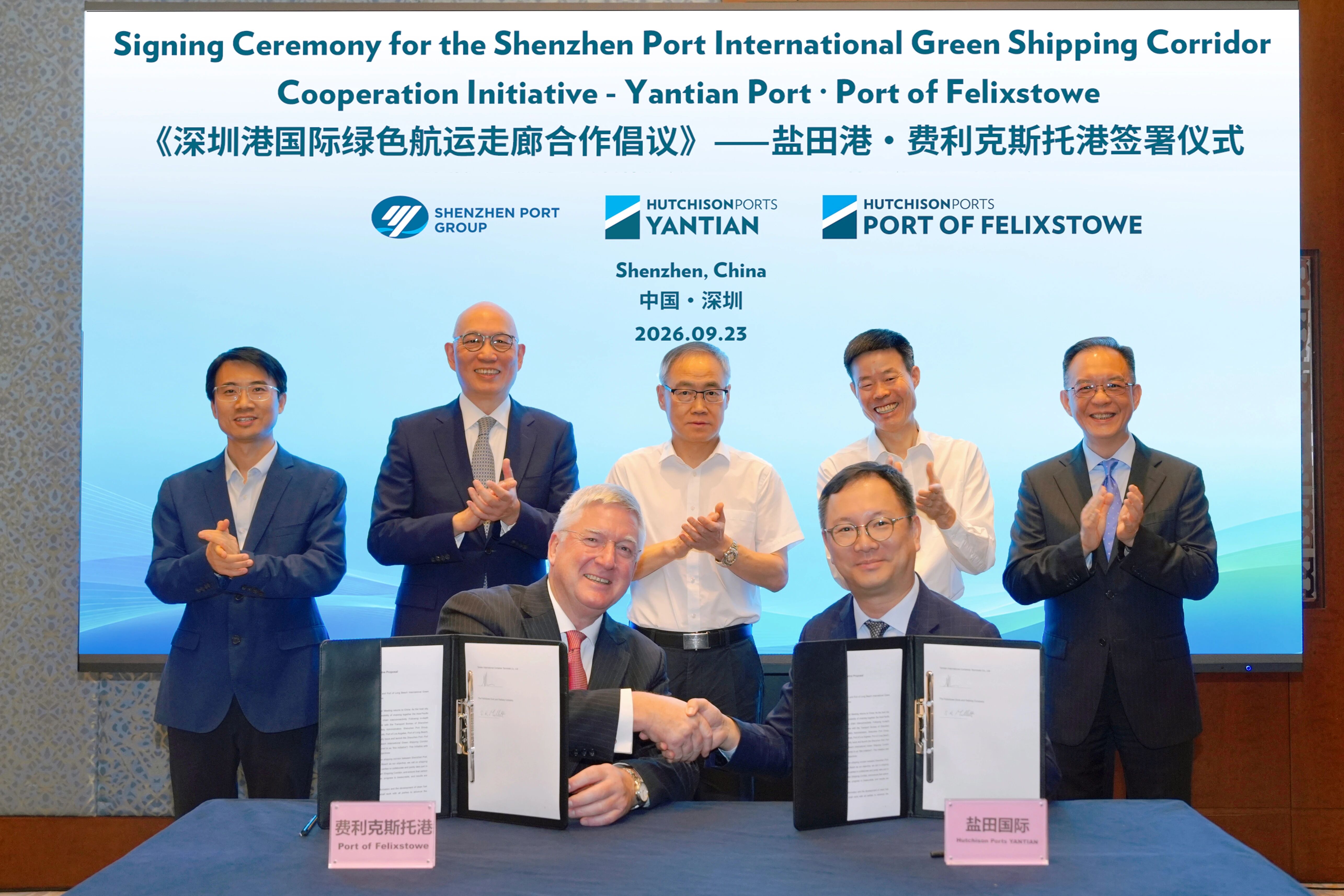
Yantian and Felixstowe Sign Green Shipping Corridor Cooperation Initiative
 Sustainability
Fleet Management Lights Up Anchor Plaza in Blue for World Maritime Day 2026
 Sustainability
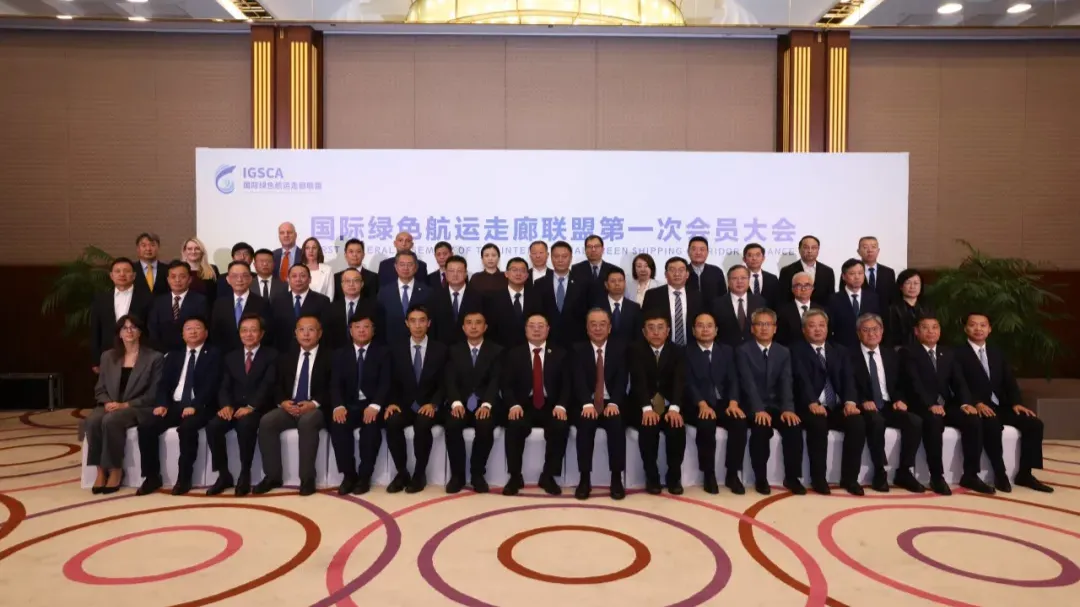
COSCO , CMA CGM and SIPG Join Launch of International Green Shipping Corridor Alliance
 Sustainability
Zero-Emission-Capable Ship Orders Slide as IMO Uncertainty Weighs on 2030 Target
 Sustainability
Fueling Now and the Future: IBIA Hong Kong Forum on Alternative Marine Energy
 Sustainability
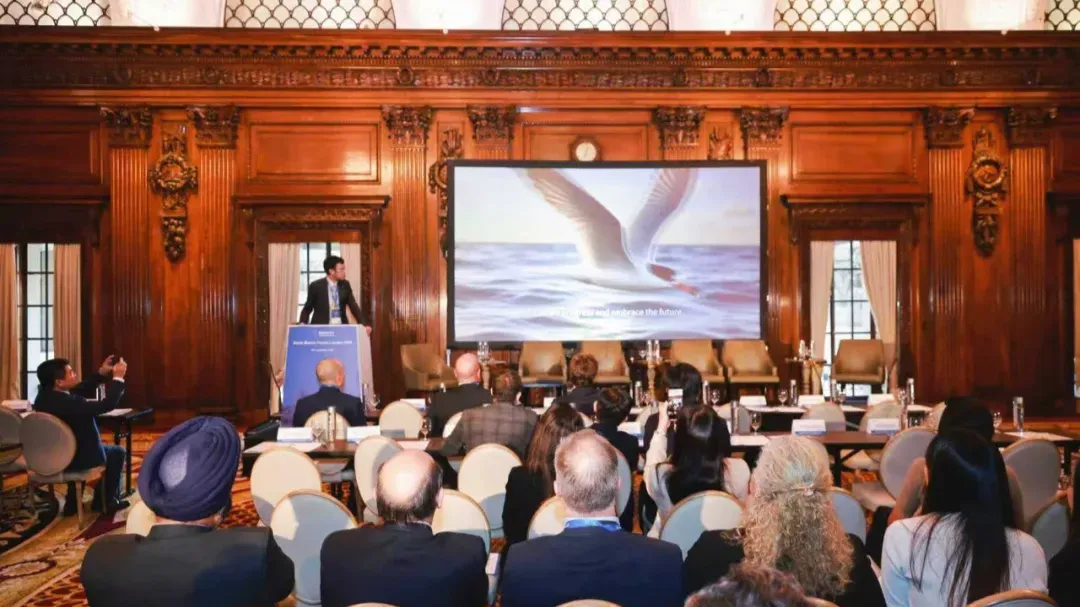
WMMF 2026 Promotional Film Debuts in London
 Sustainability