


Hubei Firm Proposes RMB427m LNG and Methanol Vessel Programme
Three project submissions cover 12 vessels for river and river-sea transport, but the plans remain at the preliminary filing stage, with shipyards and financing arrangements yet to be identified.
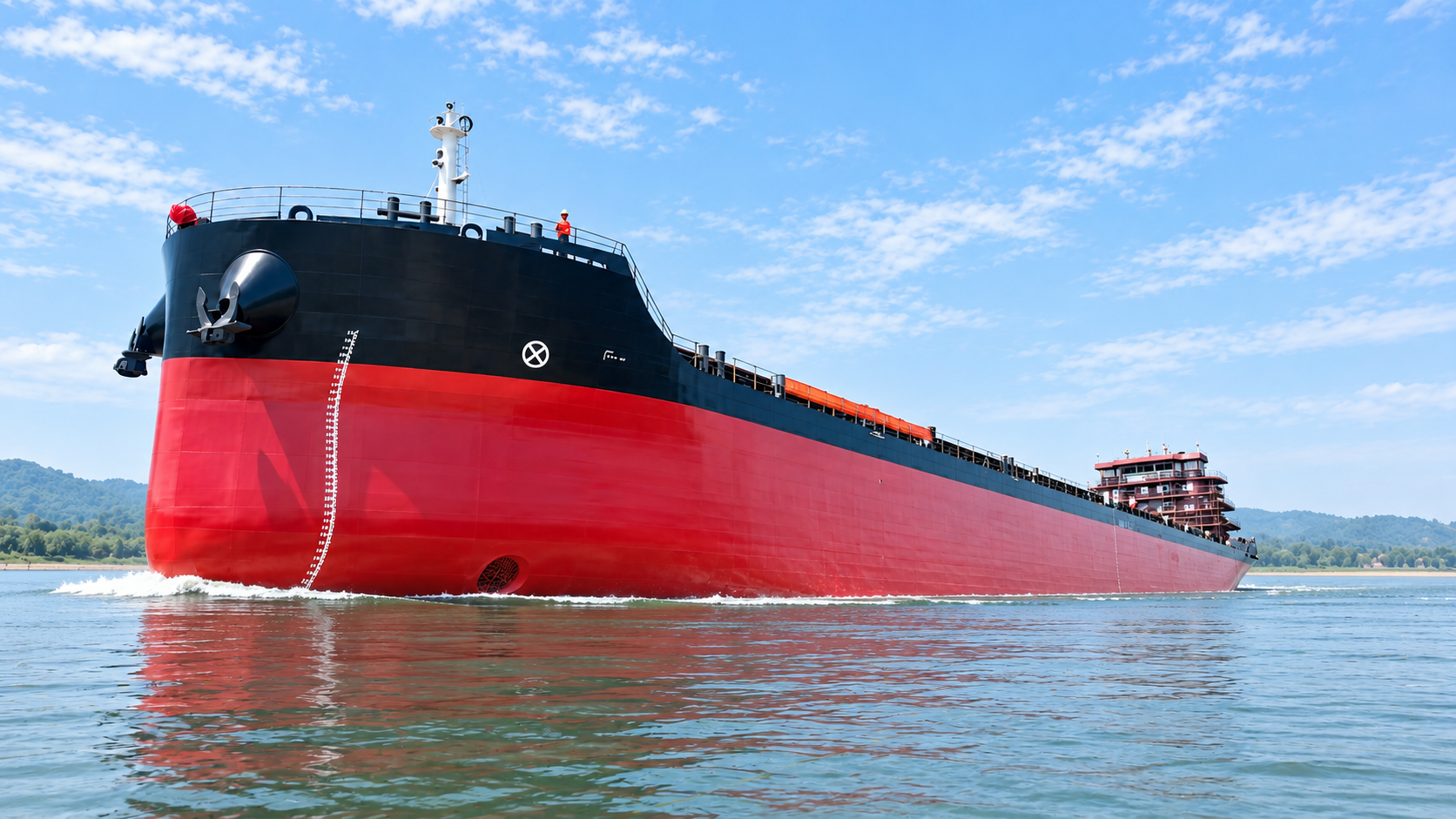

Wuhan-based Hubei Yunhe Zexing has proposed investing approximately RMB427 million in 12 LNG- and methanol-powered vessels in Yichang, adding a potential new fleet programme to the Yangtze River’s transition towards alternative fuels.
The privately owned company, registered in Chinese as 湖北运合则兴科技发展有限公司, submitted three separate projects for Yichang’s Wujiagang district on September 28, according to the project information provided. Together, they cover two LNG-fuelled river-sea vessels, five methanol-electric inland bulk carriers and five LNG-fuelled inland bulk carriers.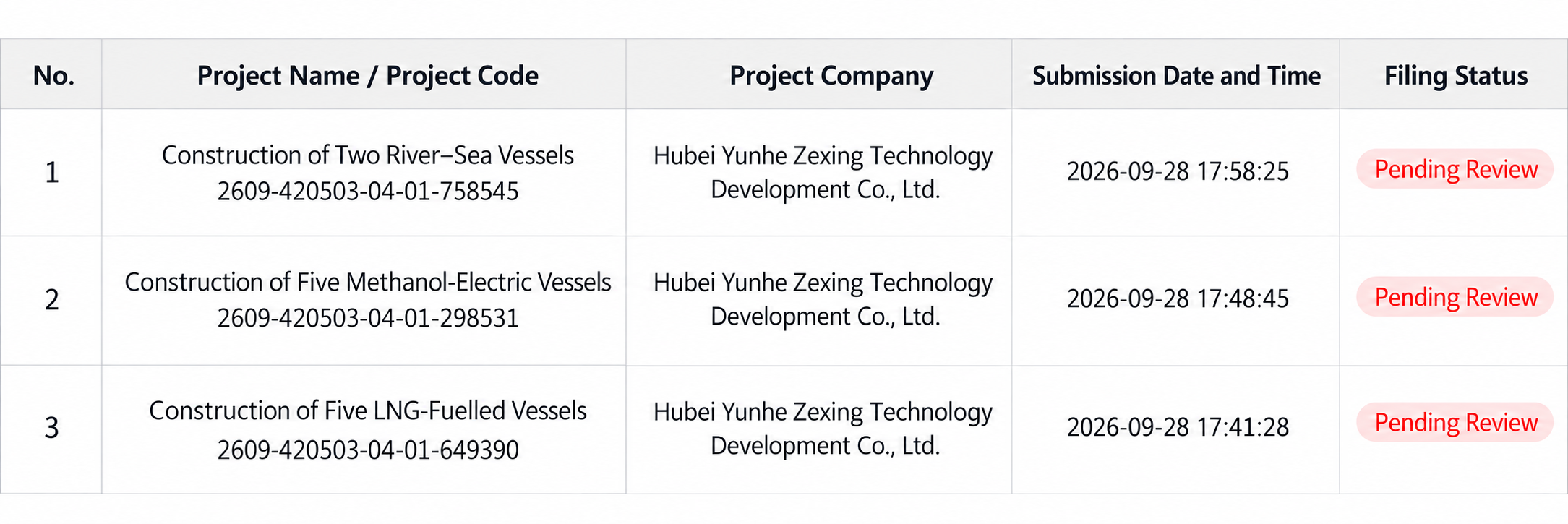
All three submissions list October 2026 as the intended construction start. However, their recorded status was still awaiting review. The proposals therefore represent planned investment rather than confirmed shipbuilding orders, and the timetable remains provisional.
Two fuel pathways
The largest vessels in the programme are two river-sea ships designed to operate on LNG as their sole fuel. Each would measure 143.98 metres in length, with a beam of 22 metres, a moulded depth of 10.7 metres and gross tonnage of 10,900.
Their estimated investment is RMB71 million apiece, or RMB142 million combined. Gross tonnage measures enclosed volume and should not be read as cargo-carrying capacity; no deadweight figure is specified in the supplied information.
The other ten vessels would serve inland bulk trades. Five methanol-electric ships carry an estimated investment of RMB30 million each, totalling RMB150 million. Five LNG-only vessels are budgeted at RMB27 million each, or RMB135 million.
Both inland types have the same stated principal dimensions: 130 metres long, 16.26 metres wide and 7.28 metres in moulded depth. These matching dimensions suggest scope for a common hull platform, although the available information does not establish whether they share a detailed design.
The methanol-electric vessels are budgeted at roughly 11% more per ship than the LNG version. That difference is an initial project estimate, rather than a comparison of contracted yard prices or lifetime operating costs.
A developing Yangtze market
Yichang sits at the connection between the Yangtze’s upper and middle reaches, making it an important location for inland shipping and river-sea logistics.
River-sea vessels can link inland and coastal ports without transferring cargo between river ships and seagoing vessels. The commercial model is already in operation: in May 2024, the LNG dual-fuel Chuang Xin 5 completed the inaugural voyage on a direct route from Zhoushan to Luohuang port in Chongqing.
Methanol-electric propulsion also has an established demonstration base on the river. China Classification Society reported the launch of Guo Neng Chang Jiang 01, a 10,850-tonne cargo-capacity inland bulk carrier equipped with methanol dual-fuel integrated electric propulsion, in May 2024.
These earlier projects provide context for the proposed investment, but do not establish the technical specification or operating economics of Yunhe Zexing’s vessels. The supplied submissions do not detail the methanol-electric power configuration, equipment suppliers or fuel procurement arrangements.
From proposal to construction
According to the company information supplied, Yunhe Zexing was established in January 2024 and is registered in Wuhan’s Jiang’an district. Its listed activities include technical services, industrial design, metal materials and machinery sales.
That makes the proposed fleet a substantial undertaking for a relatively young business. Its age and registered business scope alone, however, offer no basis for judging its ability to finance or operate the vessels.
The available project information identifies no shipyard, construction contract, financing package, charterer or delivery schedule. It also leaves unclear whether Yunhe Zexing intends to operate the ships itself or develop them for other owners or operators.
For the industry, the proposals point to prospective demand across two alternative-fuel pathways. The next commercially meaningful developments will be completion of the filing process, identification of construction partners and evidence that funding and employment arrangements are in place.

READ MORE
 Shipbuilding
Zodiac Linked to First LNG Carrier Order at Hanwha Ocean
 Shipbuilding
RCL Adds Four Feeders to Its Huangpu Wenchong Programme
 Shipbuilding
X-Press Feeders CEO Shmuel Yoskovitz : “When You Own Your Own Vessels, You Control Your Destiny”
 Shipbuilding
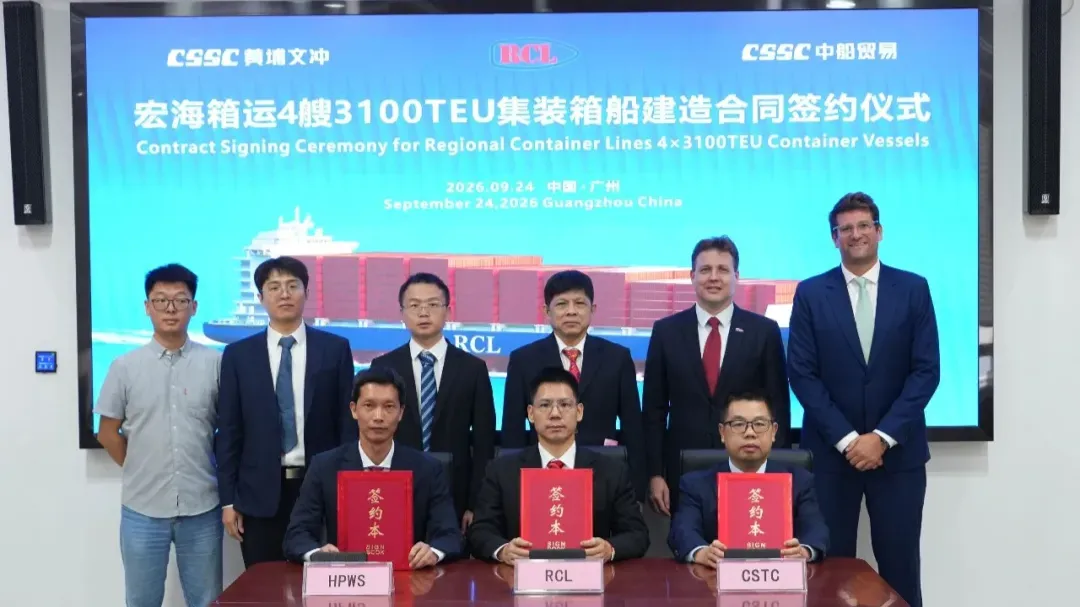
4 More,totally 16 Since 2024: Why RCL Keeps Ordering at Huangpu Wenchong
 Shipbuilding
DAB Group Enters Shipowning With First Ultramax Pair Ordered in China
 Shipbuilding
Union Maritime Adds Nine Ships Across Five Segments as Newbuild Programme Reaches 79
 Shipbuilding
Fujian Guohang Plans RMB2.49bn Fleet Expansion into LR2 Tankers and Heavylift
 Shipbuilding
Swire Buys Four Heavy-Lift Ships in Latest Strategic Shift
 Shipbuilding
French Space Logistics Owner Selects China’s GSI for Next-Generation Ro-Ro Vessel Project
 Shipbuilding