


French Space Logistics Owner Selects China’s GSI for Next-Generation Ro-Ro Vessel Project
Transporting Rockets and Satellites: French Space Logistics Owner Selects China’s GSI for Next-Generation Ro-Ro Vessel Project
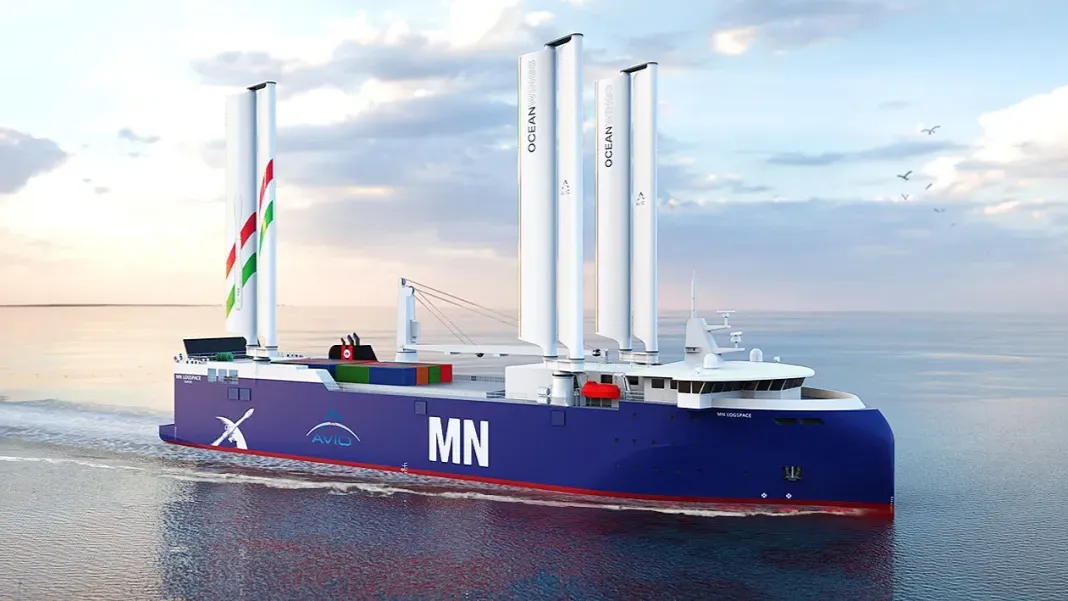
A Chinese shipbuilder is making further inroads into Europe’s high-end specialized vessel market, with a project designed to support the transportation of rockets, satellites and other high-value aerospace equipment.
On September 15, China State Shipbuilding Corporation (CSSC) subsidiary Guangzhou Shipyard International (GSI), together with China Shipbuilding Trading (CSTC), officially secured the effective contract for a 1+1 series of 105-meter high-end ro-ro vessels ordered by French specialized shipping company Compagnie Maritime Nantaise (MN).
The project marks the first high-end export order secured by GSI’s newly established Xiaohu Island shipbuilding base, representing an important milestone in the company’s strategy to move toward more specialized, technologically advanced and internationally oriented shipbuilding.
Although the vessels are relatively small compared with today’s ultra-large container ships, VLCCs or LNG carriers, the significance of this project lies in the customer profile, operational mission and technical requirements behind it.
The vessels will be deployed within France’s aerospace logistics system, operating between Kourou River and Pariacabo Port in French Guiana, supporting the transportation of highly valuable equipment including rockets, satellites, aircraft and helicopters.
For a shipyard, such a project requires far more than conventional shipbuilding capability. It demands specialized vessel design, exceptional reliability, precise cargo handling solutions and advanced environmental performance.

Compagnie Maritime Nantaise: A Specialist in Aerospace and High-Value Logistics
The customer behind the order, Compagnie Maritime Nantaise (MN), is not a traditional ro-ro operator. The French company has built its reputation around specialized transportation services, including aerospace logistics, military supply chains and high-value cargo transportation.
MN is part of the French Sogestran Group and has decades of experience operating vessels designed for demanding missions.
The company already operates vessels closely connected with Europe’s aerospace industry. Among them, MN Colibri and MN Toucan were specifically designed to transport components of the Ariane launcher system from Europe to the Guiana Space Centre in Kourou, French Guiana, one of the world’s important satellite launch facilities.
MN also operates specialized ConRo vessels such as MN Calao and MN Tangara, which support military logistics and the transportation of special equipment.
Therefore, GSI’s latest order is not simply a commercial ro-ro vessel project. It represents entry into a highly specialized segment where ship reliability, safety standards and operational experience are critical factors.
Transporting aerospace equipment requires vessels capable of handling exceptionally valuable cargo under strict conditions. The choice of GSI by MN reflects growing recognition of Chinese shipbuilders’ capabilities beyond conventional merchant vessels.
A New Generation of Green Ro-Ro Vessel for Specialized Transport
According to GSI, the 105-meter ro-ro vessel incorporates several advanced technologies, including a wind-assisted propulsion system, hybrid propulsion system and digital twin technology.
The vessel is designed to achieve highly intelligent operational control and meets EEDI Phase 3 energy efficiency requirements. It also features a DNV biofuel class notation and reserves space for future adoption of green fuels.
The design reflects a broader shift in the specialized shipping market.
Historically, vessels serving aerospace and military logistics focused primarily on reliability, mission capability and cargo security. However, as global shipping moves toward decarbonization, shipowners are increasingly considering lifecycle efficiency, fuel flexibility and future regulatory compliance.
For MN, the new vessels must not only perform critical aerospace logistics tasks but also remain competitive in an increasingly carbon-conscious maritime environment.
The combination of wind assistance, hybrid propulsion and digital management demonstrates how specialized vessel design is evolving from a purely functional approach toward a more integrated model combining operational performance and sustainability.
Chinese Shipbuilders Expanding into Europe’s High-End Specialized Vessel Market
One notable aspect of the project is the changing competitive landscape in high-end ro-ro and specialized vessel construction.
Previously, several of MN’s advanced ro-ro and ConRo vessels were built by Korean shipyards. For example, MN Calao and MN Tangara were constructed by Hyundai Mipo Dockyard.
The decision to place this new-generation vessel project with GSI highlights the increasing competitiveness of Chinese shipbuilders in specialized ship segments.
For many years, China’s shipbuilding industry built its global position through large-scale production of mainstream commercial vessels, including bulk carriers, tankers and container ships. However, the competitive landscape is gradually expanding.
Shipowners today are increasingly looking for:
- customized vessel solutions;
- advanced energy-saving technologies;
- integrated engineering capabilities;
- long-term operational value.
In recent years, Chinese shipyards have achieved significant progress in various high-value sectors, including large car carriers, multipurpose heavy-lift vessels, LNG carriers, offshore vessels and vessels designed for new energy industries.
The MN project represents another step in this transformation, demonstrating that Chinese shipbuilders are moving from a manufacturing-driven advantage toward a technology and engineering-driven competitive model.
Xiaohu Island’s First Export Order and GSI’s High-End Shipbuilding Strategy
For GSI, the significance of this project extends beyond the vessel itself.
The MN order is the first high-end export benchmark project for the company’s Xiaohu Island shipbuilding base.
As China’s shipbuilding industry enters a new stage of development, major shipyards are increasingly focusing on optimizing product structures rather than simply expanding production capacity.
GSI has been promoting its “Three Premiums and Four Specialties” ship type strategy, aiming to strengthen its capabilities in premium oil tankers, premium gas carriers, premium passenger vessels and specialized ships.
The MN project fits closely with this direction. The Xiaohu Island base is positioned not merely as an additional production facility, but as a platform for more specialized, advanced and internationally competitive shipbuilding projects.
From an industry perspective, a 105-meter ro-ro vessel cannot be compared in scale with a 24,000 TEU container ship or a VLCC. However, its strategic value lies in the market segment it represents.
High-end specialized vessels have traditionally been dominated by European and Korean shipbuilders. China’s gradual entry into this market reflects the broader upgrading of the country’s shipbuilding industry.
The cooperation between GSI and MN is therefore more than a single shipbuilding contract. It represents another example of Chinese shipyards expanding into higher-value segments of the global maritime industry.
For Xiaohu Island, this first high-end export project may become a starting point for attracting more international customers in specialized vessel markets. For China’s shipbuilding sector, it provides another indication that the industry is moving beyond building more ships toward building more sophisticated and valuable ships.

READ MORE
 Shipbuilding
Will Newbuilding Prices Still Be This High a Year From Now?
 Shipbuilding
Guohang Enters Tankers with RMB 2.49bn Fleet Plan
 Shipbuilding
Henghui Reportedly Orders Up to Four Heavy-Lift Ships at ZPMC
 Shipbuilding
Swire Buys Four Heavy-Lift Ships in Latest Strategic Shift
 Shipbuilding
24 Firm Orders + 16 Options: Ren Yuanlin Accelerates Yangzijiang Maritime’s ‘Financial Shipowner’ Strategy
 Shipbuilding
Hengli Heavy Industries moves five newbuildings from world’s largest dock in latest production milestone
 Shipbuilding
$3.1 Trillion in Revenue, $824 Billion in New Ships: Is Shipping Buying the Wrong Tonnage?
 Shipbuilding
Maersk’s $5bn Newbuilding Push Signals a Shift Back Toward Fleet Growth
 Shipbuilding
185 Ships and Counting: How Union Maritime Is Building Its Next Fleet in China
 Shipbuilding