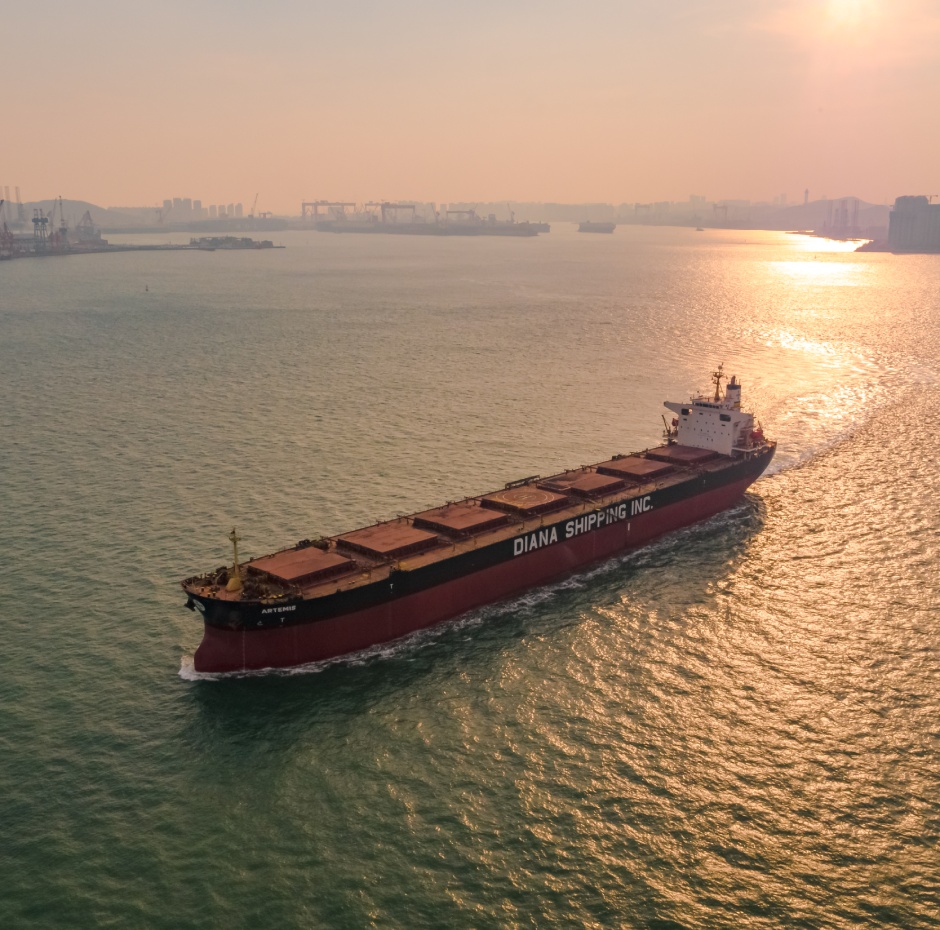



On September 23, the 80,000 dwt multipurpose grain carrier GUO REN HAI arrived at Ningbo-Zhoushan Port with a full cargo of Brazilian soybeans. The vessel berthed directly and discharged its entire cargo at one port. On the same day, its operator, COSCO SHIPPING Bulk, signed a memorandum of cooperation with Ningbo-Zhoushan Port to develop a model for discharging imported grain in full and distributing it to customers in eastern China and along the Yangtze River.
The arrival brought several elements of the company’s grain strategy together in one voyage. According to COSCO SHIPPING Bulk, the ship has about 96,000 cubic metres of hold capacity and can carry up to 70,000 tonnes of soybeans. The company says this class can sail directly from Santos, Brazil, to China in about 40 days, five to seven days less than the transit time it cites for conventional bulk shipping. For this voyage, coordination with the loading port and agents on a stowage plan enabled the ship to load an additional 1,214 tonnes, the company said. These figures describe separate gains in passage time, usable capacity and cargo handling. Their combined effect across a round voyage will determine how valuable the design proves to be.
A grain carrier designed around the cargo
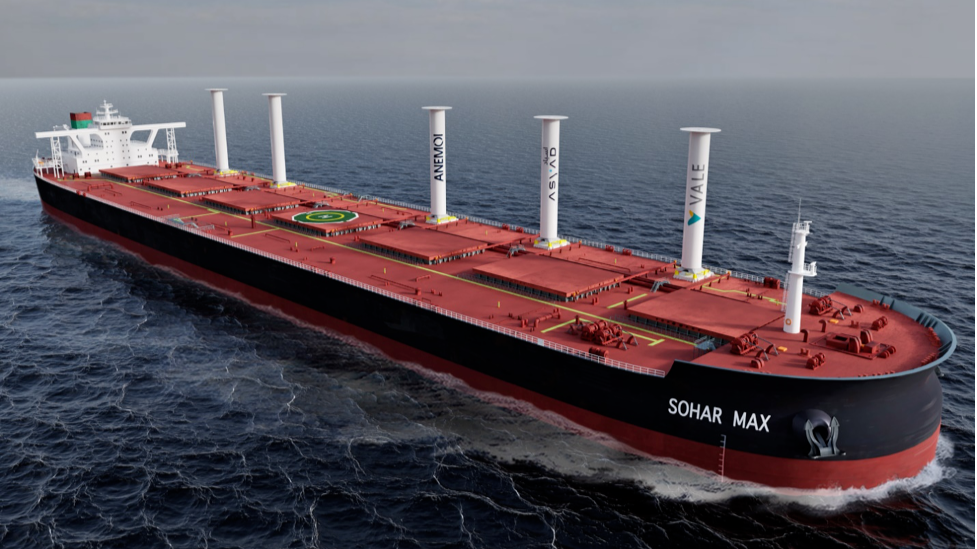
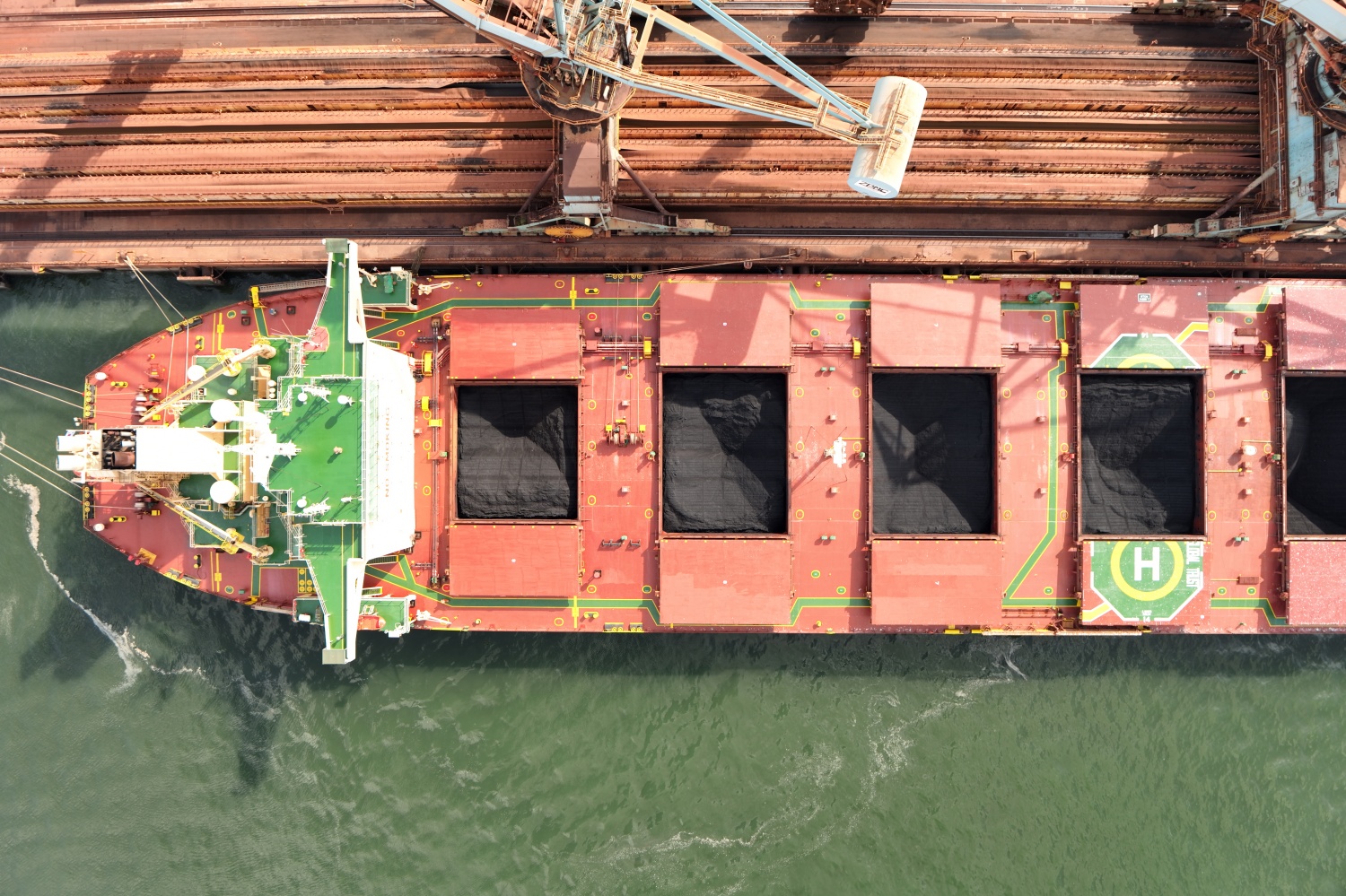
Soybeans and other grains have long moved on conventional Panamax and Kamsarmax bulk carriers. COSCO SHIPPING Bulk’s investment reflects a closer examination of costs that deadweight alone does not capture. Grain needs substantial hold volume relative to its weight; it also takes time to trim at the load port, clear from recesses at discharge and protect against changing temperature and humidity over a long passage. GUO REN HAI has open-hatch, box-shaped holds without the internal ledges and steps that complicate trimming and cleaning. Its equipment includes dehumidification, mechanical ventilation and temperature sensors at different levels within the holds. The commercial aim is to turn a greater share of available space into cargo carried while making handling and quality control more predictable.
The extra 1,214 tonnes loaded on the Brazil voyage shows why the operating plan matters as much as the hull form. A large, open hatch makes more of the hold accessible, but the load port must still agree on how to distribute and trim the cargo. Likewise, humidity controls require monitoring throughout the passage. China Classification Society says the vessel also incorporates an optimised low-resistance hull form, energy-saving devices, a shaft generator, shore-power capability, selective catalytic reduction and an exhaust-gas cleaning system. Taken together, these features address the ship’s performance at sea, its work in port and the condition of the grain on arrival.
COSCO SHIPPING Bulk says the type can average up to 14.5 knots when laden. A shorter transit could reduce inventory time for customers and allow a vessel to begin its next employment sooner, although sailing faster may also increase fuel consumption. The commercial test is therefore wider than a single 40-day passage: operators will need to assess fuel use per tonne carried, the consistency of arrival times, cargo condition and the number of productive days gained over a full round voyage.

Multipurpose capacity and the return voyage
Grain moves in large volumes from the Americas to China, leaving owners with a familiar question after discharge: where should the ship go next, and what can it carry on the way? Ballast legs and waiting time can absorb much of the value of a laden crossing. The new vessels are designed to handle grain alongside containers, large equipment, general cargo and other dry bulk commodities. CCS confirms the range of cargoes for the Dalian-built series, while COSCO SHIPPING Bulk has described similar flexibility in the separate 80,000 dwt grain-carrier project developed with CITIC Financial Leasing and Fujian Shipbuilding.
That flexibility creates scope to connect inbound agricultural cargo with Chinese exports, including equipment and other manufactured goods. It does not, by itself, establish a profitable two-way service. Containers require boxes, suitable terminals and workable stowage arrangements; large pieces of equipment have their own securing and port-handling requirements. The export destination must also fit the vessel’s next grain-loading programme. The measure of success will be how often COSCO SHIPPING Bulk can turn those loading options into paying cargo, reduce ballast distance and improve earnings across successive voyages.

One discharge port, many inland destinations
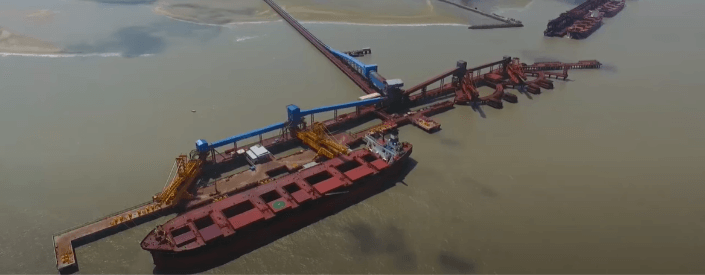
The Ningbo-Zhoushan agreement extends the operating plan beyond the ship. Under the proposed “full discharge and distribution” model, an ocean-going grain carrier unloads its complete cargo at a hub port. Storage and onward transport then handle deliveries in smaller lots to customers in the Yangtze River region and eastern China. For the deep-sea ship, a single discharge port offers the prospect of a shorter port rotation and an earlier start to its next voyage. For importers, inventory held at the hub can be allocated to different destinations and delivery schedules.
The economics depend on what happens after the hatches are closed. Grain must move through berth, storage, inspection and inland transport without adding delays or costs that cancel the ship’s gain in turnaround time. Cargo ownership and release procedures must also work for customers taking different parcels. The memorandum covers vessel and port coordination, integrated supply-chain services and the development of cargo in both directions. GUO REN HAI has demonstrated the ocean passage and full discharge at Ningbo-Zhoushan; repeated deliveries to inland customers will show whether the broader model can work reliably at scale.
Scaling a long-term fleet
One successful voyage can validate a design, but regular customer commitments require a fleet. COSCO SHIPPING Development said in its 2026 interim disclosures that seven 80,000 dwt multipurpose grain carriers had been delivered and leased out since the start of the year. In 2025, COSCO SHIPPING Bulk, CITIC Financial Leasing and Fujian Shipbuilding signed agreements for a project covering 30 vessels of the 80,000 dwt type. COSCO SHIPPING Development subsequently announced plans in June 2026 for a further 20 multipurpose grain carriers of 87,000 dwt: 15 to be built by COSCO SHIPPING Heavy Industry in Dalian and five by CSSC Chengxi. The announced contract price is RMB 319 million per vessel, or RMB 6.38 billion across the 20 ships, excluding tax.
For the 15 Dalian-built vessels, COSCO SHIPPING Development expects delivery from mid-2029 through the end of 2030. Its filing says the ships are to be placed on long-term operating charters with Huifeng Shipping, a COSCO SHIPPING Bulk subsidiary, for 240 months, with a 120-day adjustment. This arrangement gives the operator a scheduled supply of similar ships and the asset owner a long stream of charter income. It also commits the operating business to finding suitable employment through multiple freight-market cycles. As the fleet grows, common designs could simplify crew training, maintenance, spares and voyage planning, provided that cargo commitments grow with it.
The September voyage offers an early operational result: a Brazil–China soybean movement, 1,214 tonnes of additional loading through coordinated stowage and full discharge at one Chinese port. The larger questions now concern repetition. Can the ships consistently use their hold capacity across different loading ports? Can their speed improve round-voyage economics after fuel is accounted for? Will their alternative cargo capability produce fewer ballast miles, and can the Ningbo-Zhoushan distribution model deliver grain efficiently beyond the port? The answers will emerge as more vessels enter service and the company puts the complete import-and-export network to work.