


Cetus Maritime Eyes 13-Vessel Expansion as Seacon Deal Points to Pre-IPO Consolidation
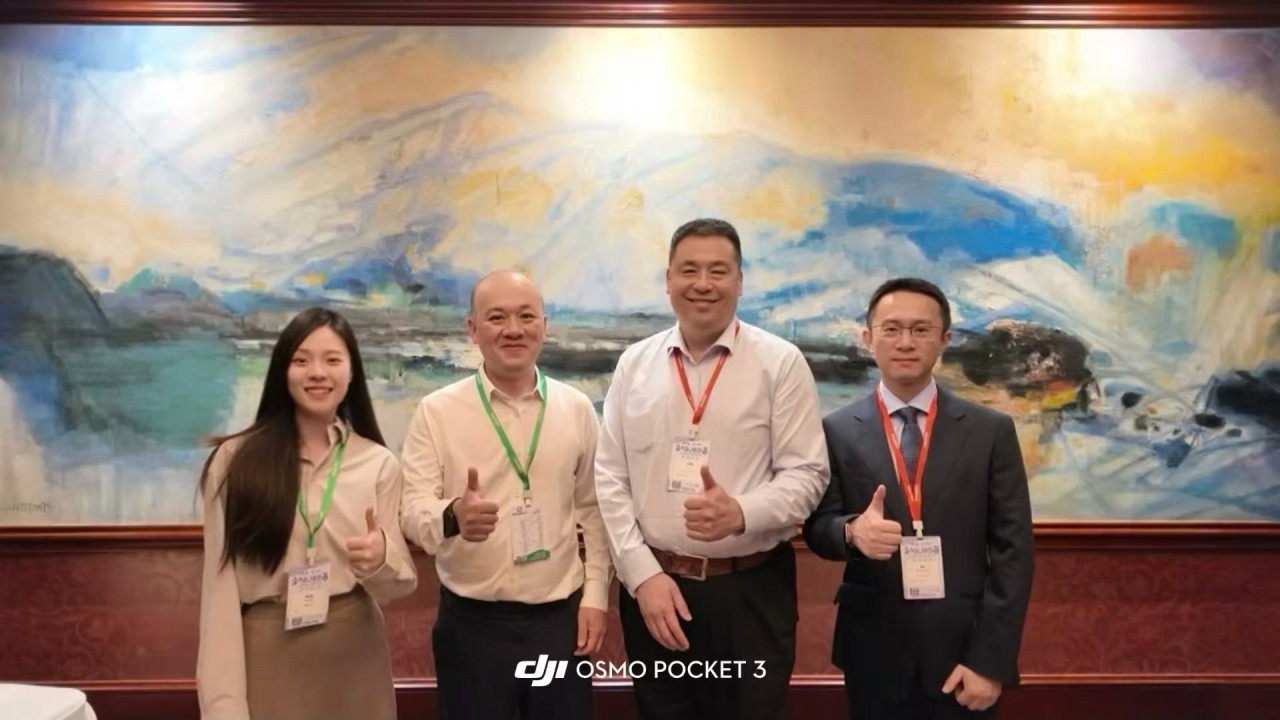
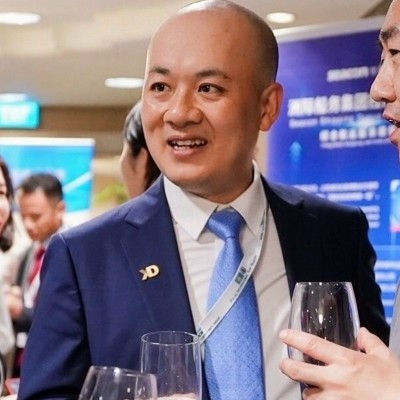
A potential transaction involving 13 vessels could mark one of the most significant expansion moves in Cetus Maritime’s recent history — and, more importantly, may signal that the company is entering a new phase in which fleet growth, corporate consolidation and capital-market ambitions become increasingly intertwined.
On August 28, Seacon Shipping Group Holdings Limited, the Hong Kong-listed shipping company, disclosed that it had entered into discussions with Cetus Maritime Holdings Limited regarding a proposed disposal of interests in certain subsidiaries holding interests in 13 vessels.
Under the structure currently being discussed, approximately 30% of the transaction consideration would be settled in cash, while the remaining 70% would be satisfied through the allotment and issuance of ordinary shares in Cetus, or an affiliated entity, before a proposed overseas initial public offering.
The deal has not yet been finalized, and no legally binding agreement has been signed. Seacon has also not disclosed the identities, vessel types, ages, ownership percentages or individual valuations of the 13 ships involved.
Even so, the structure of the proposed transaction is already notable.
This is not simply a conventional secondhand vessel sale. It appears to combine a transfer of shipping assets with an equity transaction and a possible pre-IPO corporate restructuring. Rather than fully cashing out of the vessels, Seacon could effectively roll a substantial portion of their value into an equity position in Cetus.
For Cetus, the transaction would potentially allow it to absorb a meaningful block of tonnage without funding the entire acquisition in cash.
That structure is particularly interesting when viewed against what Cetus Maritime CEO Mark Young has repeatedly told Xinde Marine News about fleet expansion, asset prices, leverage and newbuilding investment.
A 13-vessel deal would represent a major step up in scale
During an interview with Xinde Marine News at the EMC Shipping Conference earlier this year, Mark Young said Cetus owned around 30 vessels and operated close to 50 ships when chartered-in and commercially managed tonnage was included.
Against that base, a transaction involving interests in 13 additional vessels would be substantial.
Even before considering the precise ownership percentages involved, 13 vessels would represent more than 40% of the roughly 30 ships Cetus said it owned at the time of the interview.
That alone would make this a meaningful expansion.
But the more important issue is how the transaction could be financed.
According to Seacon’s announcement, only around 30% of the consideration would be paid in cash. The remaining 70% would be settled through equity, with the number of shares to be determined by reference to the agreed net asset values of the respective fleets and relevant entities.
The announcement also states that Cetus, or an affiliated company, is seeking an overseas listing.
Taken together, these elements suggest that the potential transaction should not be viewed simply as Cetus buying 13 ships from Seacon.
It could instead represent a broader asset-for-equity transaction ahead of a possible IPO, with Seacon potentially moving from being a seller of shipping assets to becoming a shareholder in a larger shipping platform.
Mark Young has consistently argued against expansion for expansion’s sake
The potential transaction is particularly noteworthy because it fits closely with the investment philosophy Mark Young has articulated over the past several years.
Speaking at the EMC2026 conference in Suzhou in May, Young was asked how shipowners should think about buying vessels when asset prices remain high and the relationship between vessel values and freight earnings has become increasingly difficult to justify.
His response focused first on cash flow.
From a financial perspective, he argued, shipowners should look at cash flow before depreciation.
The logic is straightforward. A shipping company with sustainable cash generation can survive a weak market and wait for the next cycle. A company whose cash flow collapses, however, may find even high-quality ships becoming financial liabilities, particularly when debt service becomes difficult.
Young therefore repeatedly emphasized leverage.
High vessel prices do not necessarily mean that shipowners should stop investing altogether. The much greater danger, in his view, comes when expensive vessels are acquired with excessive debt.
If freight markets turn down, the combination of high entry prices and high leverage can rapidly magnify financial pressure.
This explains why Cetus has generally avoided responding to strong markets by placing large blocks of newbuilding orders.
Instead, the company has spent recent years buying relatively young, fuel-efficient secondhand vessels, while using mergers, acquisitions and partnerships to expand its fleet and operating footprint.
That distinction is central to understanding the latest potential Seacon transaction.
Cetus has not rejected fleet expansion. On the contrary, it has been expanding for years.
What it has resisted is the idea that growth must come through large-scale direct newbuilding orders funded with substantial upfront capital and leverage.
“Cautious on newbuildings, open to M&A”
Young reinforced the same message in a subsequent interview with Xinde Marine News.
Cetus, he said, did not have a particularly clear plan to place a major series of direct newbuilding orders at that stage.
That did not mean the company was disengaged from the newbuilding market.
Cetus remained in close dialogue with Chinese shipping investors and specialist vessel-investment partners and was involved in discussions around cargo requirements, vessel design and the commercial suitability of future tonnage.
But the company did not necessarily need to be the party placing the order and carrying the entire asset on its own balance sheet.
Young was similarly open about mergers and acquisitions.
Cetus was prepared to consider further consolidation, but not simply to make the fleet larger.
He described successful M&A as requiring a genuine fit between the parties — including customers, management philosophy, market views, culture and risk management.
That is why the proposed Seacon transaction stands out.
Rather than ordering 13 ships directly from shipyards, Cetus may now acquire interests in 13 existing vessels through a corporate-level transaction, while paying only a minority of the consideration in cash.
In structural terms, that is very close to the expansion model Young has been describing.
Cetus has long used consolidation as a growth tool
Cetus Maritime’s development over the past decade has never been based solely on buying individual vessels.
Its corporate history is one of repeated combinations, acquisitions and platform-building.
Asia Maritime Pacific, the predecessor of Cetus, acquired US-based Sono Shipping in 2016, expanding its presence in the US Gulf, South America and the Atlantic trades.
It later acquired Hong Kong-based Handysize operator Fenwick Shipping Services.
In late 2022, Asia Maritime Pacific combined with Hamburg Bulk Carriers to create Cetus Maritime.
In 2024, Cetus completed another major combination with Chilean shipping company Nachipa Corp, further strengthening its South American presence.
Following that transaction, the combined fleet was reported at around 65 vessels, including approximately 40 owned ships and 25 chartered-in vessels.
Young said at the time that consolidation was an important route to sustainable growth in the highly fragmented Handysize sector.
The company was also explicit that it did not intend to operate as a pure asset-trading shipowner.
Its fleet strategy involved selling smaller and older Handysize vessels, recycling capital and acquiring larger, more modern and more fuel-efficient tonnage.
The objective was not simply to own more ships.
It was to build a stronger operating platform.
That philosophy also underpinned Cetus’ 2023 partnership with Yangzijiang Financial Holding, under which the parties established an investment platform initially targeting four to eight modern, efficient Handysize bulk carriers, with the potential for further acquisitions when market conditions were attractive.
Young described that venture as a natural extension of the fleet-renewal strategy Cetus had already been pursuing.
Seen in that context, the potential acquisition of 13 vessel interests from Seacon looks less like a sudden change of direction and more like a larger-scale application of an existing strategy.
Equity could become Cetus’ next acquisition currency
The most important feature of the proposed transaction may therefore not be the number of ships.
It may be the use of equity.
If approximately 70% of the purchase consideration is ultimately settled in shares, Cetus would not need to fund the transaction entirely through cash or traditional ship finance.
That creates a different expansion model.
Traditionally, a shipowner seeking rapid fleet growth has several obvious choices: deploy internal cash, raise bank or leasing debt, or place newbuilding orders and fund instalments over several years.
All three approaches consume capital.
All three can also increase balance-sheet risk.
An asset-for-equity structure introduces another possibility.
The seller does not completely exit the underlying shipping exposure. Instead, part of the value of the ships is converted into an ownership interest in the buyer.
The buyer gains assets without paying the entire consideration in cash.
Both parties remain exposed to the future value of the enlarged company.
In effect, Cetus could be starting to use corporate equity as an acquisition currency.
That would represent a meaningful shift in scale.
For a shipping company seeking to consolidate a fragmented Handysize market, access to publicly tradable equity could significantly broaden the range of transactions it is able to pursue.
Ships could be acquired through cash.
They could be acquired through debt.
But they could also increasingly be acquired through shares.
If Cetus ultimately completes an IPO, this capability could become strategically important.
Why would Seacon accept 70% of the consideration in shares?
The proposed structure also deserves to be examined from Seacon’s perspective.
Seacon is not a distressed seller.
Its latest interim results showed strong earnings growth alongside continued fleet expansion.
But that expansion has also required substantial capital.
As its owned, leased and jointly invested fleet has grown, Seacon’s interest-bearing liabilities and finance costs have risen materially. The company also maintains a significant newbuilding programme and continues to commit capital to vessels under construction across several segments.
Against that background, the proposed transaction offers a potentially attractive form of capital recycling.
The 30% cash component would allow Seacon to recover part of the value tied up in existing vessels.
The remaining 70%, however, would not simply disappear from shipping exposure.
Instead, it could be transformed into equity in Cetus.
That would leave Seacon participating in the future value of a larger dry bulk operating platform, while potentially freeing capital to support its own newbuilding and fleet-development plans.
The transaction could therefore represent an exchange of asset types.
Cetus would exchange equity for operating scale.
Seacon would exchange direct vessel interests for a combination of cash and corporate equity.
That is materially different from a conventional vessel disposal.
Two different fleet-expansion models are meeting in the same transaction
The transaction is also interesting because Cetus and Seacon have historically followed different growth models.
Seacon has demonstrated a strong ability to use newbuilding contracts, financial leasing, joint ventures and structured financing to build its fleet rapidly.
Its expansion strategy has relied heavily on access to shipyards, leasing capital and partnerships.
Cetus has taken a more asset-selective approach.
Its commercial network spans key Handysize markets across Asia, Europe, North America, Australia and South America, while its asset strategy has tended to emphasize modern secondhand tonnage, partnerships and corporate consolidation.
For a platform such as Cetus, the most scarce resource may therefore not be the ability to order another ship.
It may be the ability to integrate suitable vessels, capital partners, cargo relationships and regional operating teams into a single global platform.
That is where the two companies could be complementary.
If the 13 vessels ultimately prove to be ships that fit Cetus’ Handysize, Handymax or Supramax operating profile, the industrial logic of the transaction would be even clearer.
For now, however, Seacon has not identified the ships, and any detailed conclusion regarding fleet composition would be premature.
The larger signal may be Cetus’ IPO strategy
The most consequential phrase in Seacon’s announcement may ultimately be the reference to a proposed overseas listing.
Cetus’ development history can already be read as a long process of consolidating a fragmented market.
Sono added US market capabilities.
Fenwick strengthened the Hong Kong and Asian network.
Hamburg Bulk Carriers added European scale.
Nachipa deepened Cetus’ position in South America.
The Yangzijiang Financial partnership introduced another source of maritime investment capital.
Now, a potential transaction with Seacon could add a block of vessel interests while simultaneously bringing a Hong Kong-listed shipping company into Cetus’ shareholder base.
That begins to resemble pre-IPO industrial consolidation.
If the transaction proceeds and an IPO follows, Cetus could move into a different stage of development.
Until now, its expansion has relied largely on private capital, joint ventures, partnerships and corporate mergers.
As a listed platform, Cetus could gain access to a broader equity market, enhance its acquisition flexibility and potentially accelerate consolidation in one of the world’s most fragmented dry bulk segments.
For Handysize shipping in particular, that possibility matters.
The sector remains populated by a large number of small and mid-sized owners. Consolidation has long been discussed, but large-scale mergers are often constrained by different shareholder expectations, regional cultures, fleet profiles, financing structures and management philosophies.
A publicly listed Cetus with a demonstrated ability to execute asset-for-equity transactions could have a wider toolkit for overcoming some of those barriers.
From “no rush to order” to a potential 13-vessel transaction
Only a few months ago, Mark Young told Xinde Marine News that Cetus was not rushing into large-scale direct newbuilding orders.
He also made clear that the company remained willing to invest.
The difference was in how.
Cash flow mattered.
Leverage mattered.
The quality and efficiency of the vessels mattered.
And, increasingly, the structure of the transaction mattered.
The proposed Seacon deal appears to fit that philosophy remarkably well.
Cetus could potentially increase its fleet exposure by 13 vessels without paying the full consideration in cash.
It could bring in another strategic shareholder.
It could increase the scale of the platform ahead of a possible IPO.
And it could do all of this without placing a large speculative newbuilding order at the top of the asset cycle.
At first glance, therefore, the transaction may look like Cetus suddenly becoming more aggressive.
In reality, it may be the opposite.
It appears to be a larger and more sophisticated expression of the same strategy Mark Young has been describing for years:
grow the platform, but protect the balance sheet; acquire assets, but avoid excessive leverage; expand through partnerships and consolidation where possible; and do not assume that fleet growth must always begin at the shipyard.
The unresolved question is therefore not simply whether Cetus will add another 13 vessels.
It is whether this transaction marks the beginning of a much broader transformation — from a privately held global Handysize operator built through successive mergers and partnerships into a publicly listed dry bulk consolidation platform capable of using its own equity to fund the next phase of growth.

READ MORE
 Dry Cargo
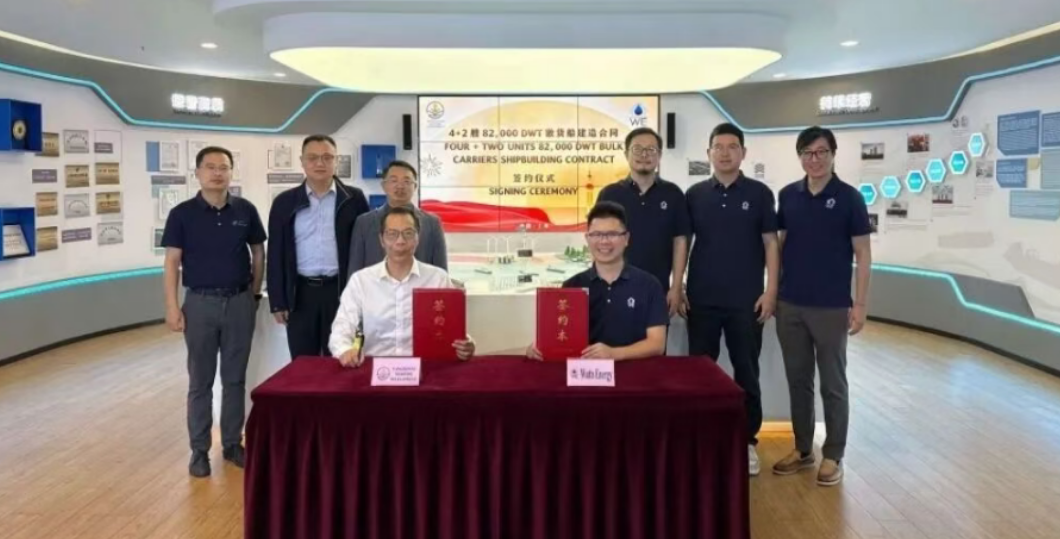
Yangzijiang Maritime linked to 4+2 Kamsarmax order
 Dry Cargo
Black Sea Wheat Loadings Plunge 78% as Grain Trade Reroutes
 Dry Cargo
China Merchants Signs $2.8 Billion-Plus Simandou Shipping Deal
 Dry Cargo
Yangzijiang Maritime Orders 4+2 Kamsarmaxes as Watts Energy Expands into Merchant Shipbuilding
 Dry Cargo
Seaspan Enters Newcastlemax Market, with Yangzijiang Set to Build Two Tri-Fuel Ore Carriers
 Dry Cargo
Shipowners Bet on Ultramaxes: 42 Ships for Chinese Yards, Deliveries Stretch into 203
 Dry Cargo
“We Are Buying Ships”: Why Dry Bulk Is Beating Expectations
 Dry Cargo
40 Days from Brazil to China: COSCO SHIPPING Bulk’s New Grain Fleet Takes Shape
 Dry Cargo
Wooyang orders four triple-fuel Newcastlemax bulkers at China’s New Times for Vale contracts
 Dry Cargo